Centralised Student Information System Design

ankur pareek



Unifying the Campus: Designing a Centralised Student Information System
A single platform powering admissions, programme registration, billing, payments, and grading — for one of the oldest universities in Oakland, USA.
Designing a connected academic ecosystem by synchronising data, automating dependencies, and eliminating bottlenecks.
Client: University in Oakland (NDA)
Industry: Education
Role: Senior Product Designer
Focus: Complex Systems, Data Visualisation, Legacy Modernisation, Workflow Automation
Executive Summary
One of the oldest universities in Oakland, USA, was operating on a fractured digital infrastructure. Critical operations—from academic records to student finances—were managed across multiple independent platforms that did not "speak" to one another.
The Goal
Design a centralized, connected Student Information System (SIS) that serves as the single entry point for Students, Faculty, Admin, and Finance teams.
The Outcome
We delivered a unified platform where every department logs into a personalised dashboard powered by a shared background data source, effectively breaking down silos and ensuring real-time data integrity.
The Problem
Designing an SIS is not just about UI; it is about information architecture and eliminating operational friction. The project presented three distinct layers of complexity:
1. The Interdependency and Bottleneck
The most critical UX risk was the strong dependency of actions across departments, particularly during high-volume periods like semester registration, grading, and transcript generation.
For example semester registration problem flow is very much action-dependent on different people from different departments, including students, it involved a critical, frustrating chain. The manual handoff created immense confusion, enabled significant waiting times, and led to clerical errors across multiple teams.
2. The "Legacy Data" Trap. The university held over 20 years of student records in outdated formats.
• Design Constraint: The interface had to seamlessly fetch and display read-only legacy records while providing a modern, structured input method for all new data.
3. Academic Structural Logic How do we standardize the architecture of learning?
• Design Constraint: We had to create a flexible data model to structure courses, credits, and programs that could accommodate varying department requirements without breaking the global system.
How might we create a unified, future-ready student information system that seamlessly synchronizes inter-department actions, supports 20+ years of legacy data, simplifies applications, billing, registration, and grading, provides personalized role-based dashboards, automates dependent workflows, enhances transparency for every user, and enables a smooth, intuitive experience that all departments trust and can scale with over time?
Research: Interviews & Insights
Key interview questions (per department)
“How do you currently access or manage student-related information?”
“Where do bottlenecks or delays happen?”
“Which tasks depend on other departments?”
“Where do errors or miscommunication occur?”
“What information do you wish you had in real time?”
Investigate
As the interview results show that most of the tasks are heavily dependent on the cross-departmental actions, so I created a combined journey map of the semester registration task, which involved Registrar, Finance, and students.
This helped me to find out the gaps and bottlenecks in the process. Found the opportunities for :potential improvements.
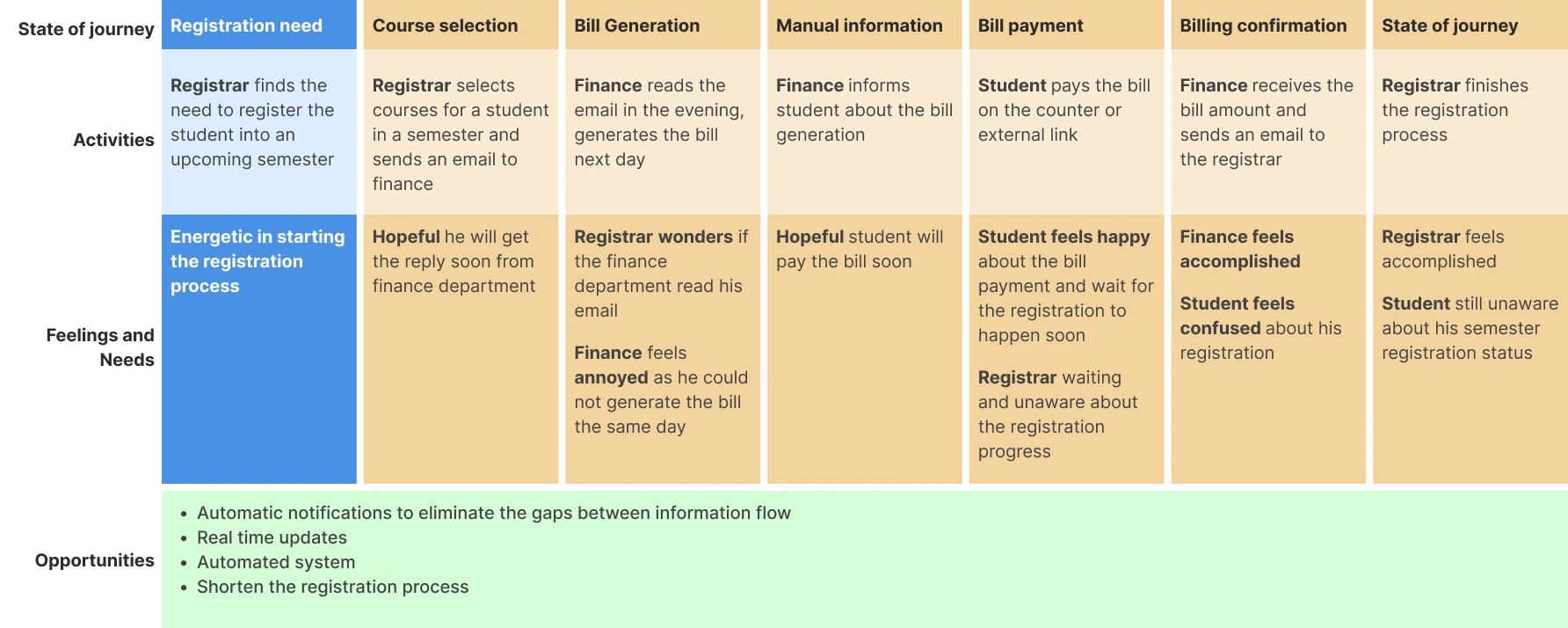
Semester registration Journey mapping
Strategy & Approach: Orchestrating the Workflow
To solve for the critical "Information Scatter" and the manual tasks bottleneck, I implemented a Role-Based Dashboard strategy combined with automated workflow states.
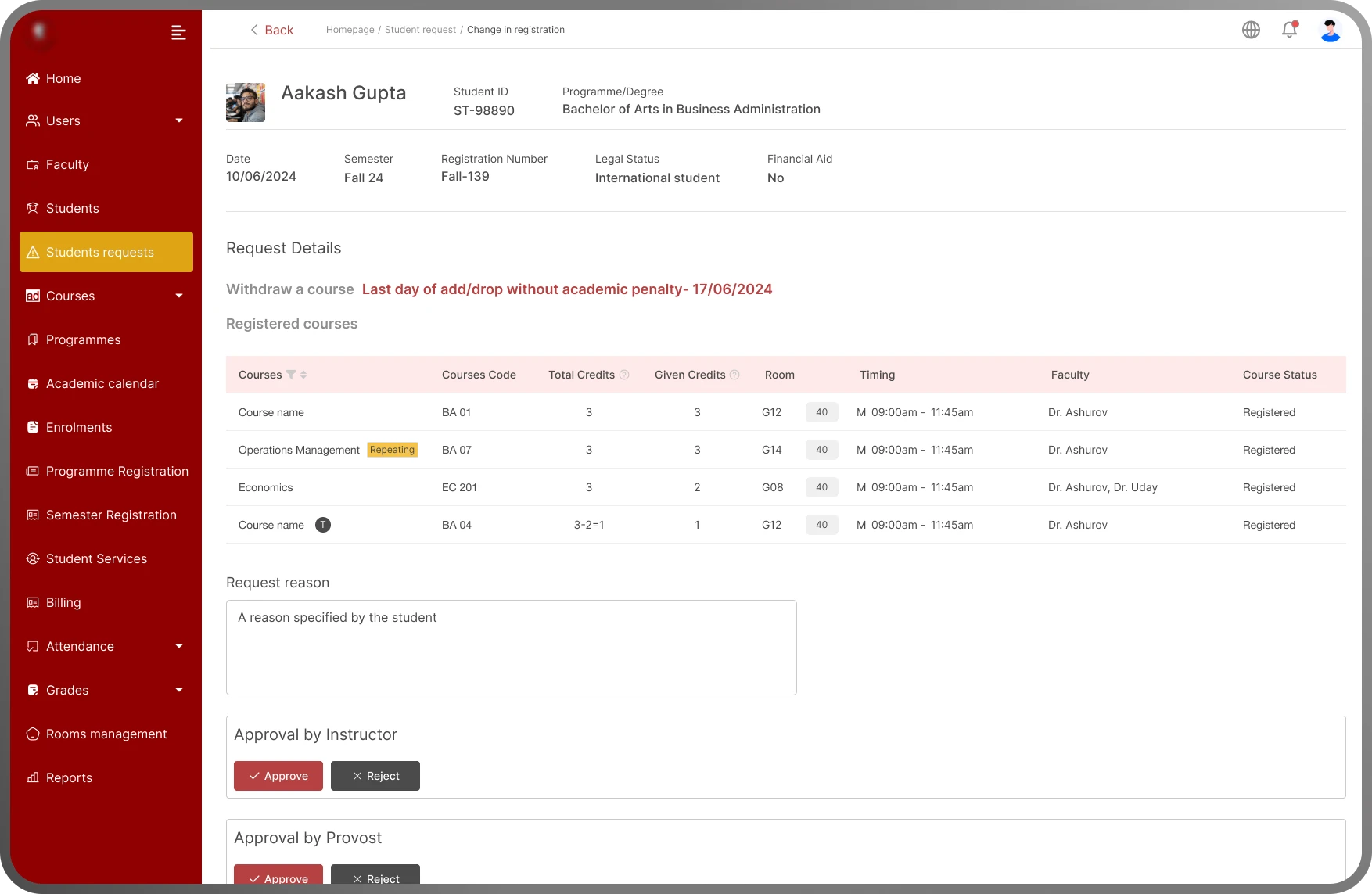
One Portal, Four Views, I unified the login experience. The backend identifies the user role (Student, Faculty, Admin, Finance) and serves a highly personalised UI.
Workflow Automation via Shared Data States I eliminated the manual handoff by designing a workflow based on shared, real-time data states accessible to all parties in the new unified portal. The system became the communication agent.
Visualizing Data Dependencies. The system was designed to automatically trigger the next step and visually update the status for everyone involved.
The Solution: The Automated Registration Flow:
Centralized Registration Workflow Eliminating the "Waiting". A new "Workflow Status" component was introduced on the Registrar, Finance, and Student dashboards. This component shows the registration status 'Enrolled', 'Unbilled', 'Ready for Payment', 'Paid', and 'Registered'. By making the registration state visible, we replaced manual notifications with automated system alerts

New automated semester registration flow
The Registrar no longer waits for the student to confirm payment; the status updates instantly to 'Ready for Payment' and 'Paid' on their dashboard.
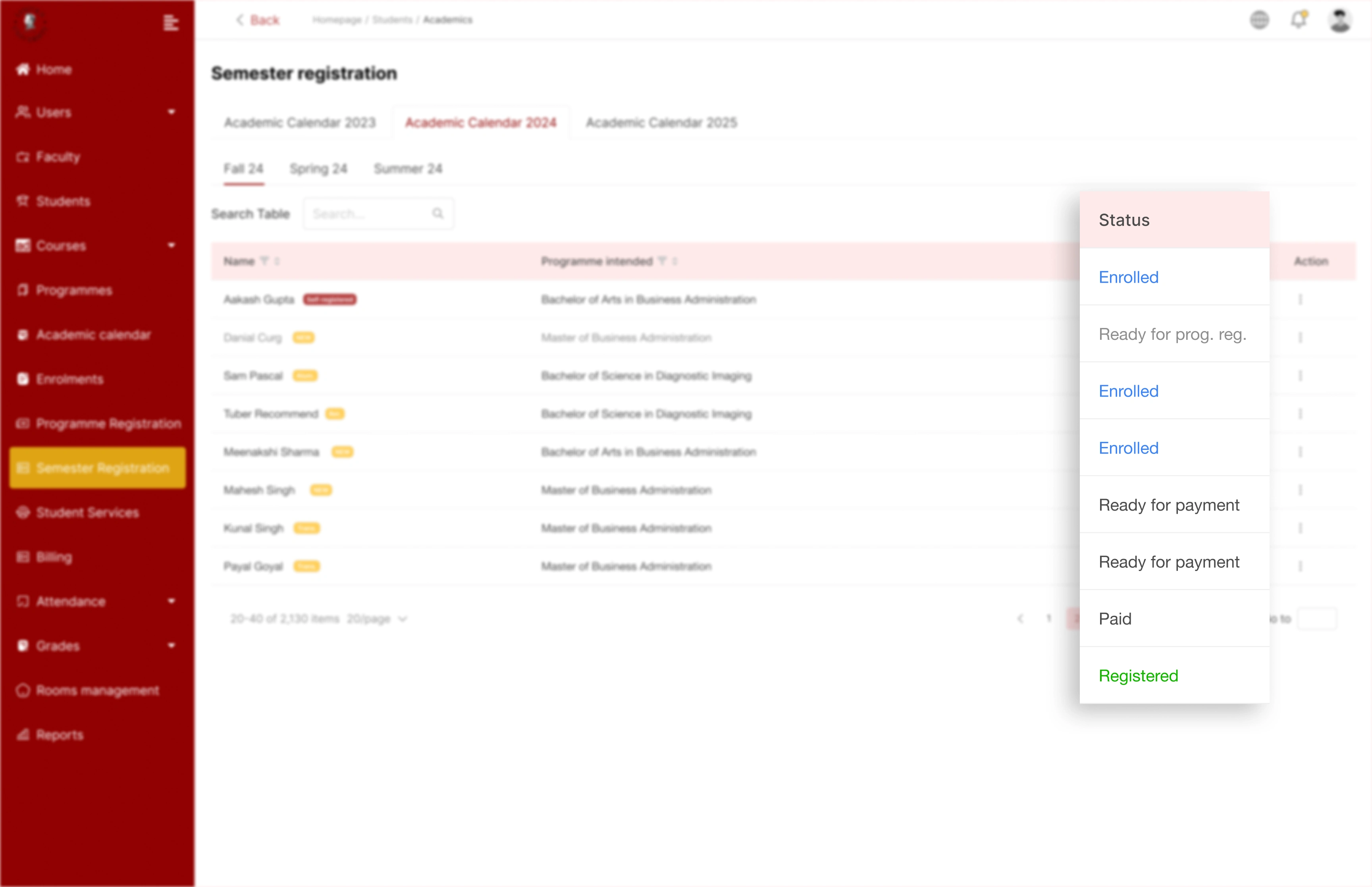
Registrar panel
The Finance Team no longer waits for a manual email; a status 'Unbilled' shows the moment the Registrar saves the course selection for any student.
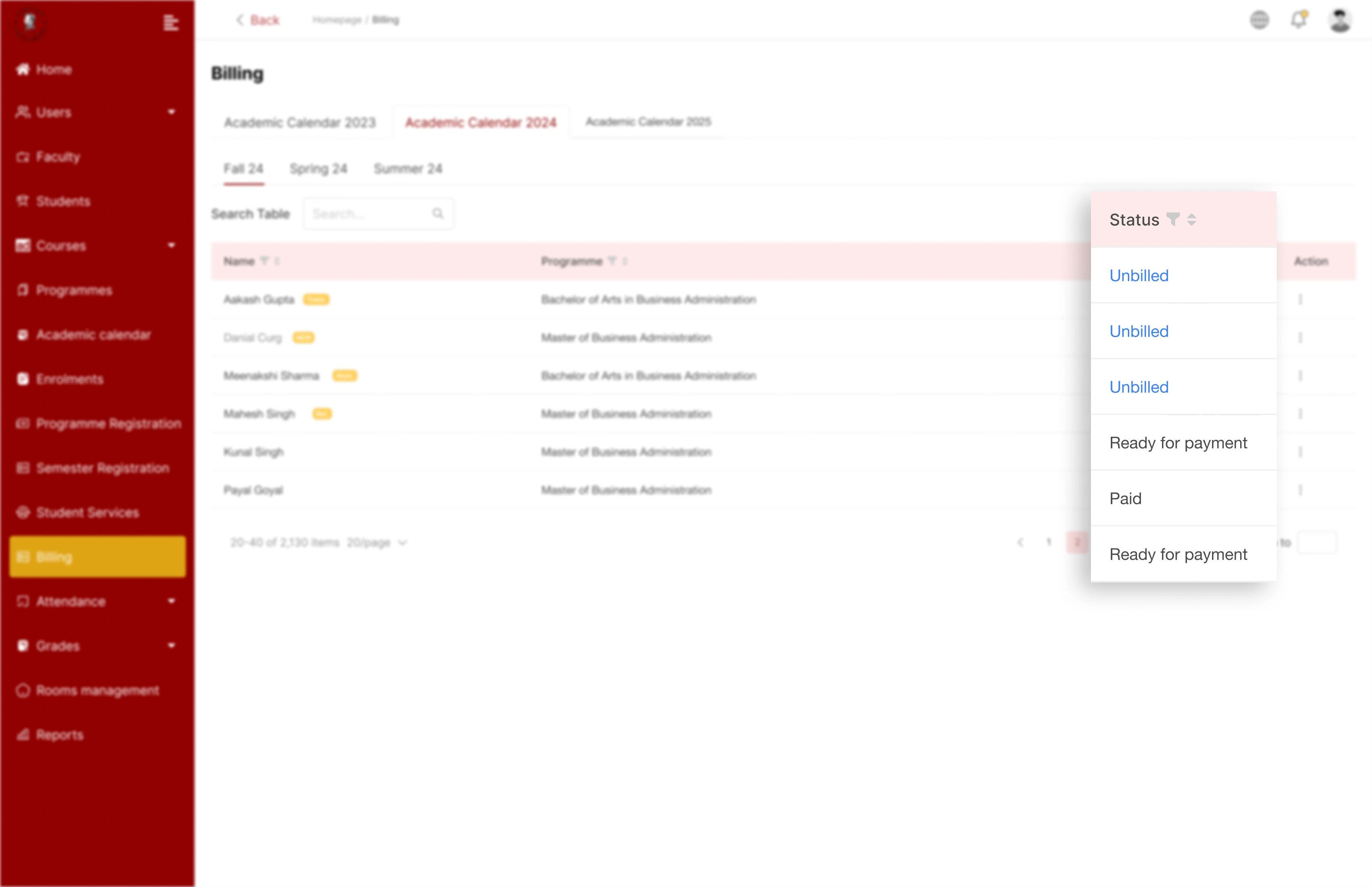
Finance panel
The students see the real-time status of their Payment and semester registration.
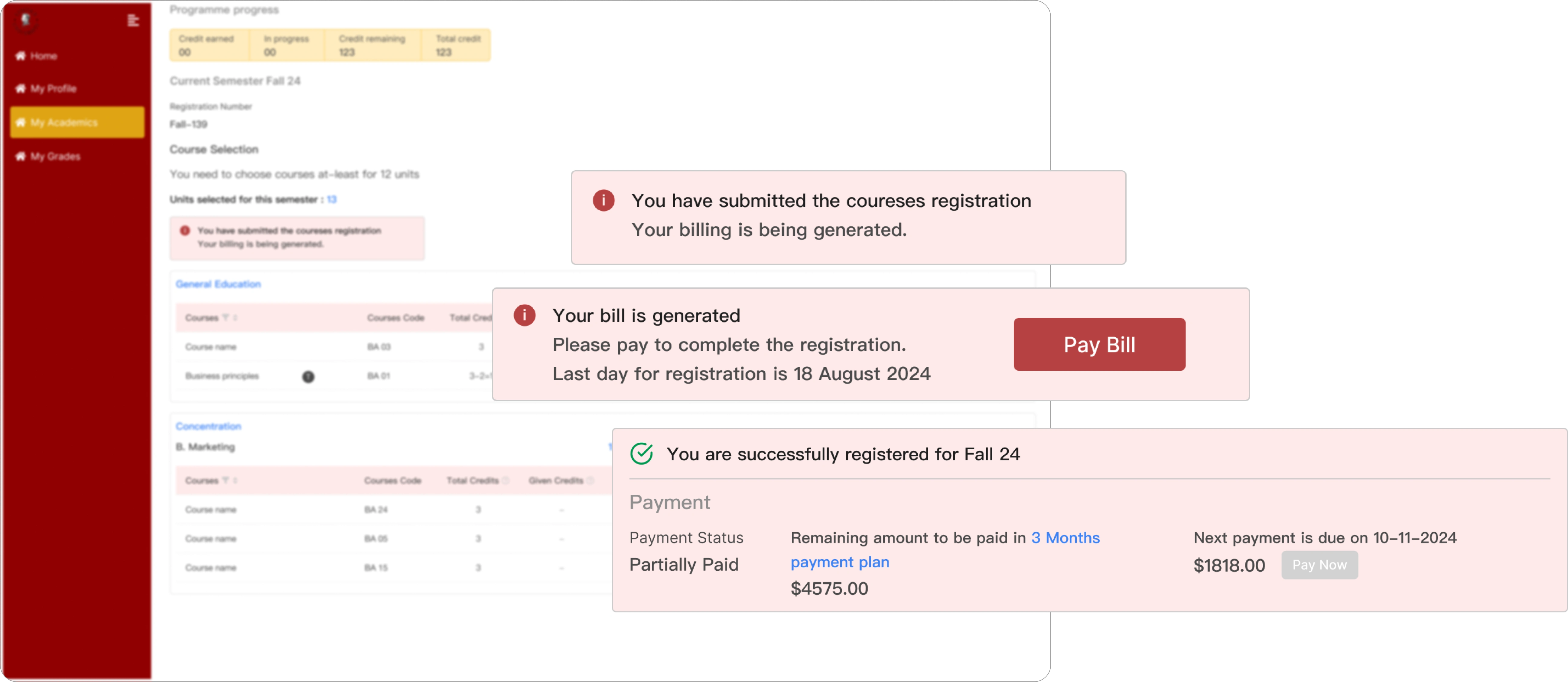
Student Panel
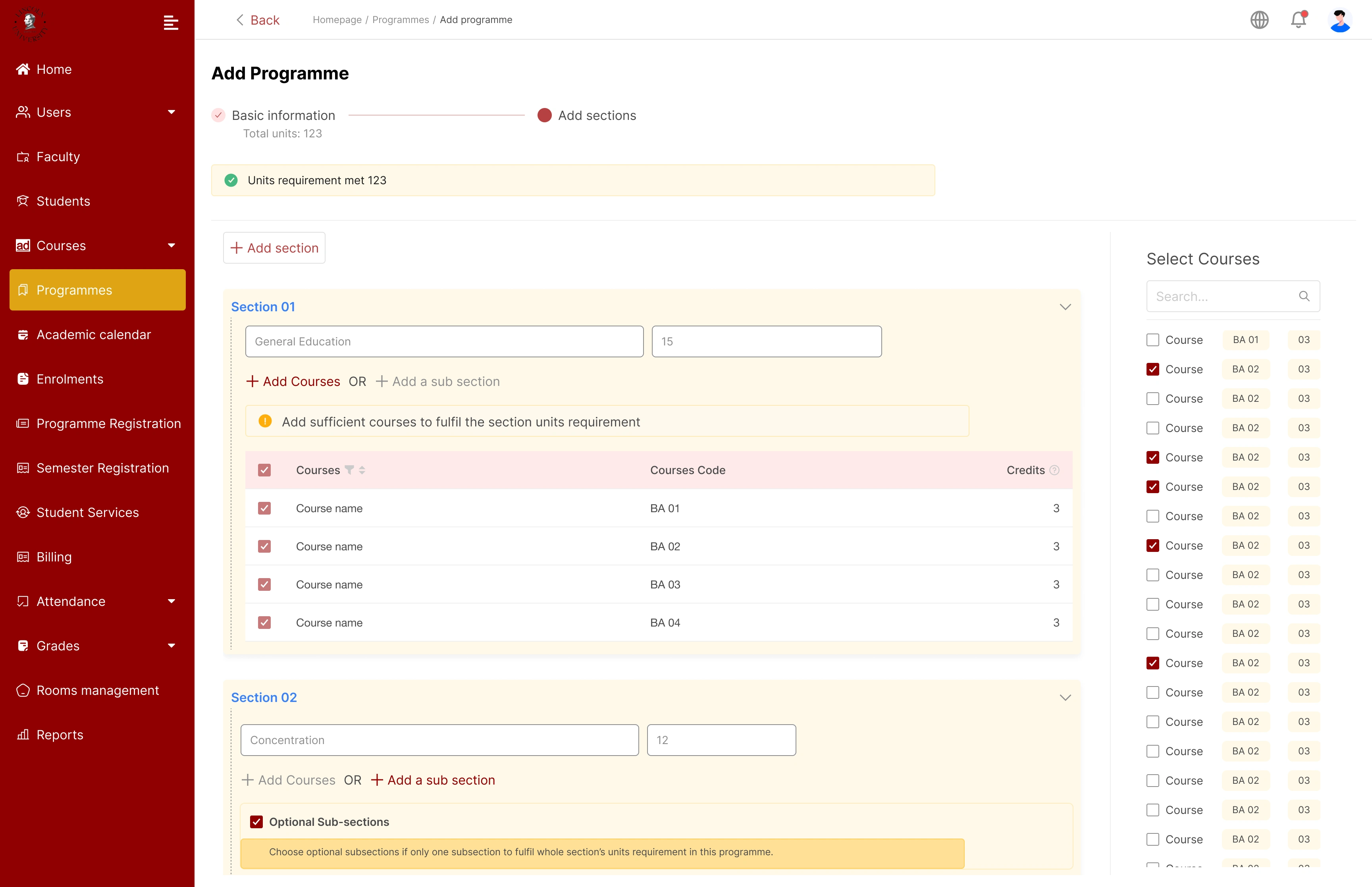
Intelligent Academic Structure I designed a clear hierarchical data input system (Program -> Course -> Credit Logic) that enforces consistency and ensures that course selections made by the Registrar accurately translate into correct billing figures for the Finance team.
Like this project
Posted Jan 1, 2026
Designed a centralized Student Information System for a university, unifying operations and improving data integrity.