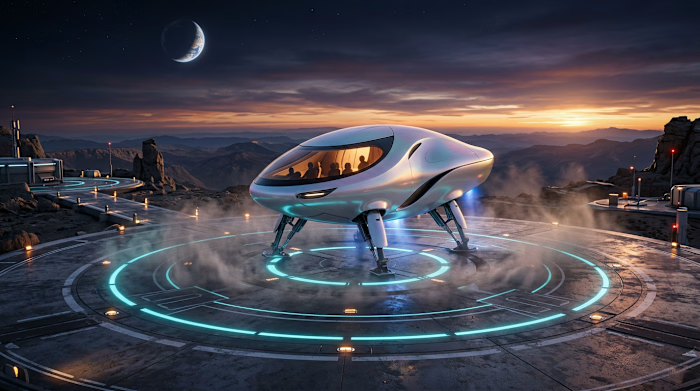
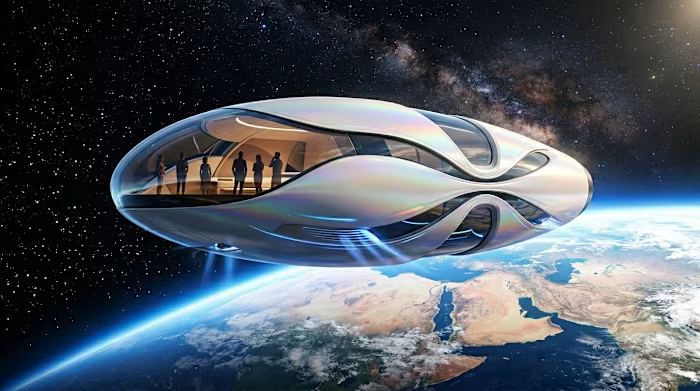
Zephyr-V — Heavy-Lift Platform (Concept)

Jerry Ray Tippett


Zephyr V-Series: Evolutionary Documentation
Concept/spec design — part of the Starship Nickalas project by Rayznglass DLLC
Propulsion & Power Plant Evolution
The critical leap in the V-Series was the transition to a 150.0 kW hydrogen fuel cell integration. This upgrade provided the massive thrust required for Low Earth Orbit heavy-lifting while adhering to clean-energy standards.
Thermal Defense & Resonance
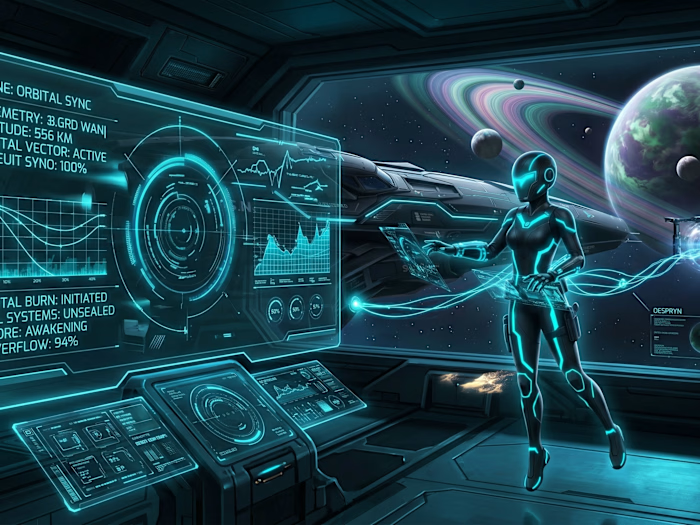
To manage the immense power output of the new fuel cells, the Zephyr-V design introduced electrolyzer resonance isolation. This evolutionary step successfully routes thermal loss away from the delicate analog gauges and glowing amber vacuum tubes, ensuring the craft's heavy mahogany consoles do not overheat under maximum load.

Zephyr-V Starship Core — Internal power matrix and resonance isolation architecture
The Efficiency Lock
The defining characteristic of the V-Series' final iteration is its unwavering power matrix data flow, mathematically locked to maintain an exact 84% system-wide energy efficiency benchmark even when carrying heavy payloads.
Structural & Aesthetic Maturation
The physical hardware integration evolved to match the "Digital Artisan" Steampunk vision. The standard industrial framework was replaced by polished copper framing and a signature "rays in glass" reinforced resin hull, completing the transformation from a basic transport into a Victorian industrial marvel.
This design merges hardcore aerospace flight physics with a 2026-level Steampunk aesthetic, representing the culmination of the V-Series engineering lineage.
Designed and engineered by Jerry Ray Tippett — Rayznglass DLLC, 2026
Like this project
Posted Jun 16, 2026
Concept design for the Zephyr-V heavy-lift platform: 150 kW hydrogen fuel cell, electrolyzer resonance isolation, 84% efficiency lock, and full Steampunk aesthetic integration.
Likes
1
Views
7
Clients
Rayznglass DLLC