ALETRA — Building a Brand You Can Walk Through

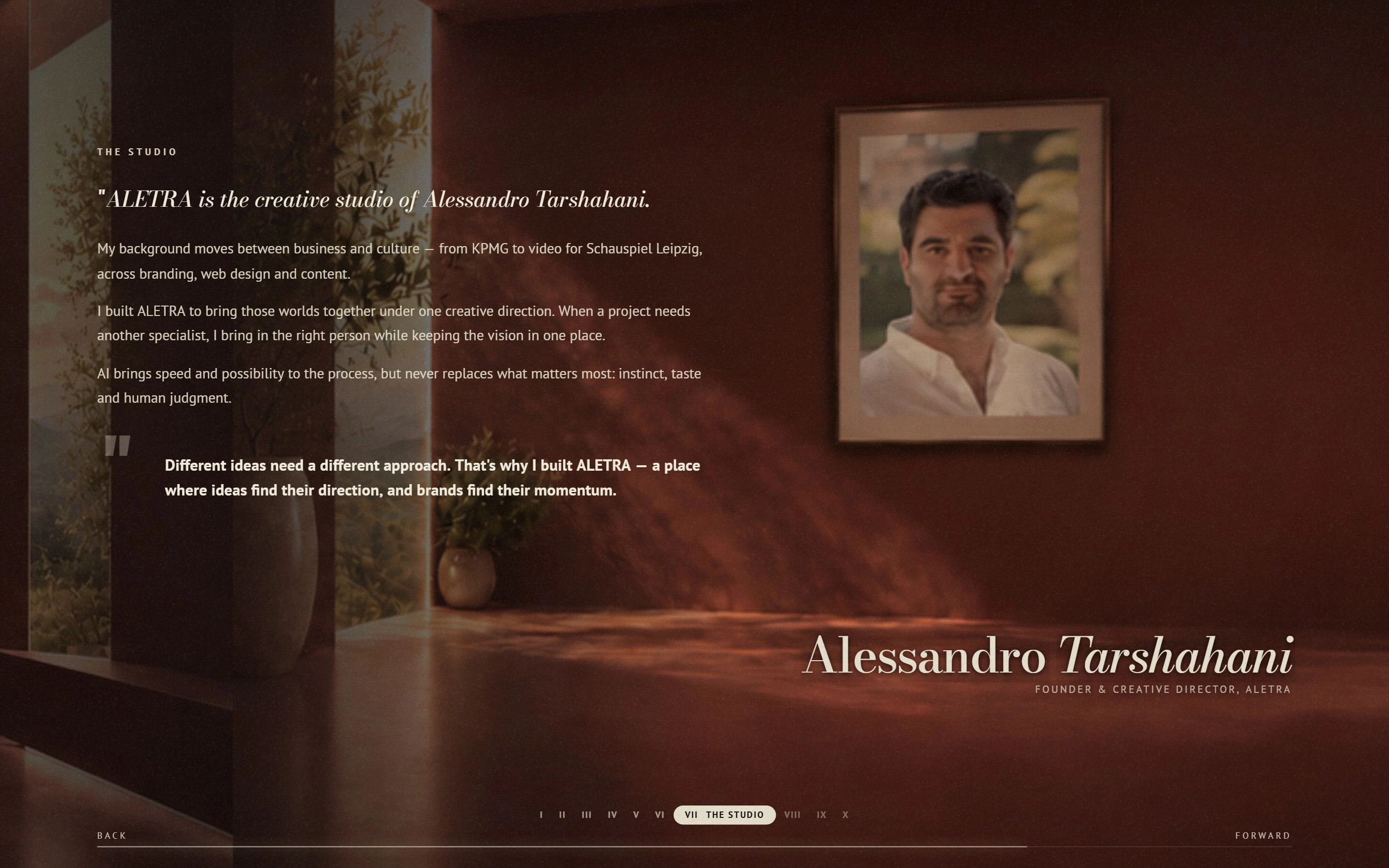
Alessandro Tarshahani


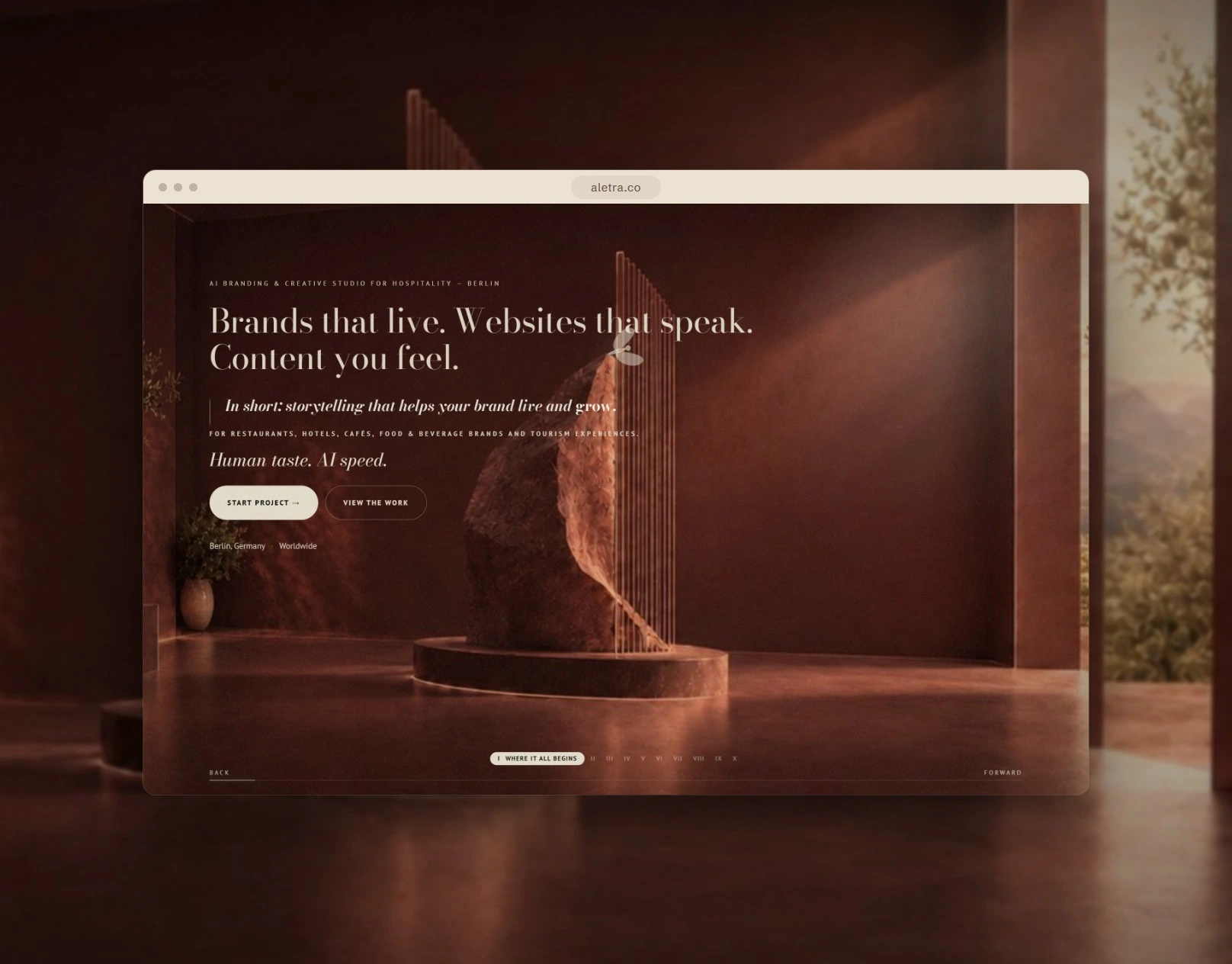
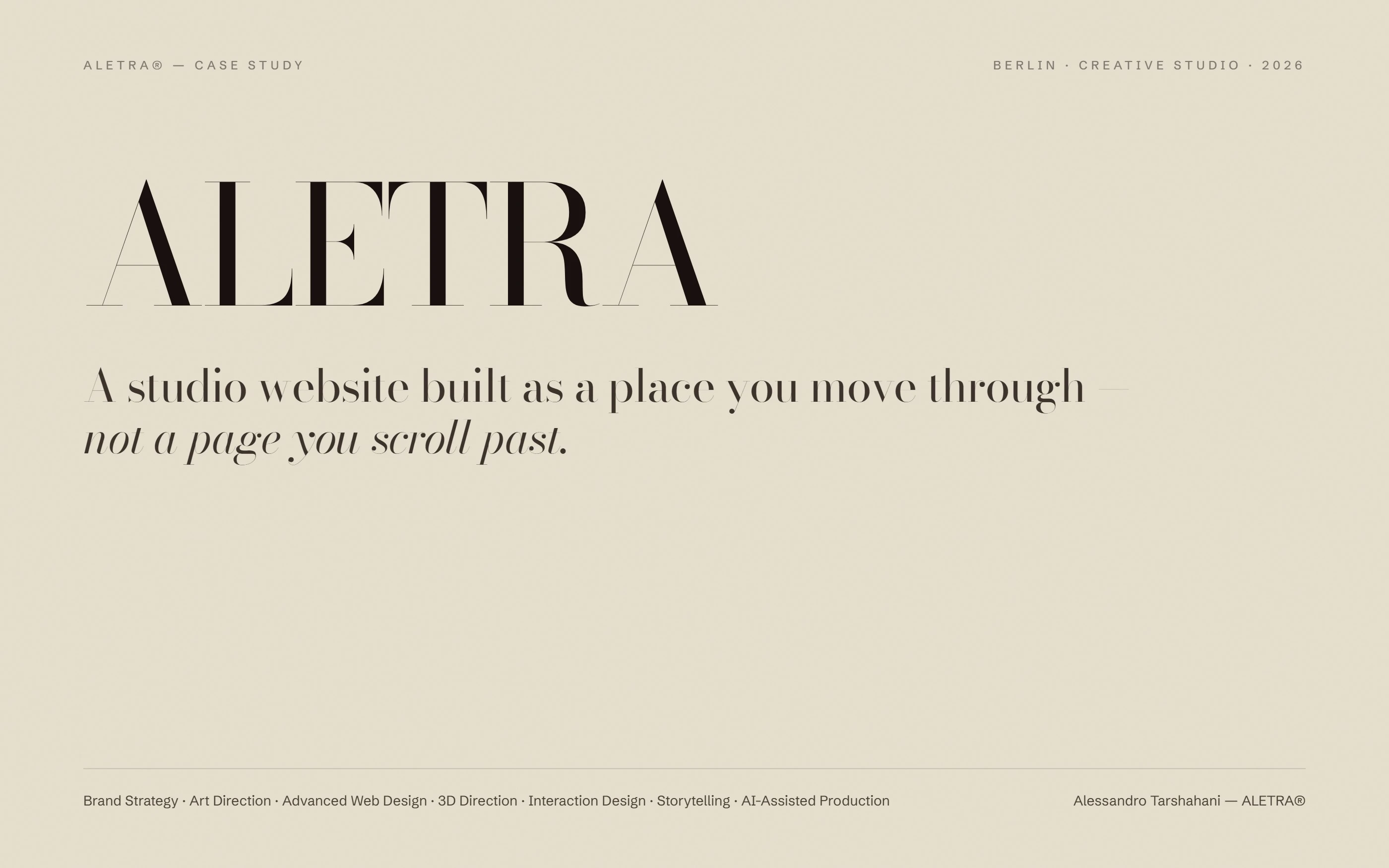
ALETRA is a Berlin-based branding and creative studio specialising in hospitality, food & beverage and tourism, working across branding, advanced web design and cinematic content.
The new website was created as a demonstration of that philosophy.
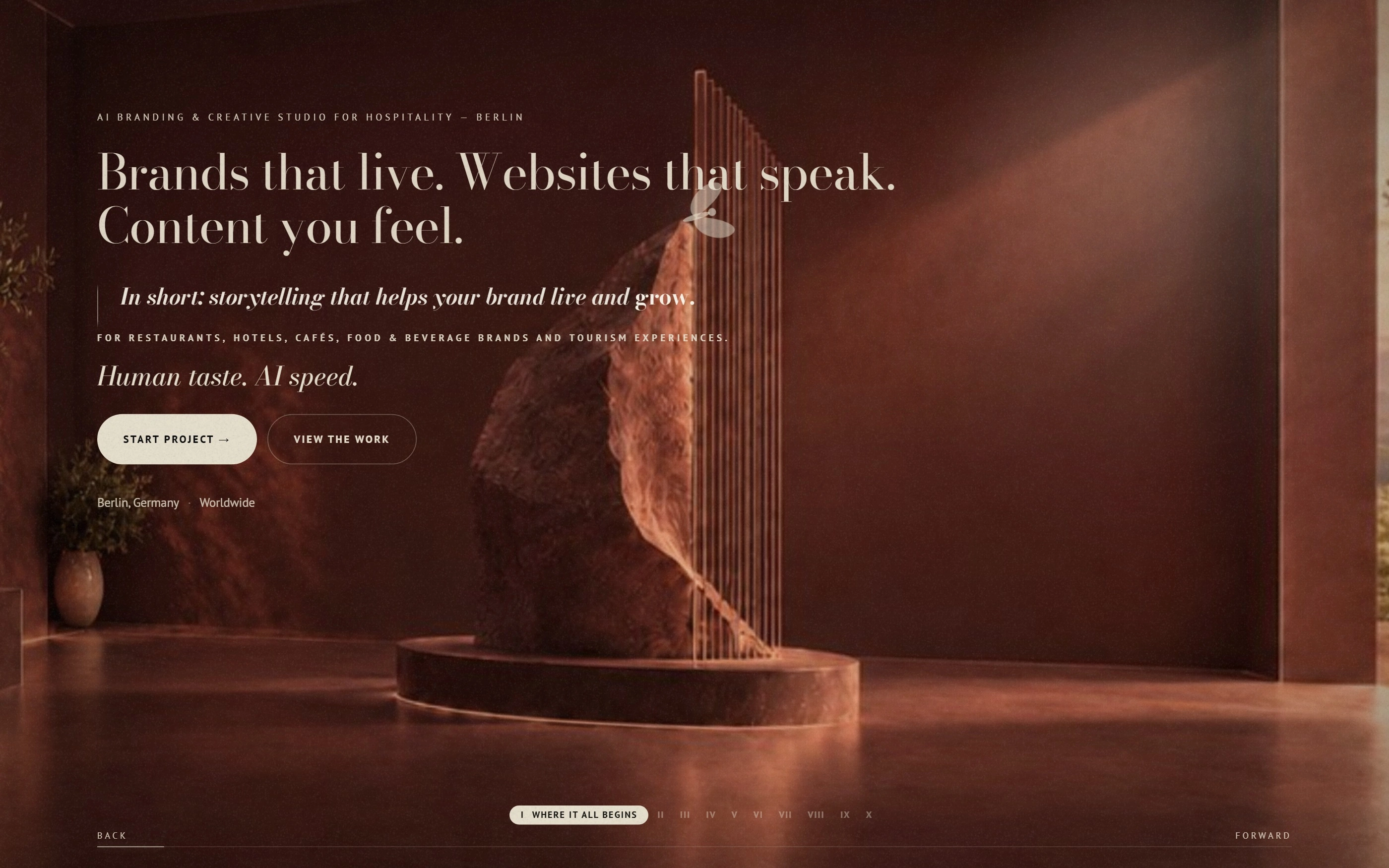
Instead of presenting the studio through a conventional agency layout, ALETRA built a spatial digital world made of rooms, architecture, art, sculpture, light and movement — turning the portfolio itself into an experience.
Berlin · Creative Studio · 2026
Brand Strategy · Art Direction · Advanced Web Design · 3D Direction · Interaction Design · Storytelling · AI-Assisted Production
ALETRA already had a strong digital presence.
It was clean, contemporary and technically advanced.
But it still behaved like a website.
Sections followed sections. Work was presented inside a digital interface. The experience communicated capability, but not enough character.
The challenge became:
How can a creative studio demonstrate branding, web design and cinematic storytelling before the visitor even opens a case study?
The answer was not another interface.
It was to build a world.
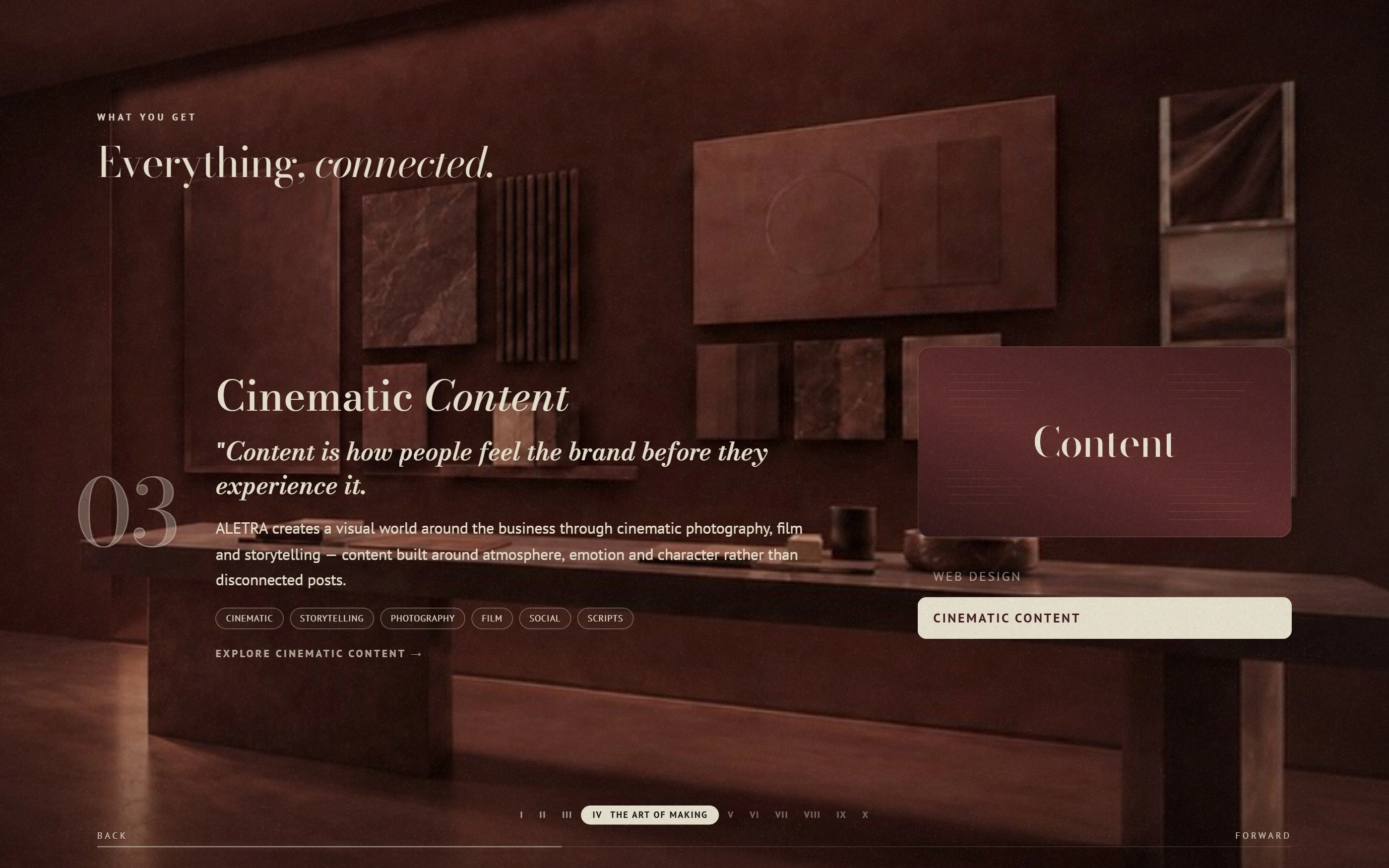
The website was reimagined as a sequence of connected spaces.
Instead of scrolling down a page, the visitor moves through rooms.
Architecture creates chapters.
Objects create depth.
Artwork introduces the work.
Light controls mood.
A butterfly moves through the environment as a recurring visual motif.
The interface becomes quieter so the world can carry the story.
The website is not a container for the brand.
The website is part of the brand.
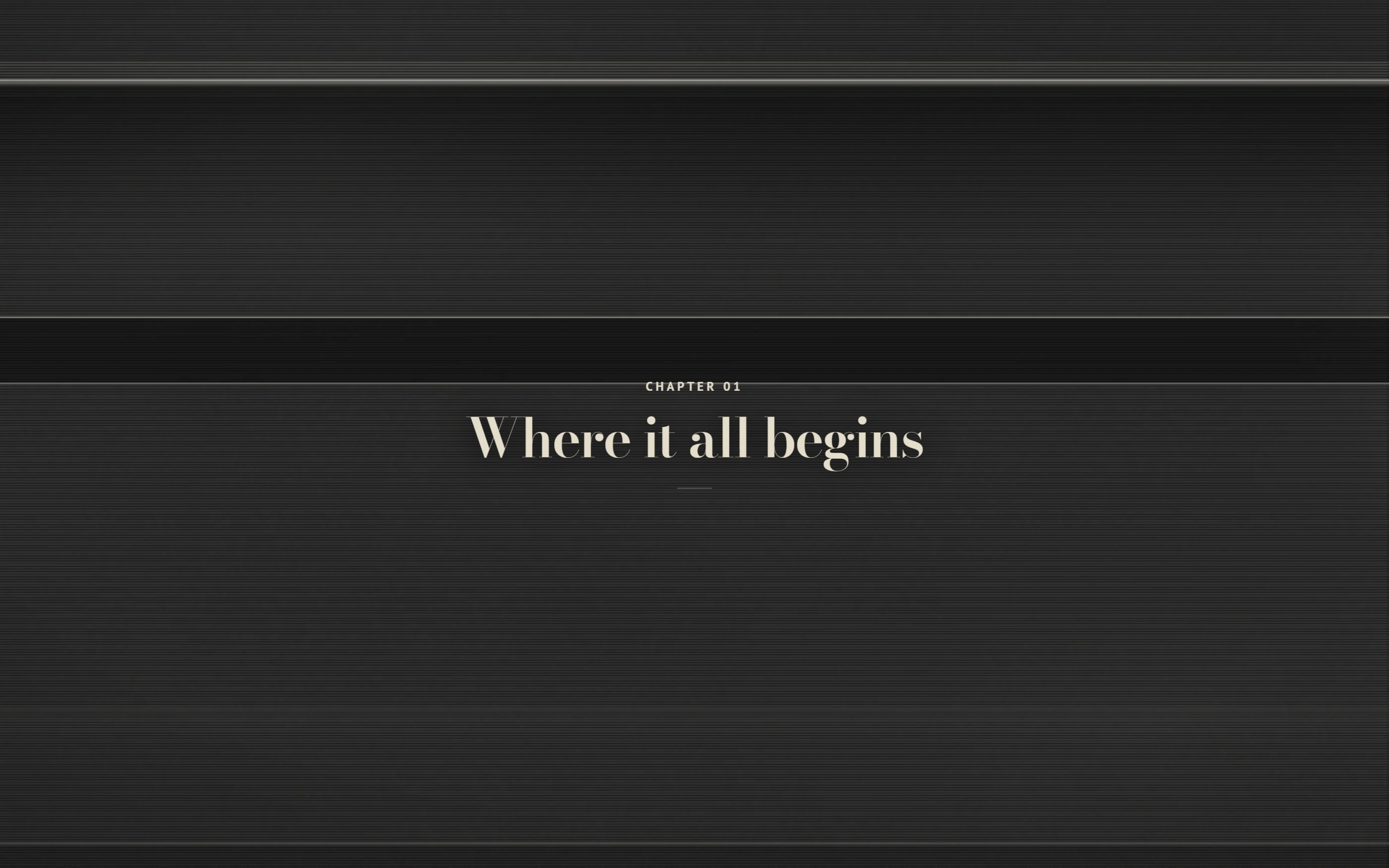
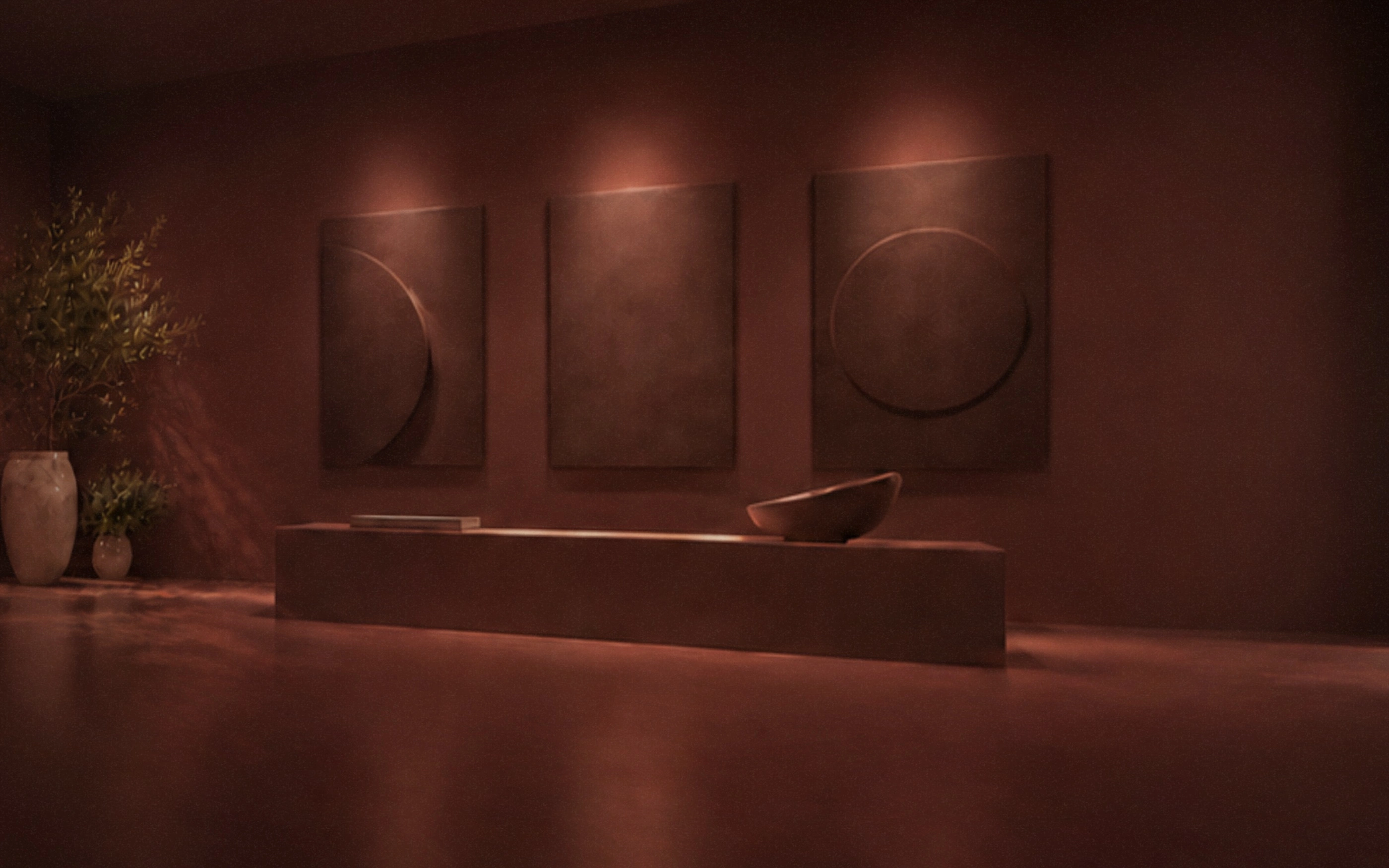
The visual direction moves away from conventional digital-agency aesthetics and toward something more physical, cinematic and human.
The world is built around three tonal states:
Beige · Brown · Night
Green appears naturally through plants.
Blue appears through sky and daylight.
Warm architecture, textured surfaces and imperfect materials keep the spaces tactile rather than digitally sterile.
The goal was not to create a virtual luxury showroom.
It was to build an unmistakable visual world for ALETRA.
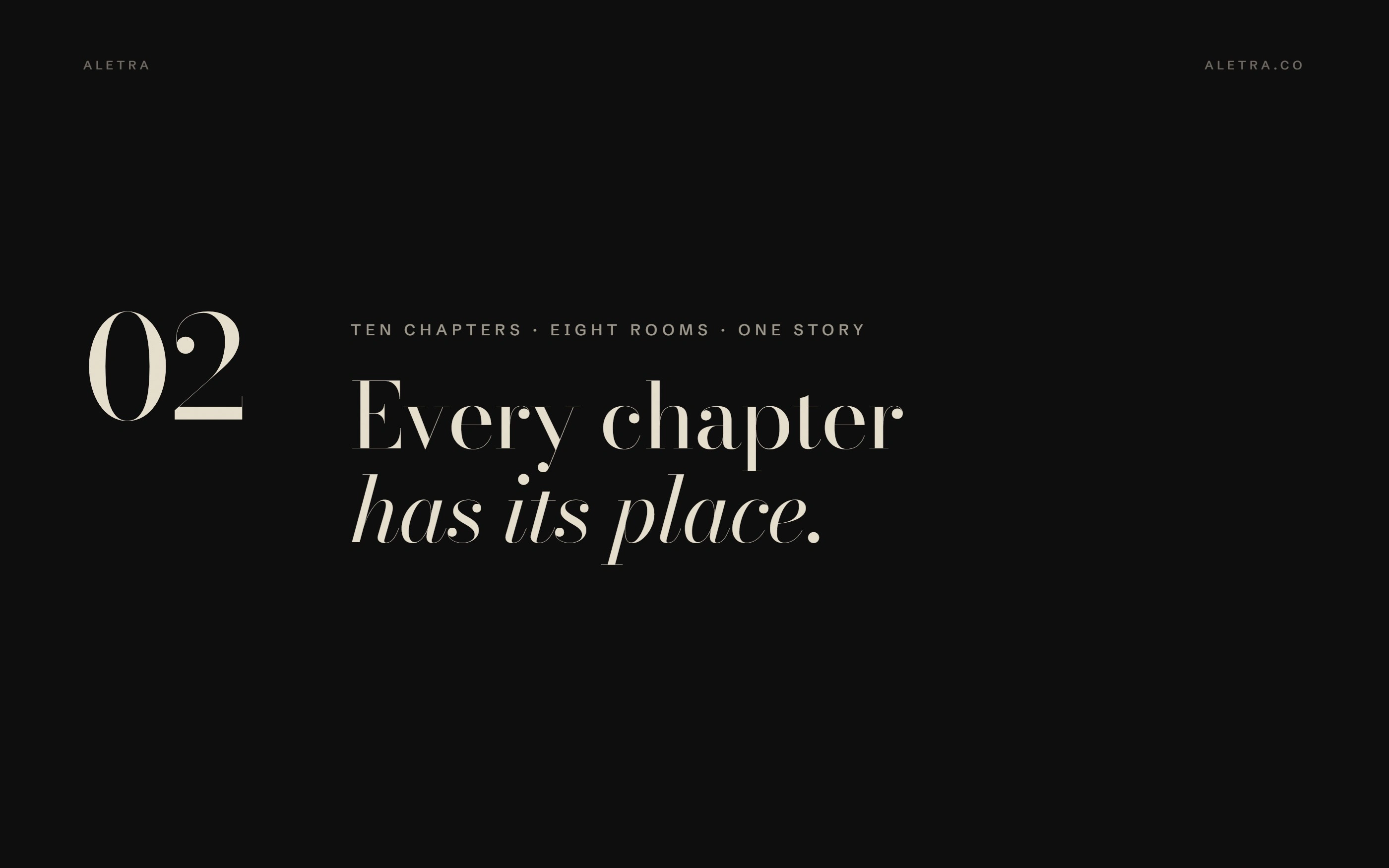
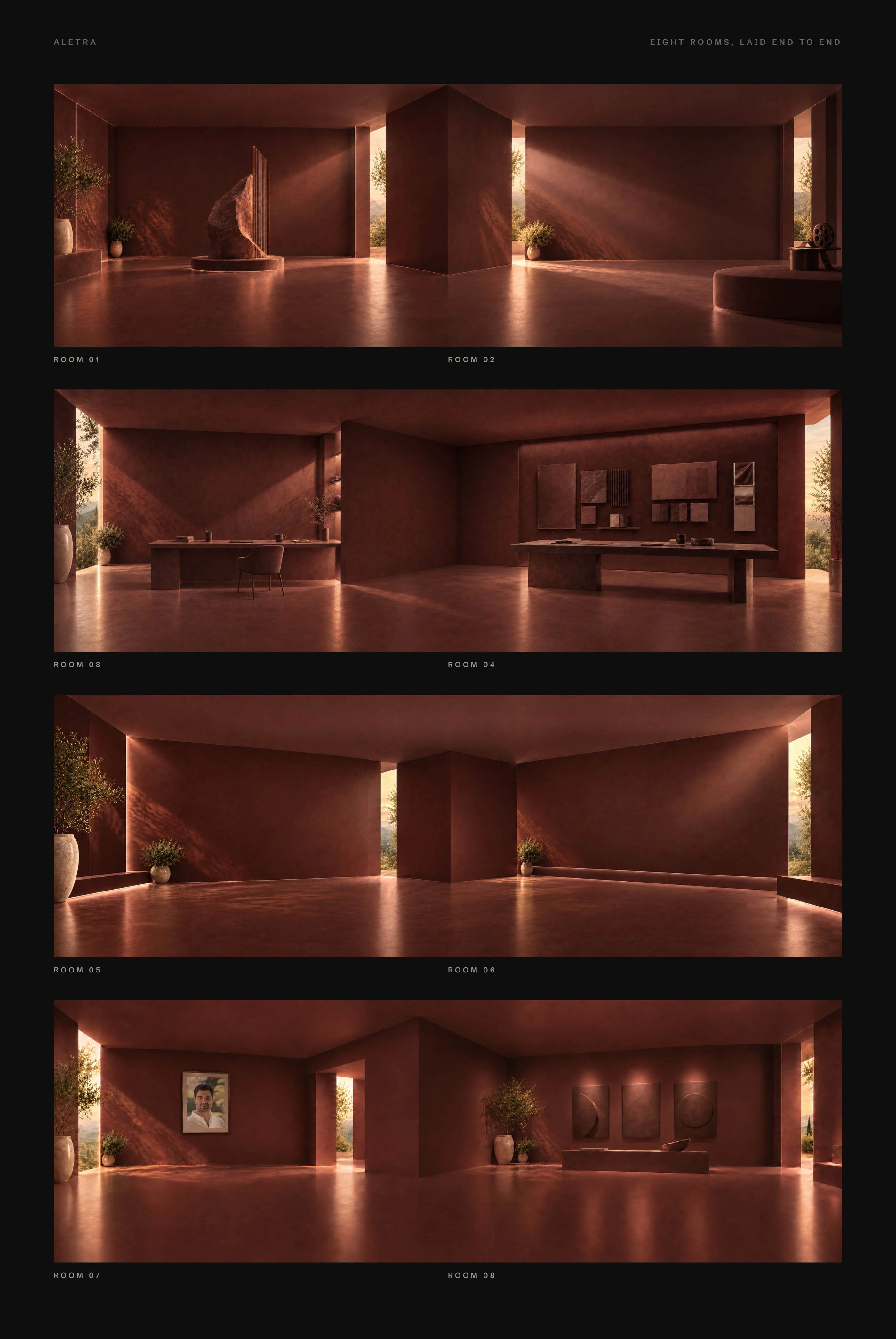
The website unfolds through a sequence of rooms rather than conventional stacked sections.
Each space has a purpose within the narrative.
Some introduce the studio.
Some frame the work.
Some slow the experience down.
Some create contrast through darkness, open sky, plants or architectural scale.
Together, the rooms create rhythm:
Arrival → Identity → Expertise → Work → Philosophy → Founder → Contact
The visitor does not need to understand the architecture consciously.
They only need to feel that the journey changes as the story changes.
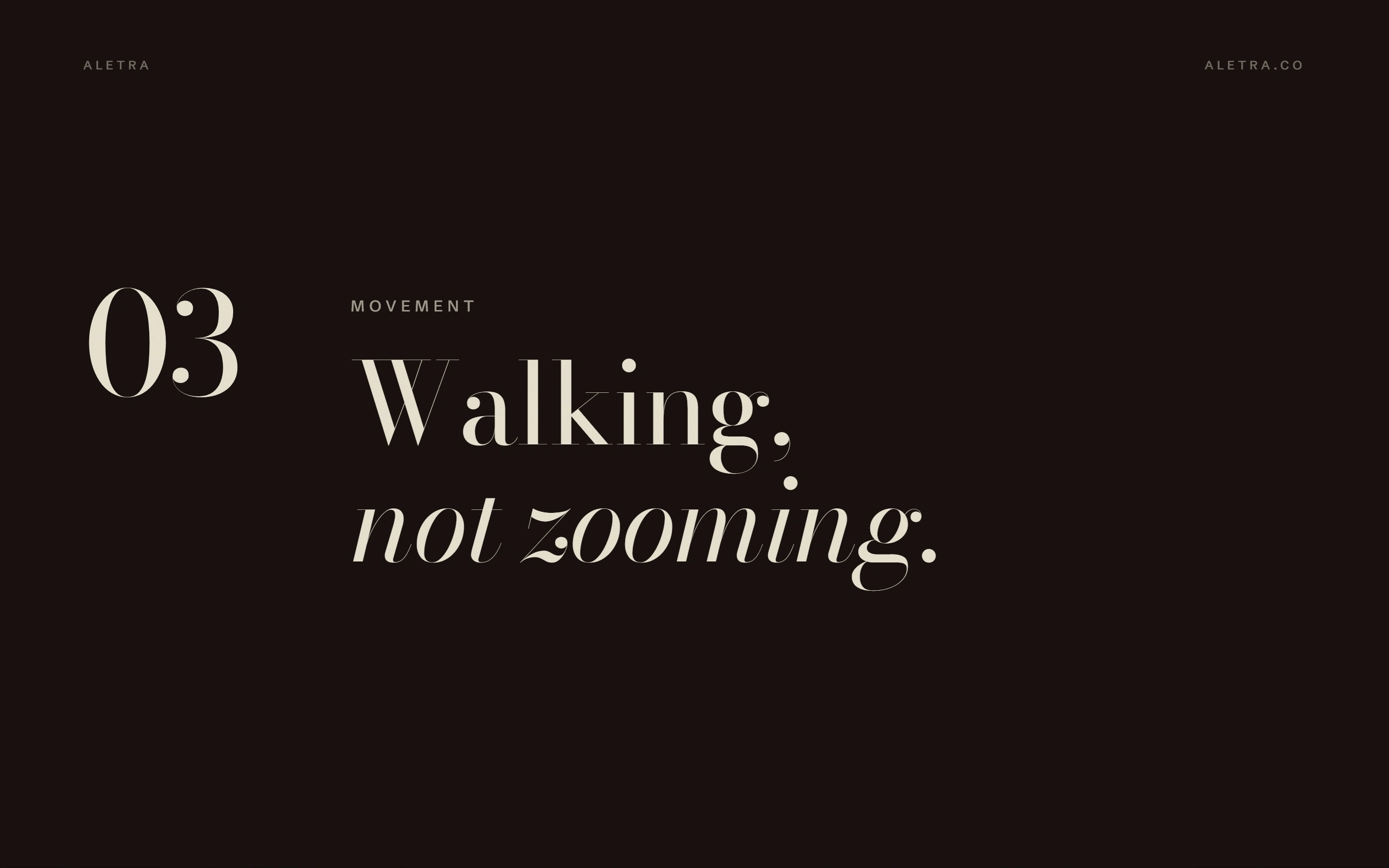
The feeling of depth comes from perspective and camera translation rather than decorative motion.
The rooms stand at an angle to the viewer, so as the camera moves, the near side sweeps past while the far side crawls — the cue the eye reads as walking through a space.
Architecture shifts in relation to the camera.
Doorways reveal the next space.
Objects create scale.
The result is a controlled illusion of walking through a physical environment.
Motion was designed to support the story rather than compete with it.
The effect should be felt before it is noticed.
04 / The butterfly
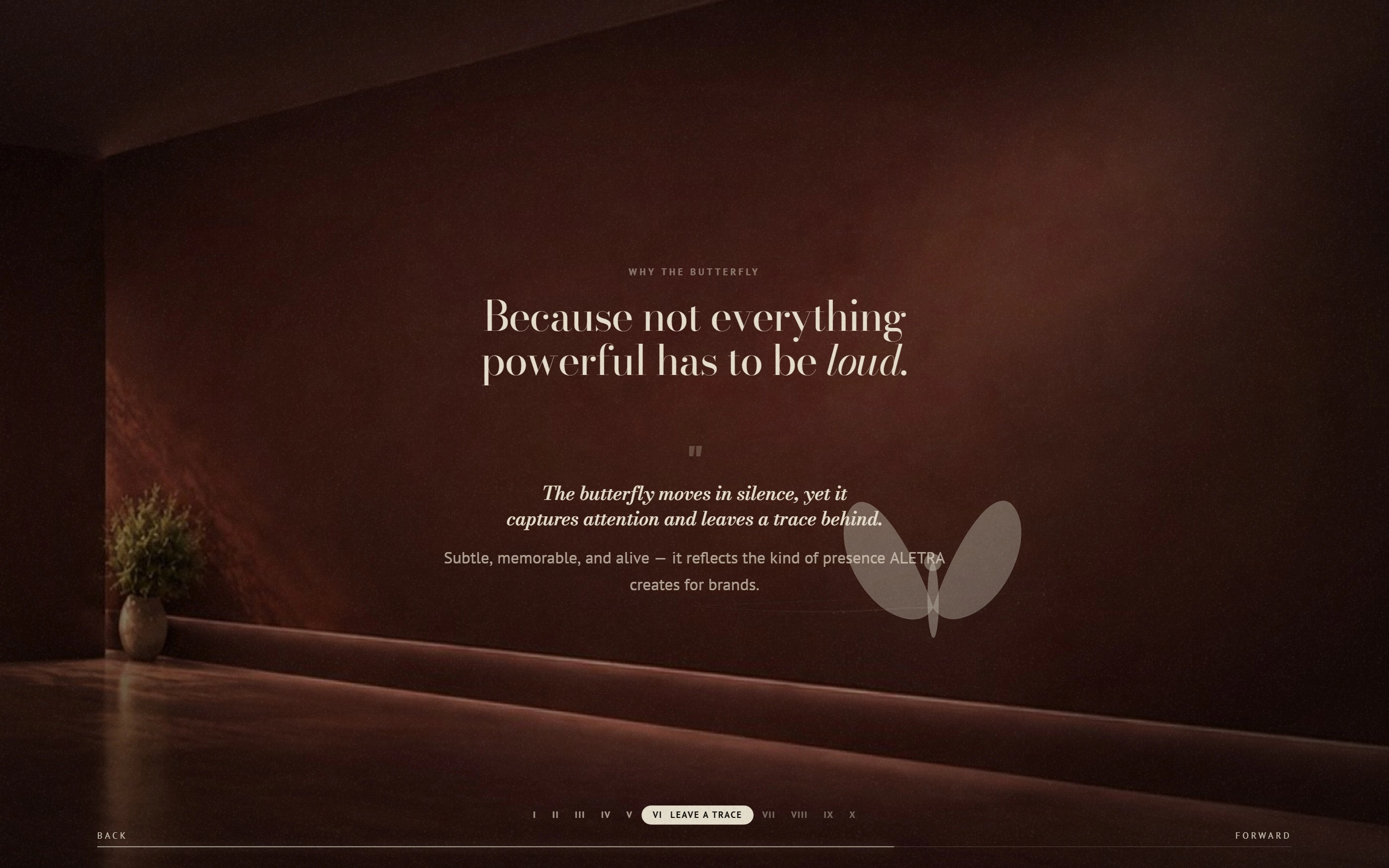
Because not everything powerful has to be loud.
A butterfly moves through the ALETRA world as a recurring visual motif.
It is not a navigation arrow or a literal guide.
It appears, disappears and crosses between spaces.
Against large architecture and sculptural forms, something small and organic introduces contrast and life.
It became a symbol of the wider ALETRA philosophy:
Human taste. AI speed.
Technology builds the possibility.
Human judgment gives it character.
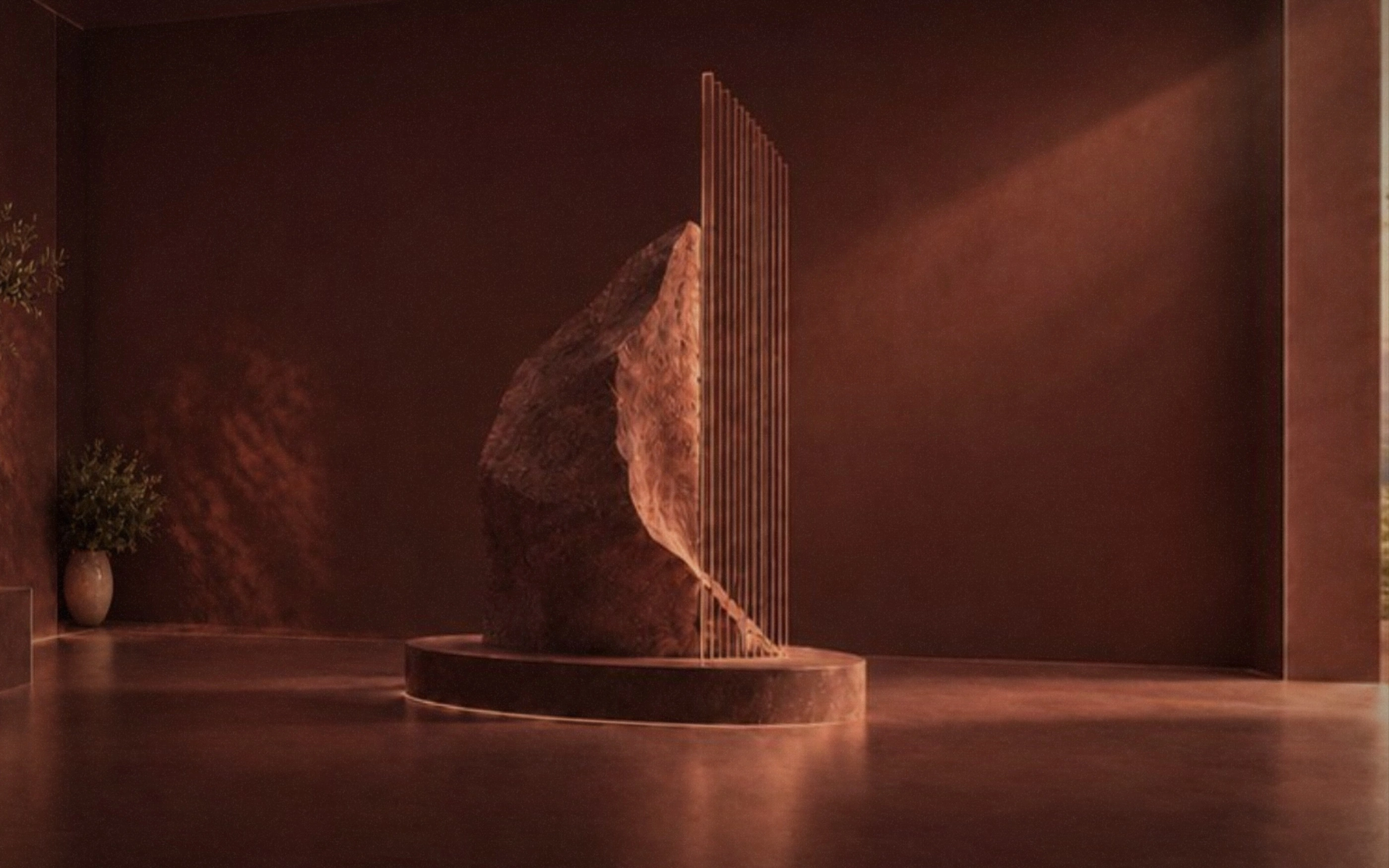
05 / Art, sculpture & authorship
The environment should contain the work — not compete with it.
Paintings and sculptural forms were introduced as part of the spatial language.
But rather than filling the site with generic gallery decoration, the strongest moments use the environment to frame ALETRA's own creative work.
Brand imagery, photography and case-study fragments become part of the architecture.
The portfolio enters the world instead of sitting on top of it.
This distinction became essential:
The rooms are the stage.
The work remains the subject.
The immersive experience establishes what ALETRA believes in.
The case studies prove it.
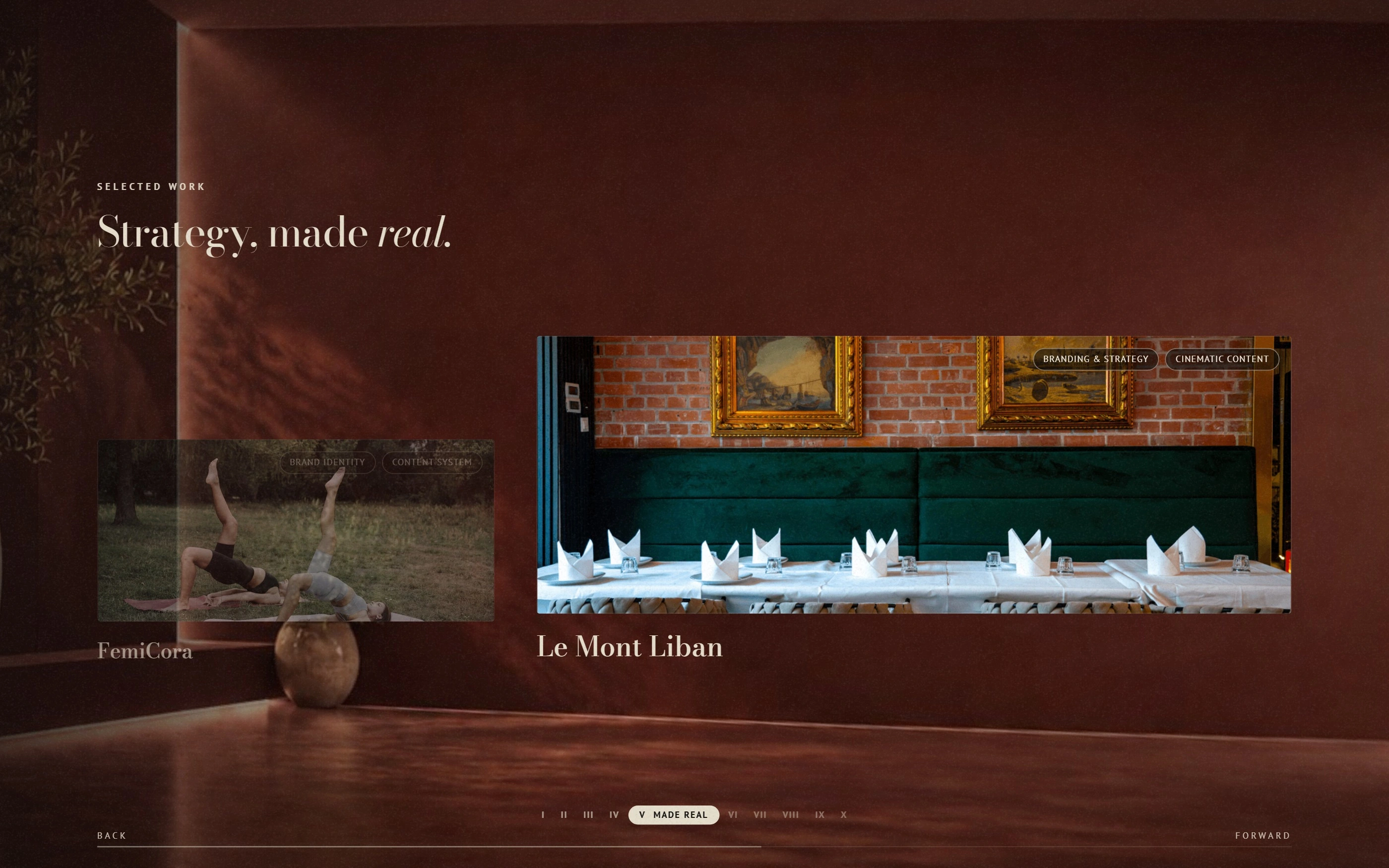
Projects such as LeMont and FemiCora shift the site from atmosphere into evidence — showing how the same thinking translates into hospitality branding, digital design, photography, content systems and creative direction.
The architecture deliberately becomes quieter around the portfolio so real client work can dominate.
Because a beautiful studio website means very little if the work underneath it cannot carry the same standard.
The new website also reflects a sharper positioning for ALETRA.
The studio focuses on:
Hospitality · Food & Beverage · Tourism
Restaurants, hotels, cafés, food and beverage brands and tourism experiences all depend on something beyond visual identity.
They depend on anticipation.
What does the place feel like?
What will I taste?
What will I see?
Why should I go there?
ALETRA connects branding, digital experience and cinematic content to answer those questions through one creative direction.
Make people want to be there.
AI played a role throughout exploration and production — from visual development and ideation to building and testing parts of the environment.
But the system was not designed by asking technology to make something "creative."
Art direction determined what belonged.
Taste determined what stayed.
Human judgment connected the individual experiments into one coherent experience.
AI accelerated the making.
Creative direction decided what was worth making.
The new ALETRA site is no longer simply a place where projects are displayed.
It demonstrates the studio's three core disciplines through the experience itself.
Branding creates the world.
Advanced web design makes the world interactive.
Cinematic direction controls how the world feels.
The result is a website that functions simultaneously as portfolio, positioning, experience and proof of capability.
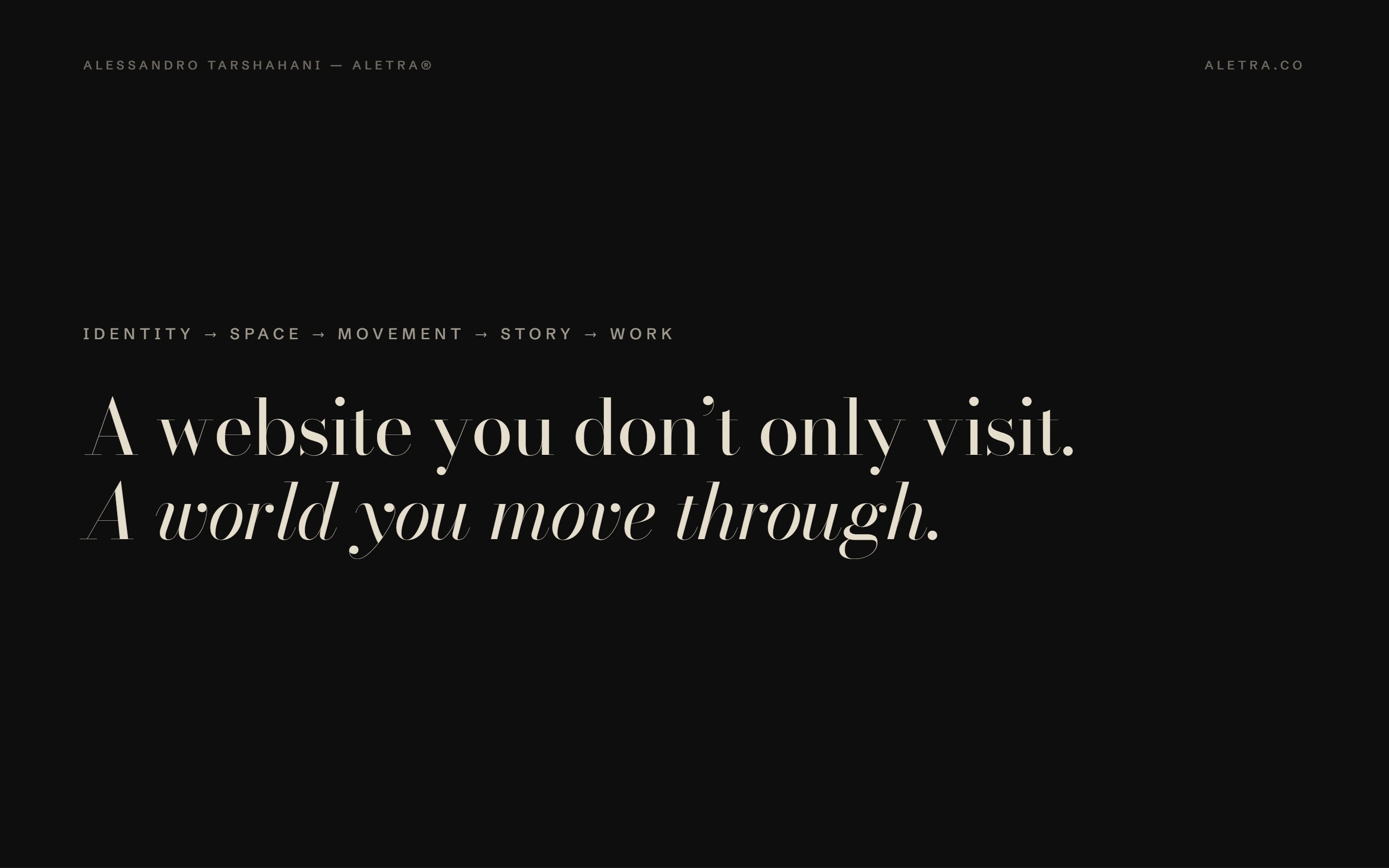
Identity → Space → Movement → Story → Work
Like this project
Posted Sep 15, 2026
ALETRA's new studio website: a spatial world of rooms, architecture, art, sculpture, light and movement — built so the portfolio becomes the experience.
Likes
1
Views
6
Clients
ALETRA