Transform Activation with Edge: Behavioral Design Redefined

Josue Perez


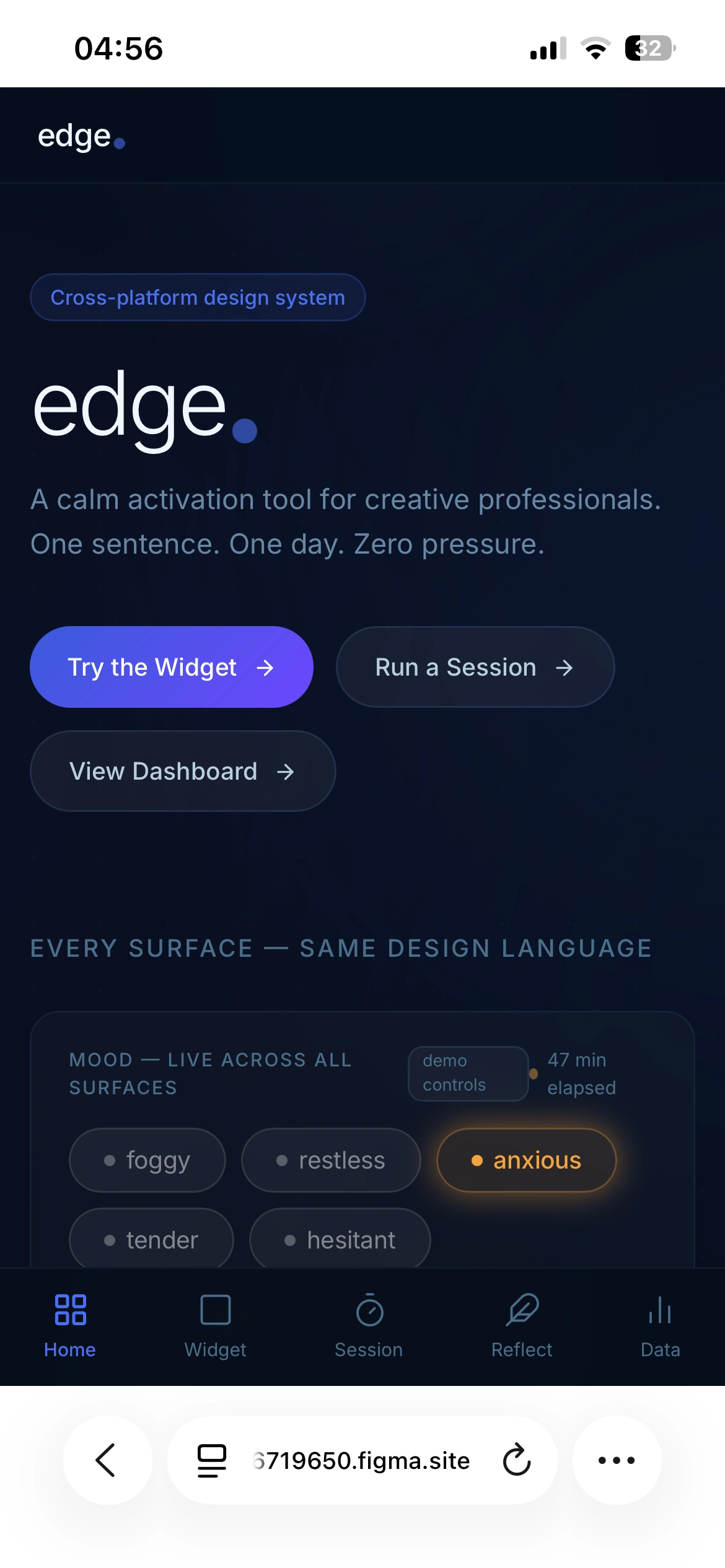
The Problem
We live in a world that treats starting as a willpower problem. Productivity tools pile on streaks, reminders, and gamification, but the real friction isn't discipline. It's the cognitive cost of initiation itself.
Edge was born from a simple question: what if the interface could meet you where you are, instead of demanding you meet it?
The Approach
Edge is a cross-platform activation tool designed to reduce friction at the exact moment of starting. The project explores how behavioral design, systems thinking, and minimal interaction architecture can transform activation from pressure-driven productivity into structured, low-resistance initiation.
Rather than layering motivation on top of friction, the design philosophy structures behavior at the system level. Every decision in the interface traces back to one principle: reduce the distance between intention and action.
Core Design Pillars
Latency-based behavioral logic: The system adapts to the user's response patterns, adjusting interface density and prompt timing based on real interaction latency, not assumptions.
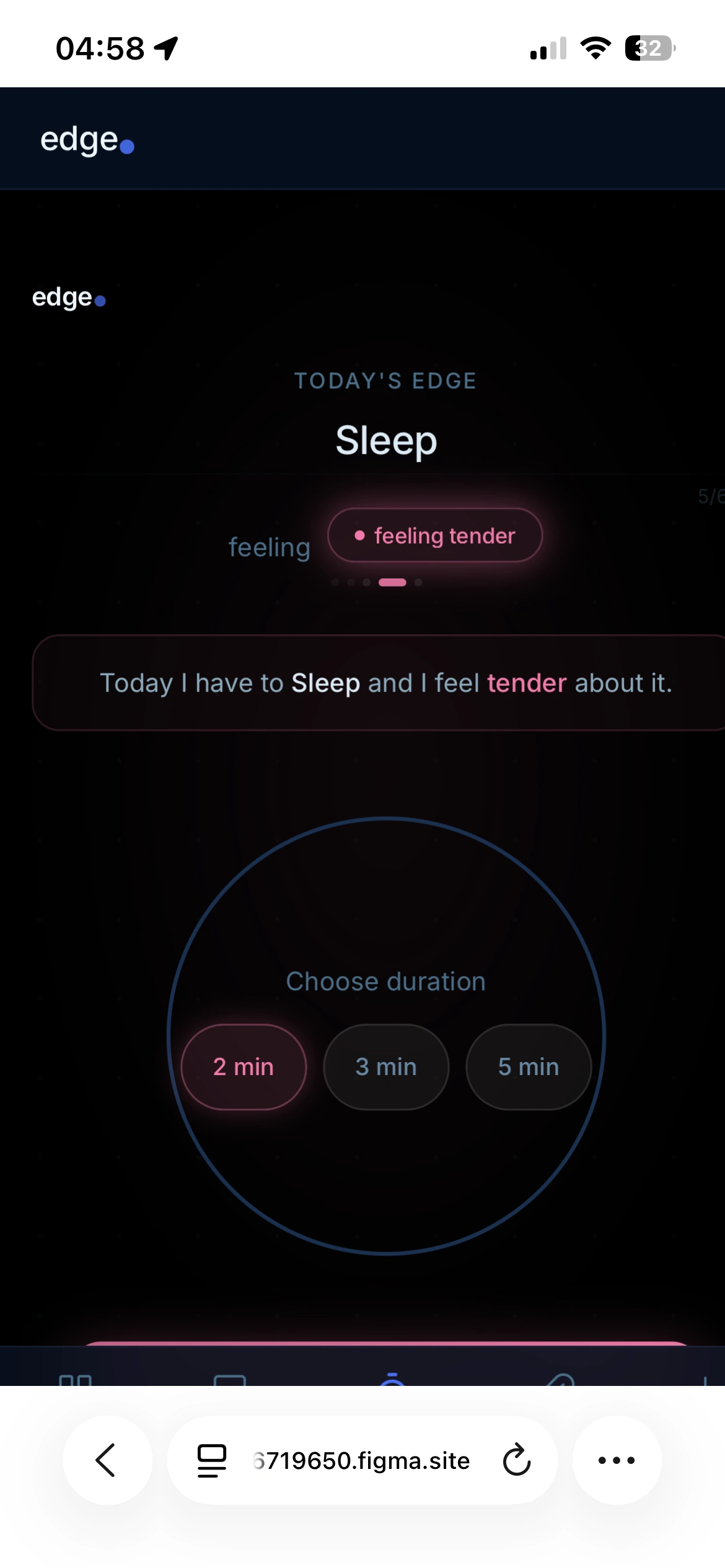
Mood-aware interface states: Instead of a static UI, Edge shifts its visual tone and interaction weight based on contextual signals, creating an environment that feels responsive rather than demanding.
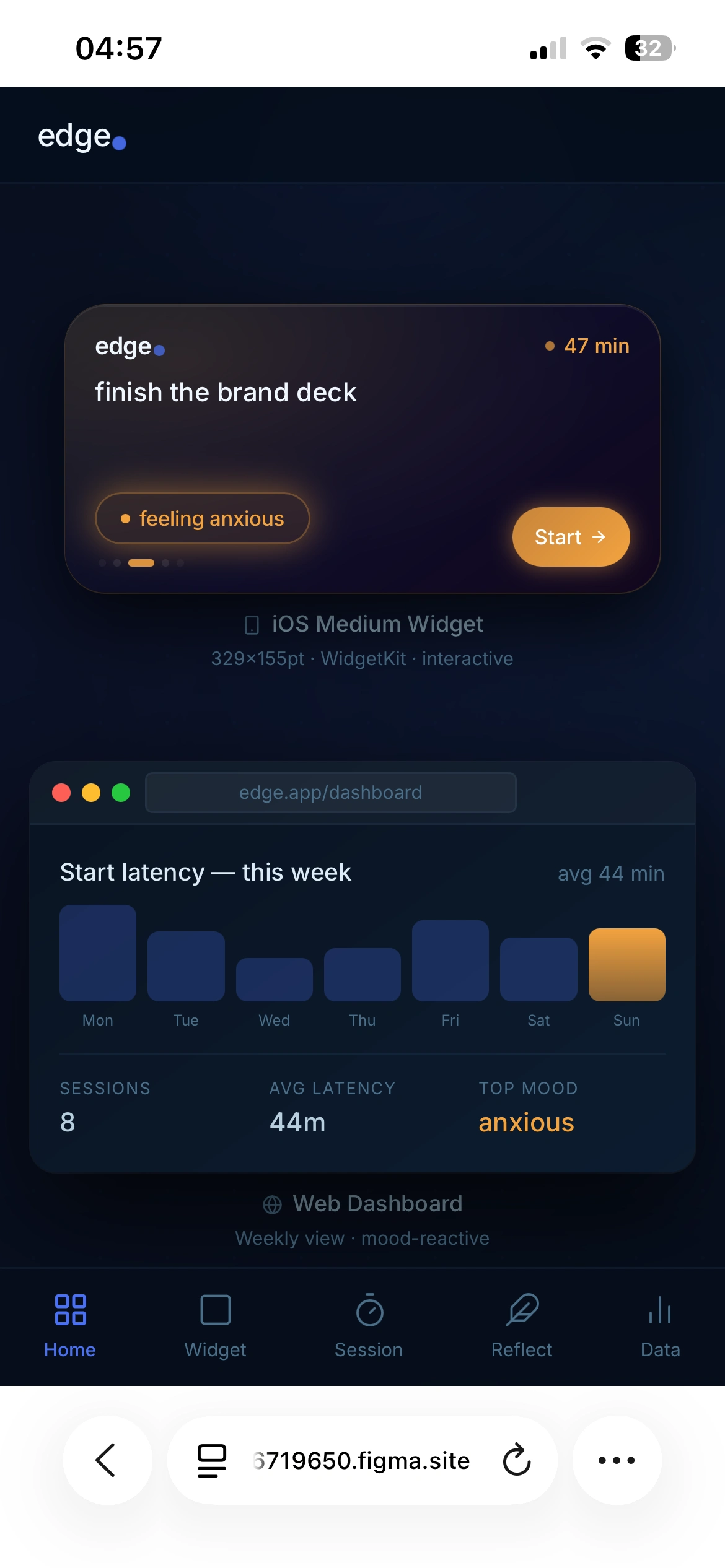
Cross-surface coherence: Desktop widget, web dashboard, and mobile all share the same interaction grammar. Context carries across surfaces without forcing the user to re-orient.
Structured interaction patterns and component logic: Every component follows a consistent behavioral contract, so the system scales without accumulating interaction debt.
Interface Design
The interface system was built in Figma and prototyped in Framer, with generative assets created using Gemini and motion work produced in Runway.
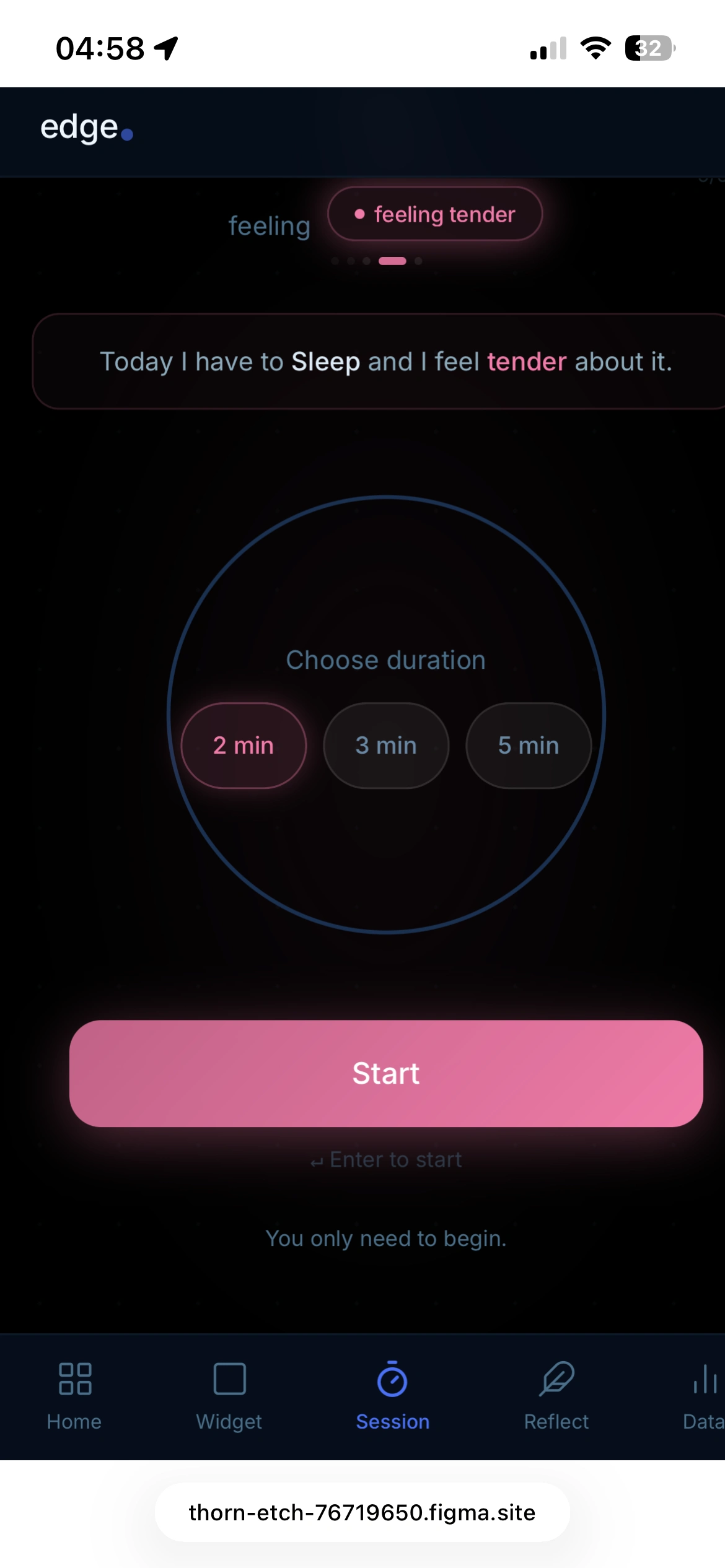
Core activation flow — desktop
Dashboard state — contextual overview
Mood-aware interface state
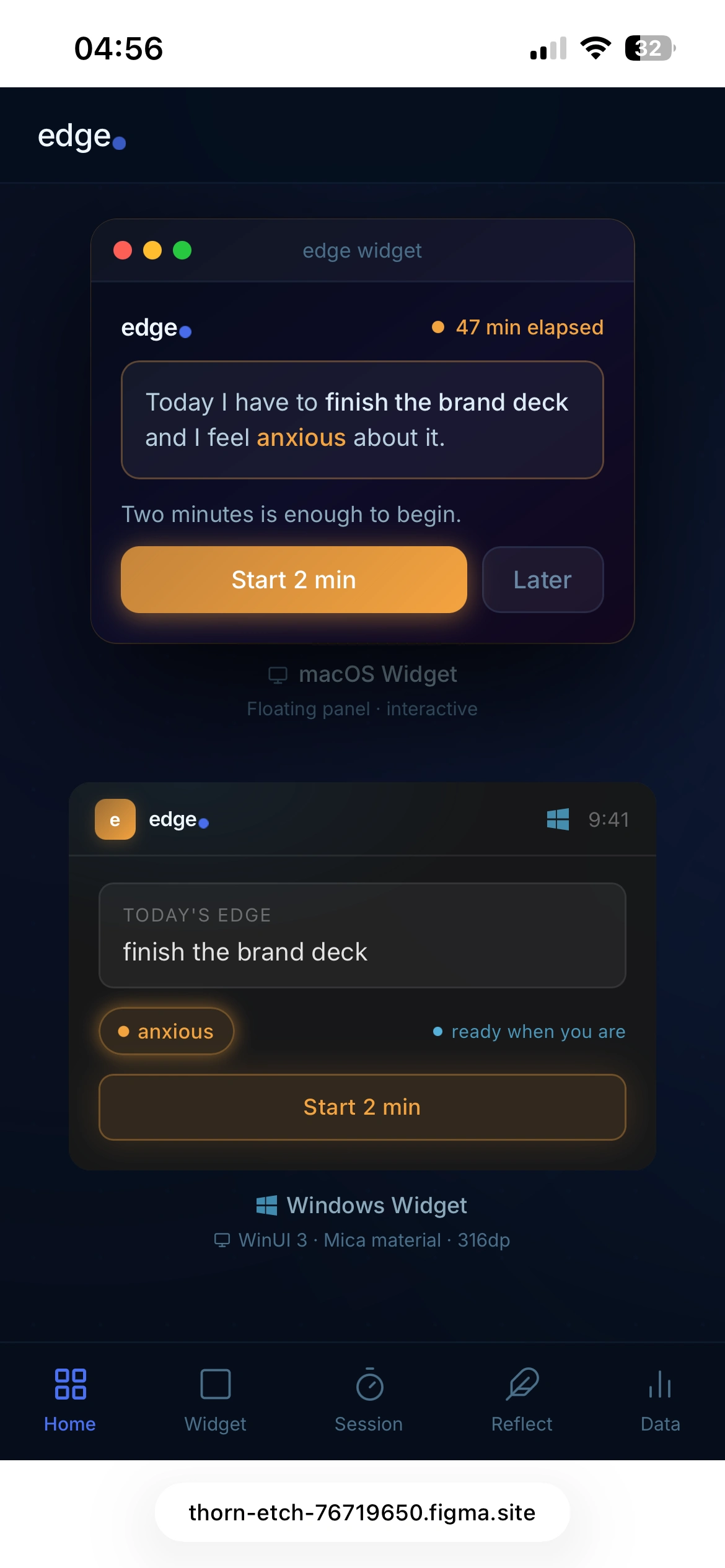
Interaction pattern — structured component logic
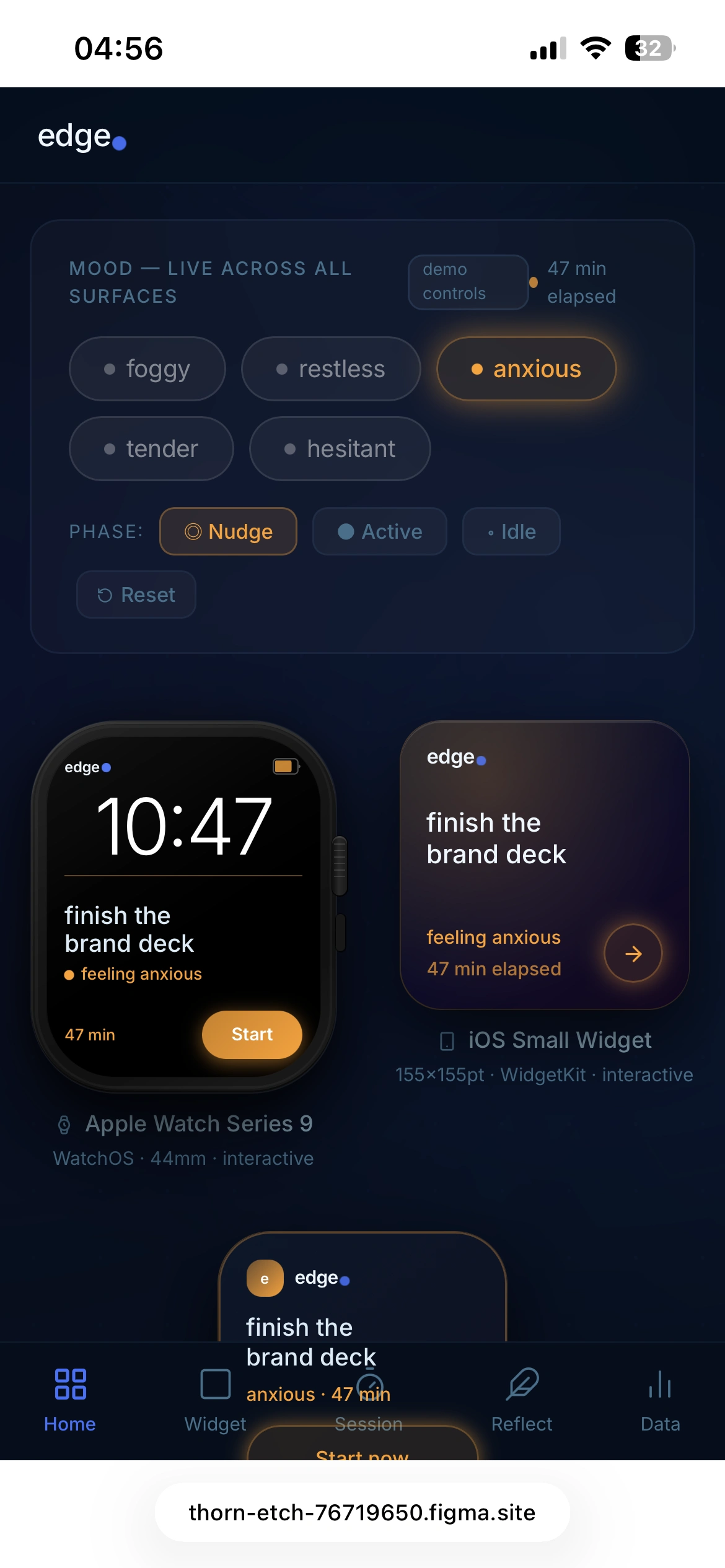
Cross-surface coherence — mobile and widget

Activation flow — behavioral prompt sequence
Motion & Prototype
Edge's interaction model relies on motion to communicate state changes and reduce cognitive load. These videos show the activation flow and generative visual system in action.
The Outcome
Built during a focused design sprint, Edge demonstrates a complete system: core activation flow architecture, latency-based behavioral logic, mood-aware states, cross-surface coherence, and a structured component library.
This project represents my approach to product design: start with the behavioral problem, build the system around it, and let the interface be the quiet result of that thinking.
Like this project
Posted May 18, 2026
Edge is a cross-platform activation tool that uses behavioral design, systems thinking, and minimal interaction architecture to reduce friction at the moment of starting.
Likes
0
Views
2