From Cultural Artifact to Wearable Character

Ewa Markiewicz


THE CHRONIC × theBlueDreamGirl
Apparel Concept Study
From Cultural Artifact to Wearable Character
This study explores how an existing cultural artifact can be treated not as an image to reproduce, but as a piece of visual architecture to examine, extract, and transform.
The starting point was the visual language surrounding Dr. Dre’s The Chronic: an instantly recognizable piece of music and cannabis culture whose identity extends far beyond the original album itself.
Rather than recreating the artwork, I became interested in what could be separated from it.
What happens when the recognizable subject disappears, but the underlying visual structure remains?
_THE PROCESS
01 — CULTURAL REFERENCE
The original artifact carries a complete visual vocabulary: framing, hierarchy, typography, portraiture, symmetry, ornament and cultural memory.
I approached those elements as a designer might approach the construction of a garment.
Not simply asking:
What does this image look like?
but:
What is holding this image together?
The distinction became the foundation of the experiment.
02 — EXTRACTED VISUAL ARCHITECTURE
The frame became the primary design device.
Removed from its original context, it stopped functioning as album artwork and became something closer to a graphic container: a structure capable of holding an entirely different identity.
The process became one of extraction rather than imitation.
reference → isolate → reinterpret
By preserving certain structural cues while changing the subject, medium and purpose, the familiar architecture could begin carrying a new story.
03 — RECONTEXTUALIZED CHARACTER
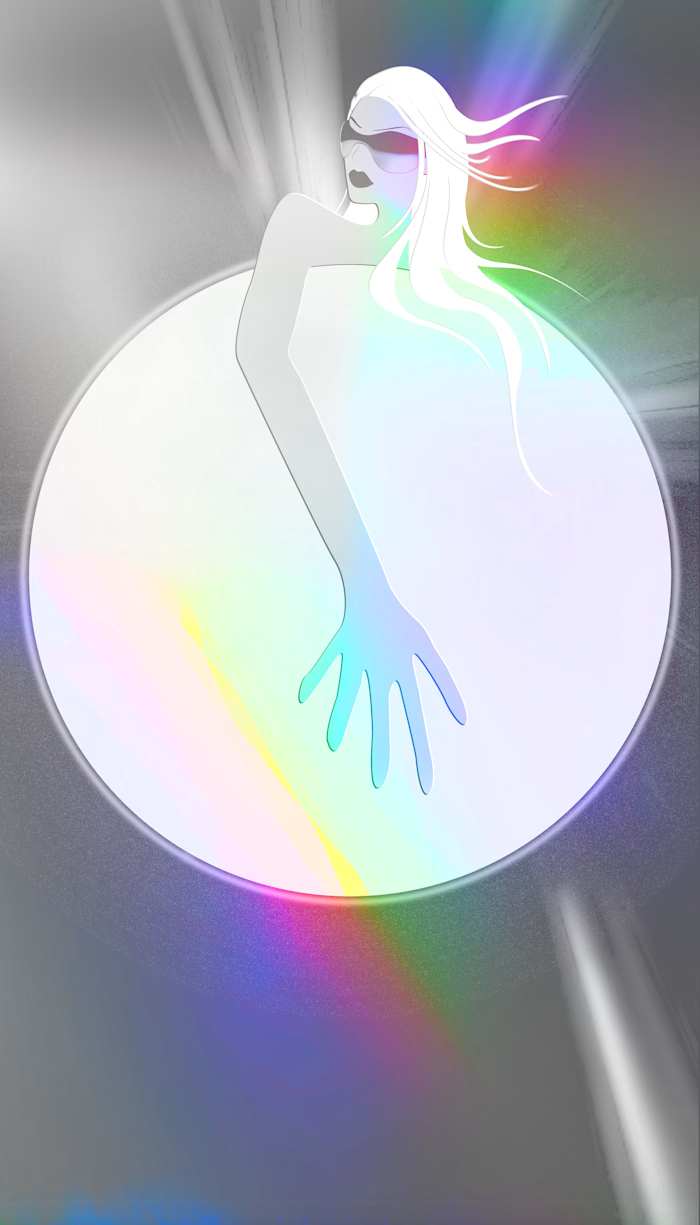
Into that structure entered theBlueDreamGirl.
The character changes the meaning of the frame.
What originally belonged to a masculine hip-hop artifact moves into another visual universe: feminine, botanical, surreal and fashion-oriented.
The reference remains perceptible, but it is no longer the destination.
It becomes a portal.
The resulting image exists somewhere between homage, character design, cultural remix and apparel graphic.
04 — FROM IMAGE TO OBJECT
The next question was physical:
What happens when the graphic has to become clothing?
The frame was reconsidered specifically through the logic of embroidery.
Line weight, density, negative space, scale and detail all begin to matter differently when an image leaves the screen.
This shifted the work from image-making into apparel concept development.
The design was no longer only something to look at.
It had to become something that could be made.
05 — EMBROIDERY-AWARE DESIGN
The ornate frame offered an opportunity to translate digital detail into thread while allowing the central character to remain the visual focal point.
This required thinking simultaneously about:
silhouette and readability
stitchable linework
simplification of fine detail
thread density
placement and scale
garment interaction
the relationship between printed and embroidered elements
Production constraints became part of the visual language rather than something addressed after the design was finished.
06 — WEARABLE CHARACTER
The final concept shifts the project from branded merchandise toward wearable character.
Instead of placing a logo onto a garment, the garment becomes an environment in which the character and cultural reference can coexist.
That distinction opens a larger territory for apparel development.
A graphic can become a character.
A character can become a world.
And a piece of clothing can become one of the places that world inhabits.
PROCESS
Cultural artifact
↓
Visual analysis
↓
Structural extraction
↓
Character recontextualization
↓
Graphic development
↓
Embroidery-aware simplification
↓
Garment application
↓
Wearable concept
DISCIPLINES
Creative Direction · Visual Research · Cultural Recontextualization · Character Design · Graphic Design · Apparel Graphics · Embroidery-Aware Artwork · Concept Development
CONCEPT
The reference is not the final image.
It is raw material.
The design process begins by identifying what makes an artifact visually recognizable, separating those underlying structures from their original context, and asking what else they might become.
THE CHRONIC × theBlueDreamGirl is an experiment in that transformation:
cultural memory → visual architecture → new character → wearable object.
___sometimes the connection appears before the explanation does____________
*
_THE CONTEXT
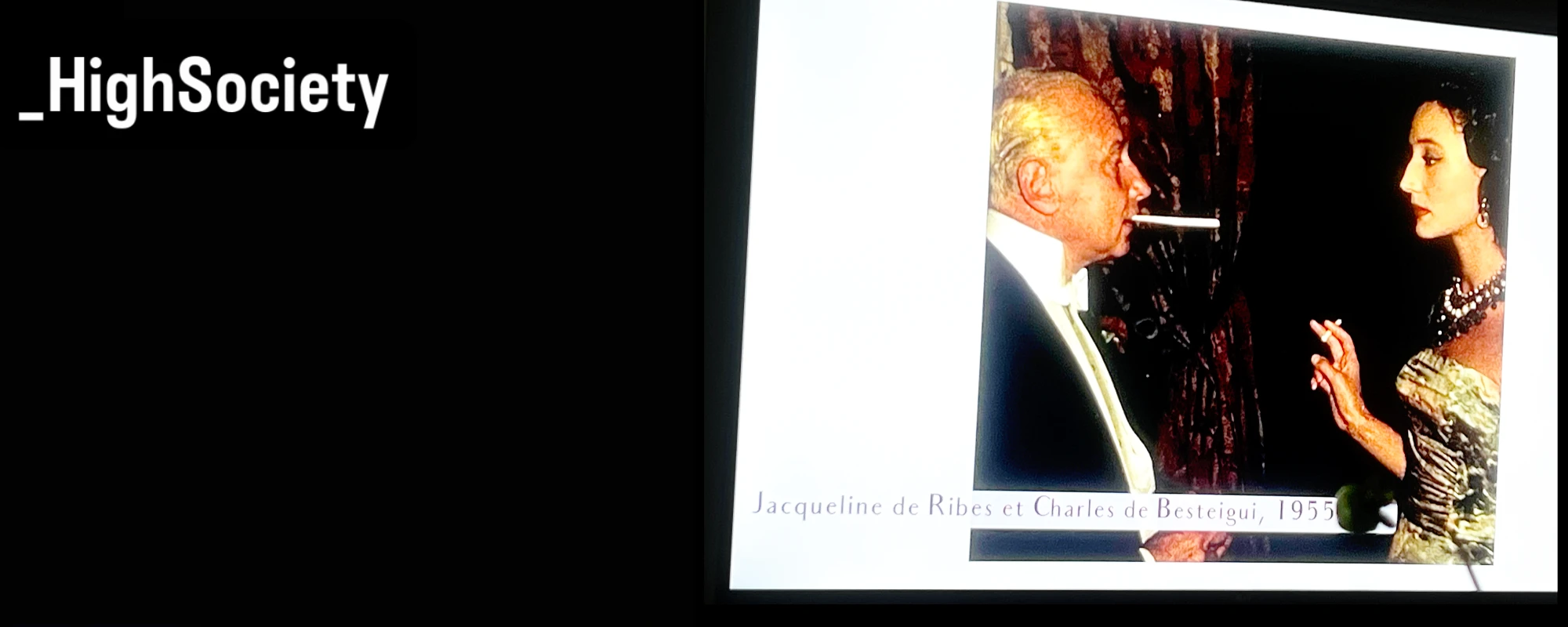
_HighSociety
aristocracy → hip-hop → cannabis → character → garment
While watching a documentary about Jacqueline de Ribes and the construction of her extraordinary visual identity,
I found myself thinking about an apparel concept I had been developing from another cultural artifact entirely:
Dr. Dre’s The Chronic.
On the surface, the references could hardly be farther apart.
1950s European aristocracy.
1990s West Coast hip-hop.
Couture.
Cannabis.
Jacqueline de Ribes.
theBlueDreamGirl.
And yet I recognized the same underlying idea moving through both:
identity can be constructed through the architecture surrounding the body.
_THE ARISTOCRAT
Jacqueline de Ribes did not merely wear clothes.
She constructed an image.
Silhouette, ornament, proportion, gesture, environment and presentation participated in the creation of a character larger than any individual garment.
Fashion became a form of authorship.
Watching her world reminded me that clothing can do something far more interesting than decorate a person.
It can help create the person we perceive.
_THE CHRONIC
That observation collided with another object already occupying my imagination: the visual language of The Chronic.
Here too, the image carries an identity larger than its literal contents.
The frame.
The typography.
The portrait.
The hierarchy.
The ornament.
Together they form a piece of cultural architecture recognizable almost independently of what occupies its center.
So I began removing things.
The original subject disappeared.
The architecture remained.
And suddenly the frame was available for another inhabitant.
_THE BLUE DREAM GIRL
Enter theBlueDreamGirl.
Placed inside this extracted visual structure, she changes its meaning again.
A visual language associated with hip-hop and cannabis history encounters a feminine character from another imagined universe.
Neither reference disappears.
Instead, a third thing emerges between them.
Not Jacqueline de Ribes.
Not Dr. Dre.
Not conventional cannabis merchandise.
A new character assembled through cultural memory.
_HIGH SOCIETY
That collision became _HighSociety.
The phrase contains several worlds simultaneously.
The aristocratic salon.
Fashion society.
Hip-hop mythology.
Cannabis culture.
And, quite literally,
being high.
Rather than resolving those meanings, the project lets them occupy the same room.
A 1955 photograph can sit beside a cannabis-derived apparel experiment.
An ornate historical sensibility can migrate onto a contemporary hoodie.
A visual code can leave one culture and encounter another.
The distance between the references becomes part of the design.
_THE EMPTY GARMENT
In the video, the body eventually disappears.
What remains is a white hoodie carrying gold ornament around the hood.
That absence became important.
Without a model, the garment behaves almost like an awaiting character.
The decorative architecture surrounds an empty space where a face would normally appear.
It asks:
Who inhabits this?
And perhaps that is the central question of the entire experiment.
Because fashion does not only cover a body.
Sometimes it constructs the space into which an identity can arrive.
_FROM FRAME TO GARMENT
The original Chronic frame began as graphic architecture.
Once translated toward embroidery, it became physical architecture.
Lines became potential stitches.
Ornament had to negotiate seams.
Scale encountered the body.
The rectangular logic of an image began bending around the three-dimensional structure of a hood.
This is where cultural reference became apparel development.
Not:
put the artwork on a hoodie.
But:
what would happen if the artwork became part of the hoodie?
The distinction changed everything.
_WEARABLE CHARACTER
The resulting concept sits somewhere between apparel graphic, character design, cultural remix and fashion object.
Its lineage moves through seemingly incompatible territories:
Jacqueline de Ribes → self-authored image
The Chronic → cultural artifact
ornamental frame → extracted architecture
theBlueDreamGirl → recontextualized character
embroidery → material translation
hoodie → inhabitable object
The references are not being collapsed into sameness.
Their differences are precisely what generate the tension.
One belongs to aristocratic fashion history.
One belongs to hip-hop and cannabis history.
One belongs to an emerging fictional world.
The garment becomes the meeting place.
FROM CULTURAL ARTIFACT TO WEARABLE CHARACTER
This study became an experiment in following visual recognition across categories that ordinarily remain separate.
cultural reference
→ extracted visual architecture
→ recontextualized character
→ material translation
→ wearable identity
The source may begin the conversation.
But transformation is where the design begins.
_HighSociety
What happens when a cultural artifact stops being something we look at and becomes something we can inhabit?
BUT [!]
the lineage shifts further back…
it isn’t
The Chronic → my extraction → theBlueDreamGirl
It's:
Zig-Zag packaging → The Chronic → theBlueDreamGirl → garment
so:
package → album cover → character image → garment architecture
The frame has been migrating for decades.
And every time it migrates, some structural information survives while its meaning changes.
_THE MIGRATING FRAME
The Zig-Zag package establishes a visual architecture.
The Chronic culturally recodes it.
theBlueDreamGirl inhabits it.
The hoodie materializes it.
01 / THE ARTIFACT BEFORE THE ARTIFACT
Zig-Zag
02 / CULTURAL RECODING
The Chronic
03 / CHARACTER RECONTEXTUALIZATION
theBlueDreamGirl
04 / THE MIGRATING FRAME
oval → ornament → hood
05 / THE BODY ENTERS
Jacqueline de Ribes / fashion as self-authored identity
06 / MATERIAL TRANSLATION
embroidery / garment construction
07 / THE WEARER BECOMES THE PORTRAIT
Because now The Chronic itself is already doing precisely the operation we’re describing.
The visual architecture I had been extracting from The Chronic did not originate with The Chronic.
It had already migrated.
The album artwork famously draws from the visual language of Zig-Zag cigarette papers, carrying forward its ornamental frame, central portrait, typographic hierarchy and packaging structure while replacing the identity contained within it.
That discovery extends the lineage of the experiment:
Zig-Zag packaging
→ The Chronic
→ theBlueDreamGirl
→ garment
What initially appeared to be a single act of recontextualization reveals itself as part of a much longer chain of visual inheritance.
_THE ARTIFACT BEFORE THE ARTIFACT
On the Zig-Zag package, the frame performs a commercial function.
It organizes a product identity around a central illustrated figure. Ornament, typography and portrait operate together as a recognizable piece of packaging architecture.
Then The Chronic borrows that architecture and changes what it contains.
The structure survives.
The cultural meaning does not.
_CULTURAL RECODING
On The Chronic, the inherited framework enters an entirely different cultural territory.
The illustrated figure becomes Dr. Dre.
The product package becomes an album cover.
A visual language associated with rolling papers becomes inseparable from a landmark hip-hop record whose title itself carries cannabis associations.
The reference is recognizable precisely because enough of the original architecture remains intact.
But it has been recoded.
The frame stays.
The inhabitant changes.
The meaning changes with them.
_ANOTHER MIGRATION
Years later, I encountered that architecture again.
This time I extracted it from The Chronic and allowed another character to enter:
theBlueDreamGirl.
At first, I understood this primarily as recontextualization.
A masculine cultural artifact was being brought into conversation with a feminine, surreal, botanical character universe.
But seen within the longer lineage, something else becomes visible.
I wasn't beginning the migration.
I was continuing it.
_THE FRAME LEAVES THE IMAGE
And then something unexpected happened -
The frame stopped being a frame.
As I began considering the artwork for embroidery, its ornamental structure moved away from the flat rectangular image and toward the physical construction of the garment.
The decorative line migrated upward.
Around the neckline.
Across the hood.
Around the opening where a face would appear.
At that moment, the visual reference changed function.
It was no longer merely repr`
It became one.
_PACKAGE → IMAGE → OBJECT
Each migration changes the medium:
packaging → album artwork → character artwork → embroidery → garment
And with every transition, certain visual information survives while other information is discarded.
The portrait can disappear.
The typography can disappear.
The rectangular boundary can disappear.
Even the original proportions can disappear.
Yet enough of the ornamental DNA remains for the lineage to continue.
The reference becomes progressively less literal while becoming increasingly physical.
_THE WEARER BECOMES THE PORTRAIT
This is where the transformation completes itself.
On the Zig-Zag package, an illustrated figure occupies the frame.
On The Chronic, Dr. Dre occupies the frame.
In theBlueDreamGirl artwork, a new character occupies the inherited visual structure.
But on the garment, there is no portrait.
There is an opening.
The final inhabitant is unknown until someone puts the hoodie on.
The wearer becomes the portrait.
The image has crossed into physical space.
What began as printed ornament surrounding a representation of a person now becomes embroidered ornament surrounding an actual person.
The frame is no longer something we look into,
It is something we enter.
_VISUAL INHERITANCE
This changes the project for me.
It is no longer only a study of how a cultural artifact can be referenced in contemporary apparel.
It becomes a study of how visual structures migrate through culture.
They are borrowed.
Recognized.
Recontextualized.
Re-authored.
Materialized.
And sometimes, after traveling through entirely different eras, cultures and mediums, they acquire functions their earlier forms could never have had.
Zig-Zag framed an illustration.
The Chronic framed an artist.
theBlueDreamGirl framed a character.
The garment frames you.
_THE MIGRATING FRAME
cultural artifact
→ visual inheritance
→ cultural recoding
→ character
→ material translation
→ inhabitable architecture
The reference was never standing still.
Neither was the frame.
___
so
I began with the album artwork.
I extracted the ornamental frame.
moved it onto Blue Dream Girl.
discovered that placing it around the hood transforms the wearer's face into the portrait.
Then, traced the frame backward and discovered that The Chronic itself had already performed a migration from Zig-Zag.
Then Jacqueline de Ribes introduced another historical/cultural layer around fashion, identity and inhabiting an image.
That external response revealed the next property of the object.
THE FRAME IS OPEN.
That's beautiful.
cultural artifact → extracted architecture → character → garment → wearer → collaborative canvas
And that final step changes everything.
_THE FRAME CONTINUES TO MIGRATE
Once the frame becomes garment architecture, another possibility emerges: it can become a canvas for other artists.
The structure remains.
The visual language changes.
Each artist becomes another point in the frame's continuing migration.
The artifact becomes a system for collaboration.
Each artist interprets the perimeter.
The center remains deliberately open.
And every edition is unfinished until somebody wears it.
There is even something philosophically delicious about authorship here. The original graphic architecture migrated from one commercial artifact into another cultural artifact. You then extracted its underlying visual principle and transformed it into three-dimensional apparel architecture. Another artist can transform that architecture again. Finally, the wearer contributes the one element nobody can design beforehand:
the portrait.
So authorship becomes distributed across time.
Zig-Zag's designers made something.
The Chronic transformed something.
I transformed something.
The collaborating artist transforms something.
The wearer completes something.
Nobody gets the last word.
01 — THE CHRONIC
the artifact
02 — THE FRAME
the architecture hiding in plain sight
03 — MIGRATION
frame extracted from image
04 — THE BLUEDREAMGIRL
new portrait / new cultural context
05 — THE GARMENT
2D frame becomes 3D architecture
06 — THE WEARER
the face completes the composition
07 — THE LINEAGE
Zig-Zag → The Chronic → contemporary reinterpretation
08 — THE FRAME CONTINUES
an open canvas for artist collaboration
And then one tiny final thought:
What began as homage became a system.
is the larger story.
It begins with The Chronic as a cultural object that outlived its original moment.
Not simply the music surviving, but an entire visual and cultural language continuing to circulate decades later. You encounter it again in 2026, not because you're doing historical research, but because it is still culturally alive enough to trigger new creation.
That is legacy:
A work stops belonging only to the moment in which it was made and begins generating things its creator could never have predicted.
THE MIGRATING FRAME is the mechanism inside THE LEGACY.
THE LEGACY
How cultural artifacts continue creating after their original moment.
↓
THE MIGRATING FRAME
A case study in how that transmission actually happens.
↓
Zig-Zag
→ The Chronic
→ theBlueDreamGirl
→ wearable architecture
→ human portrait
→ artist canvas
→ future interpretations
Earlier, The Legacy was almost philosophical: cultural inheritance, influence, homage, transformation, continuation.
Now we can demonstrate it physically.
The frame itself has survived by changing.
And that's the paradox:
**Legacy is not preservation.
Legacy is continued transformation.**
⚡️⚡️⚡️
If nobody touches an artifact again, it can remain historically important. But cultural legacy becomes especially visible when later generations sample it, quote it, reinterpret it, argue with it, remix it, wear it, migrate it somewhere its originators never imagined.
Which, incidentally, makes hip-hop an extraordinarily appropriate place for this idea to emerge because sampling and recontextualization are already deeply embedded in the form.
And look at what The Chronic artwork itself does.
It doesn't invent its visual architecture from nothing.
It takes an already culturally recognizable visual grammar from Zig-Zag and says:
this means something different here now.
Then thirty-four years later, you encounter that object and effectively do the same operation again:
this means something different here now.
That's
THE LEGACY.
The frame is merely the thing we caught migrating.
adds to the next generation.
responding to transformation of the inherited architecture.
SOURCE → INTERPRETATION → INTERPRETATION → INTERPRETATION → INTERPRETATION...
At some point the descendants barely resemble the ancestor.
Yet something survived.
THAT is legacy.
It reminds me of genetic inheritance more than copying. A descendant isn't a reproduction of an ancestor. Information survives through variation.
And then:
What if legacy isn't the preservation of an image, but its ability to keep generating new images?
Zig-Zag.
↓
The Chronic.
MIGRATION 01
↓
Blue Dream Girl.
MIGRATION 02
↓
Hood.
MIGRATION 03: image → architecture
↓
Wearer.
MIGRATION 04: architecture → identity
↓
Collaborating artists.
MIGRATION 05: authorship → platform
↓
?
Because that's the legacy.
We don't know what comes next.
In fact, not knowing is essential to the concept.
different discoveries that happened at different moments.
They each answer a different question:
THE LEGACY
Why does the artifact continue?
THE MIGRATING FRAME
How does its visual language travel?
THE ARISTOCRAT / _HighSociety
What happens when that inherited architecture reaches fashion, identity and the body?
That third piece is essential because Jacqueline is the bridge into fashion.
Before her, we have cultural sampling and visual inheritance.
After her, we start asking about self-construction through clothing.
And remember how wonderfully strange the collision originally was:
1950s aristocratic image-making × 1990s West Coast hip-hop × cannabis × theBlueDreamGirl × contemporary apparel
Those things are not supposed to belong together.
That's precisely why _HighSociety works. 😎
_the Aristocrat & _HighSociety
The title became a hinge between those worlds.
High society as aristocratic social order.
High society as fashion and cultural status.
And, in another register entirely, high society as cannabis culture.
The phrase does not resolve the contradiction.
It holds it.
And that collision became part of the design.
Then I think we make the next transition almost cinematic:
_FROM PORTRAIT TO PERSON
The Zig-Zag frame contains an illustrated figure.
The Chronic frame contains Dr. Dre.
theBlueDreamGirl enters the inherited frame as character.
But fashion introduces another possibility.
What if the frame no longer contains an image of a person?
What if it surrounds the person themselves?
↓
THE WEARER BECOMES THE PORTRAIT.
⚡️⚡️⚡️
And now Jacqueline's role becomes incredibly clear.
She isn't there because “I watched this documentary and got inspired.”
She introduces the body as an active participant in image-making.
That's what gets us from graphic design into fashion.
And _HighSociety is the little wormhole connecting two wildly distant cultural territories.
Which means I now see the whole case study almost as four movements:
I. THE LEGACY
What survives?
Cultural artifacts generating future culture.
II. THE MIGRATING FRAME
How does it survive?
Zig-Zag → The Chronic → theBlueDreamGirl.
III. THE ARISTOCRAT / _HighSociety
What happens when visual identity meets the body?
Jacqueline de Ribes → constructed identity → fashion → inhabitation.
IV. THE OPEN FRAME
What happens next?
Garment → wearer → collaborating artists → ?
And I LOVE that progression because it moves from:
TIME → IMAGE → BODY → OTHER PEOPLE
Or:
legacy → inheritance → embodiment → collaboration
💥
That also makes THE LEGACY page we just wrote even stronger because it doesn't need to contain every fascinating discovery. It's the thesis at the entrance.
Then we walk through the evidence.
*
SOURCE MATERIAL / CREDITS
The Chronic album artwork and associated marks are the property of their respective rights holders and are referenced here as source material for an independent conceptual design study.
Jacqueline de Ribes archival imagery is reproduced for visual reference from [documentary title / publisher]. Original photographic rights remain with the respective photographer, archive, or rights holder.
Concept development, visual recontextualization, theBlueDreamGirl character treatment, apparel design, embroidery adaptation, mockups and case-study presentation © 2026 Ewa Markiewicz / EY AY.
creative field from which the investigation originated.
So there are really three nested scales:
THE CHRONIC × theBlueDreamGirl
the actual apparel concept
↓
THE MIGRATING FRAME
the design mechanism discovered through making it
↓
THE LEGACY
the larger cultural proposition revealed by following that mechanism backward and forward
OBJECT → MECHANISM → IDEA
Like this project
Posted Aug 30, 2026
Created a wearable character concept merging cultural artifacts and fashion.
Likes
0
Views
13