Onemed

Zach Bello


OneMed is a product concept designed to unify healthcare systems across Nigeria by centralizing patient data, streamlining hospital operations, and integrating AI-assisted medical support.
Nigeria’s healthcare system is extensive but highly fragmented. While thousands of hospitals and clinics operate across the country, the lack of connected infrastructure continues to limit the quality and speed of care delivery. This fragmentation creates everyday challenges for both patients and healthcare providers, shaping the foundation of this project.
The Problem
Disconnected patient records across hospitals
Manual referrals slowing down care
Limited patient access to medical history
Little to no real-time insight into hospital capacity during emergencies
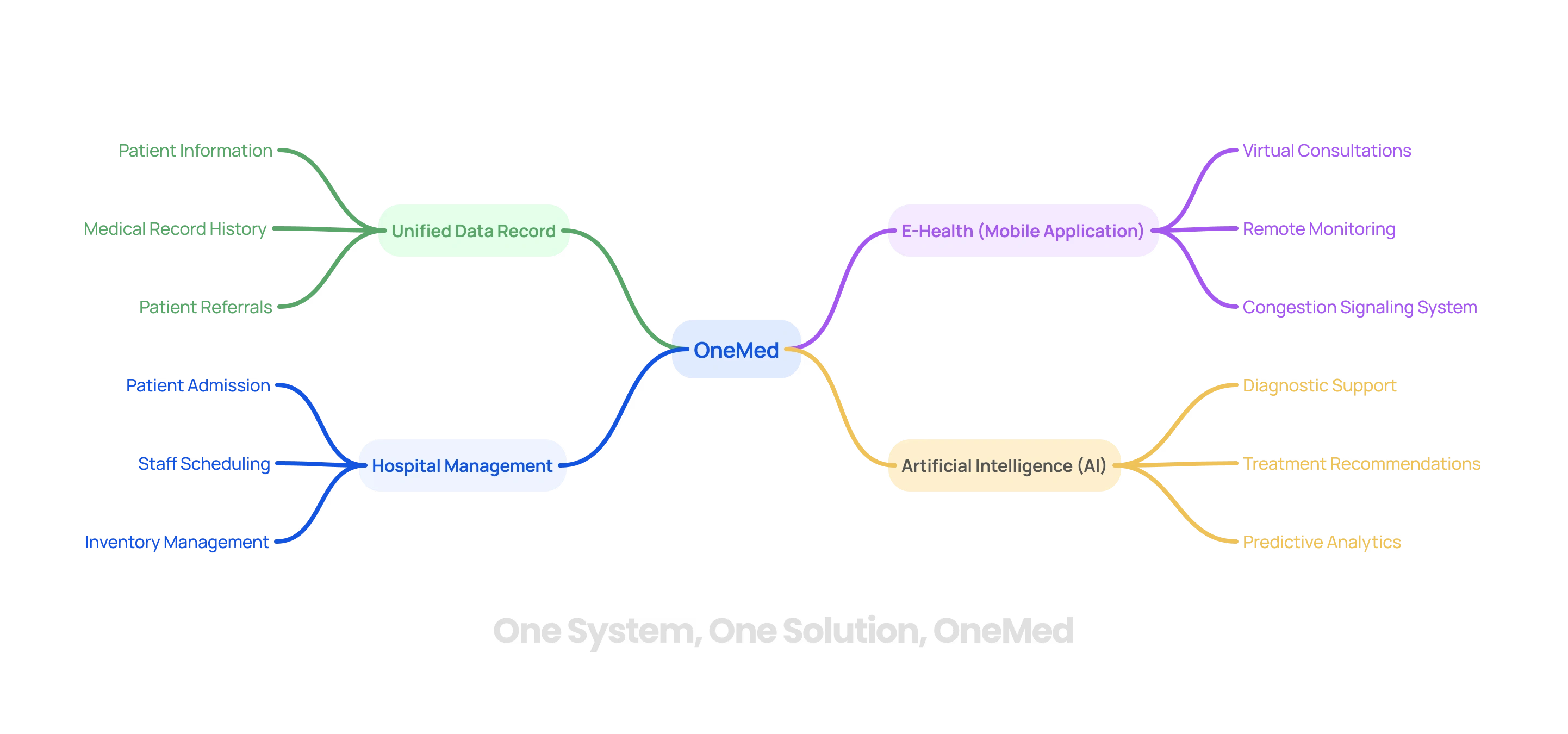
One System, One Solution, OneMed
The Challenge
Design a scalable and intuitive system that balances usability, accessibility, and data security across multiple user groups including healthcare professionals, administrators, and patients.

Design Approach
To address this, the solution was approached as a connected system rather than a single interface. The design was structured across three key layers:
Operational Layer.
Data Layer.
Experience Layer. Each layer plays a distinct role, but together they form a unified healthcare ecosystem.
Each layer plays a distinct role, but together they form a unified healthcare ecosystem.
1. Hospital Dashboard (Operational)
At the core of hospital operations is visibility. The hospital dashboard was designed to provide a real-time overview of activities, including patient management, staff coordination, and resource tracking.
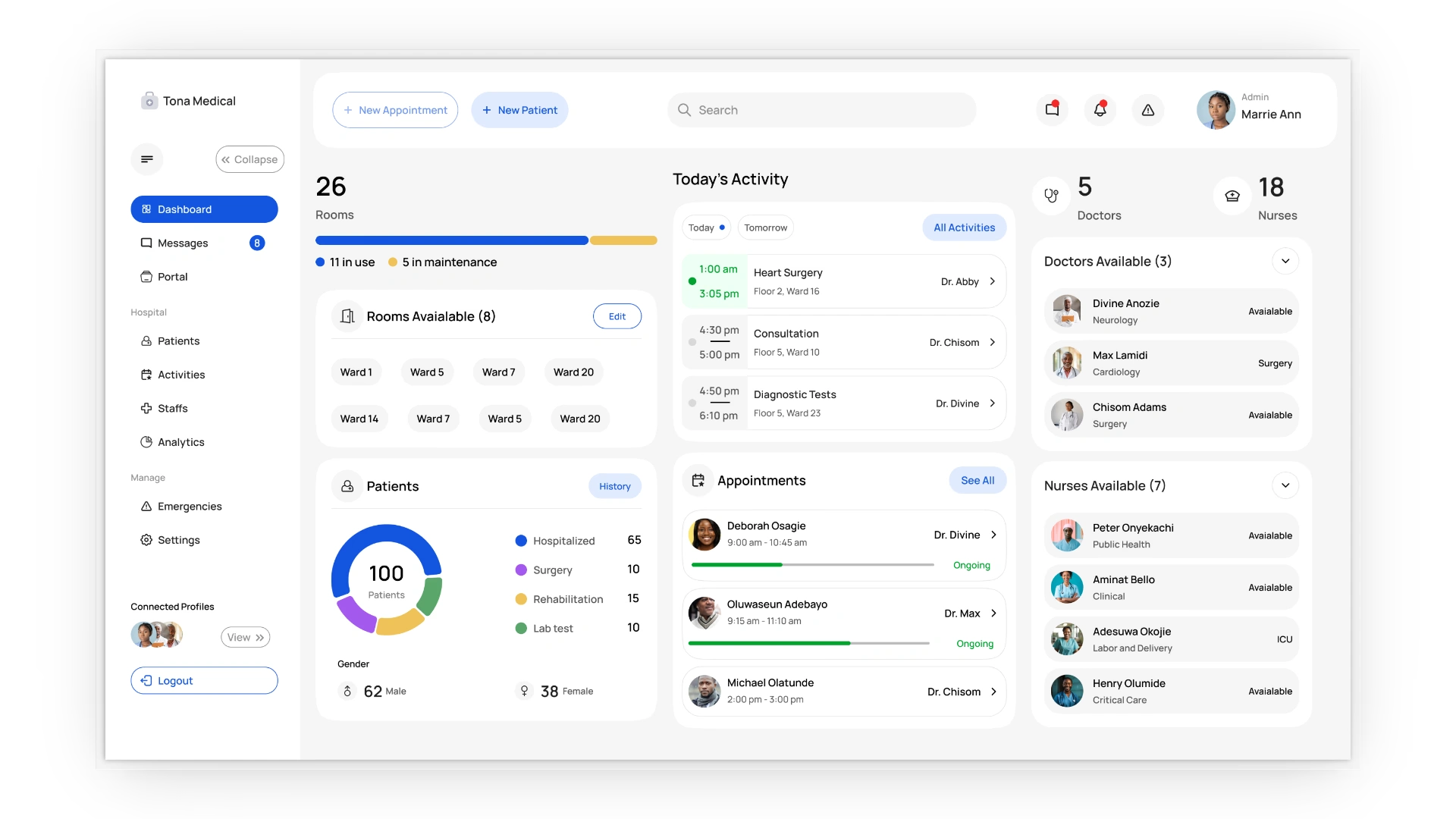
Hospital Dashboard
To further support critical moments, the system integrates an alert mechanism for emergencies, helping hospitals anticipate and respond to urgent care situations more effectively.
Recognizing the complexity of hospital workflows, OneMed also introduces a multi-account system for authorized healthcare professionals. With role-based access, doctors and front desk staff each have tailored views, ensuring that every user interacts with information relevant to their responsibilities while maintaining a unified system.
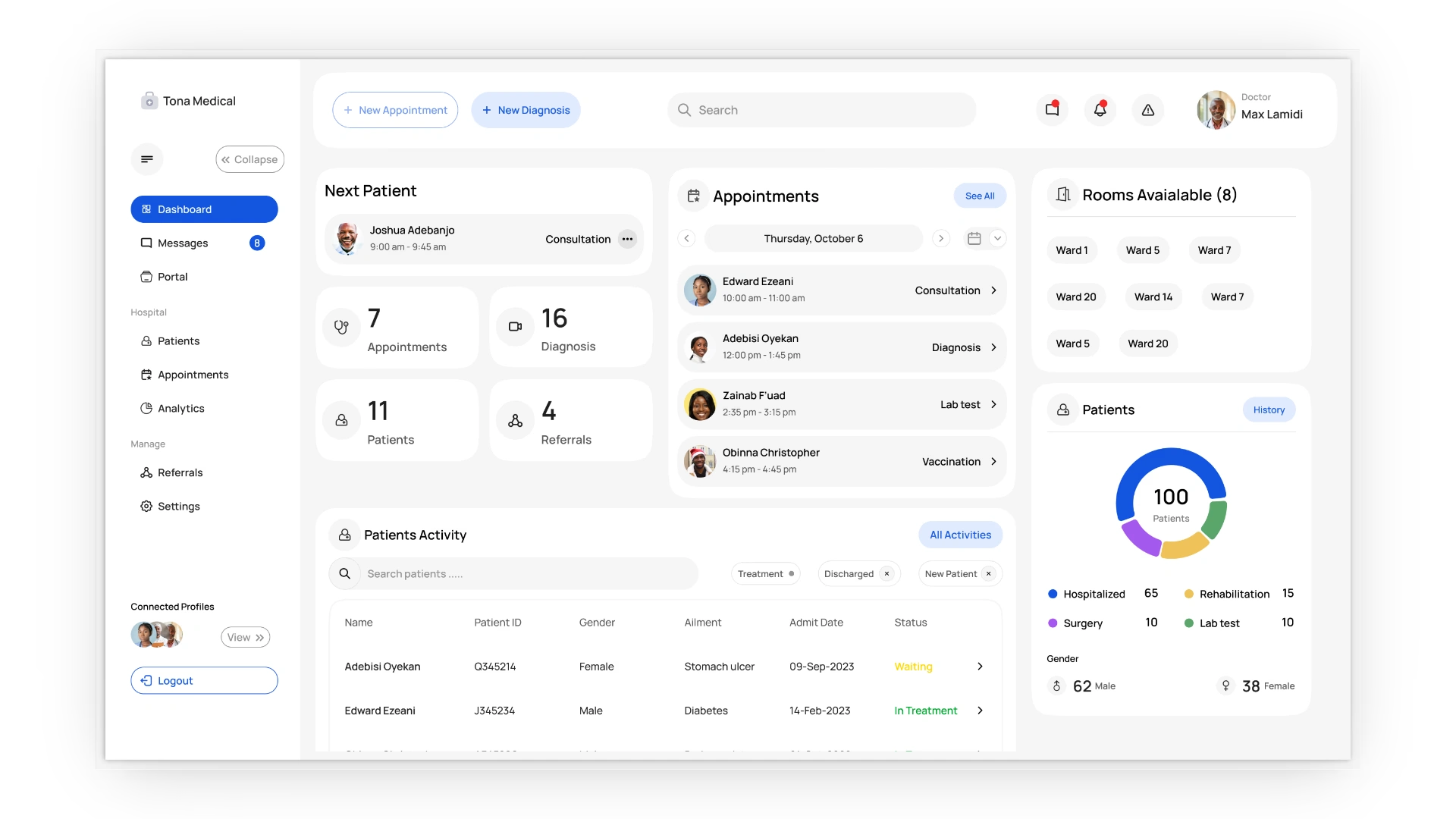
Components
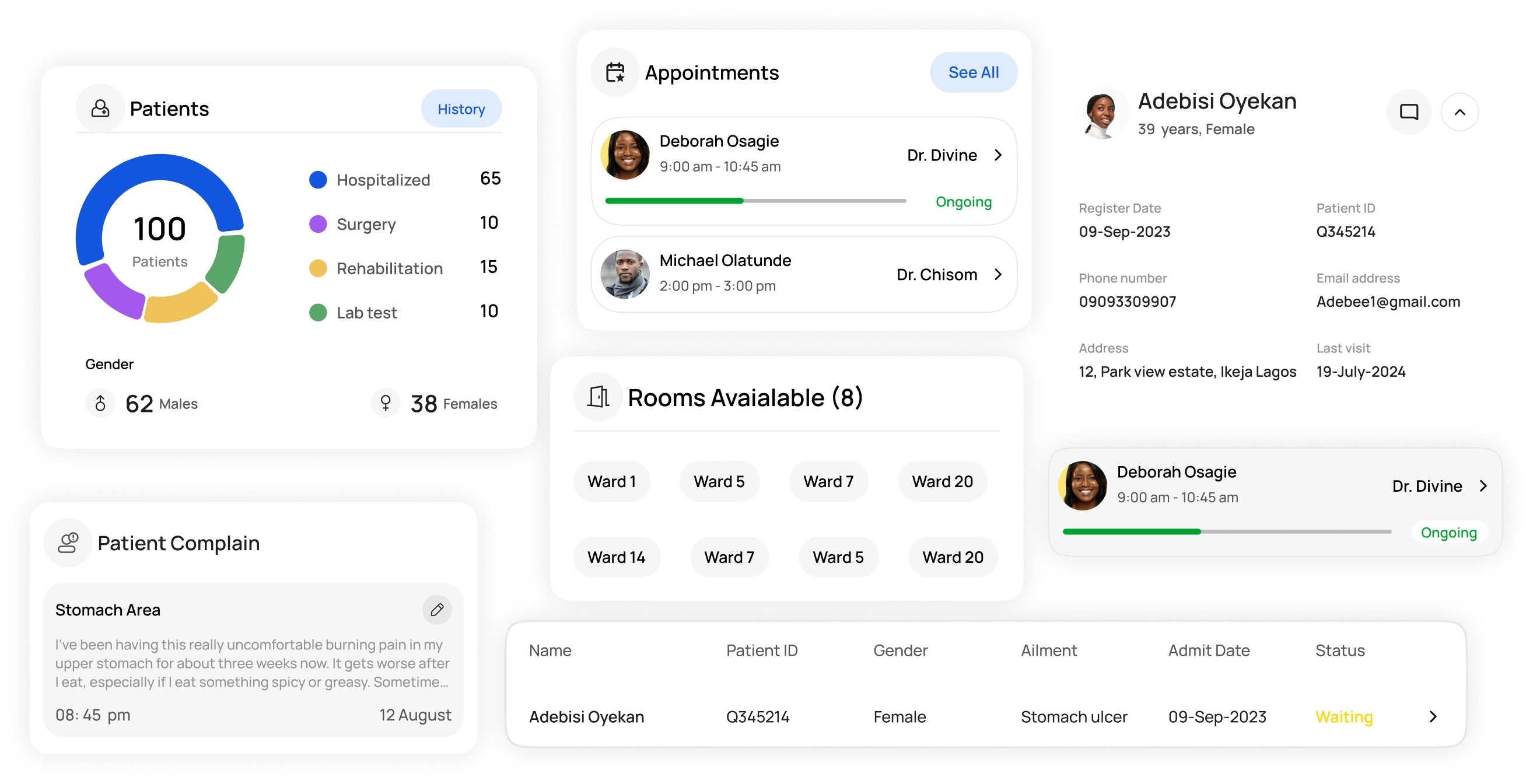
Components
2. Unified Records (Data)
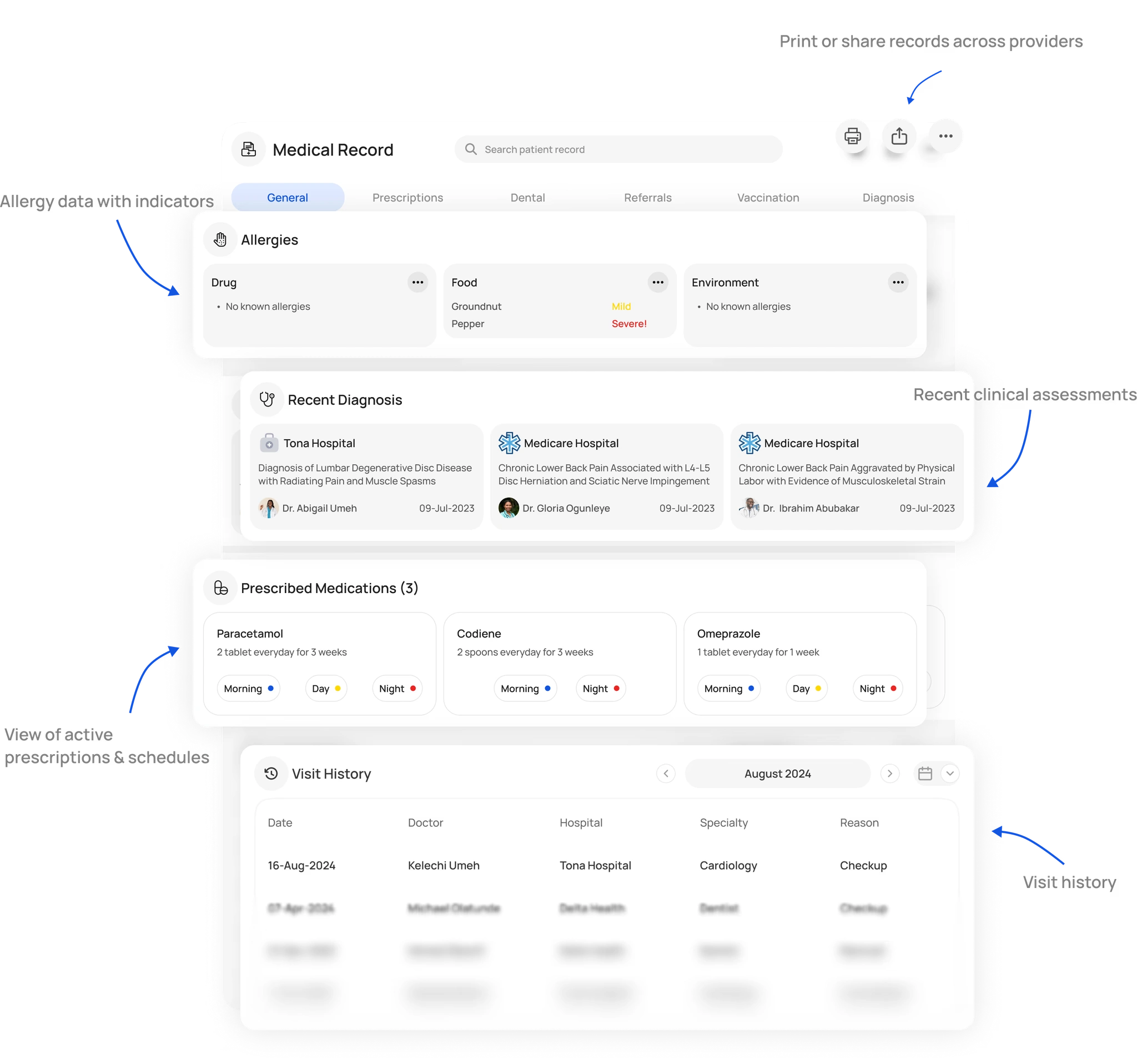
The unified records system serves as a shared data infrastructure, allowing authorized healthcare providers to access patient records across different facilities. This eliminates redundant processes and ensures that medical decisions are informed by complete and up-to-date information.
Medical Record Overview
3. AI-Driven Medical Assistance (Experience)
Building on this data foundation, the experience layer introduces intelligence into the system.
I introduced an AI-powered diagnosis feature that supports and generate treatment recommendations, assisting medical professionals in making faster and more informed decisions.
Connected Care Experience
Grounded in real-world challenges, the design prioritizes accessibility and engagement, with two additional features introduced to improve care continuity and patient participation.
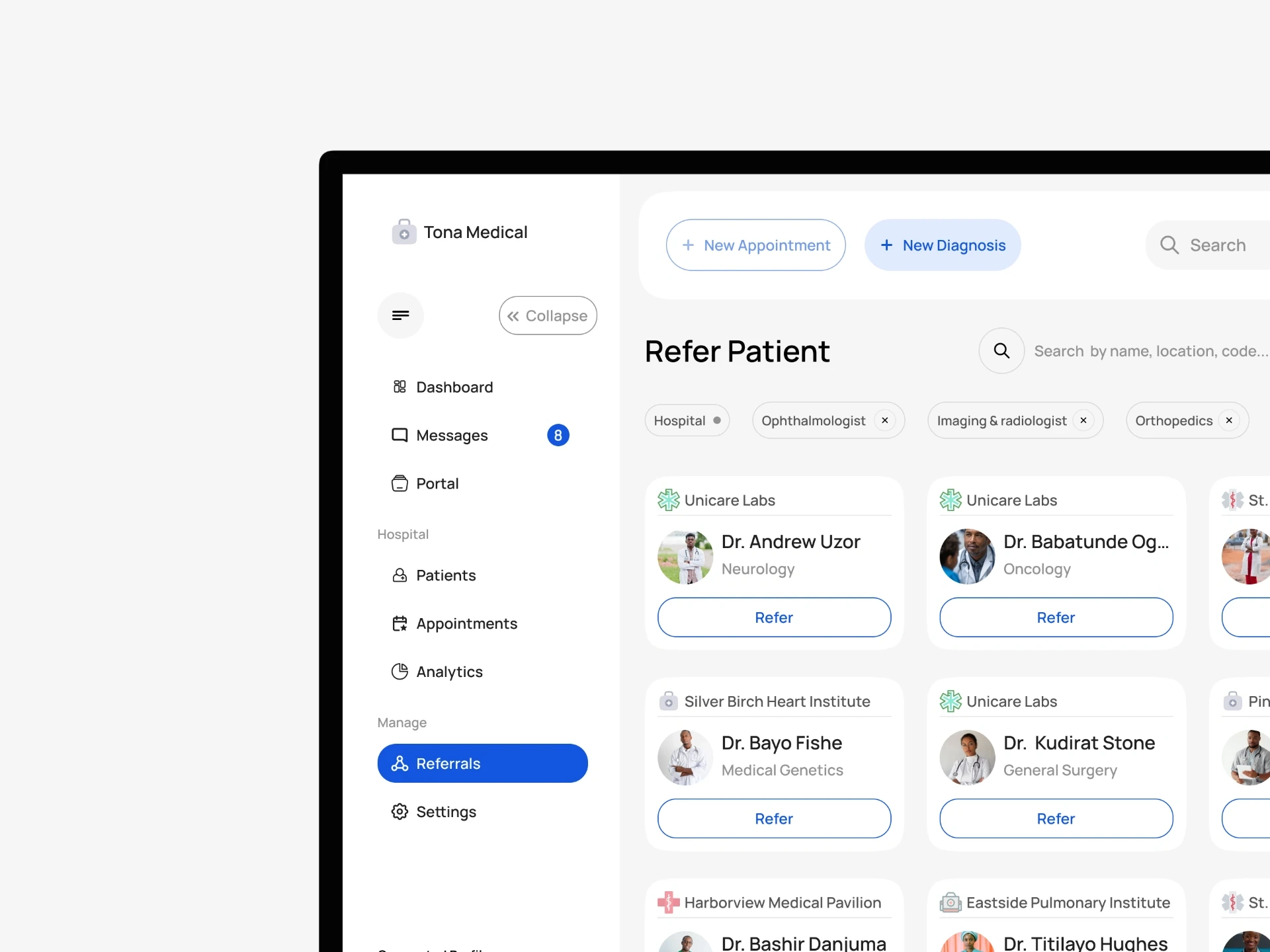
Patient Referral System
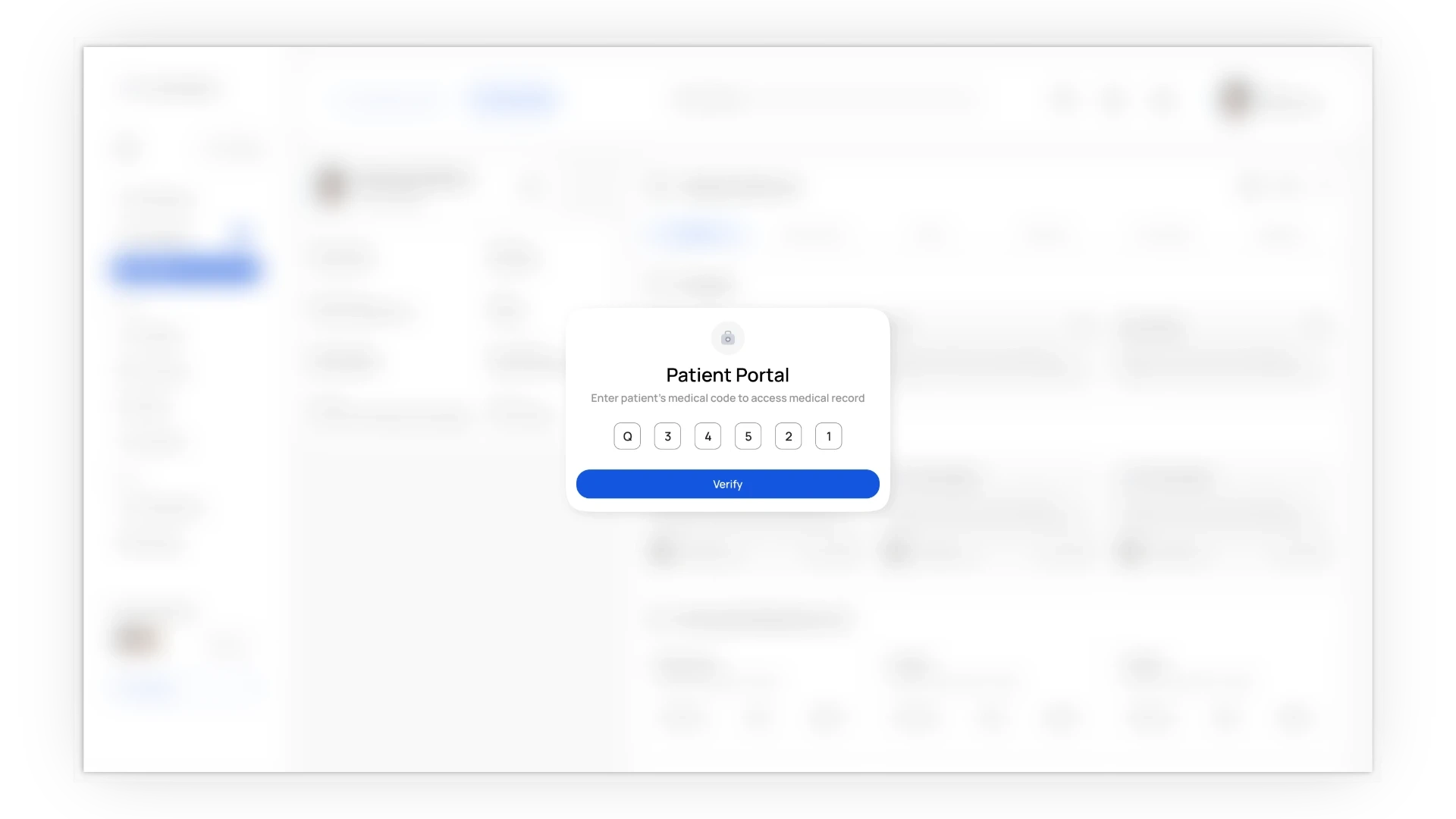
Patient Portal
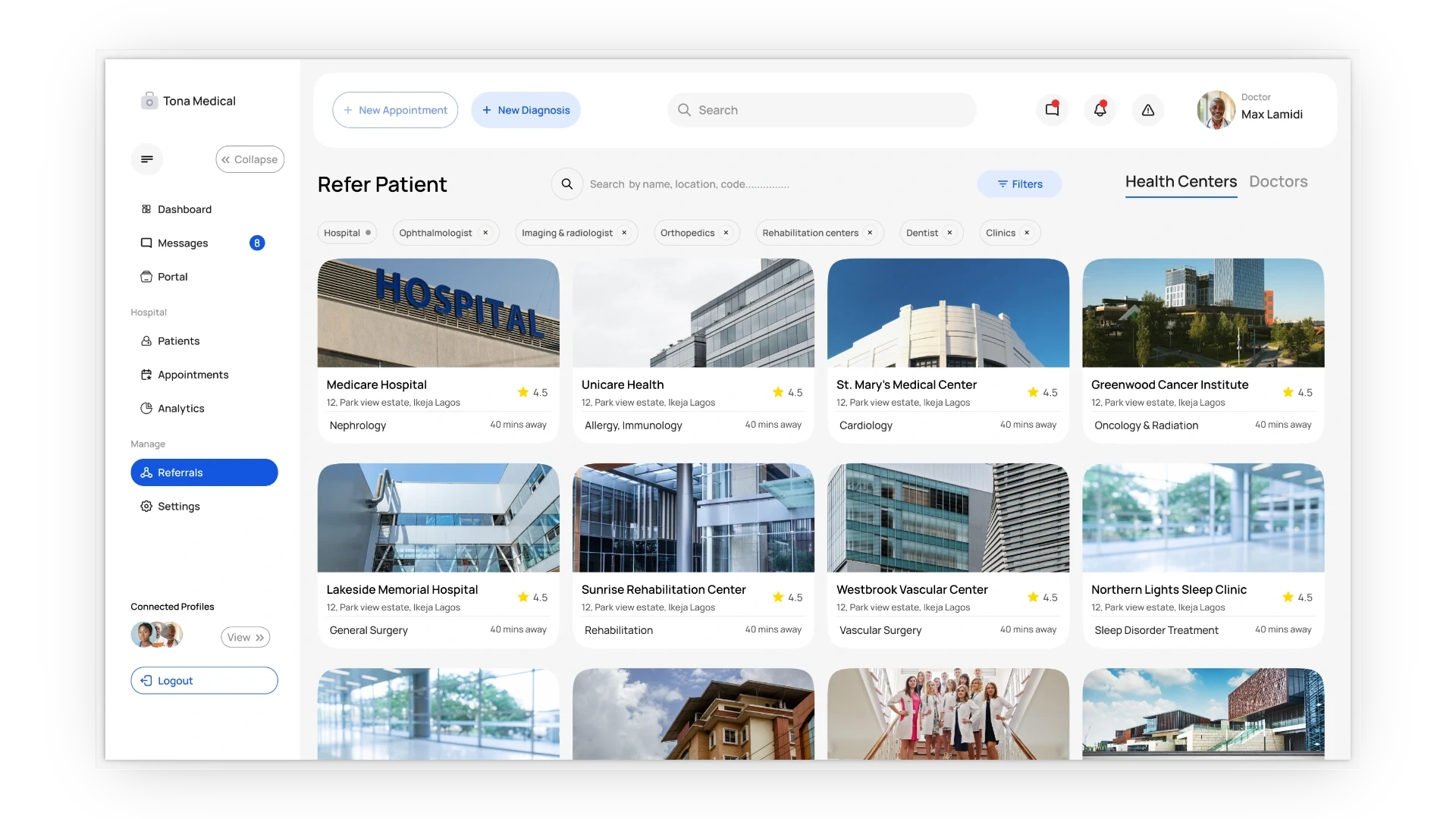
1. Patient Referral System
A seamless digital referral system replaces manual processes, enabling faster and more efficient patient transfers between healthcare facilities.
2. Patient Portal
A secure and accessible interface that empowers patients to view and manage their medical records, encouraging active participation in their healthcare journey.
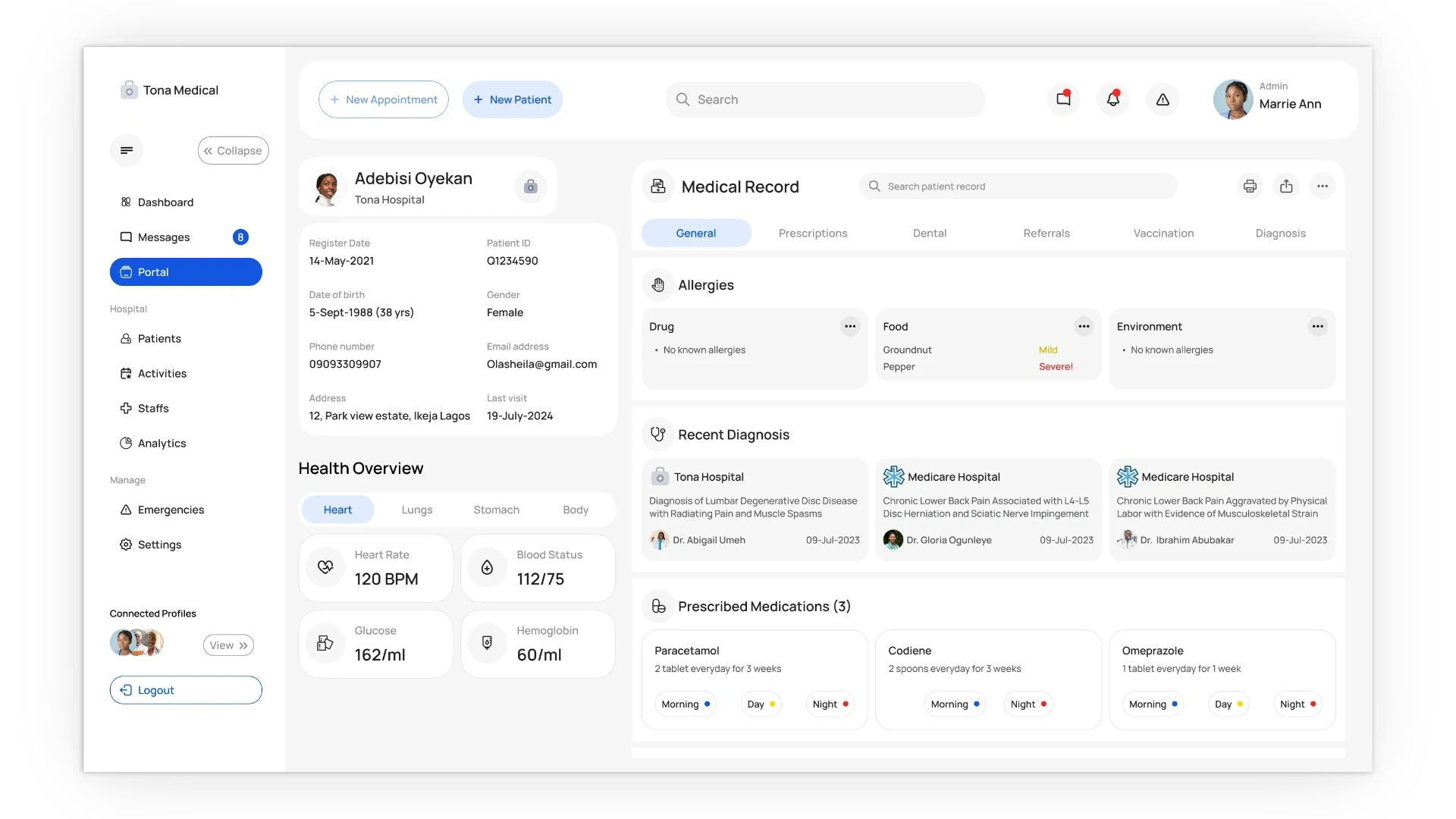
The interface maintains structural familiarity with the doctor’s dashboard while removing clinical complexity. By focusing only on relevant and understandable information, the experience remains clear, accessible, and user-friendly.
Concept Goal
The goal of OneMed is to deliver a unified healthcare solution that improves both patient experience and hospital operations, enabling faster decision-making, seamless data access, and efficient care delivery across the healthcare ecosystem in Nigeria.
Like this project
Posted Jul 2, 2026
A product concept designed to unify healthcare systems by centralizing patient data, streamlining hospital operations & integrating AI-assisted medical support.
Likes
0
Views
8