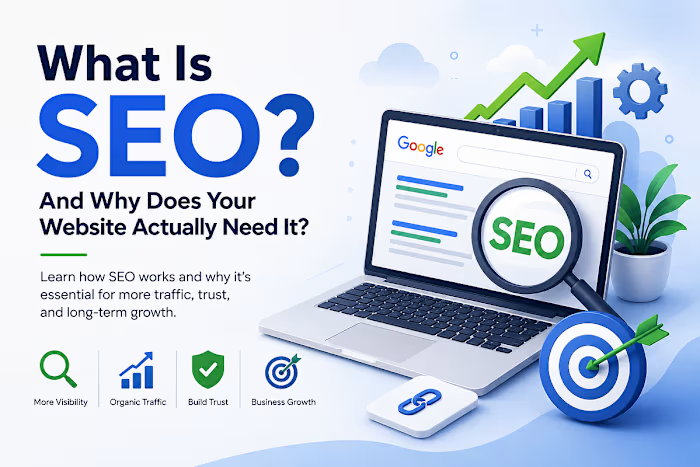
On-Page SEO Checklist: Optimize Blog Posts for Google 2026

Zaib-un-Nisa Nawaz


On-Page SEO Checklist: Optimize Blog Posts for Google 2026
A practical step-by-step checklist to optimize your blog posts for search visibility, better user experience, and sustainable organic traffic.
11 min read
·
Aug 11, 2026
--
Share
Press enter or click to view image in full size
Image designed by Usman Nawaz with AI assistance.
Introduction
Publishing a blog post is only the first step. Getting it found, understood, and clicked is where on-page SEO starts to matter.
Even a well-written article can struggle to attract organic traffic if its topic, structure, search intent, and on-page elements are not properly aligned.
That is where an effective SEO checklist comes in.
On-page SEO is not about inserting a keyword into every paragraph or writing specifically for search engines. It is about helping search engines understand your content while making the page genuinely useful for the people reading it.
In 2026, that means paying attention to more than keywords. Search intent, content quality, page structure, internal links, titles, readability, and the overall user experience all play a role in creating a stronger page.
This guide walks through a practical on-page SEO process you can use before publishing almost any blog post.
1. Start With Search Intent
Before optimizing a blog post, understand what the searcher actually wants.
Search intent is the reason behind a search query. Someone searching for “how to optimize a blog post” probably wants instructions, while someone searching for “best SEO tools” may be comparing different products.
If your content does not satisfy the underlying intent, even strong SEO optimization may not be enough to make the page useful.
For example, someone searching “how to optimize a blog post” is probably looking for a step-by-step guide. A product page or sales-focused landing page would not satisfy that intent as well because the searcher is looking for information, not necessarily ready to buy.
● The Four Common Types of Search Intent
Press enter or click to view image in full size
Image designed by Usman Nawaz with AI assistance.
Informational:
The user wants to learn something.
Examples:
what is on-page SEO
how does keyword research work
what is search intent
Navigational:
The user is looking for a particular website, brand, or page.
Commercial investigation:
The user is researching options before making a decision.
Examples:
best SEO tools
Ahrefs vs Semrush
best website SEO services
Transactional:
The user is ready to take an action, such as buying, subscribing, or hiring a service.
● How to Match Search Intent
Before writing, search your target keyword and study the pages currently appearing prominently in the results.
Look for patterns:
What topics do the ranking pages cover?
Are they guides, lists, comparisons, or product pages?
How detailed are they?
What questions do they answer?
What information appears repeatedly?
You do not need to copy competing pages.
Instead, use them to understand what searchers are likely expecting and then create something more useful, clearer, or more complete.
A useful approach is to look for the common expectations across several ranking pages, then identify what they leave unanswered. That gap can become an opportunity to make your article more practical, clearer, or more useful than the existing results.
2. Choose One Primary Keyword
Every blog post should have a clear primary topic.
For this article, the primary keyword is:
SEO checklist
Your primary keyword gives the article a central theme and helps keep the content focused.
Press enter or click to view image in full size
Image designed by Usman Nawaz with AI assistance.
However, a keyword should not become a writing constraint.
Avoid forcing the exact phrase into every heading or paragraph. Search engines can understand related terms and the broader meaning of a page.
● Use Secondary Keywords Naturally
Secondary keywords can help cover related aspects of the main topic.
For this article, they include:
on-page SEO
blog SEO
SEO optimization
SEO tips
website SEO
search intent
Use these phrases where they make sense.
For example, a section discussing title tags can naturally mention on-page SEO, while a section about optimizing an entire website can use website SEO.
The goal is topical coverage, not keyword repetition.
A simple test is to read the paragraph without focusing on the keyword. If the wording still sounds natural, the keyword is probably being used appropriately. If the sentence feels written mainly to include a phrase, rewrite it for the reader first.
3. Write a Clear, Search-Friendly Title
Your title is one of the first things users see in search results.
It should explain what the article offers without becoming overly complicated.
For example:
On-Page SEO Checklist: Optimize Blog Posts for Google 2026
The title immediately communicates:
the subject: on-page SEO
the format: checklist
the purpose: optimizing blog posts
the timeframe: 2026
● Keep the Title Relevant to the Page
Do not create a title simply because it contains a popular keyword.
The article should deliver what the title promises.
A strong title should do more than include a keyword. It should set the right expectation, communicate the page’s value, and make the reader understand what they will get after clicking.
If your title says “SEO Checklist,” readers should actually receive a practical checklist they can follow.
This alignment helps create a better experience from search result to article.
4. Create a Strong Introduction
The introduction should quickly answer three questions:
What is this article about?
Why does the reader need it?
What will they learn?
Avoid spending several paragraphs discussing general SEO history before getting to the point.
A stronger introduction identifies the reader’s problem and explains how the article will solve it.
For example, instead of starting with a long explanation of SEO, you can tell the reader exactly what they will learn: how to align search intent, choose a primary keyword, structure headings, optimize URLs and metadata, improve internal linking, and review the page before publishing.
Then explain what the checklist covers.
This gives the reader a reason to continue.
5. Optimize Your Heading Structure
A clear heading structure makes long articles easier to scan.
Use one main H1 for the article title and organize the rest of the content with logical H2 and H3 headings.
For example:
H1: On-Page SEO Checklist: Optimize Blog Posts for Google 2026
H2: Start With Search Intent
H2: Choose One Primary Keyword
H2: Write a Clear, Search-Friendly Title
H3: Keep the Title Relevant to the Page
H2: Create a Strong Introduction
The structure should make sense even if someone only reads the headings.
Press enter or click to view image in full size
Image designed by Usman Nawaz with AI assistance.
● Write Headings for People First
Do not turn every heading into an awkward keyword phrase.
Instead of:
SEO Optimization SEO Checklist Blog SEO Tips
write:
How to Optimize Your Blog Post for Search Intent
Natural headings are easier to read and provide clearer context.
6. Write Useful Content That Satisfies the Query
Good blog SEO starts with the content itself.
No technical optimization can compensate for an article that does not answer the reader’s question.
Before publishing, ask:
Does the article answer the main question?
Does it provide practical information?
Are important claims explained?
Are examples included where useful?
Does the article provide something beyond a generic summary?
● Add Original Value
If ten websites explain the same basic concept, simply rewriting their information may not give readers much reason to choose your page.
Try adding:
your own examples
practical workflows
original observations
screenshots where appropriate
case studies
expert commentary
useful comparisons
first-hand experience
Press enter or click to view image in full size
Image designed by Usman Nawaz with AI assistance.
Original value does not necessarily mean conducting a huge research study.
Sometimes a clear real-world example can make a familiar concept much easier to understand.
For example, instead of writing “SEO is important because it helps websites rank,” a more useful explanation would show what the reader should actually do. For a post targeting “on-page SEO checklist,” that could include reviewing search intent, the title, headings, internal links, images, metadata, and readability before publishing.
7. Optimize the URL
A clean URL makes the page easier to understand and share.
For example:
/on-page-seo-checklist/is easier to understand than:
/article?id=483920&category=marketingGood URL Practices
Keep URLs:
short
descriptive
readable
relevant to the topic
Avoid unnecessary numbers, complicated parameters, and excessive words when they do not add meaning.
If your website already has established URL structures, do not change URLs casually. Unnecessary URL changes can create redirects and other technical issues.
8. Write a Strong Meta Description
A meta description can influence whether someone decides to click your result.
It should accurately summarize the page and communicate its value.
For this article, a suitable version could be:
Use this practical on-page SEO checklist to optimize blog posts for Google in 2026, improve search visibility, match search intent, and create a better user experience.
Keep it natural.
Do not turn the description into a list of keywords.
Remember
A meta description can help attract clicks, but it is not a guarantee that Google will display exactly the text you provide.
Search engines may generate a different snippet depending on the query and page content.
9. Optimize Images
Images can make a long article easier to understand and more engaging.
But adding images simply to increase the number of visuals is not the goal.
Use images when they help explain an idea.
Press enter or click to view image in full size
Image designed by Usman Nawaz with AI assistance.
Place each image close to the section it explains rather than adding visuals randomly throughout the article. A useful image should make the information easier to understand, not simply make the page look fuller.
Useful examples include:
SEO workflow diagrams
screenshots
comparison graphics
original charts
process illustrations
relevant photographs
Use Descriptive Alt Text
Alt text should describe the image when the image conveys meaningful information.
For example:
Poor alt text:
SEO imageBetter alt text:
On-page SEO checklist showing title, headings, keywords, internal links, and image optimizationDo not stuff keywords into alt text.
The description should accurately represent the image.
10. Add Internal Links
Internal links connect related pages on your website.
They help readers discover additional information and provide search engines with more context about the relationship between pages.
For example, if you have an article about keyword research, you could naturally link to it from a section discussing how to select a primary keyword. Use descriptive anchor text such as “how to perform keyword research” instead of a vague phrase like “click here.”
Press enter or click to view image in full size
Image designed by Usman Nawaz with AI assistance.
Use Relevant Anchor Text
Instead of:
Click here
use descriptive text such as:
learn how to perform keyword research
The anchor text gives readers a better idea of what they will find after clicking.
Avoid Overlinking
Internal linking is useful, but every sentence does not need a link.
Add links where they genuinely help the reader continue their research.
11. Use External Links When They Add Evidence
External links can strengthen an article when they point readers toward useful and credible information.
Consider linking to:
official documentation
original research
reputable industry studies
government sources
recognized organizations
primary data sources
For example, if you make a claim about a Google feature, linking to Google’s own documentation can provide stronger context.
When a claim can be supported by a primary source, prefer the primary source over a third-party article that simply repeats the same information.
The purpose is not to add dozens of outbound links.
It is to support important information and help readers verify or explore claims.
12. Improve Readability and User Experience
SEO is not just about helping search engines understand a page. The content also needs to be easy for real people to read, scan, and understand. Even useful information can lose its impact when it is buried inside long paragraphs, unclear headings, or unnecessary technical language.
Make Content Easy to Scan
Use:
short paragraphs
descriptive headings
bullet points
numbered steps
bold emphasis where appropriate
tables when they simplify comparisons
images when they clarify concepts
Keep the Writing Natural
Write the way you would explain the topic to an informed client.
Avoid unnecessary jargon.
If a technical term is necessary, explain it clearly.
A useful rule is simple:
Make the next sentence easy to understand before worrying about making it sound impressive.
13. Review the Page Before Publishing
Before publishing, review the page from both a search and reader perspective. A final review helps you catch missing on-page elements, unclear sections, weak links, formatting issues, and gaps between the content and the searcher’s original intent.
Final On-Page SEO Checklist
Do not treat the checklist as a rigid ranking formula.
Its purpose is to make sure important elements have not been overlooked.
Press enter or click to view image in full size
Image designed by Usman Nawaz with AI assistance.
How to Turn This SEO Checklist Into a Repeatable Workflow
The real benefit comes from using the process consistently.
Instead of optimizing every article differently, create a repeatable workflow:
Search Intent → Keyword → Title → Outline → Content → Headings → Links → Images → Metadata → Final Review
Press enter or click to view image in full size
Image designed by Usman Nawaz (Author) with AI assistance.
This makes SEO optimization easier to manage when you publish regularly.
A repeatable workflow also makes it easier to diagnose problems when an article does not perform as expected. If a page receives impressions but very few clicks, review the title and search-result presentation. If visitors reach the page but do not engage with the content, examine whether the introduction, structure, and information actually satisfy their expectations. If the article does not gain visibility, review the topic, search intent, competition, content quality, and technical accessibility rather than assuming the problem is simply the keyword.
Final Thoughts
A strong on-page SEO strategy is not about following a secret formula.
It is about making every important part of a page work together.
The keyword should match the topic. The content should match search intent. The headings should guide the reader. Internal links should provide useful next steps. Images should support the information. Metadata should accurately represent the page.
Most importantly, the article should solve a real problem for a real person.
Use this SEO checklist as a practical pre-publishing process, but do not stop there. Review your search performance, study how visitors interact with your content, and improve pages based on what you learn.
For businesses that do not have time to handle all of this themselves, professional SEO content optimization can make the process easier.
Need SEO-friendly blog content that is structured for both readers and search? I provide SEO content writing and blog optimization services for businesses and websites, with a focus on clear structure, search intent, and useful, reader-first content. You can contact me through my Contra profile to discuss your project.
Like this project
Posted Aug 31, 2026
Created a detailed checklist to optimize blog posts for on-page SEO in 2026, focusing on search intent and usability.
Likes
1
Views
3
Timeline
Aug 18, 2026 - Aug 21, 2026