Childminding : Make Revenue Automation

Hardikkumar Vinzava Top 1% Framer Creator


Project Type
Revenue Automation Architecture Overhaul
A full rebuild of onboarding, retention, recovery, and churn automation with financial accuracy and lifecycle intelligence.
Industry
SaaS / Subscription Business / Revenue Operations
Role
Automation Architect
Revenue Systems Engineer
Lifecycle & Churn Intelligence Designer
Timeline
2 Weeks
Live System
Internal automation infrastructure (Make.com scenarios, Stripe webhooks, CRM, Sales, Marketing, and Support sync)
At a Glance
Financially accurate churn and retention metrics
Zero duplicate CRM records
Revenue recovery from trial and payment failures
Sales, Support, and Marketing fully synchronized
Self-healing automation with no silent failures
About the Company
The client is a growing SaaS company operating on a subscription model. Their revenue engine relies heavily on automation across onboarding, billing, sales outreach, retention, and support. Accuracy, context, and system trust were critical for leadership decision-making.
Project Overview
The automation system had become context-blind and financially misleading. Trial users were counted as churn, failed payments were treated as voluntary cancellations, sales leads were leaking, and support teams were contacting cancelled users. A full logic-first rebuild was executed to restore financial truth, recover lost revenue, and align all customer-facing systems.
Project Objectives
Restore financially accurate churn metrics
Distinguish trial dropouts from true lost customers
Separate voluntary churn from involuntary payment failures
Prevent sales lead leakage
Align Sales, Marketing, and Support lifecycle states
Recover lost revenue opportunities
Build a scalable, trustworthy automation foundation
Scope of Work
Automation architecture redesign in Make.com
Stripe webhook parsing and lifecycle logic
CRM upsert and lifecycle state modeling
Mailchimp segmentation and recovery flows
Reply.io lead injection and API repair
Intercom lifecycle synchronization
Historical data backfill and recovery
The Challenge
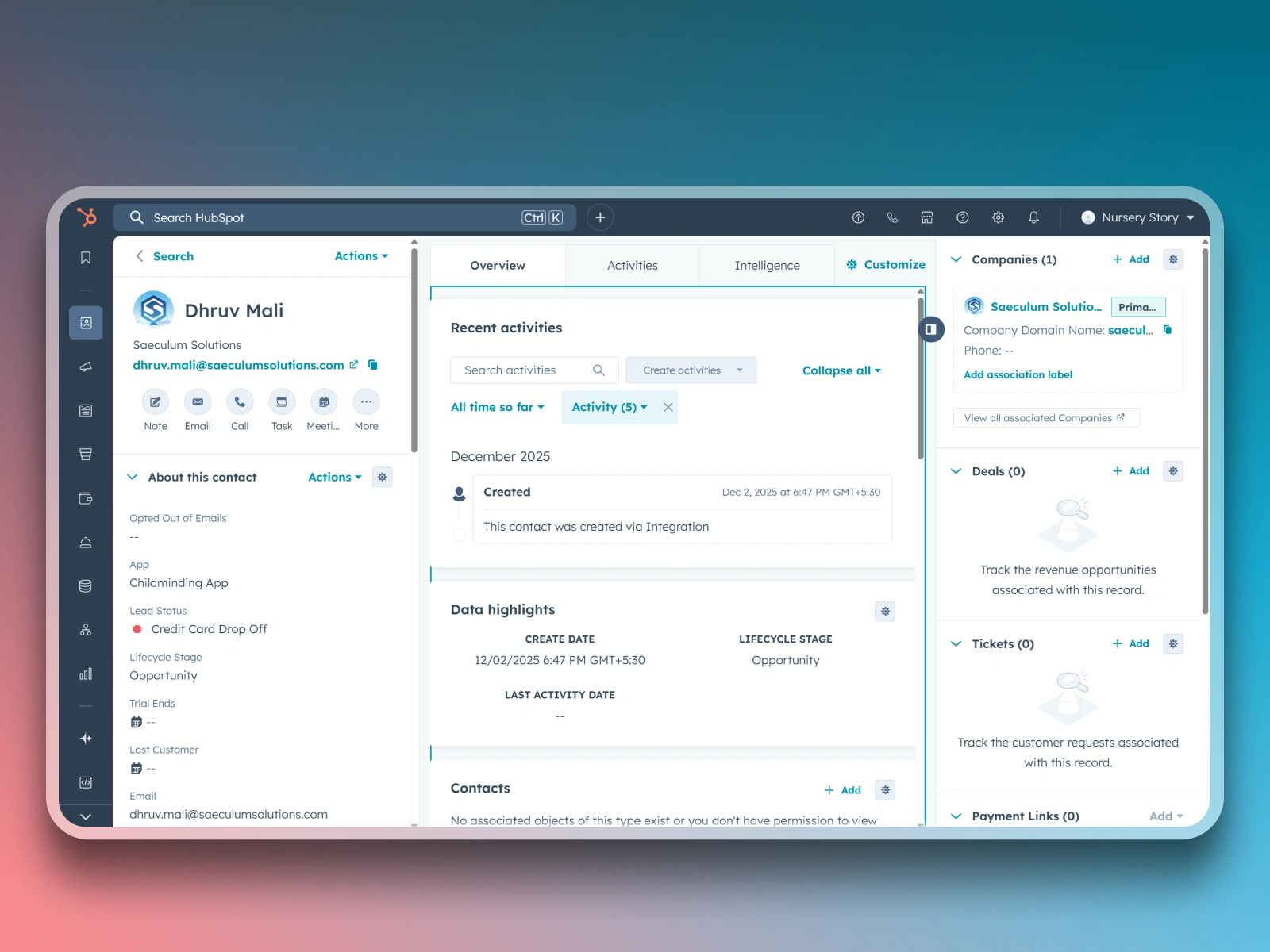
The system treated all exits as churn, regardless of intent or payment status. Trial dropouts inflated churn metrics, failed card payments triggered goodbye emails, admin actions fired customer-facing automations, leads silently failed to enter sales sequences, and six months of historical data loss went unaddressed.
Client Goals
Trust automation outputs and dashboards
Stop incorrect customer communication
Recover lost revenue and leads
Reduce manual cleanup and executive intervention
Align revenue, sales, and support systems
Project Process
System audit and failure mapping
Lifecycle and financial logic design
Webhook payload inspection and source detection
Scenario rebuild with logic-first routing
Error handling and recovery setup
Cross-platform lifecycle synchronization
Historical data backfill and validation
The Solution
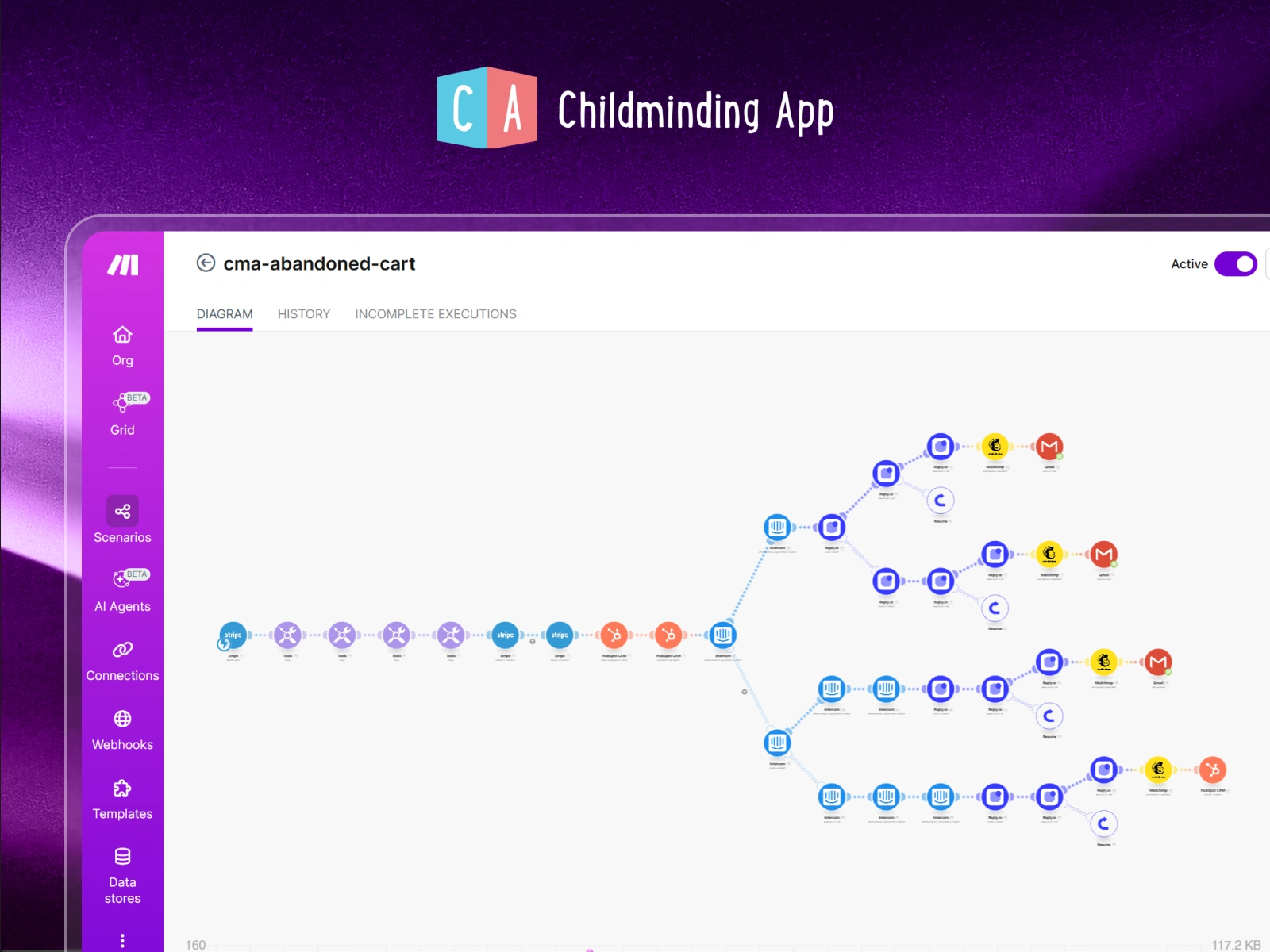
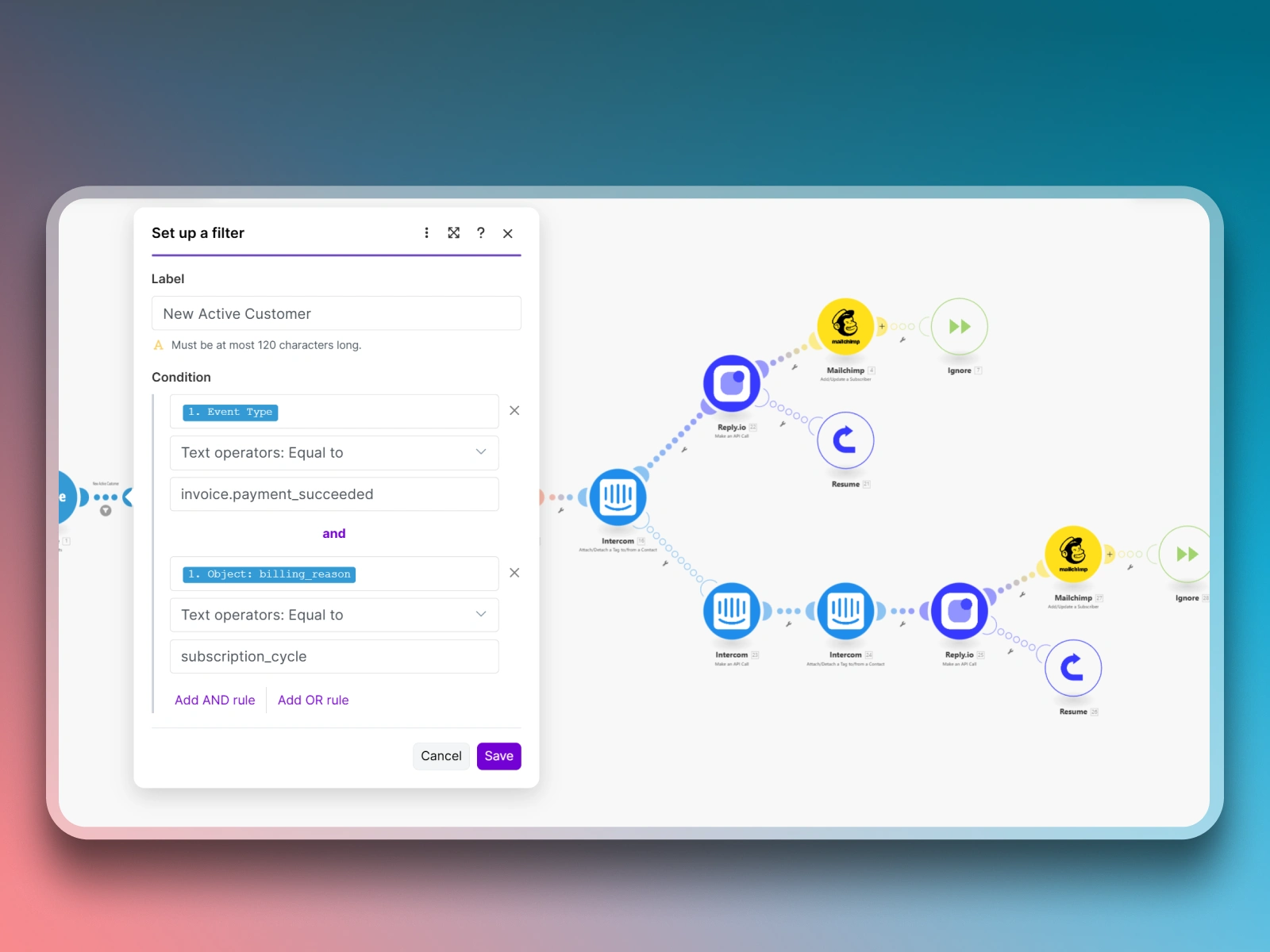
The automation stack was rebuilt around state, source, and financial reality. Every flow now validates who initiated the action, whether money ever changed hands, and what lifecycle state is commercially correct before triggering any downstream automation.
Key Logic & Automation Feature
1. Ghost Customer Logic (Financial Accuracy)
Trial users were incorrectly classified as churn, inflating revenue loss metrics.
We implemented financial validation logic using lifetime spend to distinguish real churn from failed conversions.
Logic applied:
If Total_Spend > 0 → True Lost Customer
If Total_Spend = 0 → Trial Dropout
Result:
Churn metrics became financially accurate and usable for executive decision-making.
2. Active Trial Credit Card Drop-Off Recovery
Users who initiated signup but failed to enter card details were previously ignored by the system.
We introduced detection logic for incomplete checkout states and routed these users into a dedicated nurturing and recovery campaign.
Result:
Recovered revenue opportunities before churn ever occurred.
3. Cancelling “Purgatory” Lifecycle State
A custom “Cancelling” status was created for users who selected “Cancel at period end” but were still active subscribers.
These users were immediately flagged as high-intent churn risks and entered win-back sequences before subscription expiration.
Result:
Retention efforts shifted from reactive to proactive.
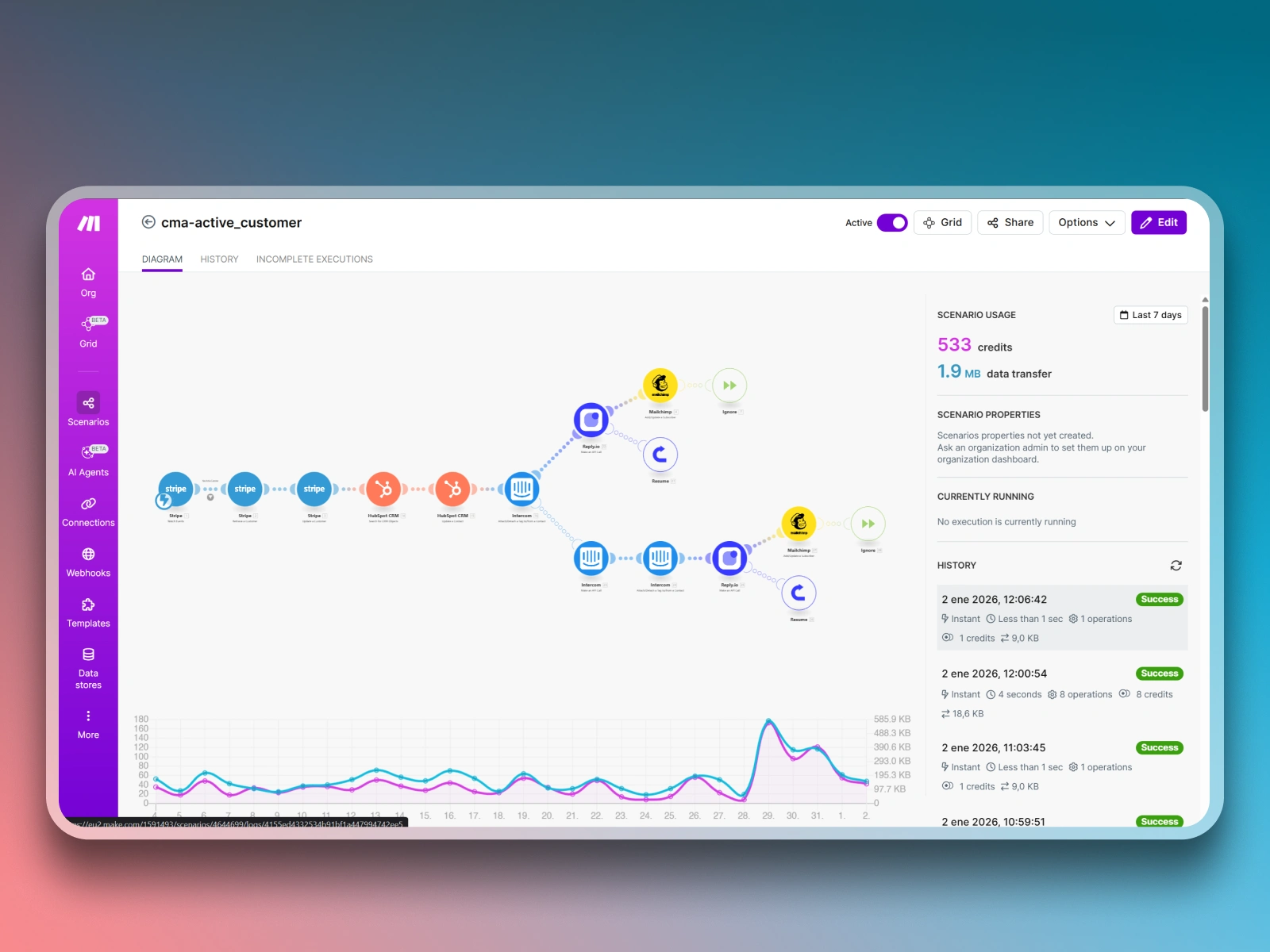
4. Voluntary vs. Involuntary Churn Routing
The system previously treated failed payments as voluntary churn.
We introduced separate lifecycle paths for intent-based exits versus payment failures.
Routing logic:
Voluntary Cancellation → Win-back or Exit Flow
Payment Failed / Uncollectible → Payment Recovery Flow
Result:
Failed card users no longer received goodbye messaging, improving recovery and user experience.
5. Admin vs. User Action Detection (Source Awareness)
Stripe webhook payloads were inspected to determine action origin.
Logic applied:
request.id present → User/API action
request.id missing → Admin dashboard action
Admin-initiated cancellations silently updated CRM, marketing, and support systems without triggering customer-facing automation.
Result:
Automation respects human intent and executive actions.
Result:
Sales regained full visibility and control of the outbound pipeline.
7. Intercom Lifecycle Synchronization
Lifecycle tags were synced across CRM and Intercom to reflect true customer status.
Cancelled users were automatically removed from active support queues.
Result:
Support teams stopped contacting churned users, improving operational trust.
8. Historical Backfill (“Time Travel Fix”)
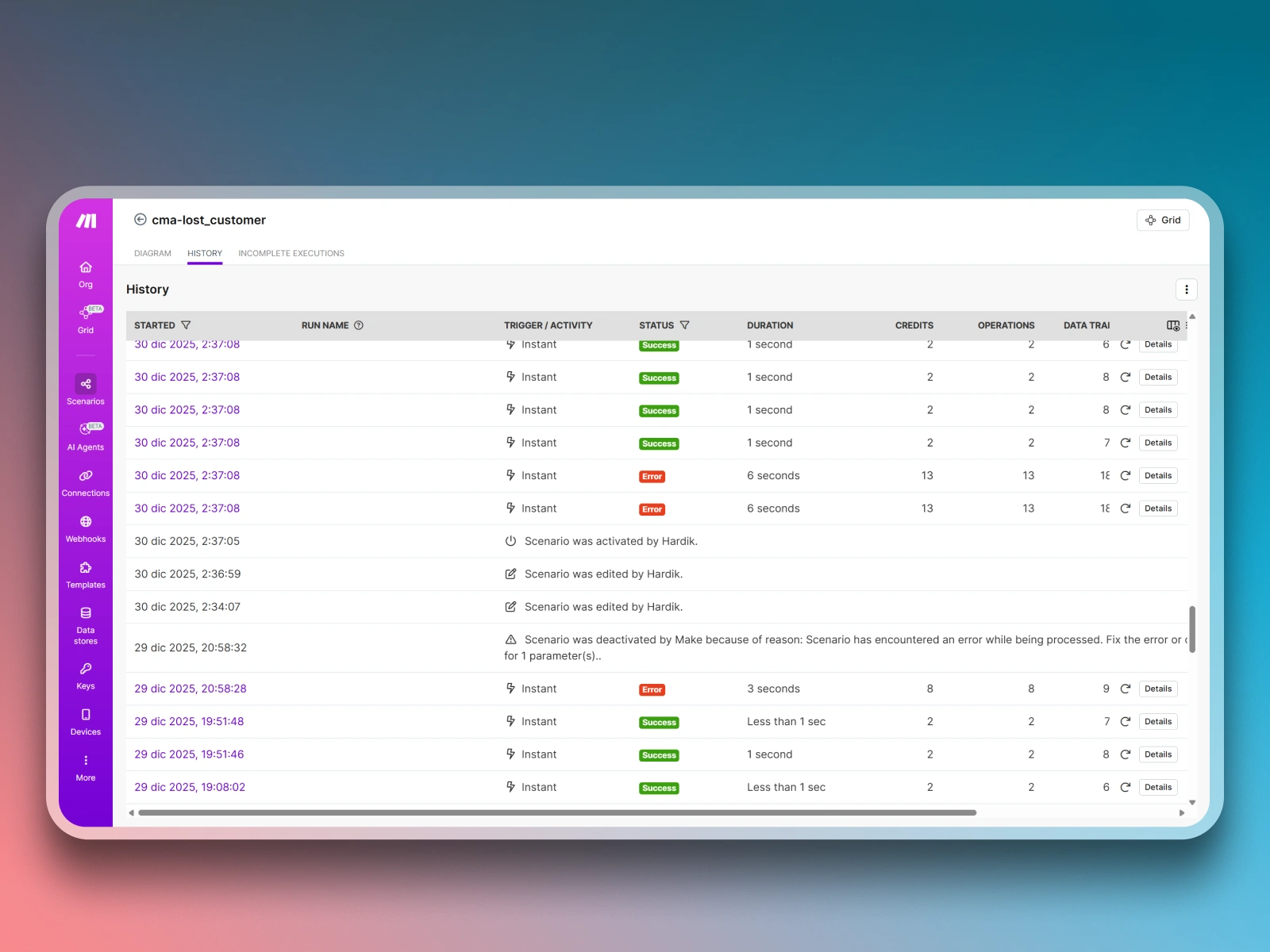
Automation failures had caused six months of lost leads.
We queried historical Stripe and CRM data, identified missing records, and manually injected them into Reply.io sequences.
Result:
The system didn’t just prevent future loss it repaired past revenue damage.
Deliverables
Fully rebuilt Make.com automation scenarios
Lifecycle and churn logic documentation
CRM upset and financial validation logic
Sales, Marketing, and Support synchronization
Historical data recovery scripts and execution
The Results
100% elimination of false churn events
Financially accurate churn and retention metrics
Recovered lost sales opportunities
Zero duplicate CRM records
Aligned Sales, Marketing, and Support systems
5–7 hours per week saved in manual cleanup
Executive trust in automation fully restored
Content Management Efficiency
No manual CRM cleanup required
Lifecycle states remain consistent across tools
Automation respects intent, payment status, and context
Scalable architecture supports growth without risk
Tech Stack
Stripe Webhooks
Make.com
HubSpot CRM
Mailchimp
Reply.io
Intercom
Lessons & Insights
True automation is not about moving data. It is about preserving context, financial truth, and intent across the entire customer lifecycle.
Like this project
Posted Jan 5, 2026
A full rebuild of onboarding, retention, recovery, and churn automation with financial accuracy and lifecycle intelligence.