Budget Variance Learning Exercise — Fictional Sample

Sam McEwen

Fictional finance learning demonstration — not client work.
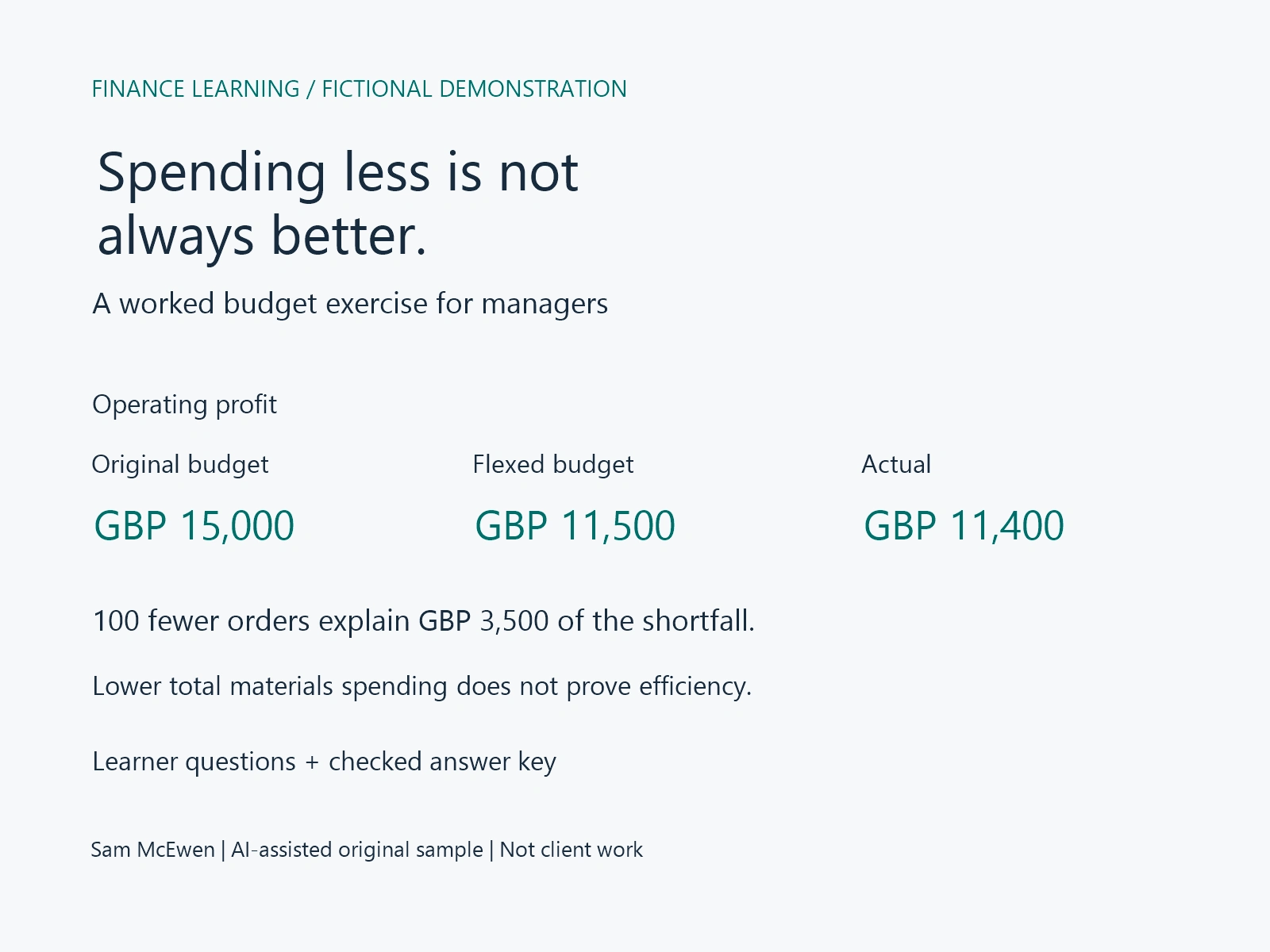
Original AI-assisted exercise for managers: planned 1,000 orders at GBP50 selling price, GBP15 materials per order and GBP20,000 fixed costs. Actual: 900 orders at GBP52, GBP16 materials per order and GBP21,000 fixed costs.
Learner task: calculate planned, flexed and actual profit. Does lower materials spending prove efficiency?
Answer key: planned profit GBP15,000; flexed GBP11,500; actual GBP11,400. Profit bridge: volume -3,500; price +1,800; materials per order -900; fixed costs -1,000. Net GBP3,600 adverse. Materials are GBP600 below the original budget but GBP900 above the flexed budget: lower spending does not prove efficiency.
Assume identical orders sold in the month, variable materials and fixed costs within the activity range. Excludes VAT, tax, inventory changes and depreciation. Purchase prices and usage quantities are needed to diagnose materials changes. Cash balances require opening cash and receipt/payment timing.
Available for written-only exercise and answer-key commissions, with scope and fee agreed first. All figures invented; not accredited training or financial advice.
Like this project
Posted Sep 12, 2026
Original AI-assisted finance exercise and checked answer key. Fictional figures, clear explanations and written-only delivery. Not client work.
Likes
0
Views
1