
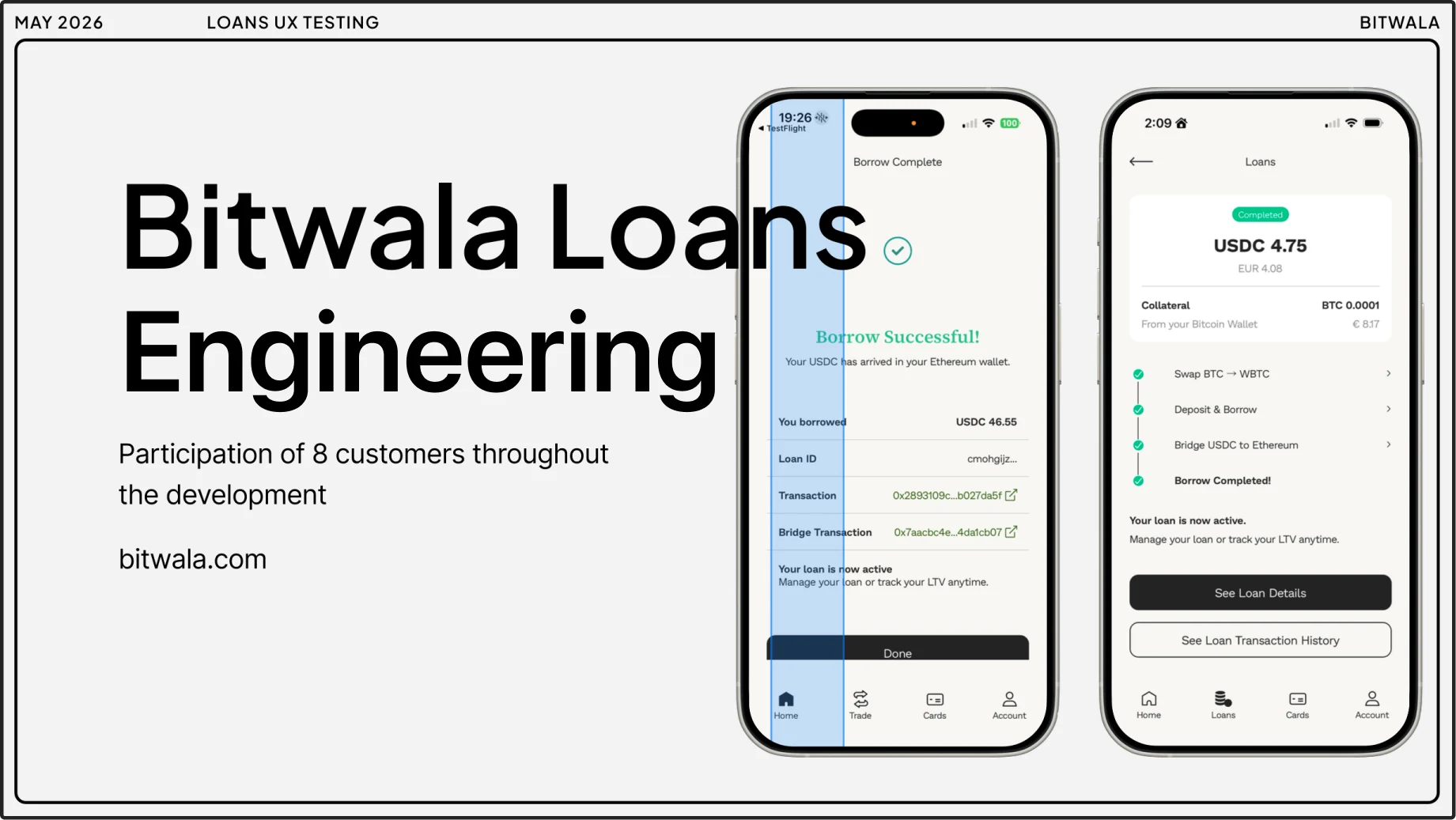
Bitwala Loans Design and Product Engineering
Problem
Individuals who hold Bitcoin to achieve long-term capital gains will likely experience life-altering events – even more so in today’s unpredictable world with major challenges like wars, global warming, and the AI revolution. Situations followed by economic hardship force holders to sell their Bitcoin to stay financially afloat when necessary, losing the chance to realize Bitcoin’s potential over the long run.
Solution
Let’s look at the Boro.today service.
Boro provides the infrastructure to borrow cash (take out a loan) against your own Bitcoin.
How does it work? Users hold Bitcoin on a platform that uses Boro's infrastructure. Instead of selling their Bitcoin, they borrow USDC (which they can use however they wish) by locking their Bitcoin as collateral.
The idea for the service belongs to Bitwala’s CEO, Dennis Daiber. It was conceived as a standalone B2B tool that—with a few well-written APIs—could be integrated into any crypto platform or Bitcoin wallet.
As Boro's first client, Bitwala integrated the service into their app, wrapping it in a custom front end with a Bitwala-branded UI and an enhanced UX.
Team Size and Roles
1x Product Designer
2x Product Engineers (Backend Focus)
1x Product Engineer (Frontend Focus)
When I joined the project as a Product Engineer, the initial UX designs for the key flows were already in place or actively under development. My role was to translate those designs to the front end and conduct user testing.
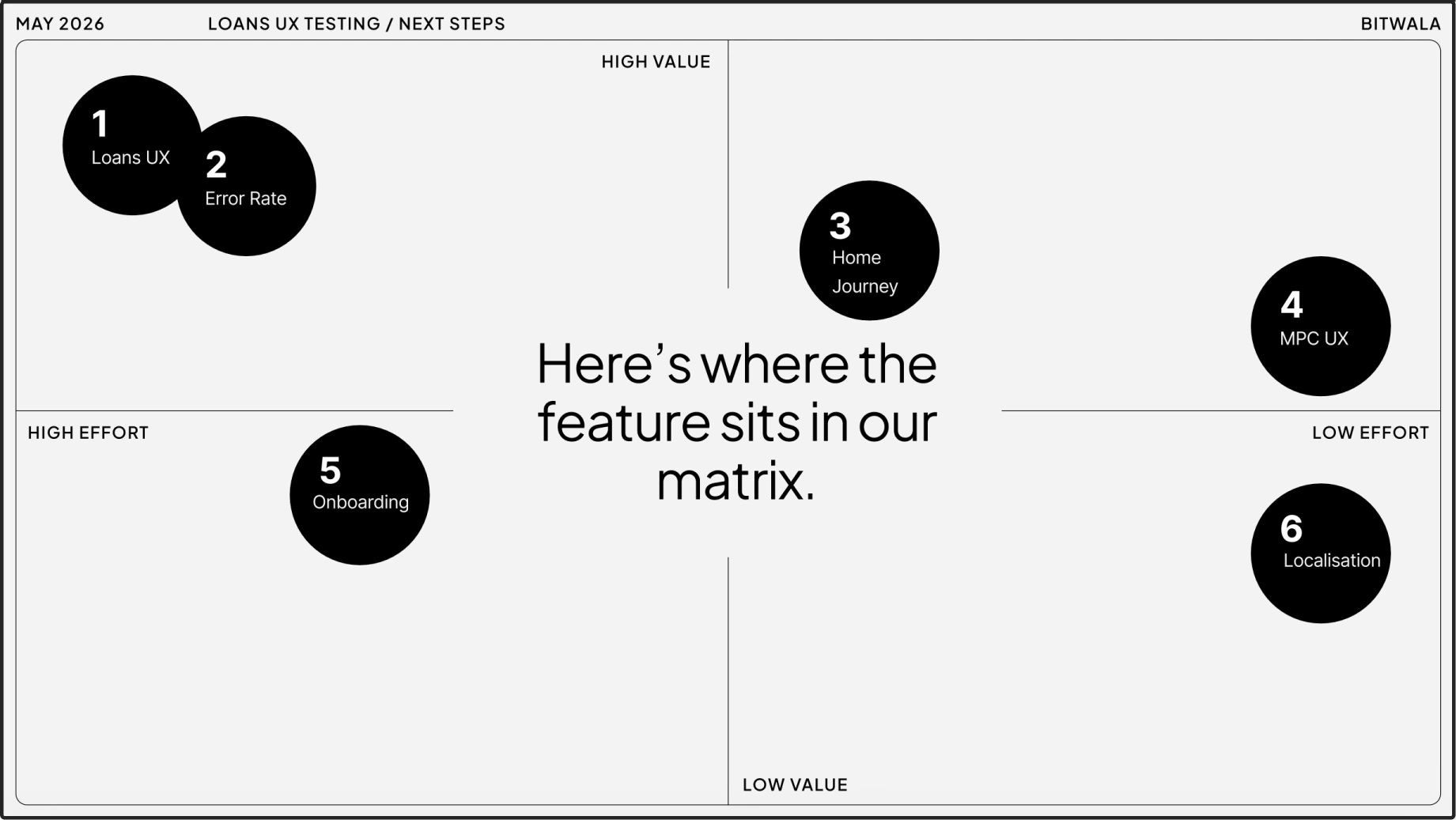
Feature Matrix
Phase 1
With the opt-in flow already in staging, I began by testing it myself and conducting user research. Observing and listening to users gave me a clearer picture of how the flow should look and what changes were needed in the existing design.
Because the service was accessible only to registered users holding actual Bitcoin, my research also encompassed the steps preceding the loan flow: Sign Up & Login, Dashboard Hierarchy & Intuitiveness, and MPC Wallet Creation.
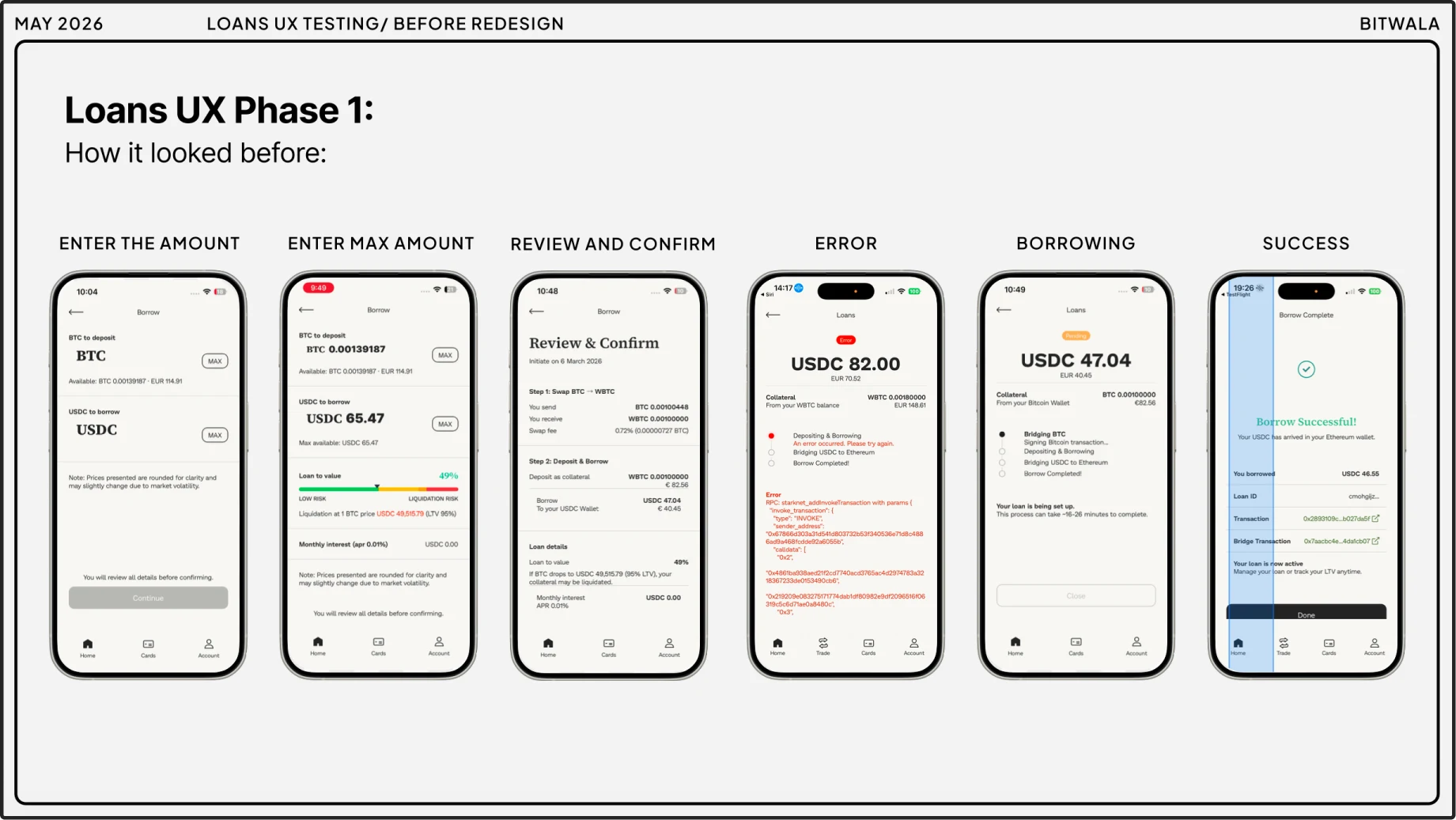
How the Borrow flow looked before the UX Redesign
Phase 2
The first round of user testing demonstrated a completion rate of only ~12% for the "Loan Taking" flow. This was due to micro-friction points during account setup that, at scale, completely blocked users from taking out a loan. To increase transaction success, we needed to make the experience more intuitive and the interface easier to navigate—especially since modern product flows must be fast and seamless.
Alongside the development of the Loan Management and Repayment APIs, I initiated a round of user research. The insights pointed toward focusing on the following areas:
Home (Dashboard/Overview) UX Architecture
Crashes & Error Handling
Handling Unexpected Steps in the Loan Journey
Wallet-to-Wallet Transfer Messaging (from Custodial to MPC)
Fee Transparency
Login & Onboarding UX
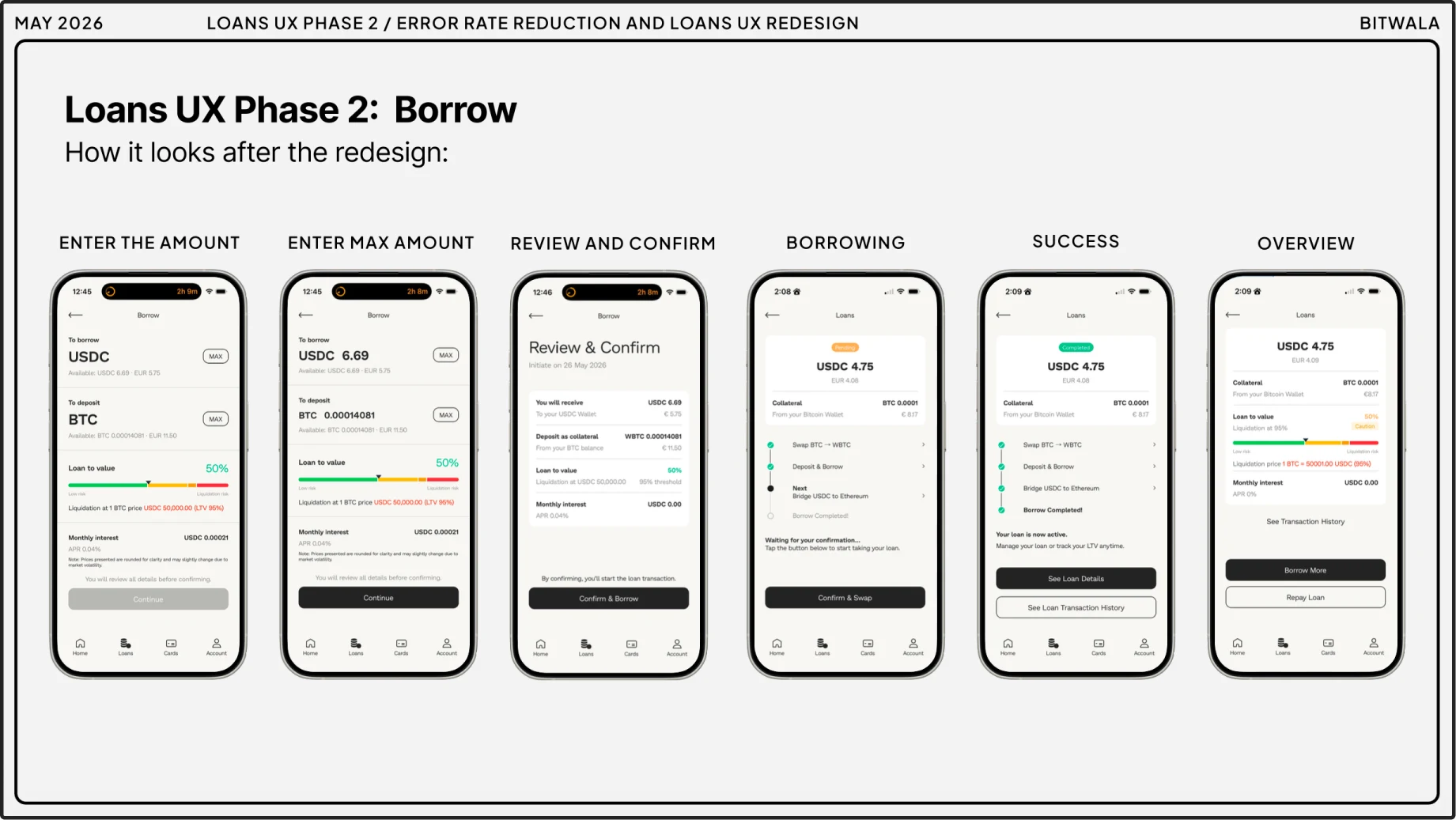
How the Borrow flow looked after
Outcomes
The second round of user testing showed a dramatic increase in the "Loan Taking" success rate, with ~75% of transactions successfully completed following the redesign.
While the "Repayment" flow achieved a ~20% success rate—still a notable improvement over the initial benchmark—we identified key areas for improvement that will be crucial in the next development phases.
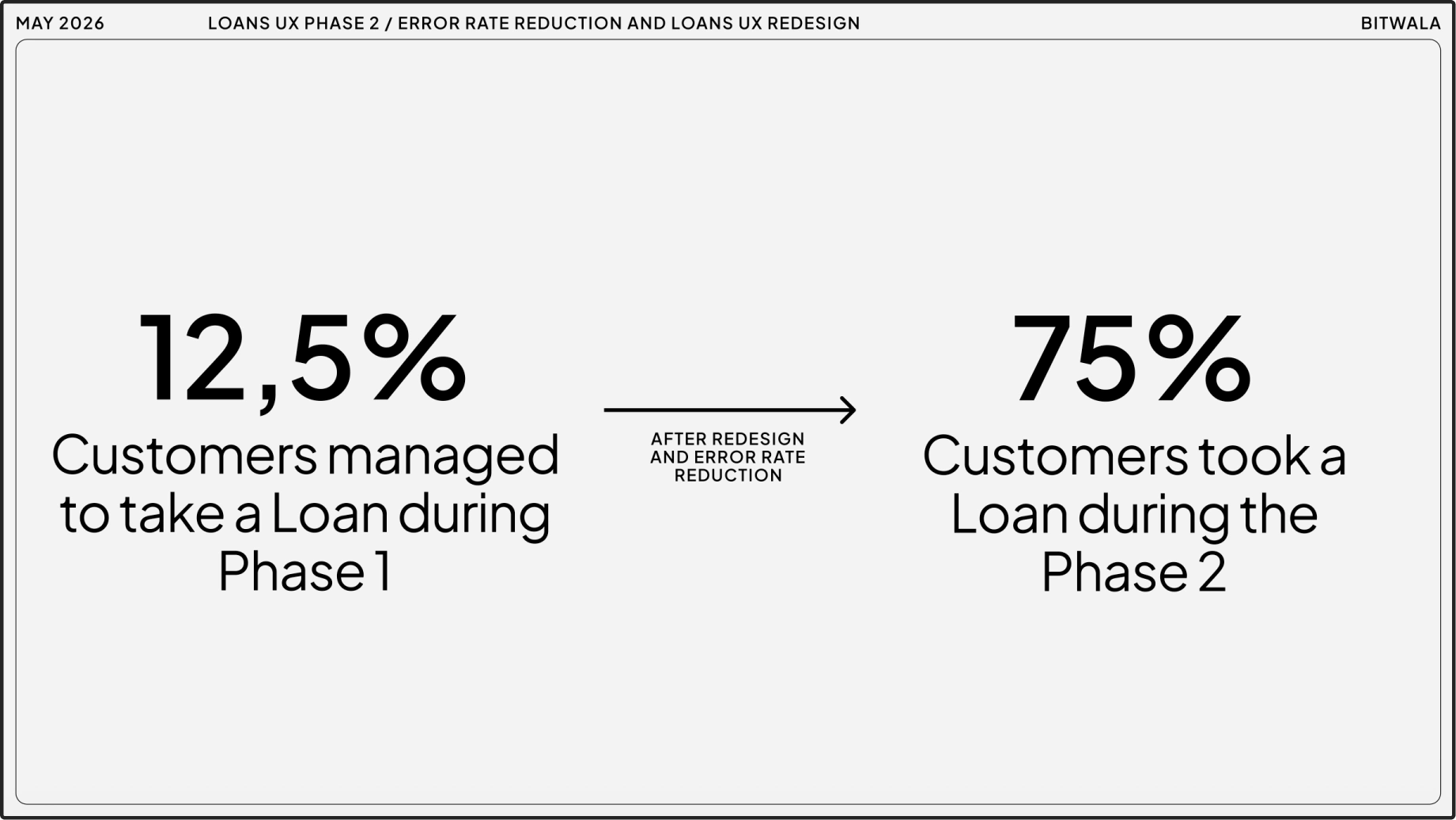
From 12,5% to 75% Transactional Success Rate
Challenges
Because of our small team size, everyone worked hard to wear multiple hats. While effective short-term, this burns energy much faster and can quickly lead to burnout. From experience, I don’t recommend operating at full capacity for more than 3 to 4 months without a 2 to 3-week break; at a certain point, the tank runs so low that it no longer drives you or your business forward.
Thank you for reading,
Until next [thing]
0 likes · 0 views · Nov 11, 2026
Work @ Bitwala as UX and Product Engineer


