Nectar — Desktop Shell for Browser-Automation Agents

Akhil Yadav


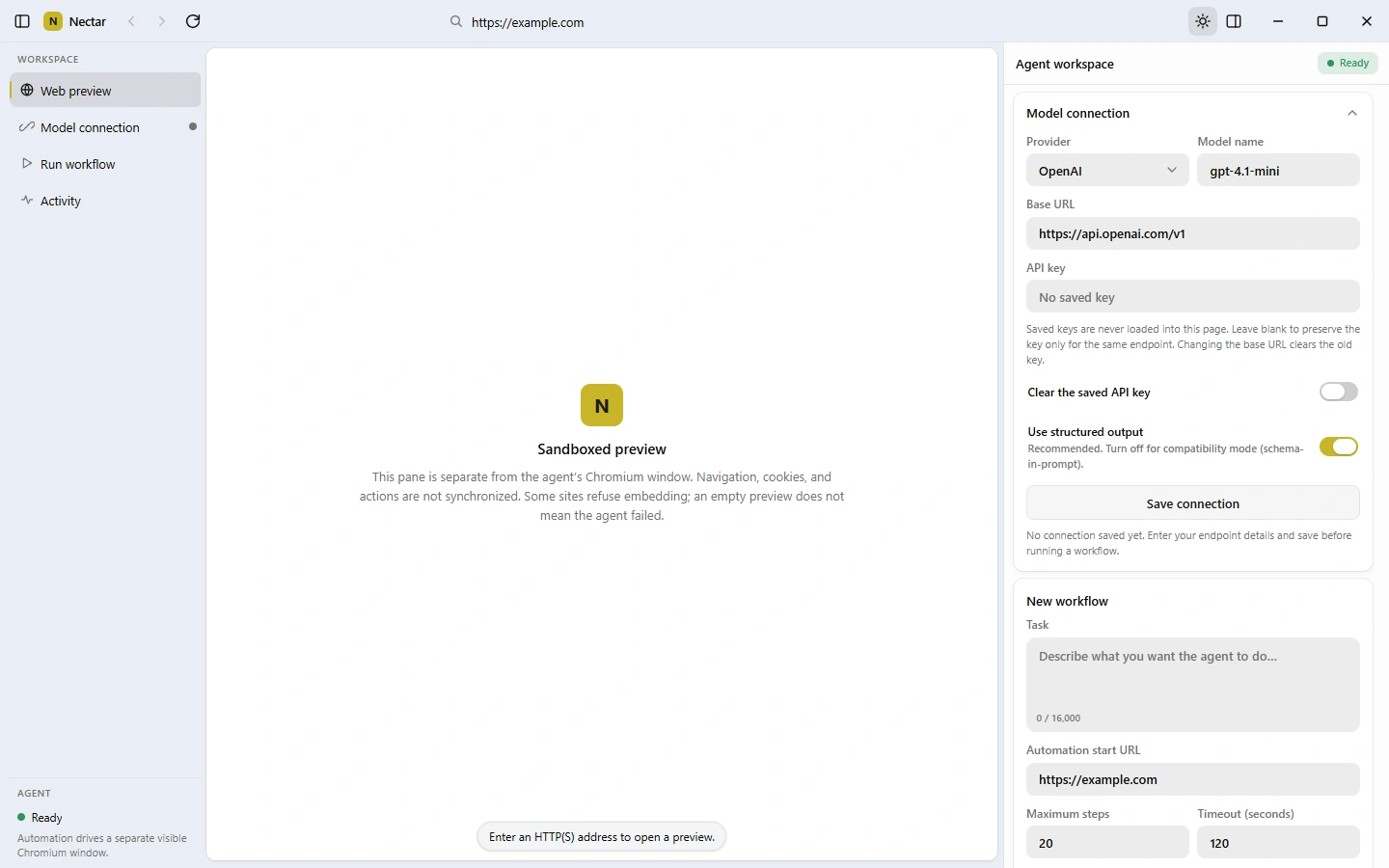
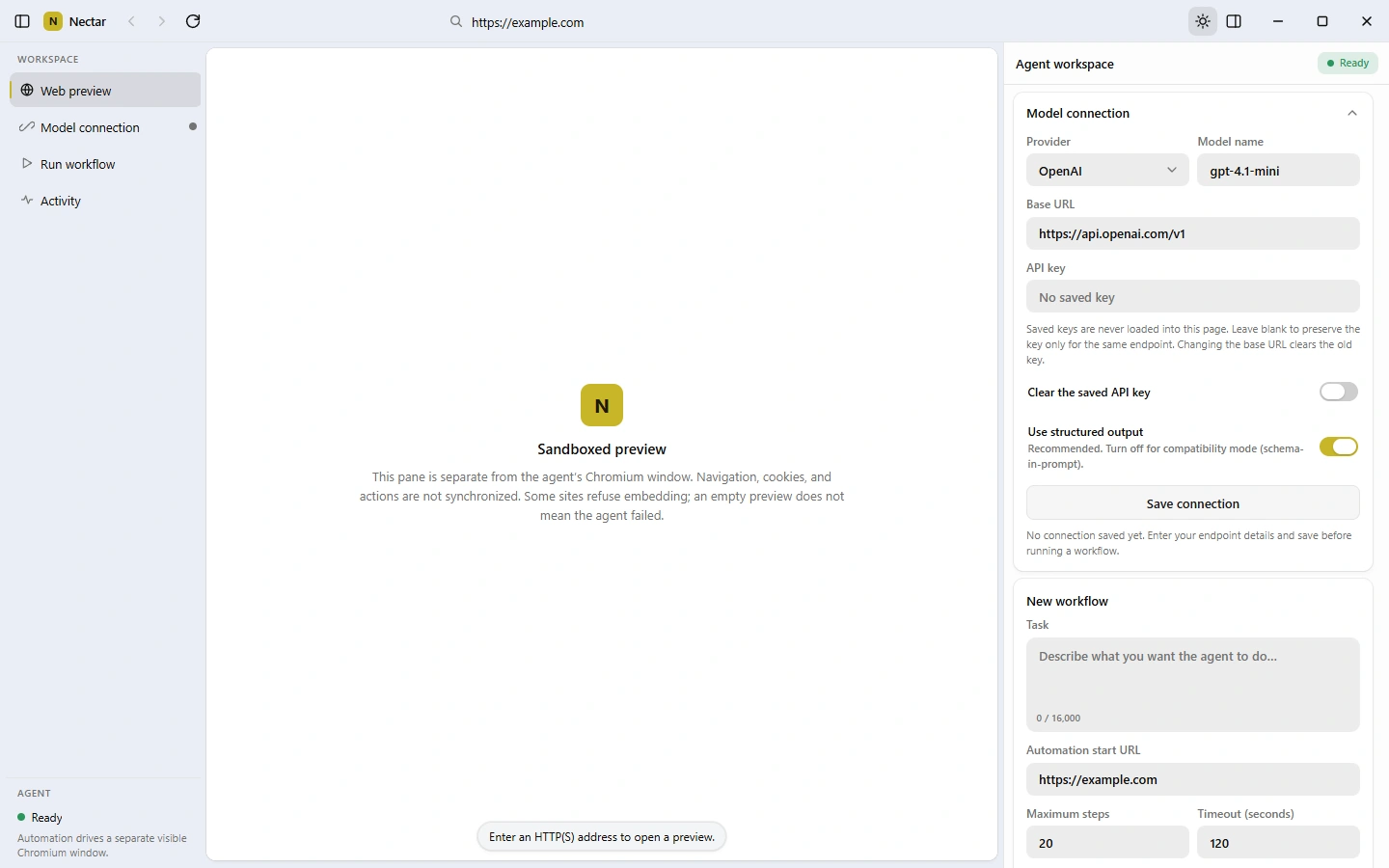
Nectar Browser window
Self-initiated portfolio project. Demonstrates implemented functionality and is not presented as a client engagement. Features and integrations are described according to their verified implementation status.
Source code: github.com/akhilyad/nectar
Overview
Nectar Browser is a Windows desktop shell for browser automation. You connect any OpenAI-compatible endpoint (OpenAI, OpenRouter, Ollama, LM Studio, vLLM or a custom gateway), describe a task in plain language, and an isolated Python worker drives a real, visible Chromium window while the app streams every step back.
Problem
Browser-automation agents are usually scripts with keys in plain text and no clean way to stop them. A desktop product needs safe credential handling, visible activity and reliable cancellation.
Solution
An Electron shell with a sandboxed renderer that talks to a Python worker over a narrow, validated protocol. API keys are encrypted with the operating system's key store and never returned to the page; each run uses a throwaway browser profile that is deleted afterwards.
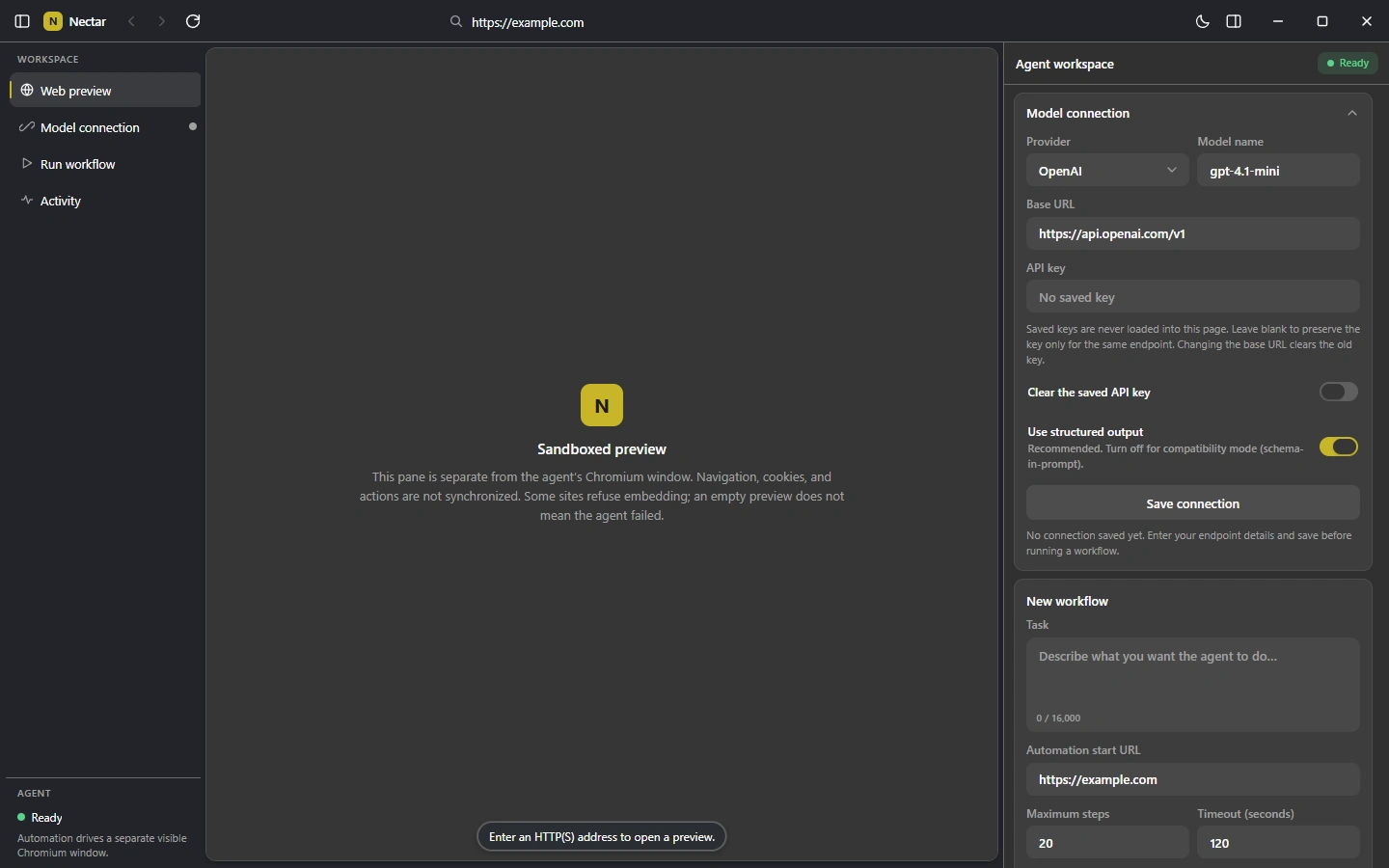
Dark theme
Key features (implemented)
Provider presets with strict API-root normalisation; HTTPS required for non-loopback hosts; embedded credentials and query-string keys rejected
Windows DPAPI key storage through Electron safeStorage; keys redacted from diagnostic streams
Context isolation, renderer sandbox, content security policy and trusted-frame-only IPC
Fresh temporary Chromium profile per run, with cleanup of scratch directories
Cooperative cancellation, deadlines, and self-cancellation if the parent process disconnects
Windows installer packaging with a bundled Python runtime, and a signature-verification gate
Engineering
Process topology, IPC surface and worker protocol are documented in the repository. Its validation record lists 10 JavaScript and 18 Python unit tests plus browser, Electron, packaged-build and integration checks against a mock model. These figures come from the repository's own record; I have not re-run them for this entry.
Limitations
Tests use a mock model: no real paid or local model has been exercised
The worker is not an operating-system security sandbox and has no per-action approval gate
The application executable is unsigned and has not been installed on a clean machine
Not a security audit, and no claim of reliability on arbitrary websites
Like this project
Posted Oct 18, 2026
Electron shell for browser-automation agents, pairing a Python worker with Chromium runs, encrypted API-key storage, renderer isolation, and cancellation