Laminotomy/Laminectomy Surgical Solutions at Mountain West Spine

Megan Opena


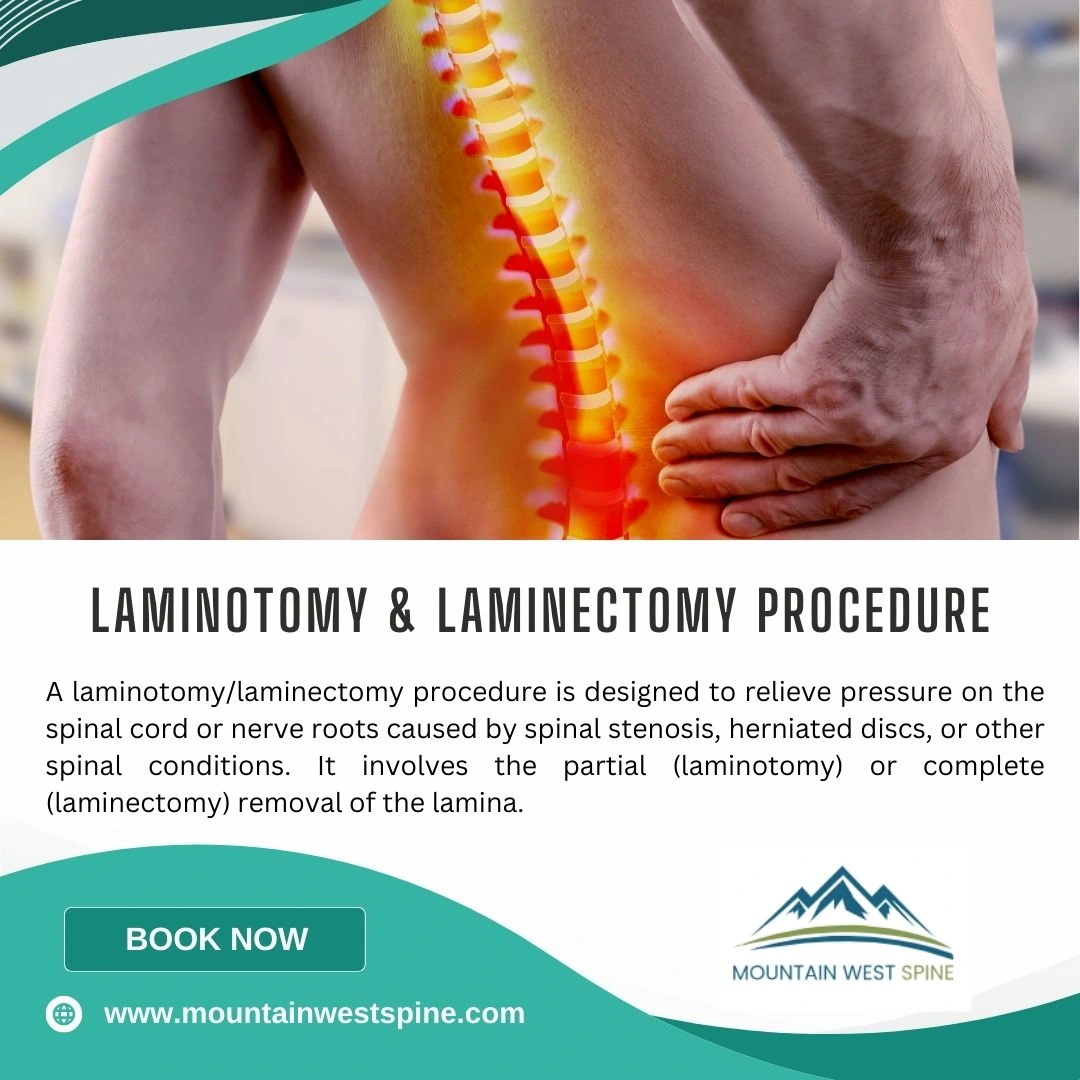
Back pain. It’s a pervasive issue affecting millions, impacting daily life and overall well-being. For many, conservative treatments like physical therapy, medication, and injections provide relief. However, when these methods fall short and the pain persists due to spinal nerve compression, surgical intervention may become necessary.
At Mountain West Spine, under the expert guidance of Dr. William Daniel Bradley, we offer advanced surgical solutions like laminotomy and laminectomy to address these debilitating conditions. These procedures are designed to alleviate pressure on the spinal nerves, thereby reducing pain and restoring function.
What is laminotomy/laminectomy?
Your spinal column is made up of vertebrae stacked one upon the other, protecting the delicate spinal cord and nerves within. The back portion of each vertebra includes a bony arch called the lamina, which plays a crucial role in protecting the spinal canal.
However, in certain conditions, the lamina can contribute to the narrowing of the spinal canal, resulting in spinal cord and nerve compression.
A Laminotomy/laminectomy procedure is designed to relieve pressure on the spinal cord or nerve roots caused by spinal stenosis, herniated discs, or other spinal conditions.
A laminotomy involves the partial removal of the lamina—the back part of the vertebra covering the spinal canal.
A laminectomy involves the complete removal of the lamina to allow more extensive decompression of the spinal cord and nerves.
Both procedures aim to decompress the spinal nerves, reducing pain, numbness, and weakness.
What are the advantages of a laminotomy/laminectomy procedure?
Laminotomy and laminectomy offer several key benefits for patients suffering from chronic spinal conditions. This includes the following:
Effective symptom relief
These procedures help relieve chronic pain, numbness, tingling, and weakness caused by compressed nerves. Patients often experience significant improvement in symptoms shortly after surgery.
Improved mobility and function
These procedures decompress the spinal nerves and restore proper nerve function, allowing for improved mobility and a better overall quality of life. Patients can return to daily activities with reduced discomfort.
Minimally invasive options
At Mountain West Spine, Dr. Bradley specializes in minimally invasive techniques for laminotomy and laminectomy.
These approaches use smaller incisions, leading to less tissue damage, reduced post-operative pain, and faster recovery times than traditional open surgery.
High success rates
Laminotomy and laminectomy procedures, mainly when performed by experienced spine surgeons like Dr. Bradley, boast high success rates in relieving pain and improving function for appropriately selected patients.
However, it's important to note that "success" in this context means achieving the goals of pain reduction, improved mobility, and restored function rather than a complete cure for all back problems.
Who are the ideal candidates for the laminotomy/laminectomy procedure?
Not every patient with back pain requires surgery. Ideal candidates for laminotomy or laminectomy typically include those who:
Have chronic nerve pain that has not improved with conservative treatments like physical therapy, injections, or medications.
Experience leg or arm weakness, numbness, or tingling due to nerve compression.
Have spinal stenosis, herniated discs, or degenerative spinal conditions that are impacting mobility and function.
Suffer from severe symptoms affecting daily activities such as walking, standing, or sleeping.
Have been recommended for surgery by a spine specialist after a thorough evaluation.
Dr. Bradley, our spine surgeon in Boise, will conduct a comprehensive assessment to determine whether laminotomy or laminectomy is the right option based on each patient’s condition and medical history.
What can you expect during the laminotomy/laminectomy procedure?
Here’s what you can expect before, during, and after your laminotomy or laminectomy surgery at Mountain West Spine.
Pre-operative phase
Before surgery, patients undergo a detailed consultation and imaging studies (such as X-rays or MRI scans) to confirm the need for the procedure. Dr. Bradley will discuss the surgery, potential risks, and expected outcomes. Patients may need to:
Make certain lifestyle changes, such as quitting smoking, maintaining a healthy diet, or engaging in light exercises.
Stop taking certain medications (such as blood thinners) before surgery.
Follow pre-operative instructions, including fasting the night before surgery.
Arrange for transportation and post-surgical assistance at home.
During surgery
During either procedure, Dr. Bradley makes an incision over the affected area of the spine. The muscles and soft tissues are gently moved aside to access the vertebrae.
In a laminotomy, only a small portion of the lamina is removed to create more space for the spinal nerves. While in laminectomy, the entire lamina is removed for more extensive decompression.
Dr. Bradley may also remove bone spurs or disc fragments that are pressing on nerves. These procedures can be performed using traditional open surgery or minimally invasive techniques, depending on the specific condition and overall health of the patient.
The duration of surgery can vary depending on the complexity of the case and the number of vertebral levels being treated, but it typically ranges from one to three hours.
Post-operative phase
After surgery, patients are monitored for a few hours or overnight, depending on the patient’s condition. Recovery includes:
Pain management with medications and ice therapy.
Gradual movement to prevent stiffness and promote healing.
Wound care at home
Physical therapy and rehabilitation to regain strength and flexibility. The program may include exercises to strengthen back and core muscles, improve posture, and restore range of motion.
Returning to normal activities in a few weeks, with full recovery taking up to three months.
You will have scheduled follow-up appointments with Dr. Bradley to monitor your healing progress, assess your symptom relief, and adjust your rehabilitation plan as needed.
How long will it take me to recover?
Recovery time varies based on the extent of the surgery and individual patient factors. Hospital stays typically range from one to three days. Some patients may experience immediate relief from symptoms, while others may notice gradual improvement.
Physical therapy is often recommended to help regain strength and flexibility. Most patients can return to light activities within a few weeks, but full recovery may take several months. Dr. Bradley will provide a personalized recovery plan tailored to your needs.
What are the potential risks of laminotomy/laminectomy surgery?
As with any surgical procedure, laminotomy and laminectomy come with some risks, although complications are rare. Potential risks include:
Infection at the surgical site.
Bleeding or blood clots.
Spinal fluid leaks.
Nerve damage, which could result in temporary or permanent weakness or numbness.
Recurrence of symptoms if other spinal conditions develop.
Dr. Bradley takes every precaution to minimize risks and ensure the best possible surgical outcomes for his patients.
Move Freely Again with Laminotomy/Laminectomy Surgery at Mountain West Spine
Laminotomy and laminectomy are effective spinal decompression procedures that can significantly improve pain, mobility, and quality of life for those suffering from chronic spinal conditions.
At Mountain West Spine, Dr. Bradley uses advanced techniques and a patient-centered approach to ensure the best possible outcomes. If you're struggling with persistent back pain or nerve compression symptoms, schedule a consultation today with the best spine specialist near me.
Learn more about the different spinal surgical procedures we specialize in:
The material contained on this site is for informational purposes only and DOES NOT CONSTITUTE THE PROVIDING OF MEDICAL ADVICE, and is not intended to be a substitute for independent professional medical judgment, advice, diagnosis, or treatment. Always seek the advice of your physician or other qualified healthcare providers with any questions or concerns you may have regarding your health.
Think this surgery is what you need?
Please reach out to us and we can discuss your needs and get you back to your normal.
Like this project
Posted May 16, 2025
Performed laminotomy/laminectomy surgeries to relieve spinal nerve compression.
Likes
0
Views
1