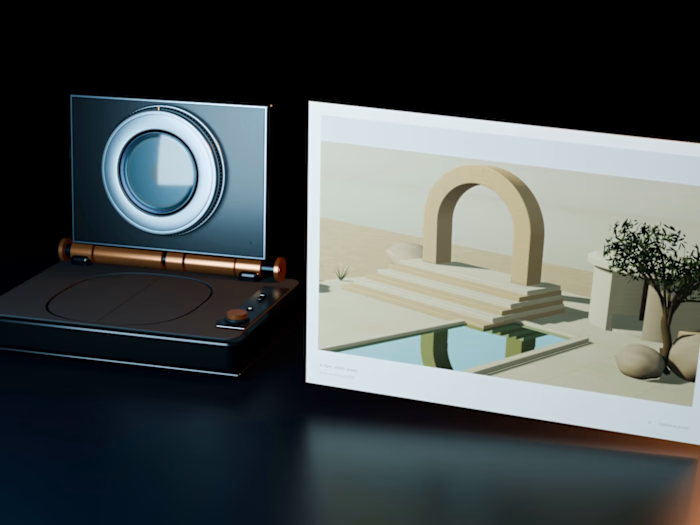
Where the End Begins

Charles

An original conceptual film about power, permanence and the moment a completed structure becomes an invitation.
Power taking shape
Where the End Begins follows a monumental building as it assembles, settles into place and becomes still. The film explores how architecture can suggest power before we know its purpose: through the weight of a roof, the height of a column and the distance between a human viewpoint and the space above it.
The first encounter is close and mechanical. Connections and moving parts arrive before the whole form is revealed. As the view widens, those details become part of something much larger. That change in scale carries the movement from concentration to awe.
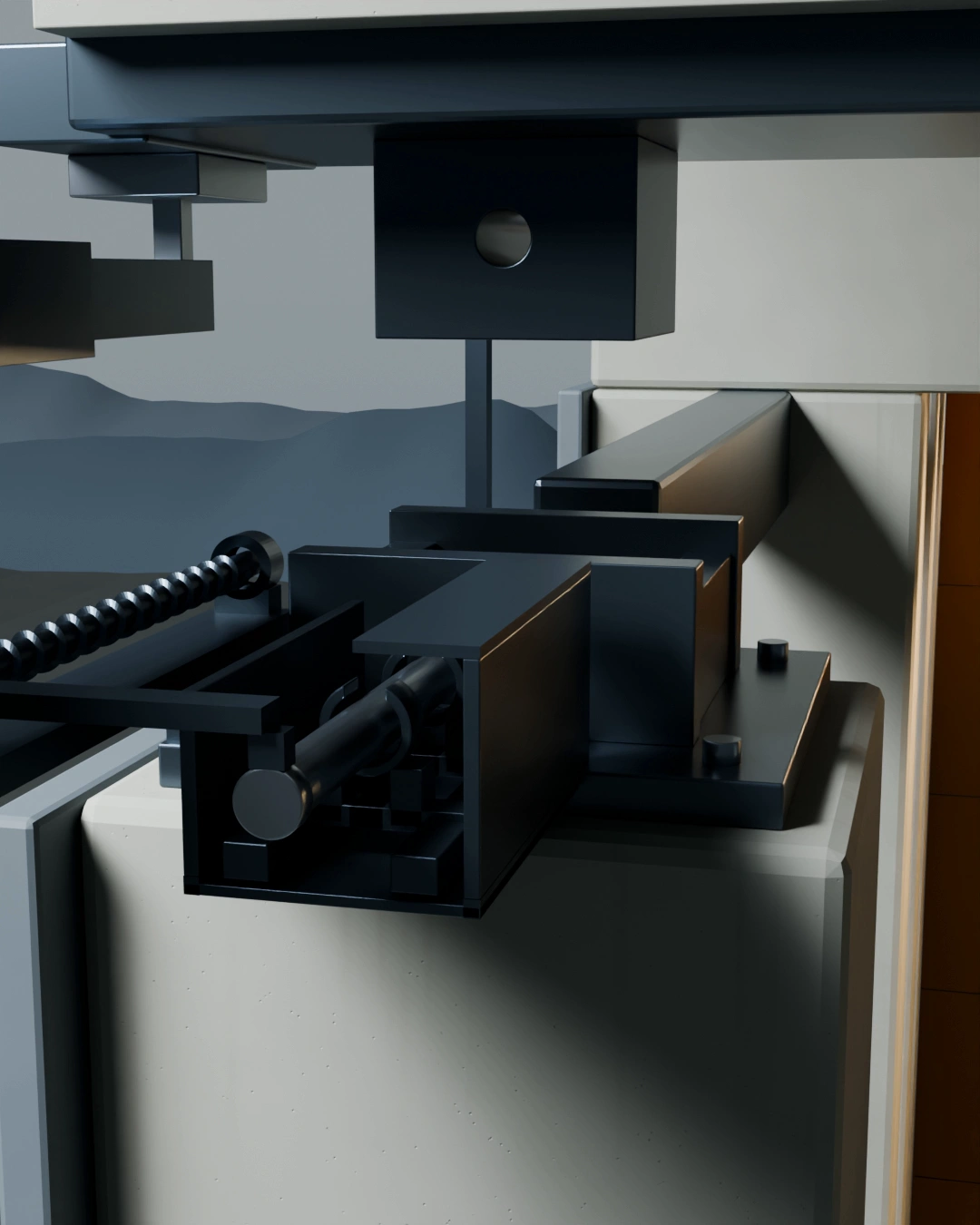
The opening withholds the whole building. A close view of the mechanism makes the first encounter intimate and precise.
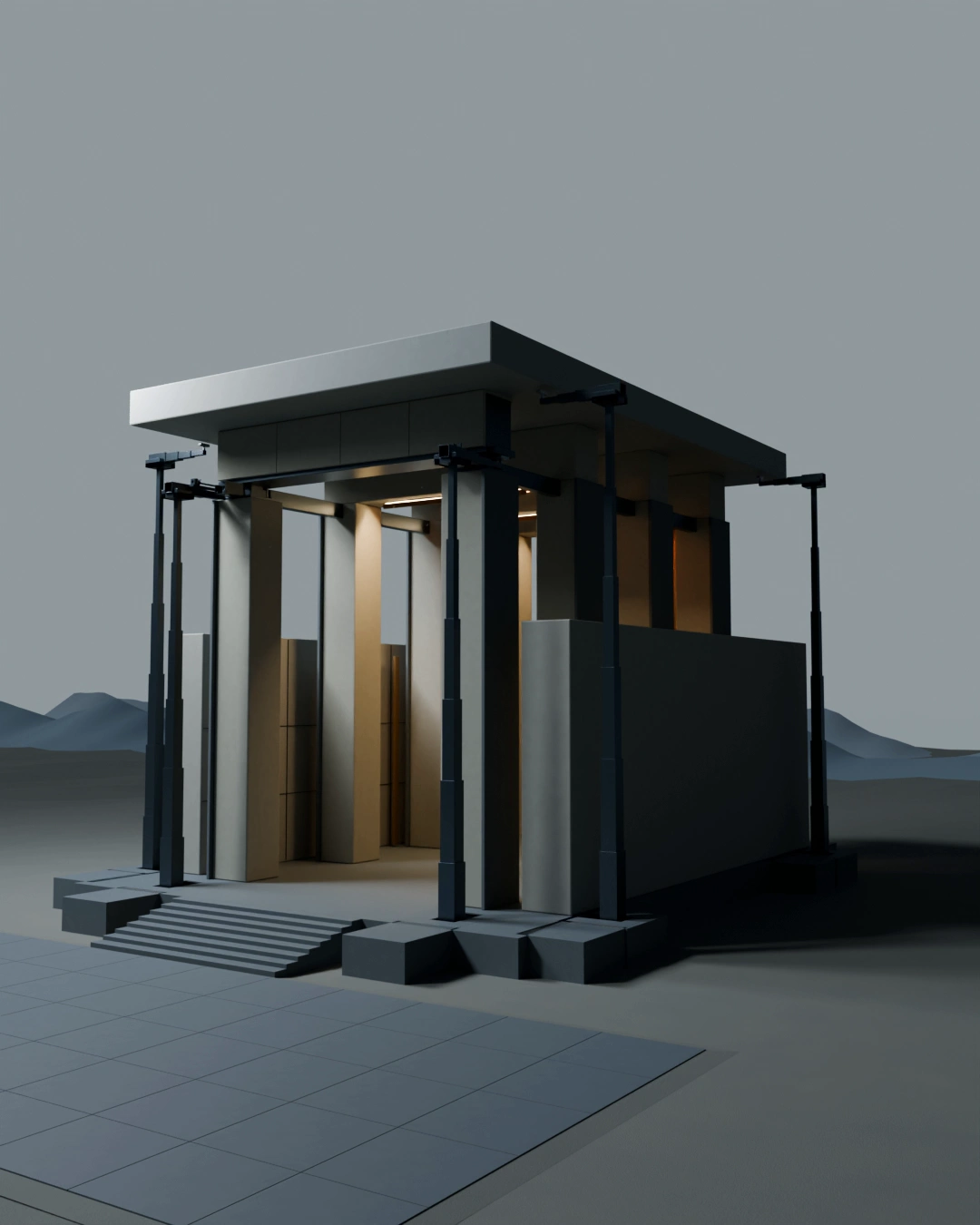
Temporary machinery frames the rising architecture, making the act of assembly part of the image.
A sense of permanence
The visual language brings mineral surfaces and precise metalwork together. Cool exterior tones, deep recesses and restrained warmth give the building an ancient yet futuristic character without explaining its history.
Permanence is the feeling the film seeks: something newly assembled that already seems to belong to a longer span of time. The sparse ground and distant ridgeline leave room for that impression. Deliberate movement and pauses allow the form to register, rather than rushing past it.
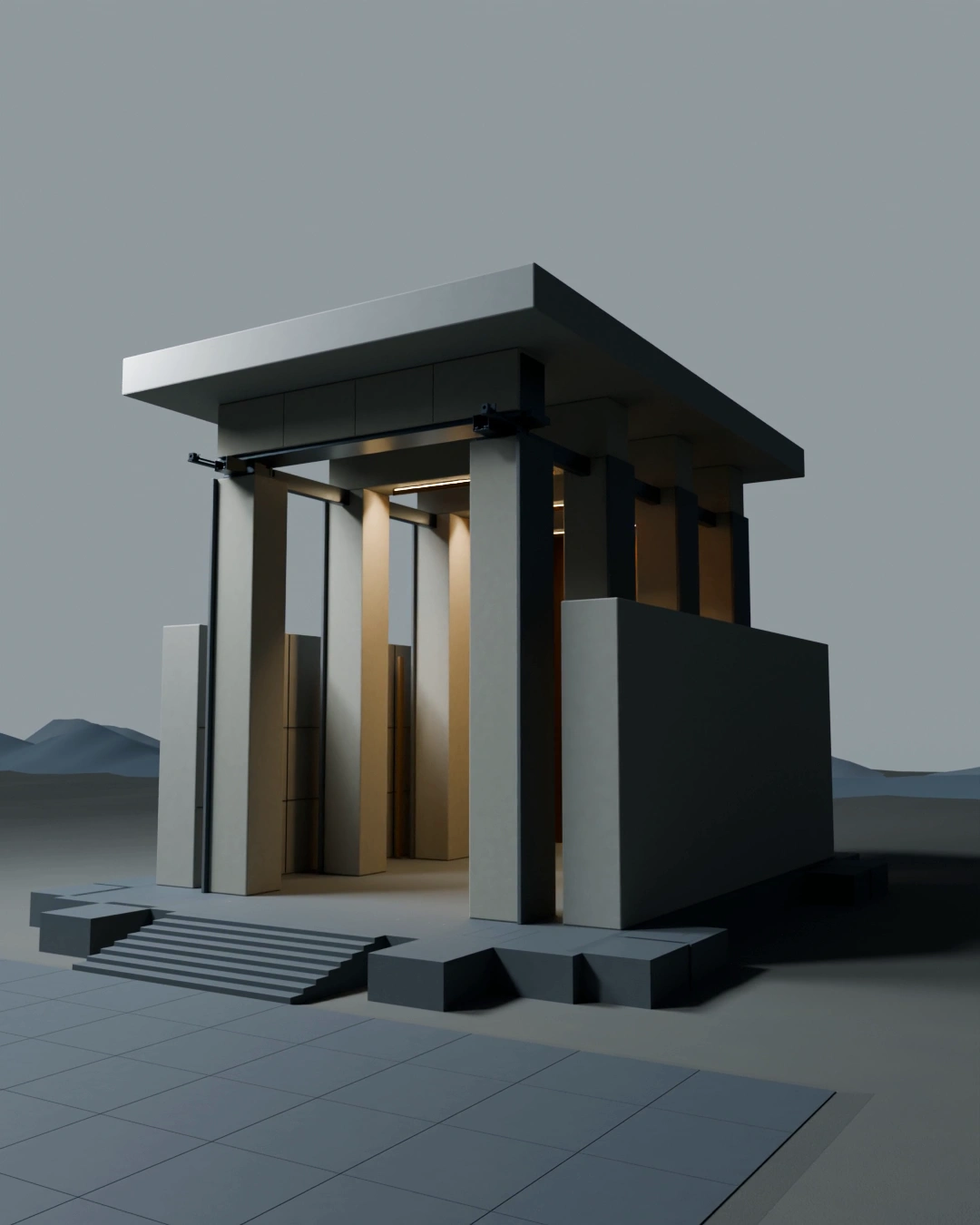
After the temporary supports recede, the building holds the scene through mass, proportion and light.
When the machinery withdraws
Assembly is only one part of the transformation. The temporary equipment lowers into recessed bays, and the covers close behind it. The machinery has occupied the scene; its withdrawal changes what we notice.
The building becomes the focus as the activity around it subsides. The sequence moves from effort toward stillness, allowing the architecture to remain as the lasting presence.
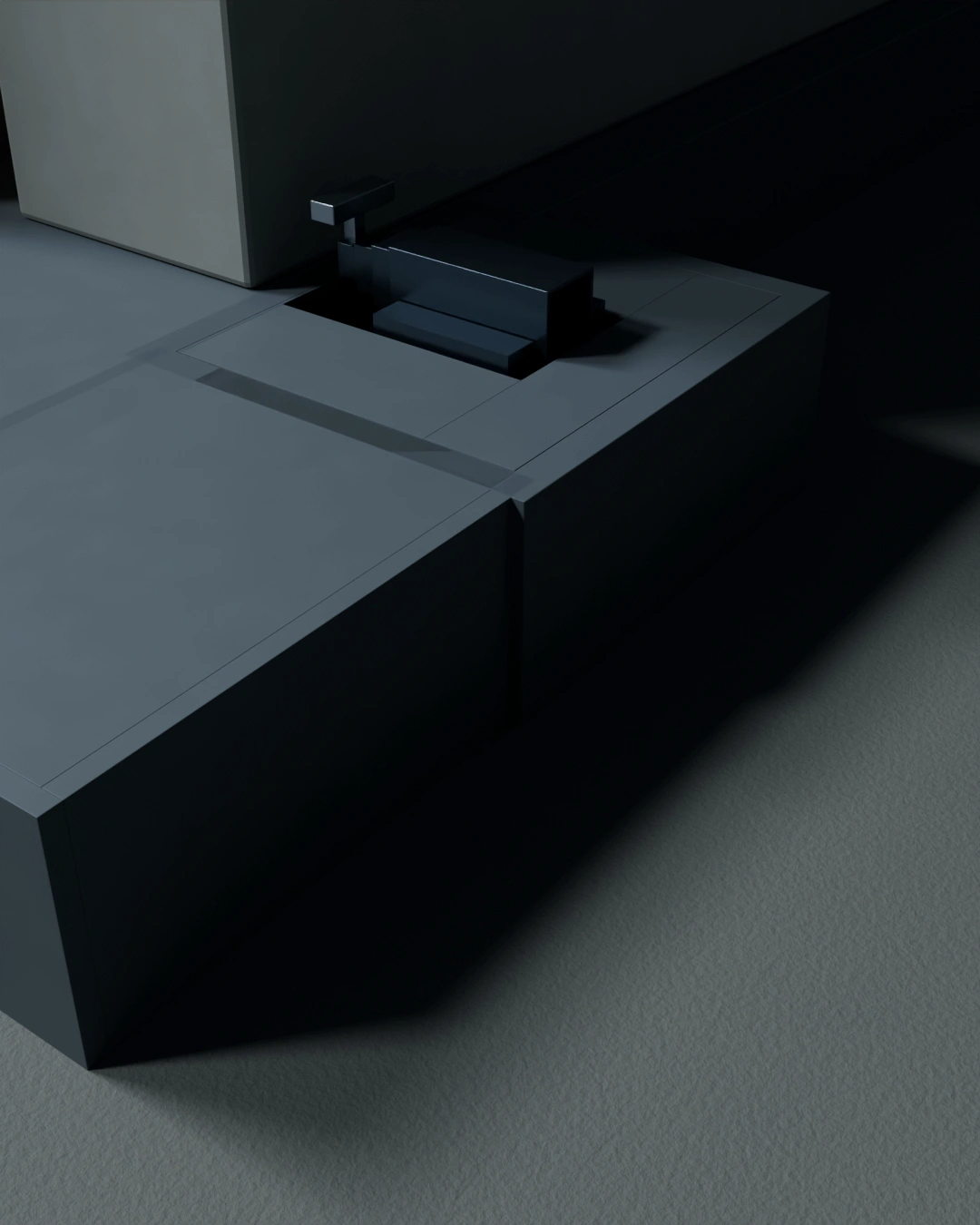
The mechanism descends into its recessed bay: the means of assembly begin to leave the composition.
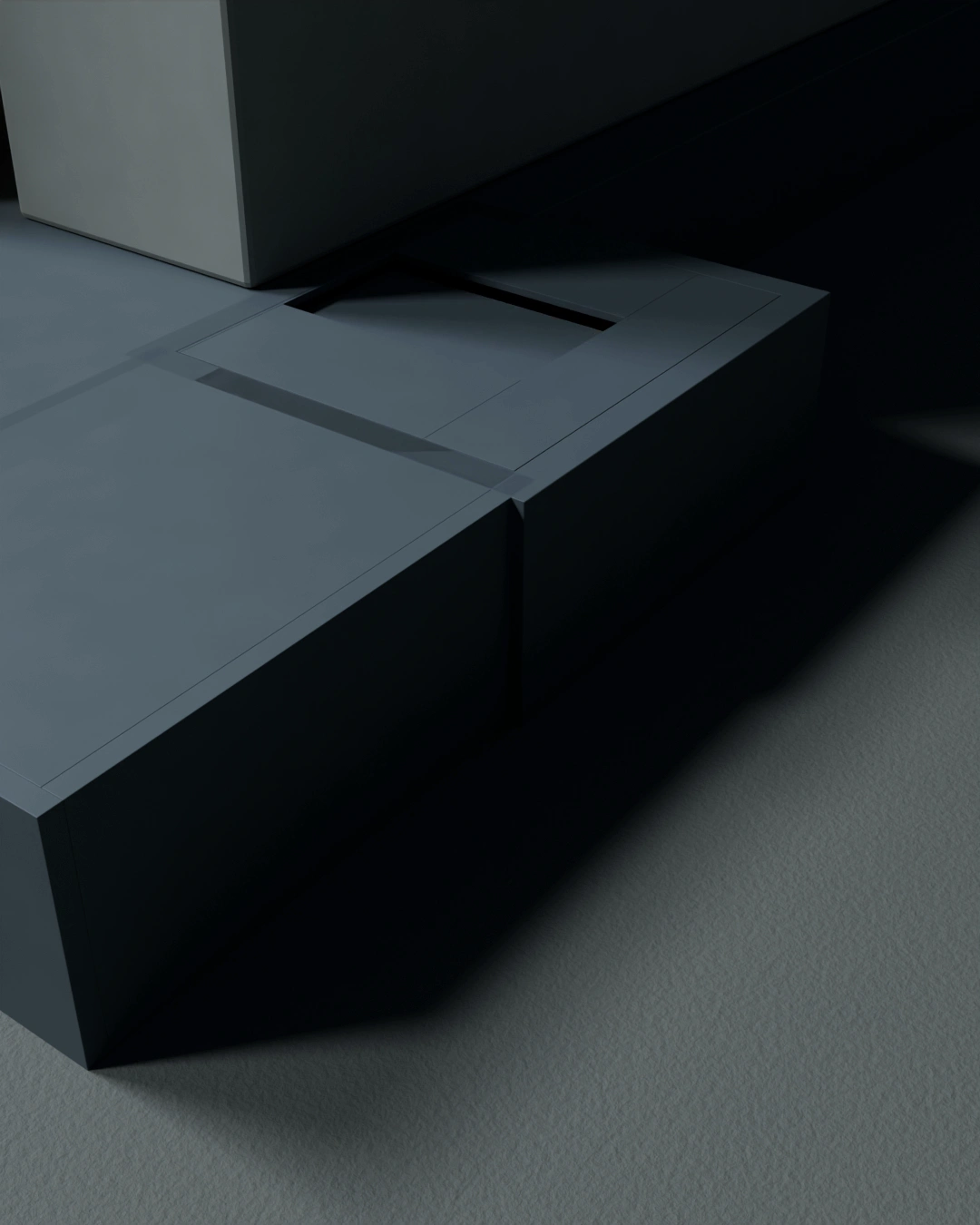
The cover moves across the opening, returning attention to the building that remains.
The ending is a threshold
The final approach brings the camera toward the entrance at a more human scale, while the columns and roof continue to rise overhead. Warm light draws the eye inward. The doorway stays closed.
This is the meaning of Where the End Begins. The act of construction reaches its conclusion, but the viewer’s relationship with the place has only just begun. The film leaves space for curiosity: what it might feel like to stand there, approach the door and imagine what lies beyond it.
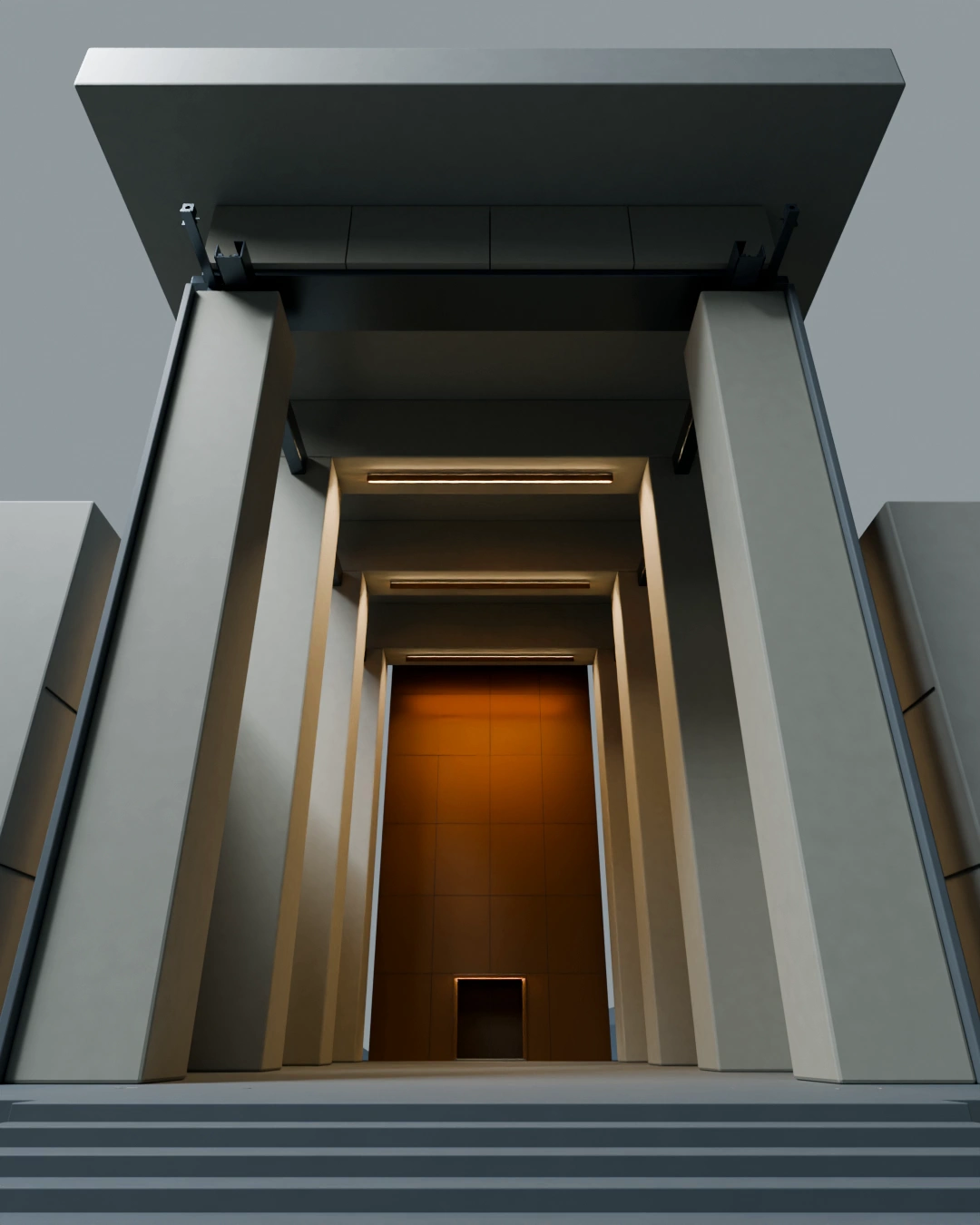
Construction ends at a closed doorway. The viewer is left at the beginning of a journey.
About the work
An original conceptual artwork by Launch in Seven, created in Blender through 3D scene design, materials, lighting and animation, with an accompanying music and sound mix. The architecture and mechanisms belong to an imagined setting; the film is an artistic interpretation, not an engineered construction proposal.
Commission a film
For a custom architectural or concept film, contact Launch in Seven here on Contra to discuss your project.
Like this project
Posted Sep 25, 2026
An original conceptual film about power, permanence and the moment a completed structure becomes an invitation.
Likes
0
Views
6