
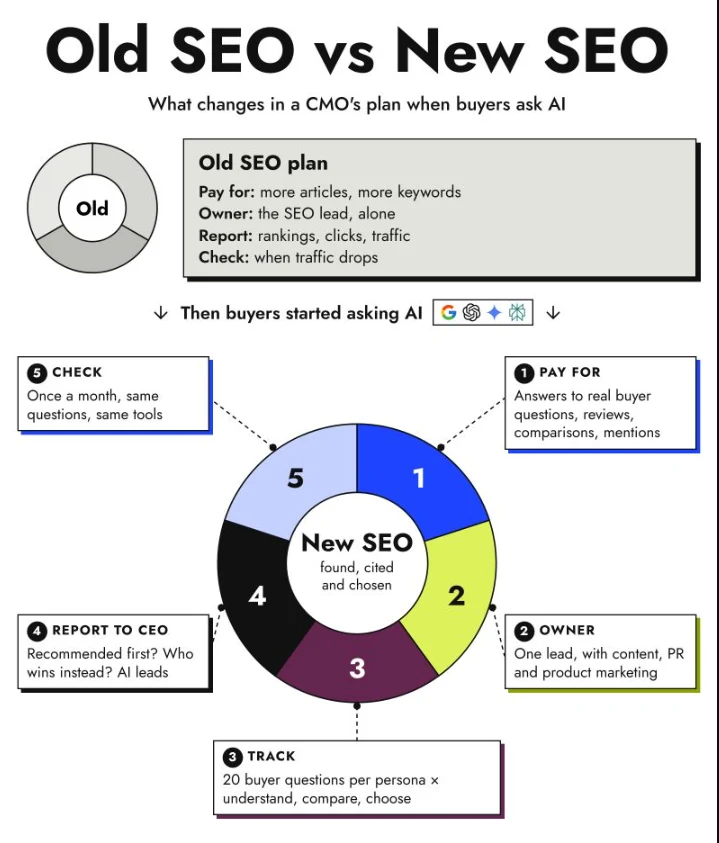
Old SEO: rank, get the click, count the traffic.
New SEO: get found, cited and chosen. Here's what it changes in a CMO's plan ↓
The goal used to be page one.
Now a buyer asks Google's AI Mode or ChatGPT one question and gets a shortlist of brands. Often they don't need to click.
So a report built on rankings and traffic can look healthy while you lose deals.
What I'd change, line by line:
1. What you pay for
Old: more articles for more keywords.
New: fewer pages, each answering a real buyer question, plus reviews, comparison pages and mentions on sites your buyers trust.
2. Who owns it
Old: the SEO lead, alone.
New: one owner, with content, PR and product marketing on the same monthly plan.
3. What you track
Old: a keyword list.
New: 20 buyer questions per persona (founder, CMO, head of marketing), across three buying stages: understand, compare, choose.
4. What you report to the CEO
Old: rankings, clicks, traffic.
New: keep those, and add how often AI recommends you first, who it picks instead, and leads from AI visits.
5. How often you check
Old: when traffic drops.
New: once a month, same questions, same tools.
The common mistake: cutting SEO to fund "AI".
The new work sits on top of the old one. AI answers still lean on pages search engines can find and trust.
Test this week: ask ChatGPT 5 "compare" questions your buyers ask. If you rank on Google but AI recommends a competitor, your report shows half the picture.
Which line of your SEO plan would you change first?
I go deeper on SEO budgets for the AI era in The AI Marketer, my free weekly newsletter.
0 likes · 3 views · Nov 5, 2026
Old SEO: rank, get the click, count the traffic. New SEO: get found, cited and chosen. Here's what it changes in a CMO's plan ↓ The goal used to be page one...
