Built with Framer
Ghostflow AI Automation Agency Website Design

Shivansh Tomar



Ghostflow — System-First AI Automation Agency Website
Overview
Ghostflow is an AI automation agency that designs and owns reliable systems for modern teams.
This project focused on creating a calm, credible single-page website that positions Ghostflow as a systems partner, not a tool-first automation shop.
The goal was to communicate reliability, ownership, and long-term thinking—without SaaS tropes, hype, or overexplaining.
The Problem
Most AI automation agencies struggle with trust and differentiation.
Their websites often:
Focus on tools instead of systems
Feel like SaaS landing pages despite selling services
Overpromise speed while ignoring reliability
Fail to convey ownership or long-term responsibility
For Ghostflow, the challenge was clear:
How do you communicate durable automation and operational ownership in a single page—without sounding generic or salesy?
Goals
The site needed to:
Position Ghostflow as a system-first automation agency
Speak directly to founders and operators, not hobbyists
Build trust before introducing engagement terms
Work as a single-page narrative without feeling shallow
Filter low-intent leads while encouraging serious conversations
Strategy & Approach
Single-Page Narrative Design
Rather than multiple pages, the site was structured as a guided flow:
Clear positioning and calm confidence in the hero
System-level pain points instead of surface automation issues
A before/after transition to show operational impact
A bento section to communicate philosophy and capability
A simple, operator-friendly process
Testimonials placed before engagement plans
Structured packages based on ownership, not hours
A soft but confident closing CTA
Each section exists to answer one specific question in the visitor’s mind.
Language Choices
The copy intentionally avoids:
“Zapier + AI” framing
Feature-heavy explanations
Buzzwords that signal novelty over durability
Instead, it focuses on:
Reliability
Change tolerance
Ownership
Systems that don’t need babysitting
This helped position Ghostflow as a long-term partner rather than a setup service.
Key Sections
Pain & Diagnosis
The pain points focus on system fragility, not task inefficiency:
Workflows breaking under change
Automation without ownership
Logic is scattered across tools
Teams are unable to trust systems unattended
These speak to teams who have already tried automation—and felt its limits.
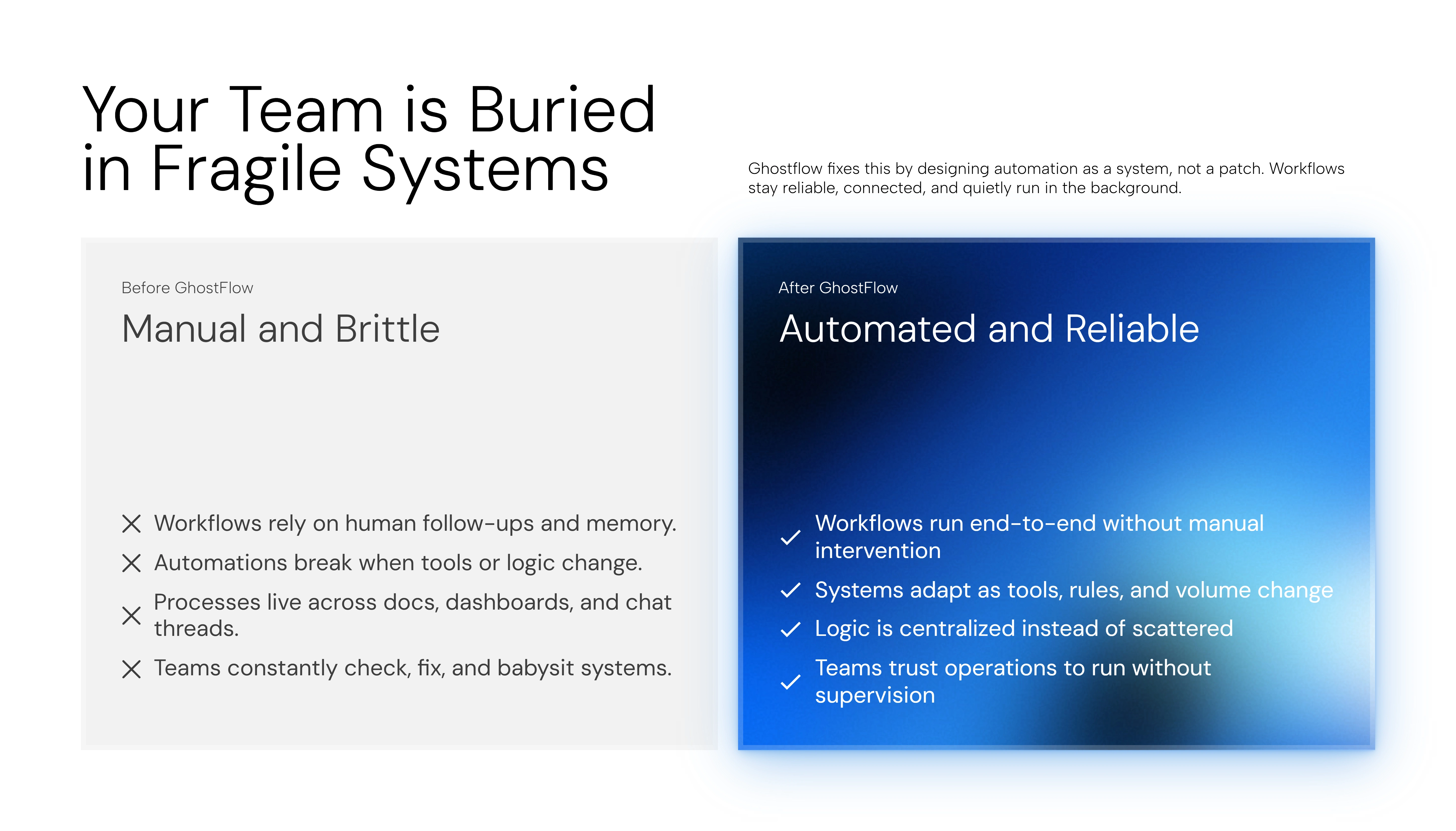
Before / After Transition
This section contrasts:
Before:
Manual, fragile, human-dependent operations
After:
Reliable, automated, system-owned workflows
This creates clarity without exaggeration.
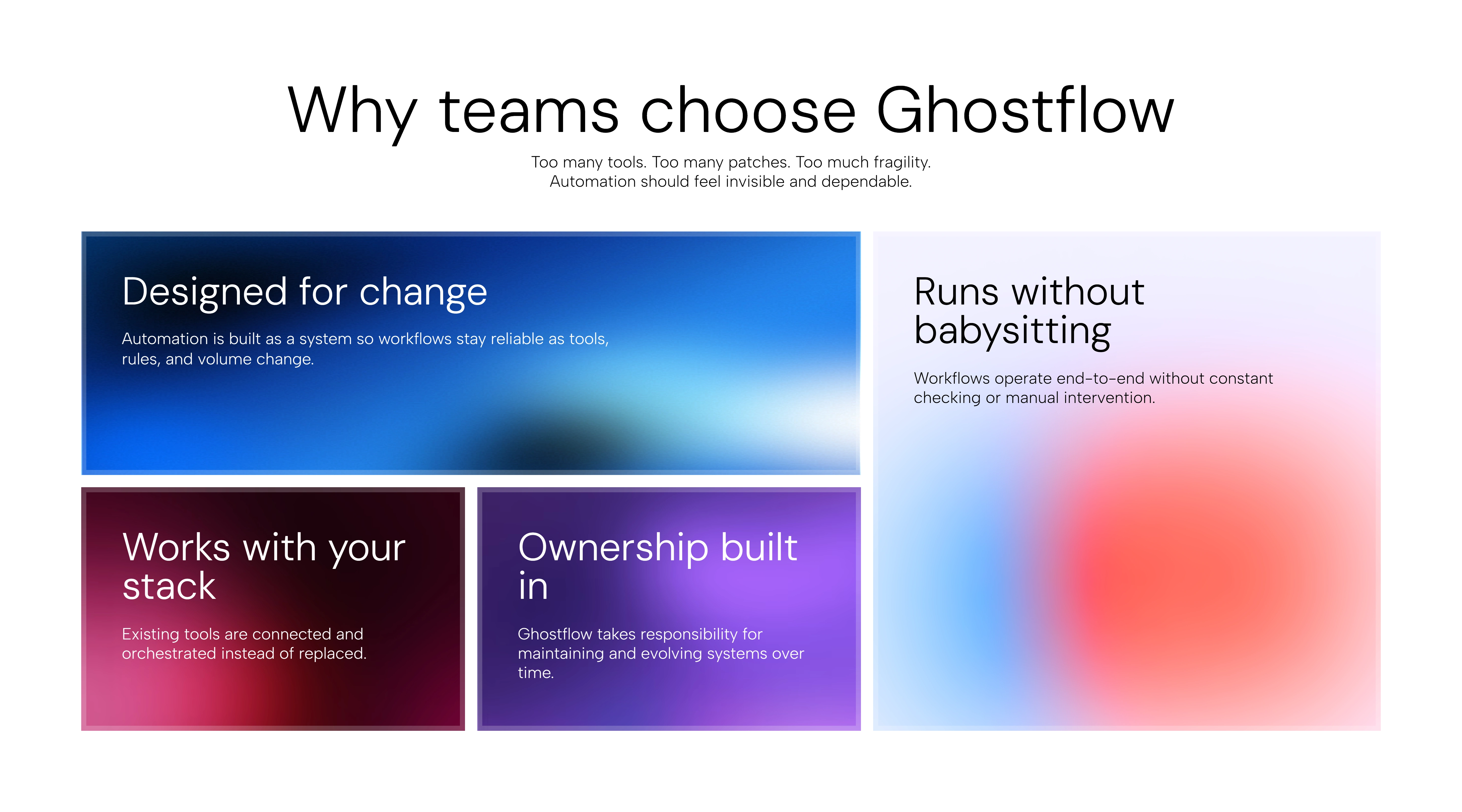
Bento Section
A four-card bento layout communicates Ghostflow’s core philosophy:
Designed for change
Runs without babysitting
Works with your stack
Ownership built in
Each card uses a single sentence for clarity and scanability.
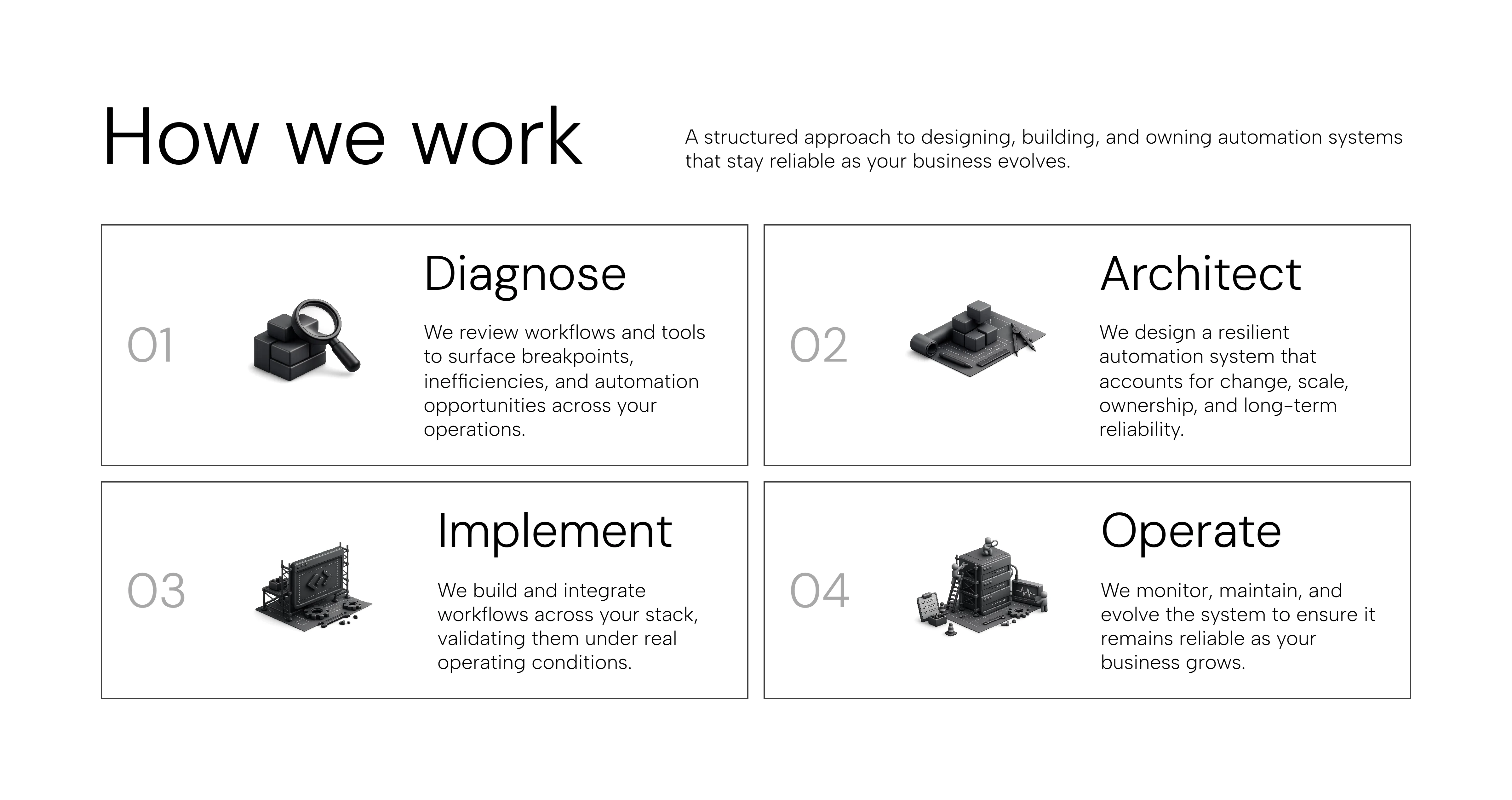
Process
Instead of generic “Discover / Build / Scale” language, the process reflects how operators think:
Diagnose
Architect
Implement
Operate
This reinforces Ghostflow’s role as an ongoing systems owner.
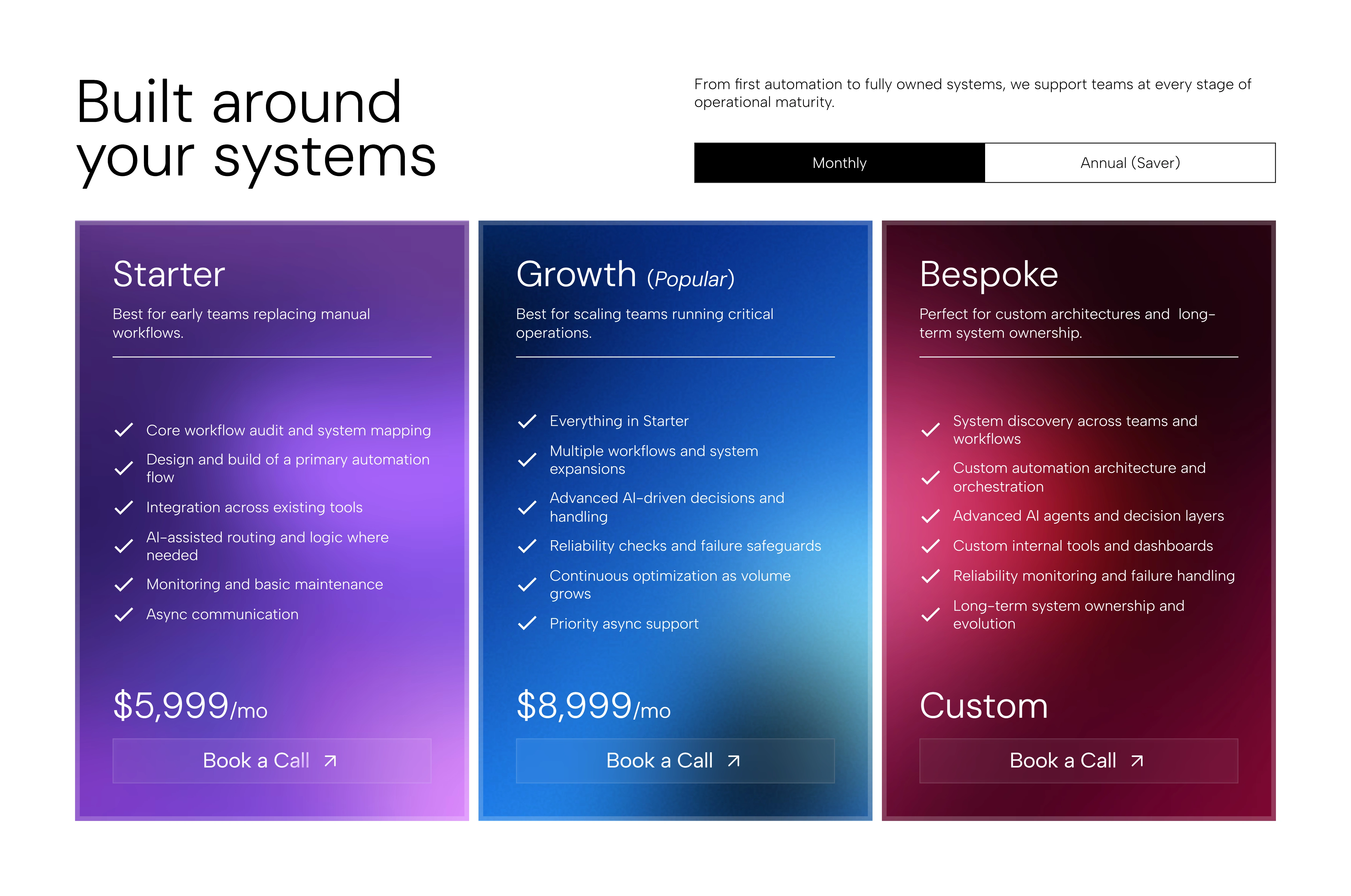
Engagement Plans
Pricing is structured around engagements, not hours or deliverables.
Each package is scoped by:
Workflow complexity
System criticality
Level of ownership required
This avoids commodity pricing and reinforces long-term responsibility.
Tools & Implementation
Framer for layout, responsiveness, and performance
Figma for structure and layout planning
Custom UX copywriting for positioning and conversion
The site was built as a reusable template for automation agencies with similar ICPs.
Outcome
The final result is a calm, credible single-page website that:
Clearly differentiates Ghostflow from generic automation shops
Builds trust before engagement discussions
Filters leads through tone and structure
Communicates maturity without enterprise heaviness
The site feels intentional, confident, and operationally grounded.
Key Learnings
Clear positioning beats feature depth
Testimonials are most effective before pricing
Operators respond better to system language than tool language
Simplicity, when intentional, feels premium
Conclusion
Ghostflow demonstrates how thoughtful structure, restrained copy, and system-level thinking can turn a single-page website into a serious business asset.
Automation isn’t about speed.
It’s about trust.
Like this project
Posted Feb 4, 2026
Created a single-page website for Ghostflow, highlighting it as a system-first automation partner.
Likes
1
Views
6
Timeline
Jan 29, 2026 - Feb 4, 2026