Eduversita | End-to-End Kajabi Development

Maryam Farooq


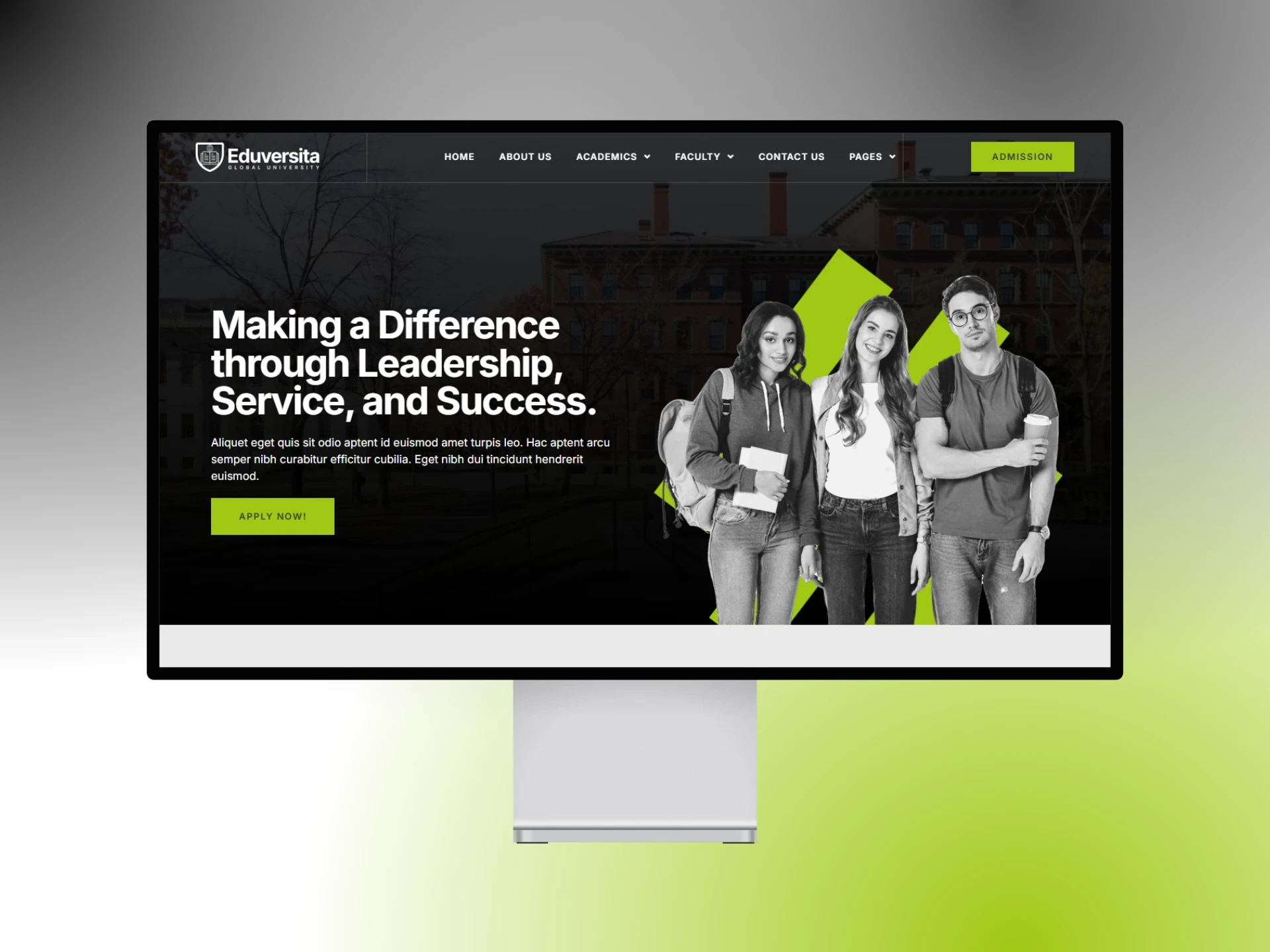
Education Platform
End-to-End Kajabi Development
Project Overview
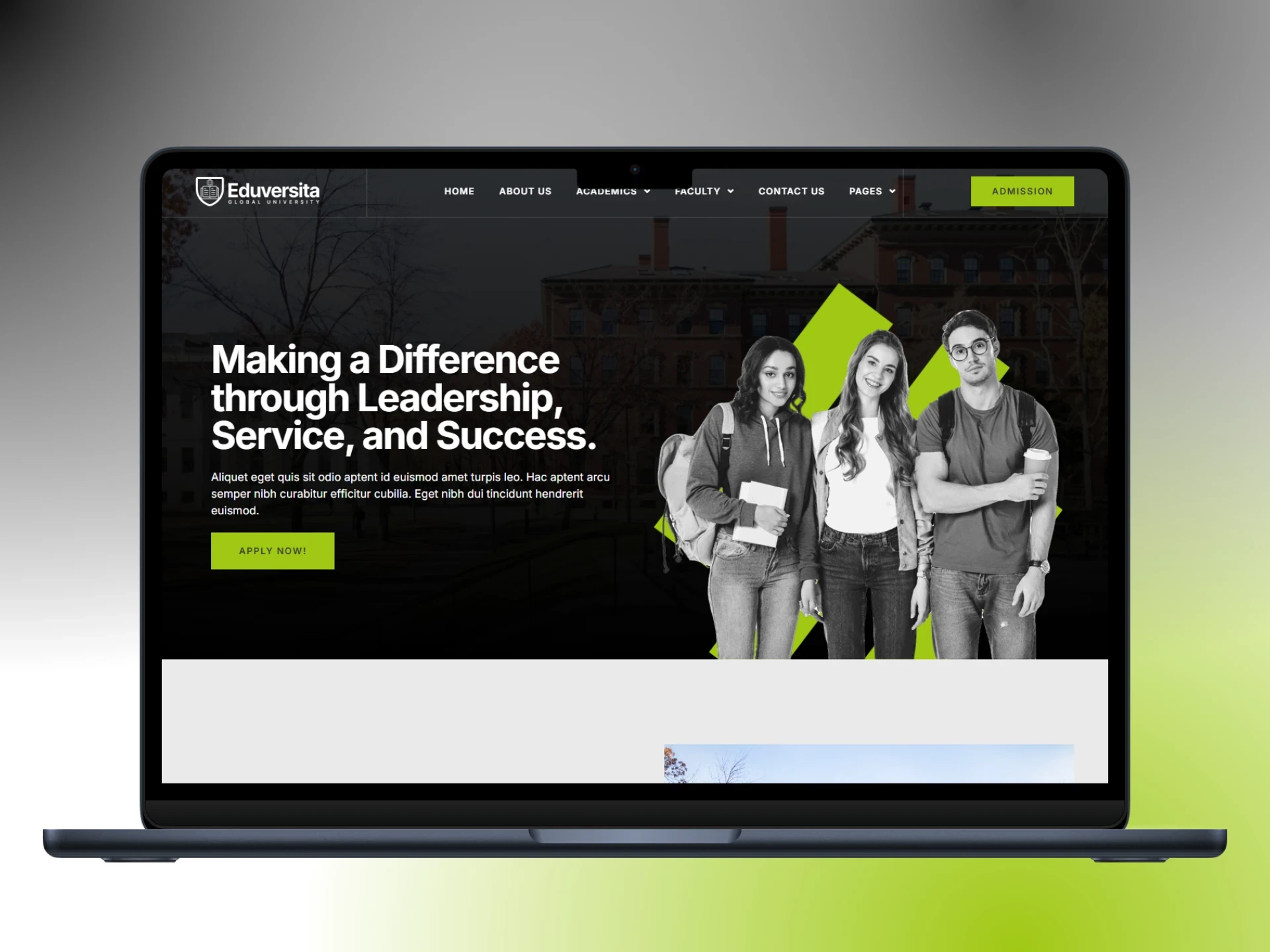
This project involved developing a complete digital education platform combining a custom website experience with Kajabi's education and membership infrastructure.
The goal was to create a professional online presence for an education-focused business while connecting the public-facing website with the systems required to deliver courses, manage students, capture leads, process offers, and automate communication.
I worked across the project from the initial interface and platform planning through implementation, configuration, integrations, testing, and launch.
The Initial Challenge
The project needed to solve two connected problems.
First, the business needed a modern and structured website that could clearly communicate its educational offering and guide visitors toward the appropriate courses or programs.
Second, the education experience needed a backend platform capable of managing:
Courses
Students
Membership access
Offers
Payments
Email communication
Lead capture
Automated customer journeys
Rather than treating the website and learning platform as separate products, the implementation was planned as a connected ecosystem.
My Role
I worked as the developer responsible for taking the project from the initial design stage through implementation and launch.
My work covered:
Figma-to-platform implementation
Website development
Kajabi configuration
Course setup
Product and offer configuration
Membership structure
Landing pages
Forms and lead capture
Checkout configuration
Email sequences
Automation workflows
Domain configuration
Third-party integrations
Responsive development
Testing
Launch and post-launch refinement
01 — Discovery & Planning
The first stage was understanding the business model and how users would move through the platform.
We mapped the primary journey:
Visitor → Landing Page → Lead / Offer → Checkout → Purchase → Course Access → Email / Automation
This helped determine which parts needed to be handled by the website and which could be managed through Kajabi.
The platform structure was planned around three main areas:
Marketing Layer
Public website, landing pages, content, SEO, and lead generation.
Conversion Layer
Offers, forms, checkout, pricing, and purchase flows.
Education Layer
Courses, lessons, student access, memberships, and educational content.
02 — Figma to Development
The project started with the interface designs in Figma.
Instead of simply copying individual screens, the designs were translated into reusable website sections and responsive layouts.
The implementation focused on:
Typography
Spacing
Layout systems
Buttons
Navigation
Content sections
Cards
Forms
Course sections
Calls to action
Responsive behavior
The objective was to preserve the visual system from Figma while making the actual website functional and editable.
03 — Website Development
The website was developed as the primary public-facing layer of the platform.
Core sections were structured around:
Homepage
About
Programs
Course information
Educational content
Landing pages
Contact / lead forms
Conversion sections
Calls to action
Reusable sections made it easier to maintain consistency across different pages while allowing individual pages to be customized for different campaigns or educational offerings.
04 — Kajabi Setup
Kajabi was used as the core education and business platform.
The platform was configured around the requirements of the education business, including:
Products
Courses
Lessons
Student access
Offers
Pricing
Membership access
Landing experiences
Forms
Email communication
Automations
The goal was to create a system where a user could move from discovering a program to purchasing it and accessing the educational content without unnecessary manual intervention.
05 — Course Architecture
The educational content was organized into structured courses and lessons.
The course architecture separates:
Product → Modules → Lessons → Student Access
This makes educational content easier to manage and allows new modules and lessons to be added without rebuilding the entire platform.
Content access was also connected to the relevant offers so that purchasing a specific product could automatically provide the appropriate course access.
06 — Offers & Checkout
The commercial side of the platform was configured around Kajabi Offers.
Offers connect the educational products with the purchasing experience.
The workflow was structured around:
Course/Product → Offer → Checkout → Payment → Access
This means that once a user completes the required purchase flow, the corresponding educational product can be made available to that user.
Checkout pages were also configured to maintain consistency with the overall website experience.
07 — Lead Capture
Lead generation was integrated into the website and Kajabi ecosystem.
Forms and conversion sections were used to collect visitor information and move potential students into the appropriate marketing journey.
Captured leads could then be organized within the platform and connected to follow-up communication.
This created a path from an initial website visit through lead capture and eventual conversion.
08 — Email & Automation
Automation was an important part of reducing manual work after users interacted with the platform.
Automated workflows can be triggered by actions such as:
Form submission
Product purchase
Course enrollment
Offer interaction
Membership access
Specific user actions
These workflows can then trigger relevant email communication or update the user's position within the customer journey.
The objective was to make the education platform operate as an automated system rather than requiring the business to manually manage every new student.
09 — Integrations
The platform was structured so Kajabi could work alongside external services where required.
Integration points can include:
Forms
Email services
Payment systems
Analytics
Marketing tools
Automation platforms
External website services
Where external tools were required, the integration layer was kept separate from the core education structure so that individual services could be changed without rebuilding the entire platform.
10 — Custom Development
Where native platform functionality wasn't sufficient, custom website implementation was used to achieve the required interface and interaction.
This included custom:
HTML
CSS
JavaScript
Responsive layouts
UI components
Section structures
Styling
Interaction behavior
The purpose of custom development was not to replace Kajabi's core functionality, but to extend it where the project required a more customized experience.
11 — Responsive Development
The website was tested and refined across different screen sizes.
Particular attention was given to:
Navigation
Typography
Section spacing
Images
Cards
Forms
Course content
Buttons
Checkout experiences
The goal was to maintain a consistent experience between desktop, tablet, and mobile users.
12 — Domain & Platform Configuration
The final stage involved connecting the platform infrastructure with the production domain.
This included configuring the relevant domain settings and ensuring that the public website, Kajabi environment, and required services worked correctly together.
Production configuration was tested before the final launch.
13 — Testing
Before launch, the complete user journey was tested rather than testing individual pages only.
The testing process included:
Website
Navigation
Links
Responsive layouts
Forms
CTA buttons
Landing pages
Content
Kajabi
Course access
Product configuration
Offers
Student enrollment
Membership access
Email sequences
Automations
Conversion Flow
Landing Page → Form / Offer → Checkout → Payment → Enrollment → Course Access
Testing the complete flow helped identify issues that would not necessarily be visible when testing individual components separately.
14 — Launch
After implementation and testing, the platform was prepared for production.
The launch included:
Final website configuration
Kajabi configuration
Domain connection
Course setup
Offer configuration
Automation verification
Responsive testing
Final content checks
Production deployment
The result was a connected education platform rather than simply a marketing website.
End-to-End Architecture
The final ecosystem can be understood as:
Figma
↓
Website / Frontend
↓
Landing Pages & Lead Capture
↓
Kajabi
↓
Products & Offers
↓
Checkout / Payment
↓
Student Enrollment
↓
Course & Membership Access
↓
Email & Automation
Each layer has a specific purpose while working together as one customer journey.
Technology & Platform
Design
Figma
Website
Wix / Custom Website Development
HTML
CSS
JavaScript
Responsive Development
Education Platform
Kajabi
Courses
Products
Offers
Memberships
Student Management
Marketing
Landing Pages
Forms
Lead Capture
Email Sequences
Automations
Infrastructure
Custom Domain
DNS Configuration
Analytics
Third-Party Integrations
Outcome
The project transformed the original education concept and Figma designs into a functional digital education ecosystem.
The final implementation connected the website, lead-generation experience, Kajabi education infrastructure, offers, checkout, student access, and automated communication into a single end-to-end workflow.
The result was a platform that could attract visitors, convert them into students, process their enrollment, provide course access, and automate key parts of the student journey.
Final Takeaway
This project demonstrates my approach to end-to-end Kajabi development, combining frontend implementation with platform configuration, education infrastructure, conversion flows, automation, integrations, and production deployment.
Rather than treating Kajabi as simply a course-hosting tool, I used it as part of a broader digital product ecosystem where the website, marketing funnel, education platform, customer data, and automated workflows work together.

Like this project
Posted Sep 23, 2026
End-to-end Kajabi education platform built from Figma to launch, integrating custom website development, courses, memberships, offers, checkout, and automation