AI Workflow Architecture Development

Eduard Shypovych


Project title
AI Workflow Architecture Development
Project description
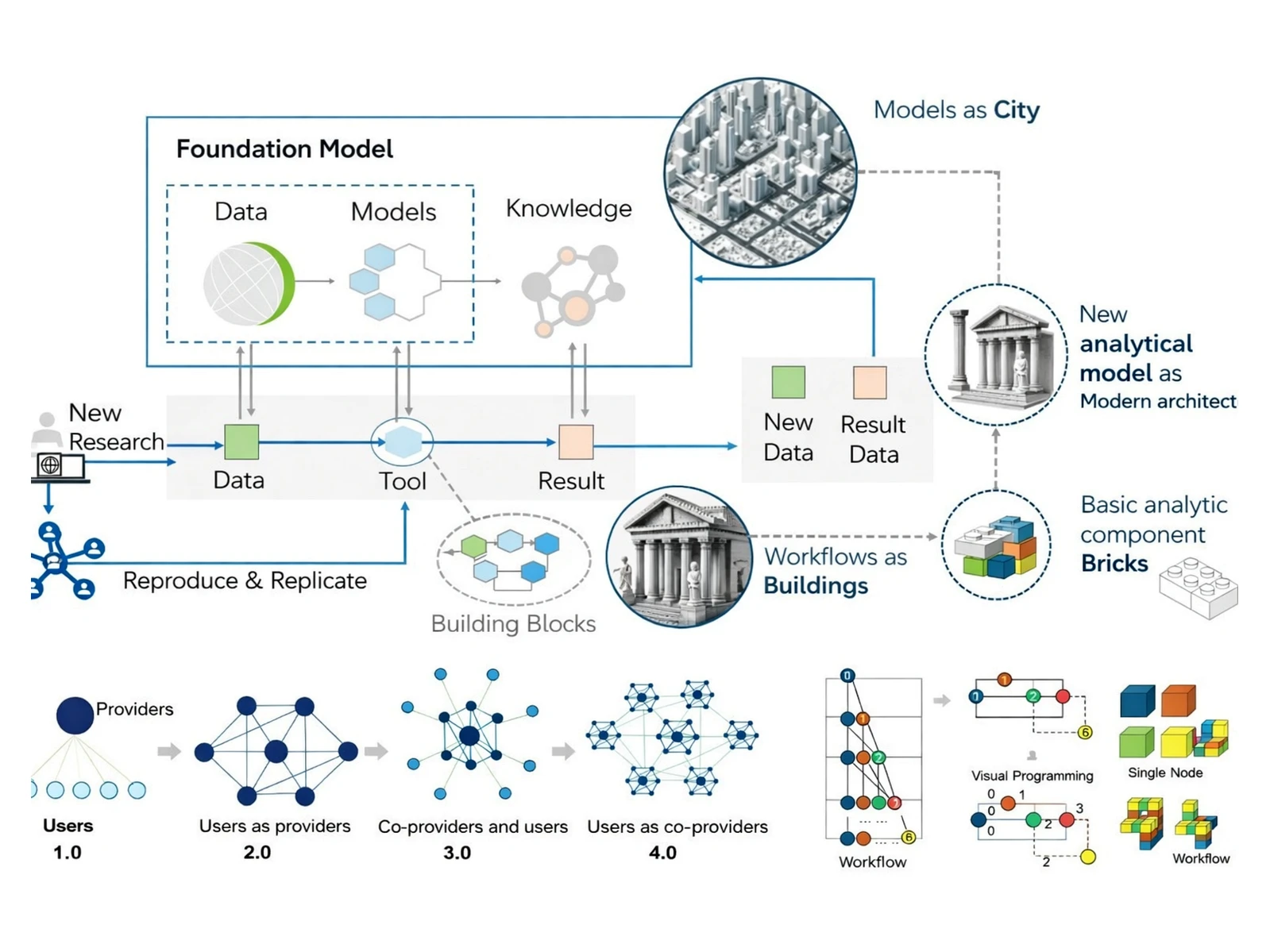
This project focused on architecting a modular AI workflow system that transforms research inputs into structured data assets, reusable tools, composable workflows, and analytical models. The goal was to create a scalable foundation where smaller building blocks could be connected into larger research and analytics pipelines without rebuilding the system from scratch each time.
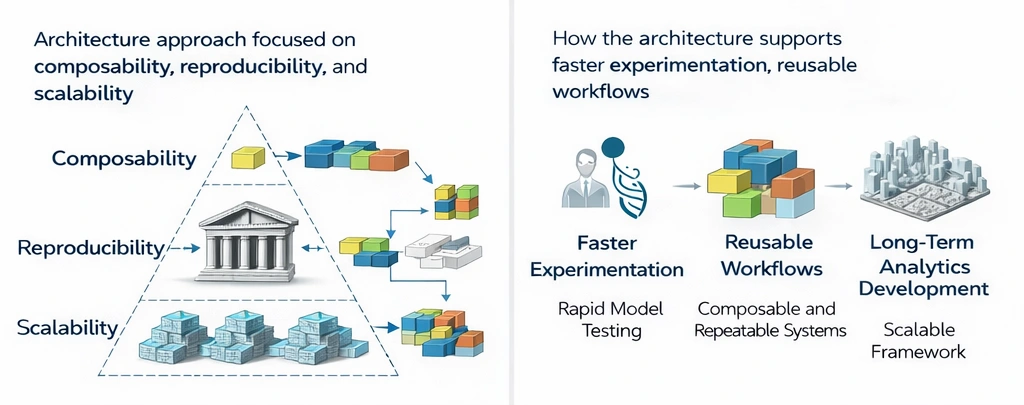
I designed the architecture to support flexibility, reproducibility, and long-term reuse. Instead of treating the platform as a single linear process, I structured it as an ecosystem of connected components that could power data processing, model interaction, knowledge reuse, and results generation across multiple analytical use cases.
My role
AI/ML Architect
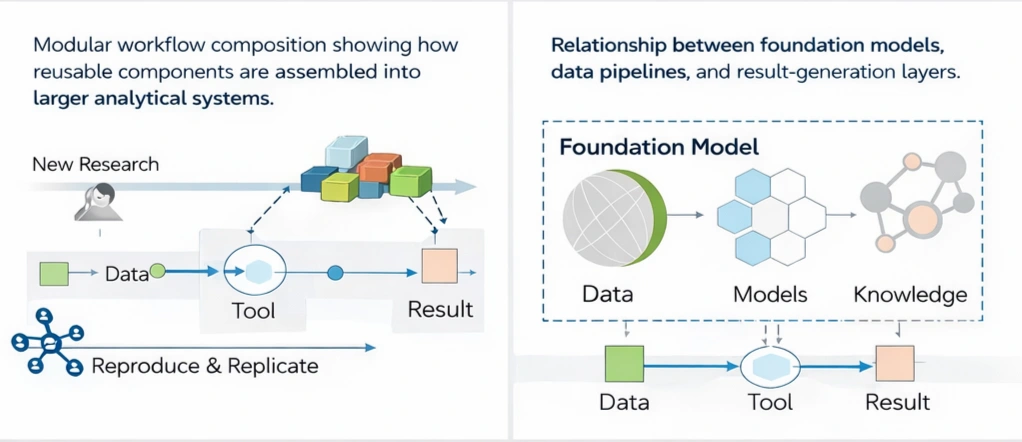
As the AI/ML Architect, I designed the overall architecture for an intelligent research and analytics platform. I defined how foundation models, data pipelines, tools, knowledge layers, and workflow components interact in a unified system. You focused on building a modular, scalable, and reusable framework that supports experimentation, replication, and the creation of new analytical models from structured building blocks.
My approach
I approached this project by designing the system as a modular ecosystem rather than a single linear pipeline. First, I mapped how new research data flows through tools and processing layers into result data and reusable knowledge assets. Then, I structured the platform into reusable analytical components, where small building blocks could be assembled into larger workflows and higher-level analytical models. I also emphasized reproducibility, so research outputs could be replicated and extended consistently. To make the system scalable and adaptable, I treated workflows as composable units and models as larger architectural systems built on top of those units. My focus was on flexibility, reusability, and creating a foundation that could support both technical users and collaborative contributors.
Scope of work
Designed the end-to-end AI workflow architecture
Defined relationships between research inputs, tools, knowledge layers, and output pipelines
Structured the platform into reusable workflow components
Planned model interaction patterns for scalable analytics generation
Designed reproducible and extensible data-processing flows
Created a modular system for assembling larger analytical models from smaller building blocks
Improved collaboration readiness through reusable and composable architecture
Built a scalable foundation for future AI-driven research and analytics workflows
Like this project
Posted Mar 20, 2026
Designed a modular AI workflow architecture for research-to-analytics model development, turning complex research inputs into resusable tools and workflows.