IMPROVING READING – ONE PHONIC AT A TIME

Asfandyar Munir

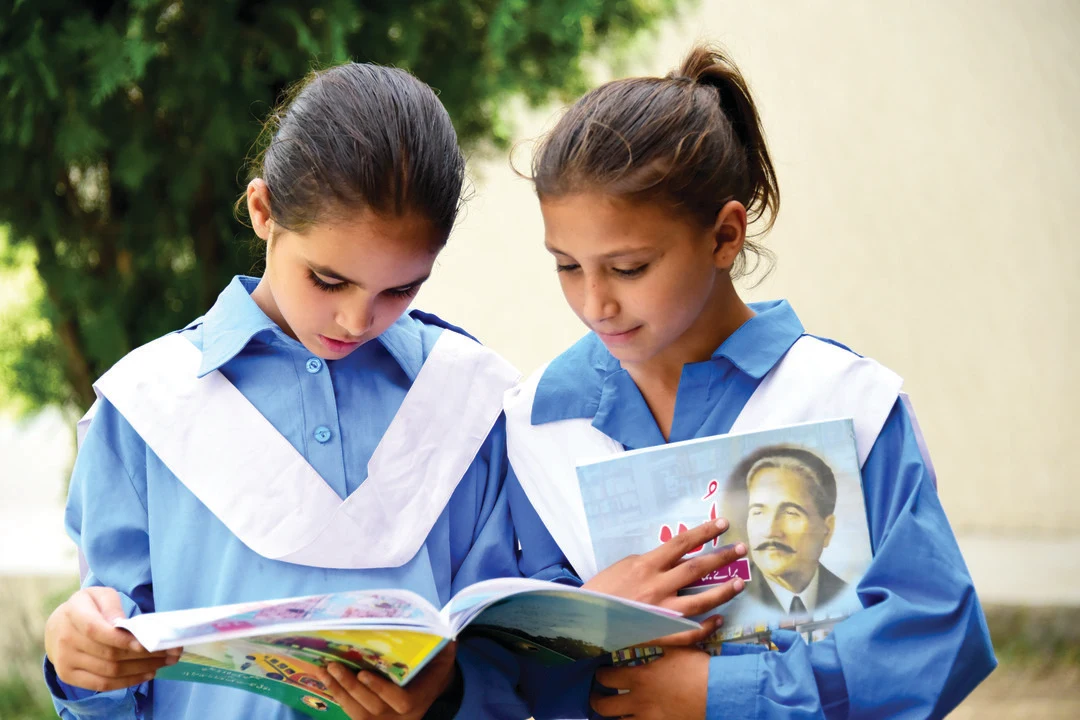
The USAID-funded Pakistan Reading Project launched in 2013 as a five-year intervention to improve early grade reading in schools across Pakistan. Stated to be the largest reading project in the world, the project received a 2-year no-cost extension and is to finish its intervention in June 2020.
At the time of inception, the objectives of the project were very clear and concise, and as of now, in the sixth year, the project stands accomplishing almost all of its objectives. Over 25,000 teachers trained, over 1.3 million children reached, over 5 million reading and learning material provided to schools, over 8000 classroom based libraries established, over 20,000 tablets provided to teachers and over 50 reading focused policies introduced.
It was very easy to see the impact the project had on the intervention kids. Independent reading assessments were carried out. The teachers were happy, the parents were happy, the donors and the Government stakeholders were happy. But for me, that was not the success.
USAID-funded Pakistan Reading Projects (PRP’s) method was simple. Urdu teachers from 4-5 local schools would be nominated to form a Teacher Inquiry Group (TIG). These TIG’s would meet once a month at a designated host school and discuss their progress, their successes and any hurdles they faced. A School Support Associate (SSA) nominated by the PRP would support them. The teachers were provided with lesson plans, student activity workbooks, flash cards, grade level readers and big books. With the use of phonics, skywriting, word breakdown through sounds and fascinating illustrated material, these teachers created magic in their classrooms, which was evident with the Early-Grade Reading Mid-line Assessment conducted by Management Systems International (MSI).
Being a part of this set-up, I would have a question from time to time. I would question the sustainability of the project. Will the teachers engage in colleague based trainings once we leave? Will the material still be displayed in the classrooms (It is available for free download at www.pakreading.org)? Will, teaching Urdu through phonics be adapted as the new norm, or will the system revert back to the decades old method of classroom teaching. All our efforts would be in vain, if this methodology would not sustain.
It was during one of our quarterly reports that I came across a story from a remote village in Baluchistan. The story of Abdullah, a primary school teacher in Government Boys Primary School, Abdul Hammad Khosa. The school is adjacent to the Government Girls Primary School, a PRP intervention school. One morning, Abdullah heard the sound of clapping coming from the adjacent school. The clapping sound was followed by Urdu syllables. The methodology fascinated him. After the class, Abdullah approached Ms. Naila, a PRP trained teacher from next door. He asked her to teach him the techniques learnt by her. Not only did she agree to teach him, but invited him to the TIG sessions as well. He implemented the techniques in his classroom and the results were marvelous. All he needed now was the material. Abdullah used the PRP website to download the material and printed a set of each to use in his classroom. Since then, not only has he seen the improvement in his students, but the overall enrollment of the school has increased as word has spread of the innovation in the classroom.
This story gives me hope. If we get more teachers like Abdullah, we can ensure that the techniques and the methodology will not fade away. And slowly and gradually we can ensure that our future generations are well versed with Urdu reading concepts. Reading enhances our creativity and our brain, paving way for a brighter and a smarter Pakistan.
Like this project
Posted Apr 9, 2025
The USAID-funded Pakistan Reading Project launched in 2013 as a five-year intervention to improve early grade reading in schools across Pakistan. Stated to be …
Likes
0
Views
2