
An audience-led approach to brand identity, emotional positioning and communication strategy.
01 / The Thinking
I believe a brand is like a human.
We don't speak to our friends the same way we speak to colleagues, family or business partners. Our identity remains the same, but our language, emotional expression and behaviour adapt to the relationship and environment.
I apply the same philosophy to branding.
Brand consistency shouldn't mean emotional uniformity.
02 / The Campus App: The Context
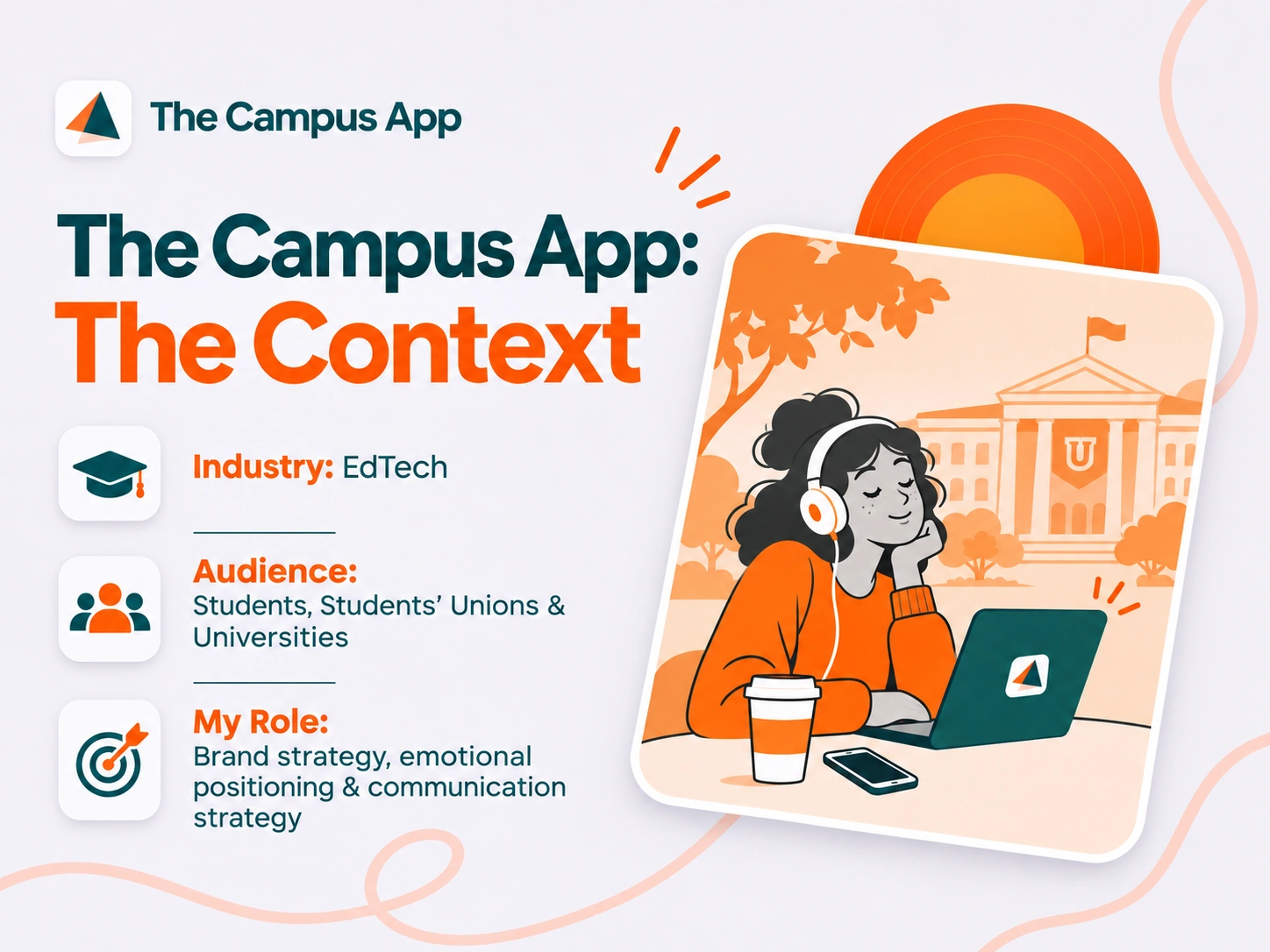
Industry: EdTech
My role: Head of Marketing
Scope: Brand strategy, emotional positioning, audience psychology, communication strategy and channel identity.
The Campus App was a student-focused technology platform operating across both B2C and B2B audiences, including students, universities, student unions and commercial partners.
My responsibility was to develop a brand communication ecosystem that could connect with these different audiences without losing its core identity.
03 / The Challenge
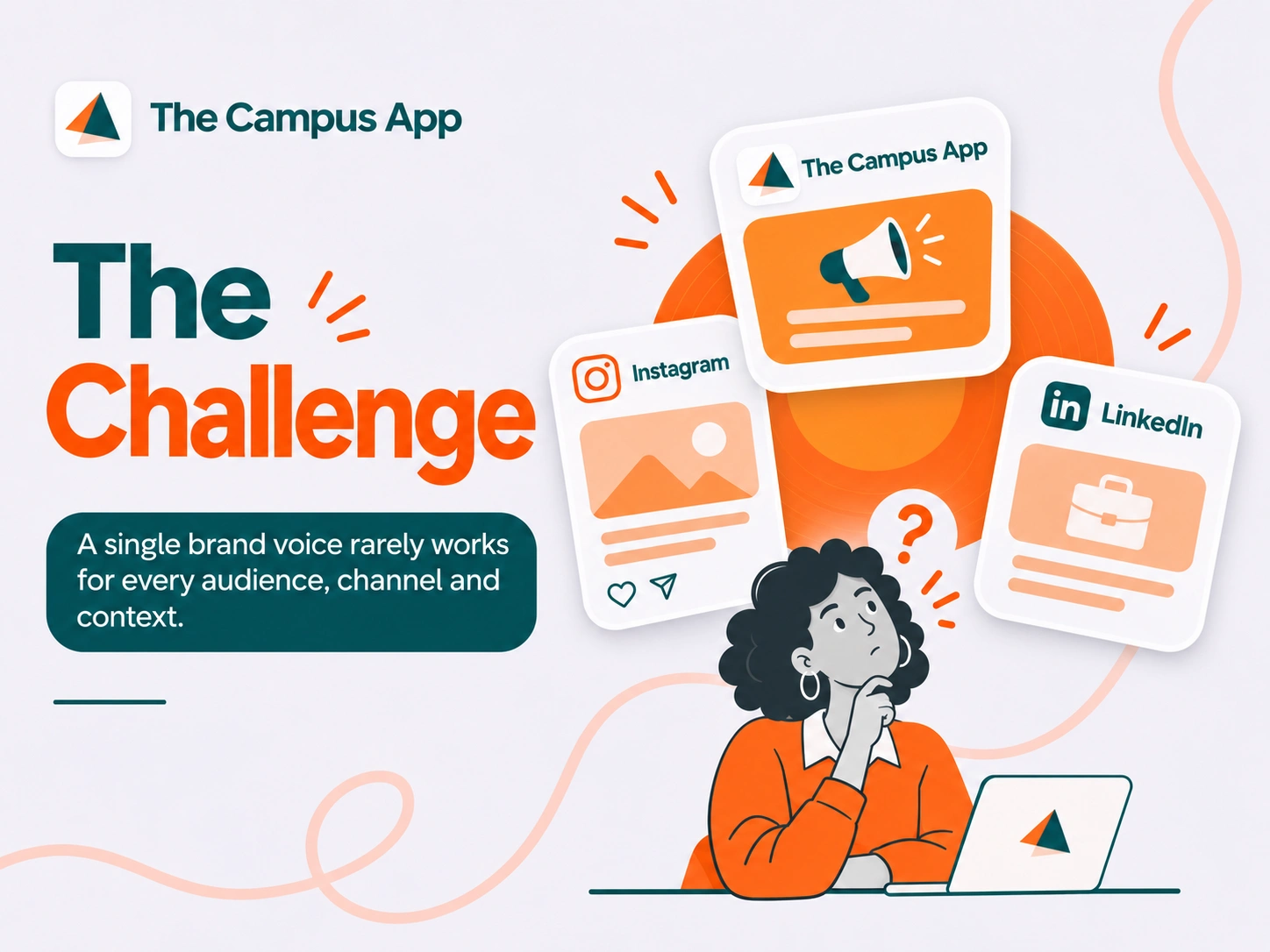
How do you build a brand that feels like a friend to a university student while remaining a credible partner to a university?
Many businesses define a tone of voice and replicate it across every channel. But audiences have different expectations, motivations and emotional needs.
The challenge wasn't creating different brand personalities. It was understanding which aspects of the same personality to express, when and why.
04 / The Framework
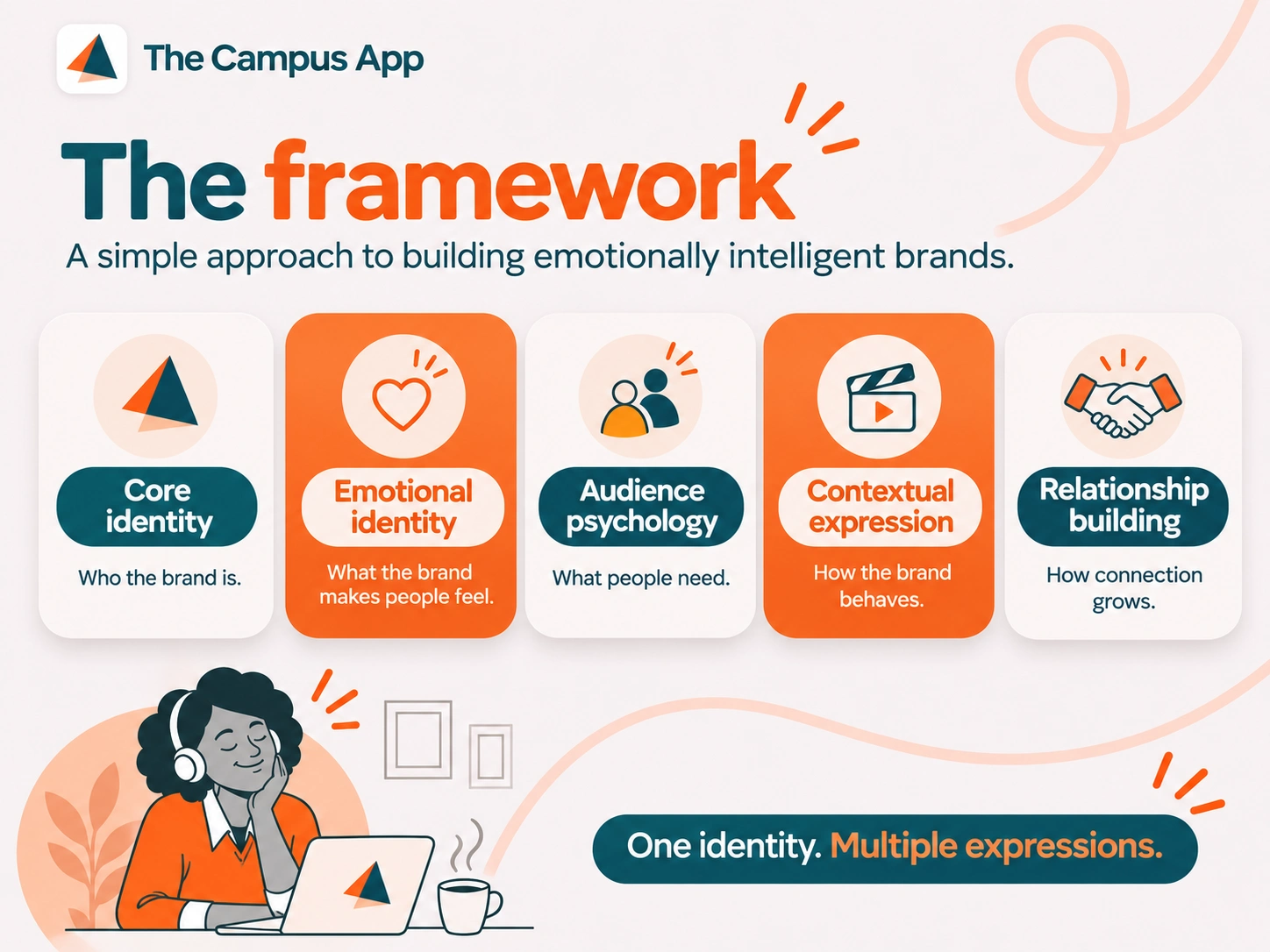
My approach to brand communication considers five interconnected layers:
Core identity: Who the brand fundamentally is.
Emotional identity: How the brand should make people feel.
Audience psychology: What influences people's behaviour, expectations and decisions.
Contextual expression: How the brand adapts to different environments.
Relationship building: How its connection with audiences evolves.
These layers inform decisions about messaging, tone, storytelling, creative direction and product communication.
Visual identity provides recognition. Emotional expression provides relevance.
05 / One Brand, Two Audience Realities
The Campus App needed to operate in two very different environments.
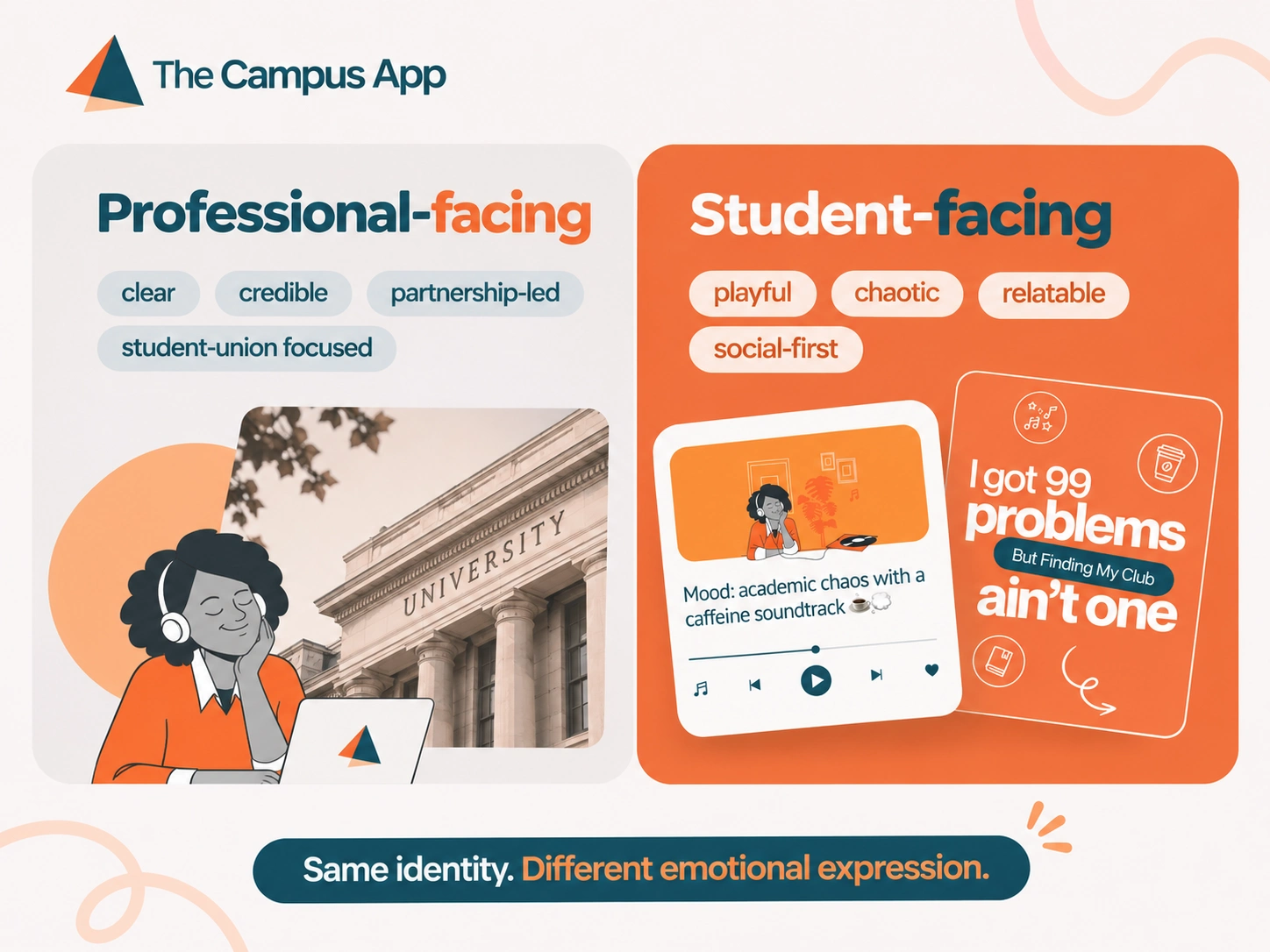
Student-facing | B2C
Students needed a brand that understood their everyday realities, spoke their language and felt naturally connected to university culture.
The emotional direction was playful, relatable, approachable and occasionally chaotic.
Professional-facing | B2B
Universities, students' unions and commercial partners needed to understand the platform's purpose, value and relevance to their institutional objectives.
The emotional direction was credible, informed, confident and collaborative.
The identity remained consistent. The relationship determined its expression.
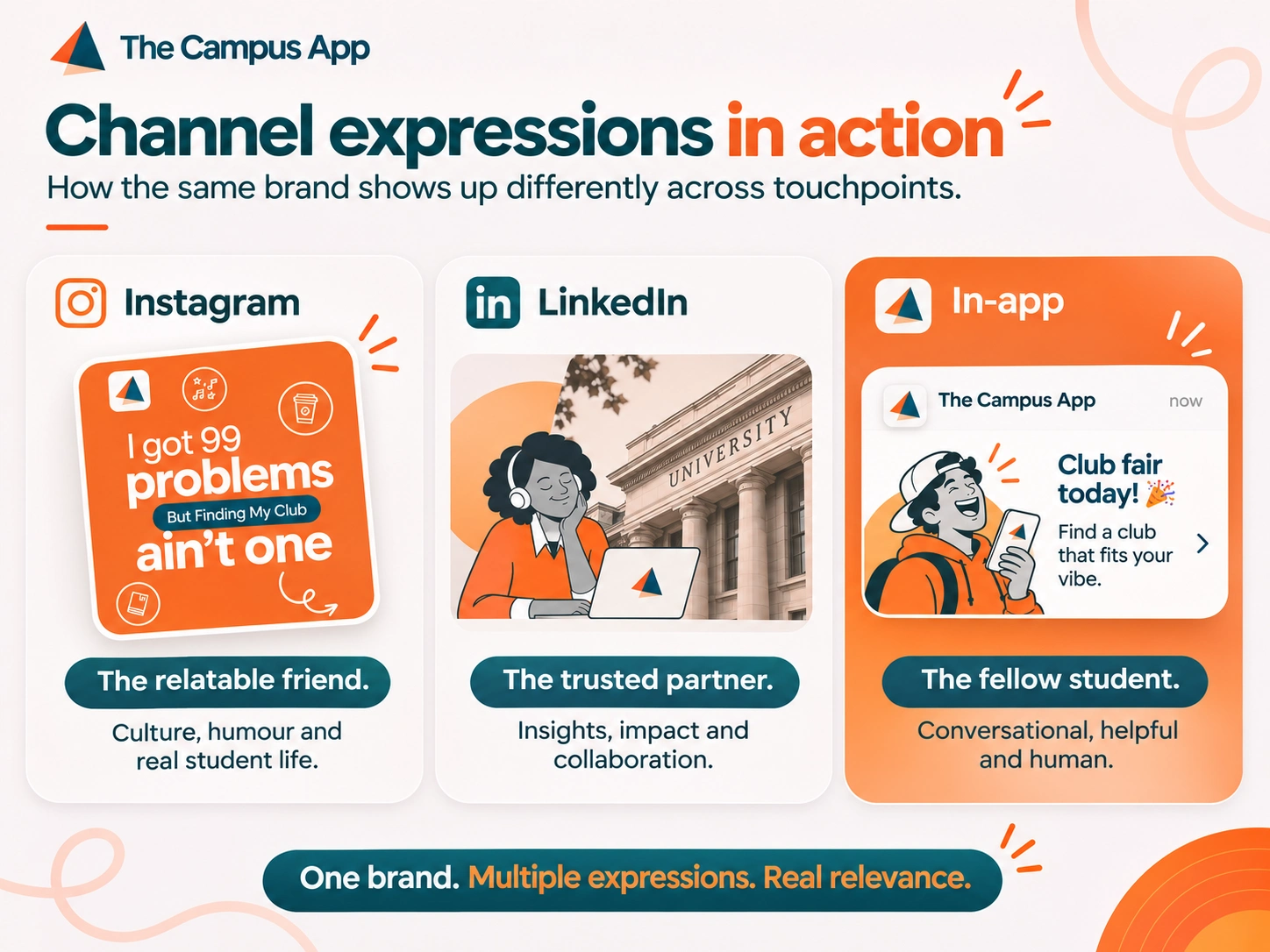
06 / Channel Expressions in Action
Instagram: The relatable friend
Playful, witty, self-aware and occasionally sarcastic.
Content reflected the realities of university life, from overthinking and academic chaos to caffeine dependency and social dilemmas.
The intention was to participate in student culture rather than simply advertise to students.
LinkedIn: The trusted partner
Professional, purposeful and commercially aware.
Communication focused on student experience, institutional challenges, industry insights and partnership opportunities.
The intention was to establish relevance and credibility among institutional stakeholders.
In-app: The chaotic university student
Conversational, humorous, spontaneous and full of personality.
Product communication was designed to feel like it came from a fellow student rather than a technology company.
The intention was to reduce the emotional distance between the product and its users.
07 / The Takeaway
A brand doesn't need to sound the same everywhere to remain recognisable.
Each touchpoint should have a defined strategic purpose, understand the emotional needs of its audience and express the brand accordingly.
This philosophy extends beyond social media into product marketing, customer experience, community building, leadership communication and brand storytelling.
For me, building a brand isn't just about defining what it looks like or sounds like. It's about defining how it behaves, how it makes people feel and how it builds relationships.
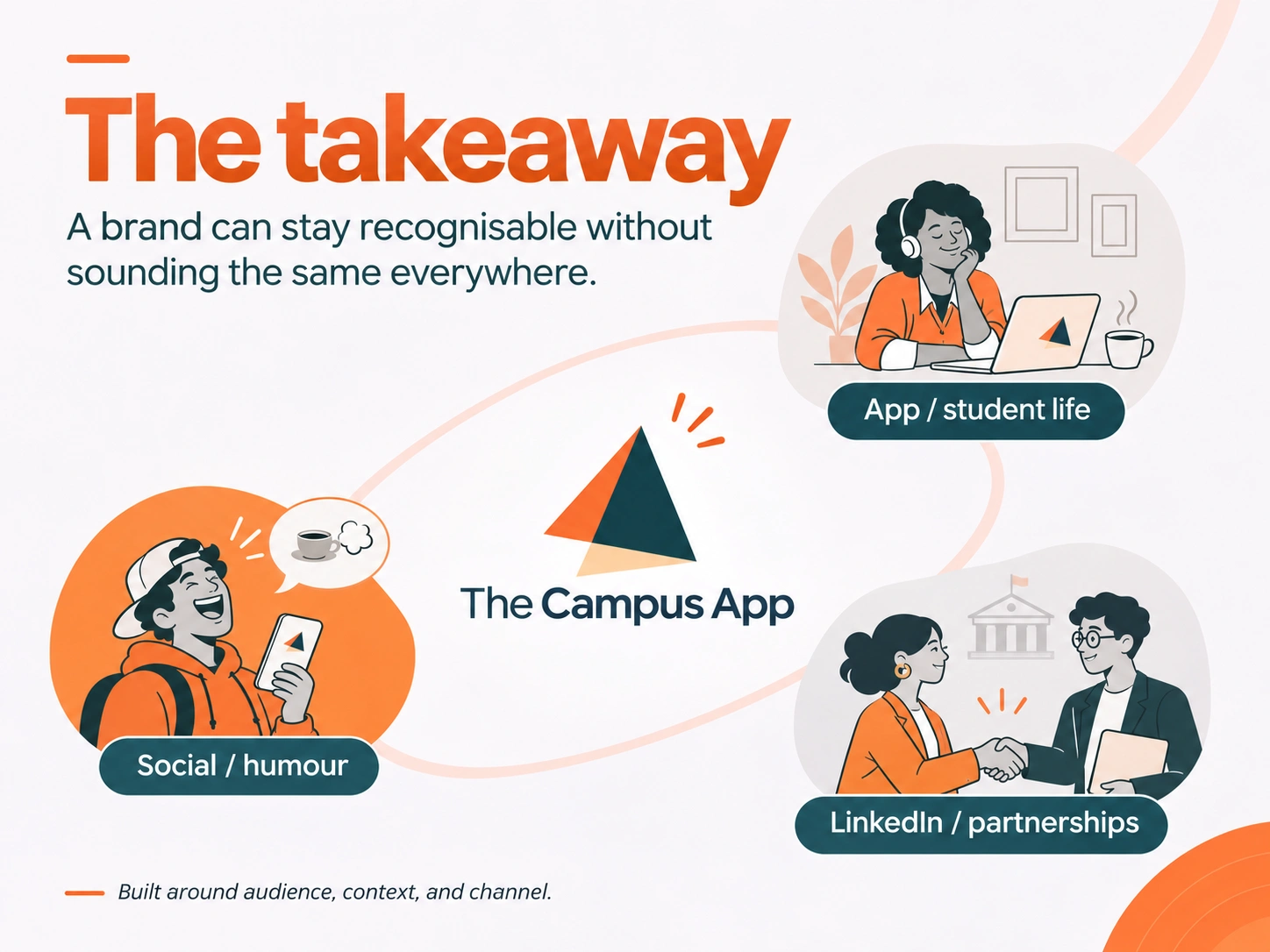
A brand should have one identity, not one emotion.
This retrospective case study presents selected examples from The Campus App. Detailed audience research, proprietary methodologies and internal implementation strategies have been intentionally excluded. Certain channel mockups are illustrative reconstructions.
0 likes · 0 views · Nov 22, 2026
brief decription in 160 chara A brand strategy case study exploring how one identity adapts its emotional expression across audiences, channels and touchpoints

