Speed-to-Lead With the Owner Still in Control

Ever F.


THE PROOF
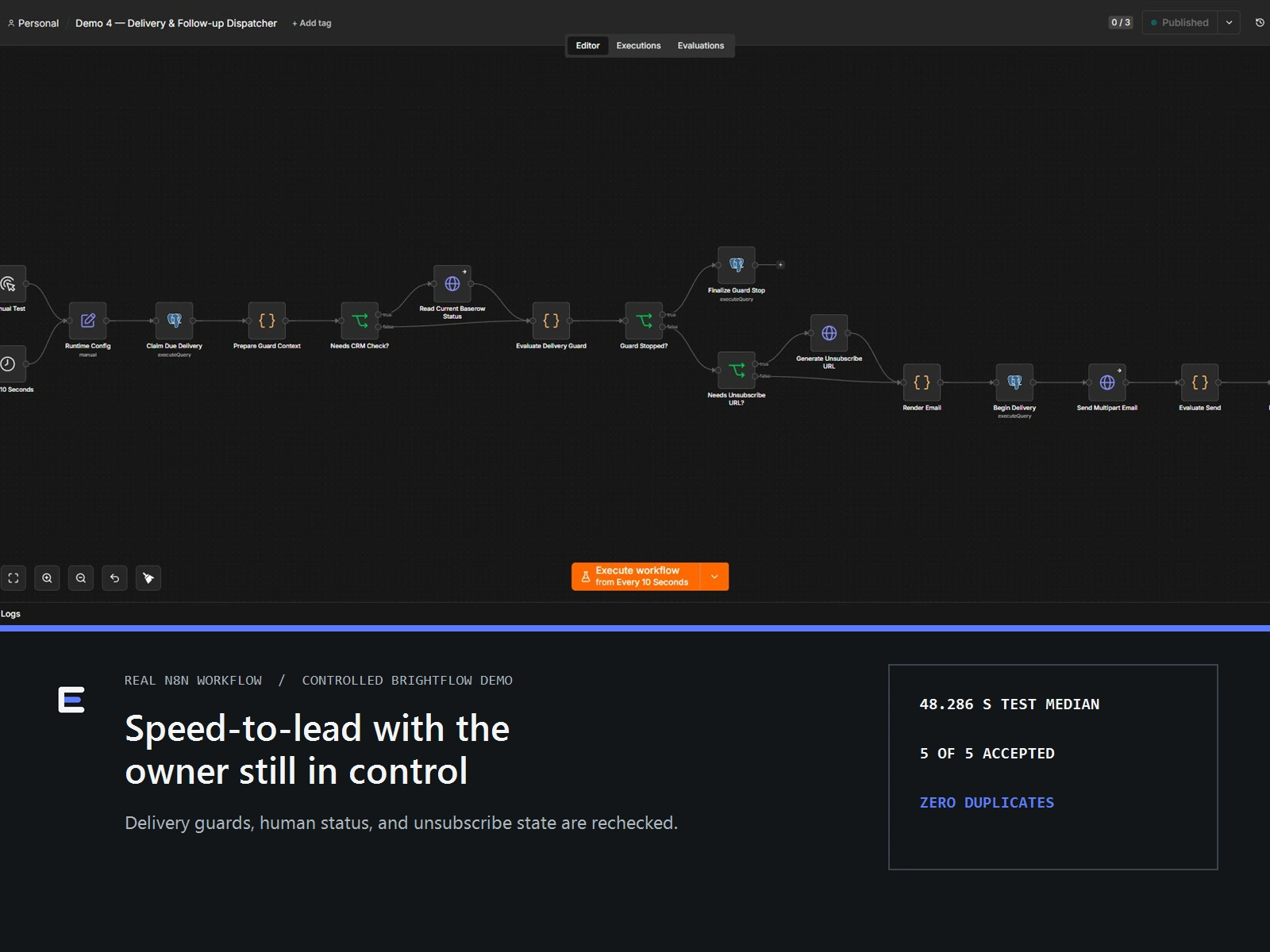
Five consecutive controlled test leads received initial replies in 50.465, 44.967, 42.457, 48.286, and 50.145 seconds. The median was 48.286 seconds and the maximum was 50.465 seconds.
Every accepted sequence sent one customer reply, one owner alert, two timed follow-ups, and one cold lead notice, then reconciled its Baserow record. There were no duplicate or error deliveries.
The five-run acceptance sequence is complete. The public Cloudflare Worker uses a hostname-authorized production Turnstile widget.
THE PROBLEM
A plumber may receive an inquiry while driving or working in a customer's home. A late reply can lose the job. A careless automatic reply can invent a price, imply that an appointment is booked, or keep following up after the owner steps in.
WHAT I BUILT
I built this demo for BrightFlow, a fictional plumbing company in Austin. The public form checks consent, bot signals, the request shape, a hidden spam field, and the rate limit before an approved test lead enters the private queue.
The private workflows classify text with personal details removed, write replies from approved business facts, alert the owner, update Baserow, and schedule exactly two follow-ups. PostgreSQL keeps the operational record. Before each send, the workflow checks human status and suppression. An ambiguous Gmail result goes to manual review instead of being sent again.
WHAT BROKE DURING TESTING
Run A exposed a timing bug. Follow-up deadlines had been set before the repaired initial email arrived, so both follow-ups fired immediately. I changed the database model so those deadlines stay at infinity until Gmail confirms the first delivery.
Run B passed timing but failed copy safety. I tightened the prompt and validators. A later run missed the response budget at 69.426 seconds because the model call and retry both ran long. I preserved the failure, reduced those timeouts to 15 and 8 seconds, reset the sequence, and reran acceptance from the beginning. The final five consecutive runs passed.
WHAT PASSED
• Five consecutive initial replies arrived in 42.457 to 50.465 seconds.
• The five-run median was 48.286 seconds.
• The accepted runs produced no duplicate or error deliveries.
• The first follow-up arrived about 130 seconds after the initial reply.
• The second arrived about 310 seconds after the initial reply.
• Approved prices stayed in deterministic code.
• All 28 automated safety and workflow checks passed.
• Database tests covered human takeover, suppression, duplicate events, and ambiguous delivery.
WHAT IS STILL OPEN
Production Turnstile and the five-run acceptance sequence are complete. Human takeover and emergency handling have automated and database evidence. A full live-mailbox takeover demonstration and a full-stack reboot remain optional extensions. The public form remains allowlisted.
BUILT WITH
n8n, PostgreSQL, Baserow, Cloudflare D1, Gmail, OpenRouter, TypeScript, and a protected public intake app.
STARTING PRICE
Lead-to-Client Autopilot: $700 plus $150 per month. The final quote depends on the client's CRM, sender identity, lead volume, compliance needs, and who owns monitoring.
BrightFlow is fictional. All timings and results are controlled test evidence, not a client result, conversion claim, revenue claim, or forecast.
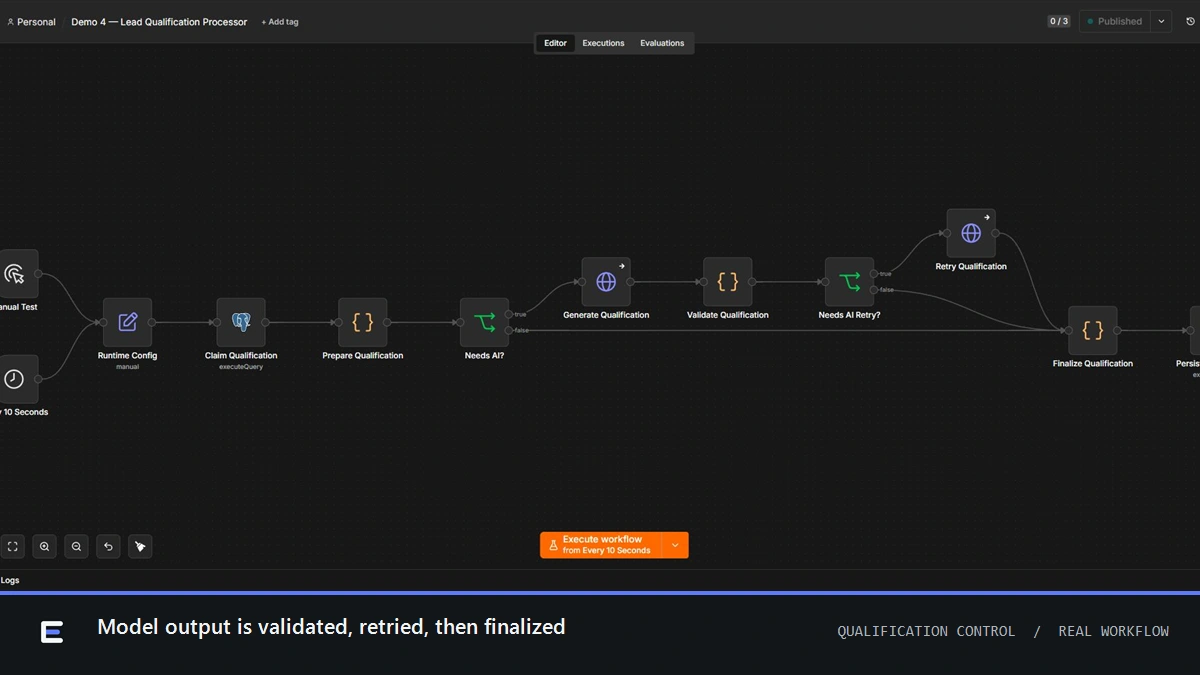
Model output is validated, retried, then finalized.
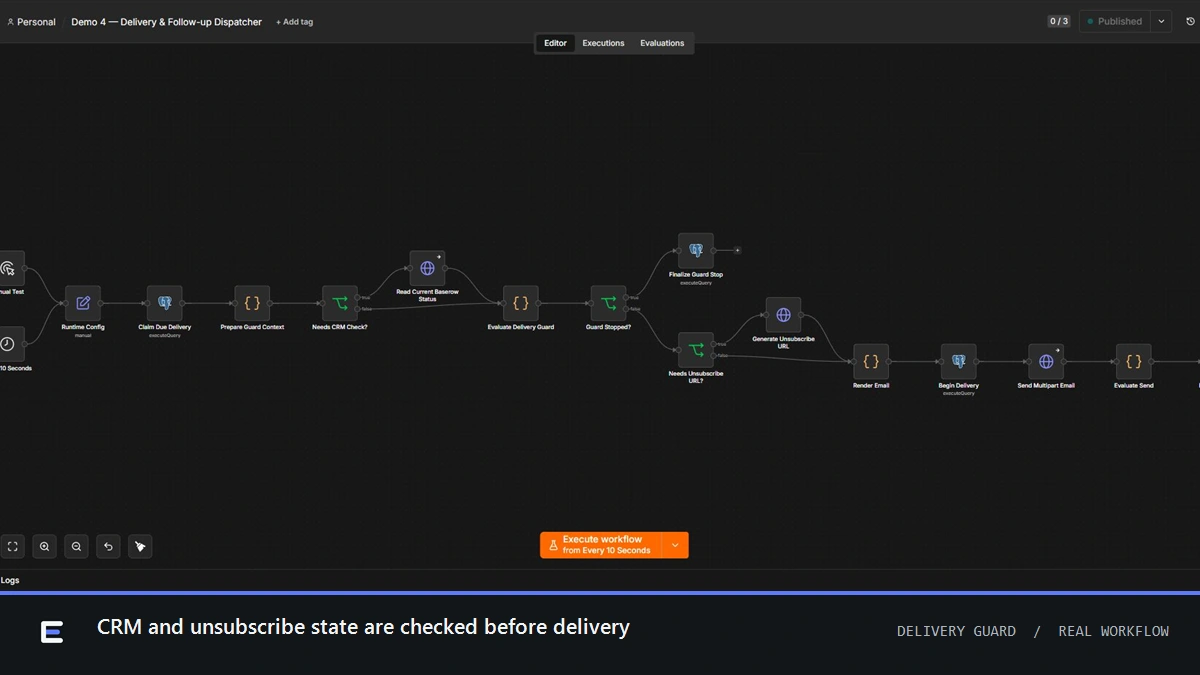
CRM and unsubscribe state are checked before delivery.
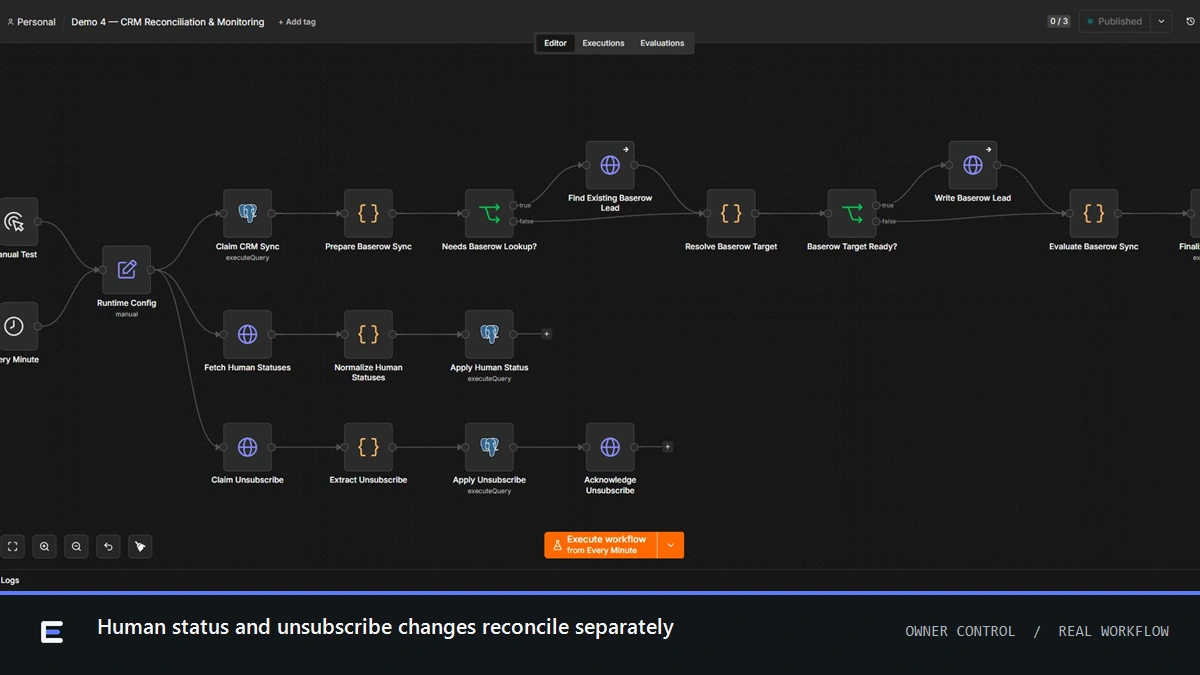
Human status and unsubscribe changes reconcile separately.
Like this project
Posted Jul 21, 2026
Five controlled test leads received replies between 42.457 and 50.465 seconds, with production Turnstile and zero duplicate or error deliveries.