
Role: Lead Designer & Developer
Team: 2-person development team
Engine: Unity
Platform: PC / Steam
Genre: Story-driven Adventure / Puzzle
Technologies: Unity, C#, Cinemachine, Post-Processing Stack, Steamworks
Project Overview
Daria: Aligning the Stars is a story-driven puzzle adventure set in a futuristic version of Morocco, where the boundaries between reality and video games begin to blur.
Players follow Daria, a young girl who discovers her late father's invention: a device capable of connecting different realities.
Through this invention, players explore fictional retro arcade games, solve interconnected puzzles, discover hidden secrets, and develop an unexpected friendship with an astronaut trapped inside a broken video game.
The central gameplay concept revolves around connecting different game worlds and using objects, information, and interactions across them to solve puzzles in unexpected ways.
My Role & Responsibilities
As Lead Designer & Developer in a two-person team, I was responsible for shaping gameplay concepts and implementing core interactive systems.
My contributions included:
Gameplay design and mechanics development.
Unity gameplay programming using C#.
Designing and implementing interactive puzzle systems.
Developing cross-reality gameplay interactions.
Implementing arcade-style visual presentation.
Creating spatial alignment and object-placement mechanics.
Camera systems and cinematic presentation.
Integrating Steam-related functionality.
Gameplay Systems & Technical Implementation
1. Cross-Reality Arcade System
One of the game's defining mechanics is the ability to interact with fictional arcade games as separate worlds.
Players can collect arcade games, enter their environments, and use objects or information between different game experiences to unlock new possibilities.
I worked on the underlying interactive systems that support this central gameplay concept.
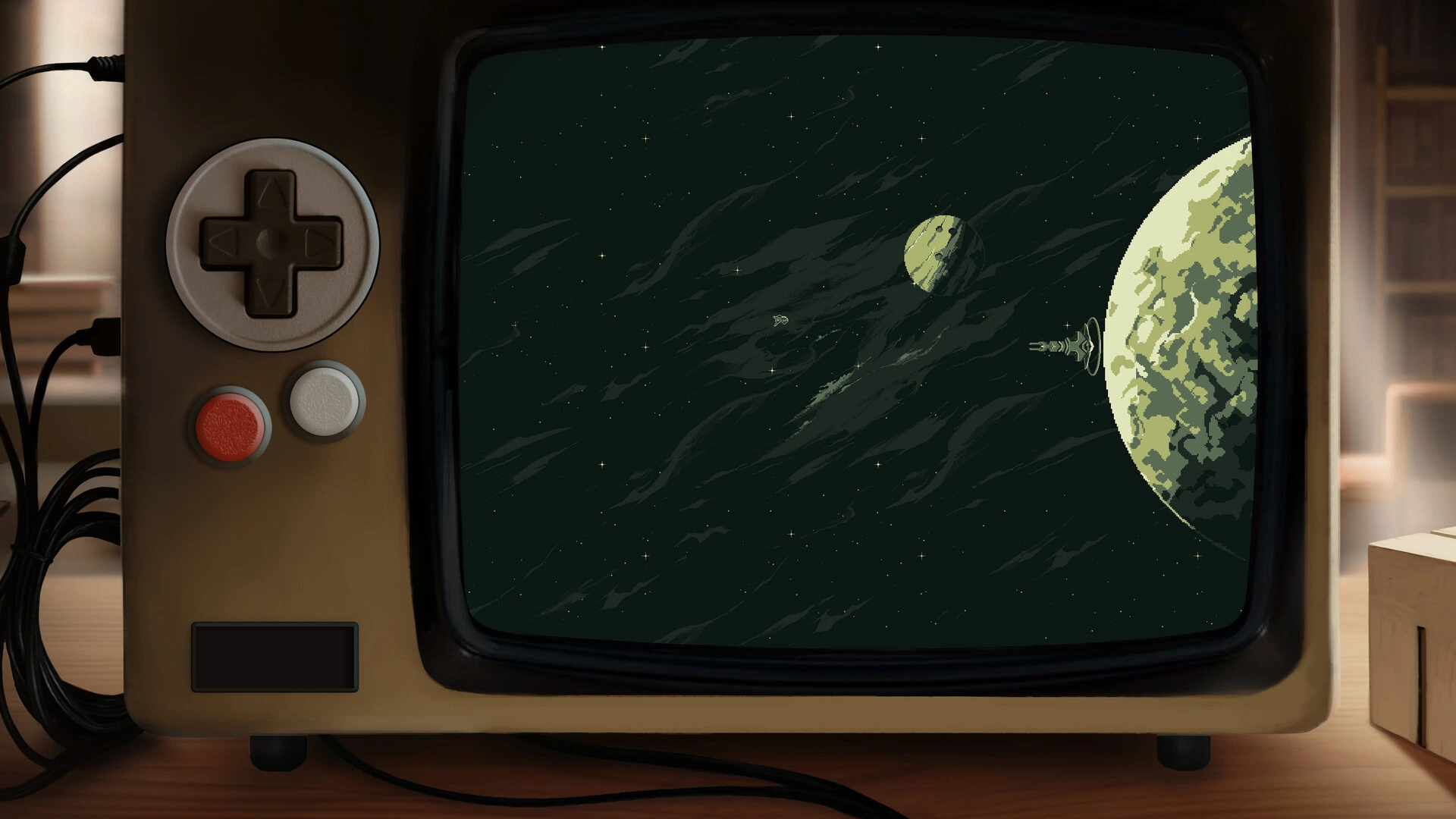
2. Retro Arcade Visual System
The arcade worlds use a distinct pixel-art aesthetic, contrasting with the game's primary 3D environments.
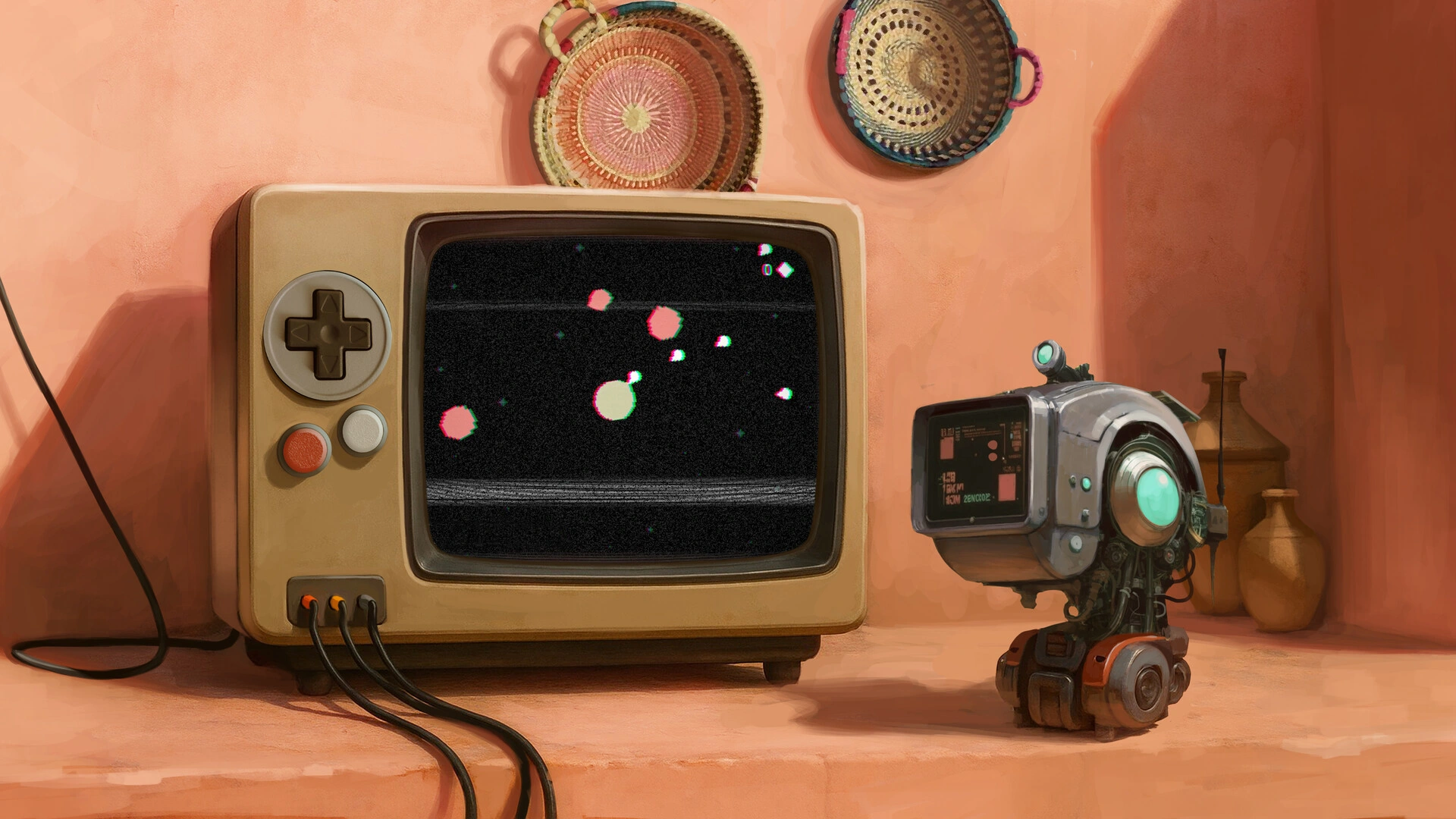
To achieve this presentation, I worked with:
Custom Render Textures.
Screen-space CRT shaders.
2D and 3D rendering integration.
Arcade-screen visual effects.
Performance-conscious rendering techniques.
The objective was to create convincing retro arcade displays while maintaining smooth gameplay.
3. Spatial Puzzle Mechanics
The game features puzzles that require players to understand spatial relationships and manipulate objects within the environment.
My technical implementation included:
Coordinate projection.
Object rotation and alignment.
Rotation-tolerance thresholds.
Immediate visual feedback.
Spatial positioning and interaction logic.
These systems were designed to make puzzle interactions intuitive while maintaining enough precision to challenge players.
4. Environmental Puzzle Design
Daria features puzzles inspired by Moroccan visual identity and architectural patterns.
Examples include:
Moroccan zellige-inspired tile alignment.
Three-dimensional container-packing puzzles.
Object manipulation and spatial reasoning.
Environmental interactions.
These mechanics connect the game's setting and visual identity with its puzzle-solving experience.
Game Design & Player Experience
Beyond individual puzzles, Daria combines several gameplay layers:
Arcade Worlds: Discover and play fictional retro games with different mechanics and visual identities.
Cross-Game Interactions: Transfer items and information between arcade experiences.
Puzzle Progression: Solve interconnected challenges to unlock new paths.
The Chain: Navigate a dynamic progression system that presents upcoming challenges, rewards, and risks.
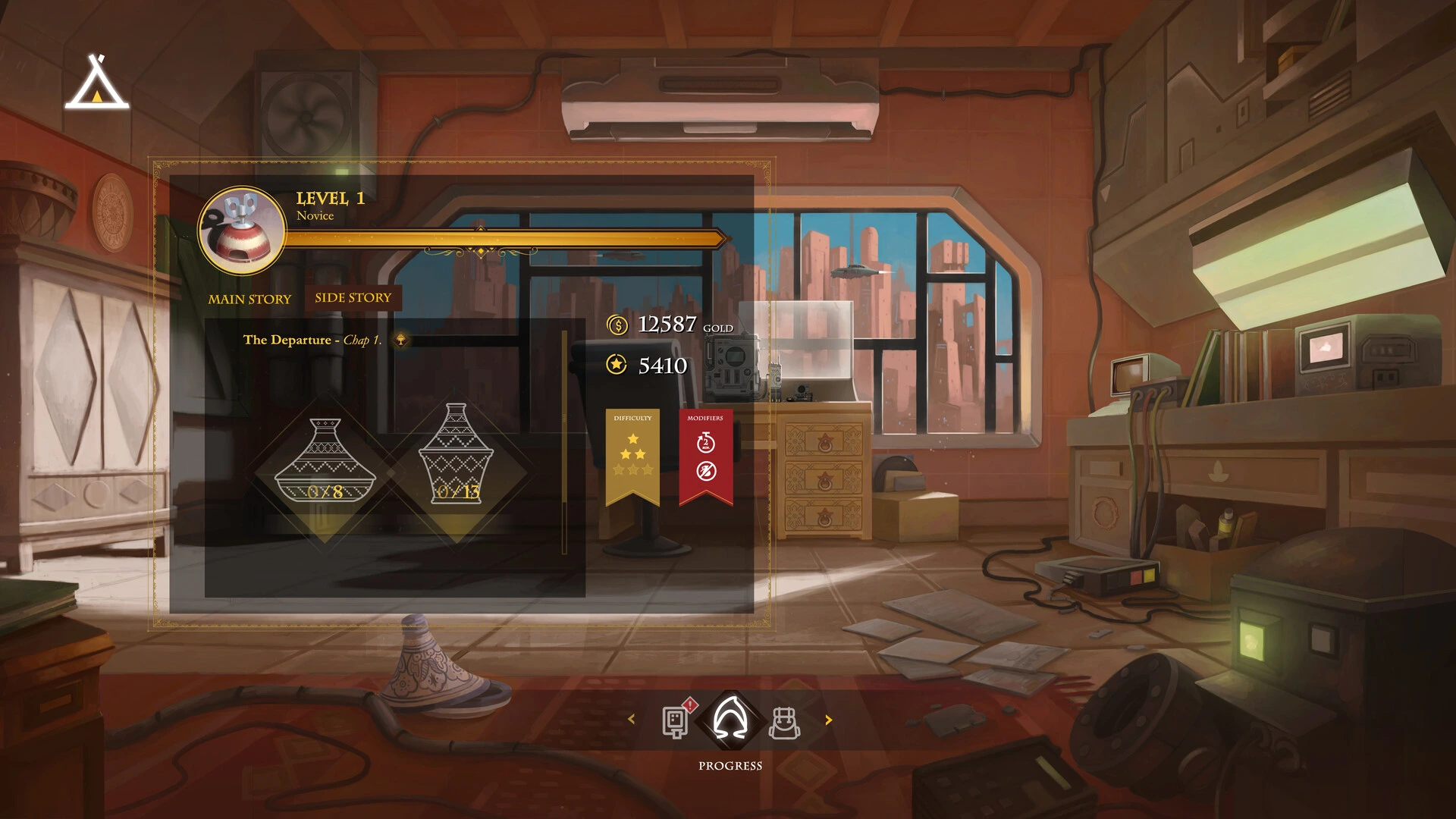
Home Base: Return to a central hub to manage inventory, upgrade abilities, and prepare for new challenges.
The overall experience combines exploration, experimentation, puzzle-solving, and narrative progression.
Technical Challenges
A major technical challenge was bringing together different visual and gameplay experiences within a cohesive Unity project.
The arcade environments needed to maintain their distinct presentation while remaining connected to the primary game world.
I focused on:
Balancing 2D and 3D visual presentation.
Creating efficient arcade-screen rendering.
Developing reliable spatial interaction logic.
Ensuring responsive puzzle feedback.
Maintaining visual consistency across different gameplay environments.
Technology Stack
Unity
C#
Cinemachine
Post-Processing Stack
Custom Render Textures
Screen-Space Shaders
Steamworks
Project Outcome
Daria represents a combination of creative game design and technical implementation, bringing together interconnected arcade experiences, spatial puzzles, and narrative-driven exploration.
The project showcases my ability to work across gameplay design, rendering techniques, interactive systems, and the technical implementation of distinctive gameplay mechanics.
Project: Daria: Aligning the Stars
Platform: PC / Steam
Team Size: 2
Role: Lead Designer & Developer
0 likes · 0 views · Nov 22, 2026
Daria: Aligning the Stars is a story-driven puzzle adventure set in a futuristic version of Morocco, where the boundaries between reality and video games begin
