Northline: A 73-Second Seedance 2.0 Brand Film Under $24

Eric Moore


Project Type: AI brand film and interactive concept site (self-initiated)
Brand: Northline Practice Growth, a fictional concept for independent dental implant practices
Role: Creative direction, generation pipeline, motion continuity, and frontend build
Duration: July 20 to July 23, 2026
Context
Northline Practice Growth is a fictional consulting brand I made to test a narrow production
question: how much of a coherent brand film and interactive site can one person build with the
current image and video models?
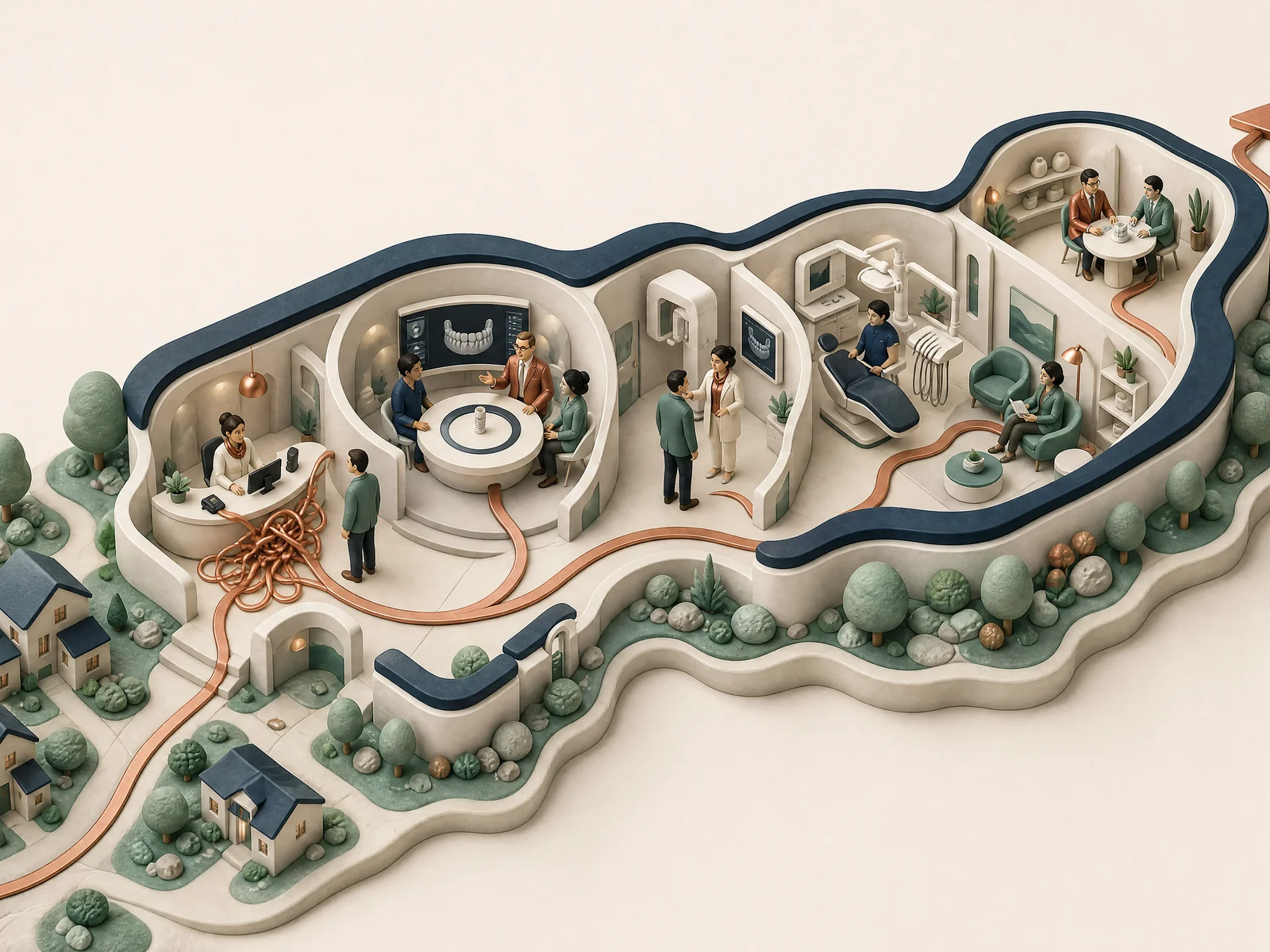
I chose independent dental implant practices as the example category. The story is
demand moving through one practice. A copper path enters from the lower left, tangles at intake,
runs through consultation and treatment, and reaches a north marker after the team repairs the
constraint.
This is a concept build. There is no client and there are no business-result claims.
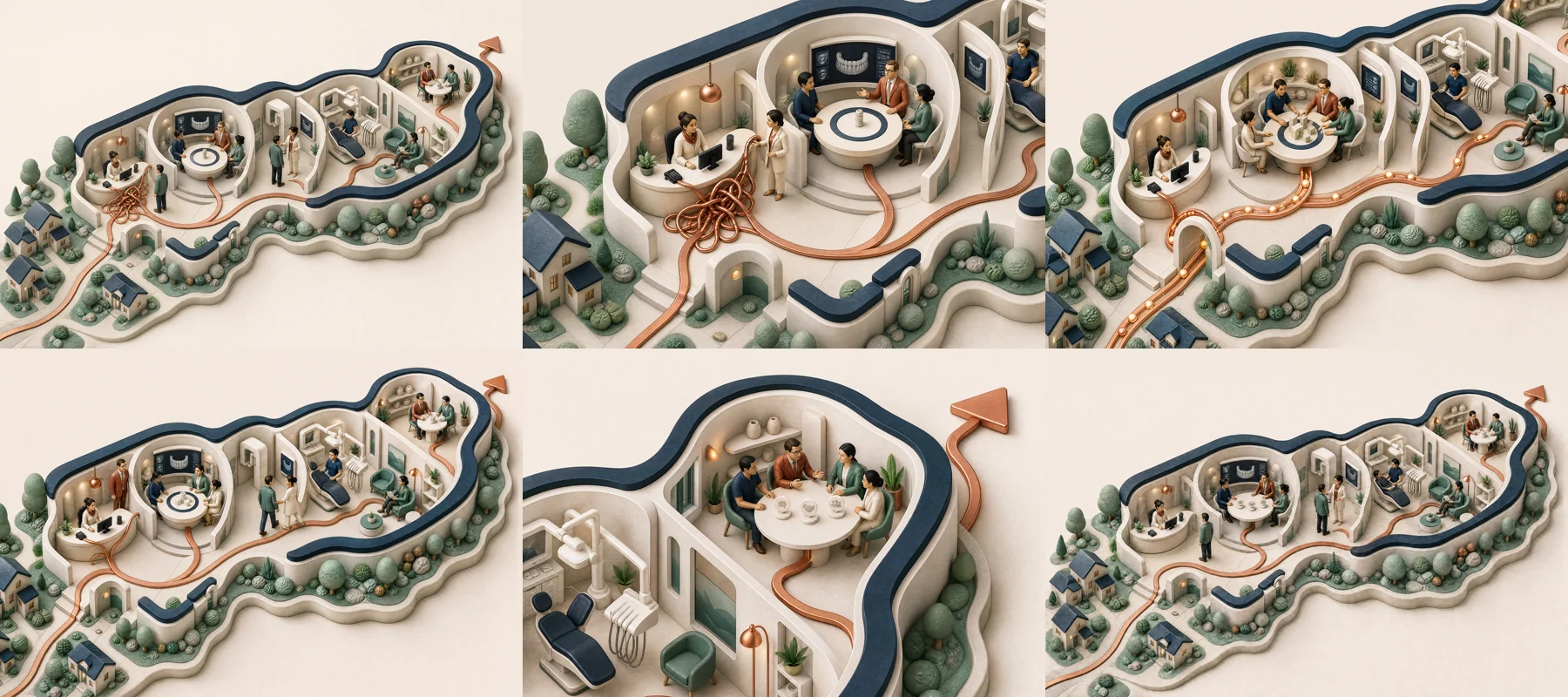
Six final scenes, one persistent miniature practice. The copper path carries the operating story through all of them.
Problem
Six independently generated scenes will drift unless the geography, people, materials, and visual metaphor are fixed before the first prompt runs.
A sequence of good video clips still reads as eleven separate clips when the camera jumps at every boundary.
A finished film does not become an interactive site by itself. Scroll position, seek behavior, mobile crops, loading states, and reduced motion still need a working system.
Cheap generation is an empty claim without the receipts and the rejected work included.
Process
1. Lock one world before generating the scenes
The continuity contract came first: one clay miniature practice, porcelain walls, a midnight-blue
roof ribbon, five recurring people, and one copper pathway. The path had to survive every scene
because it carries the business story without a voiceover.
Twelve 4K GPT Image 2 generations produced the six final scenes. The first set established the
direction. The second set tightened the shared geography and kept the same
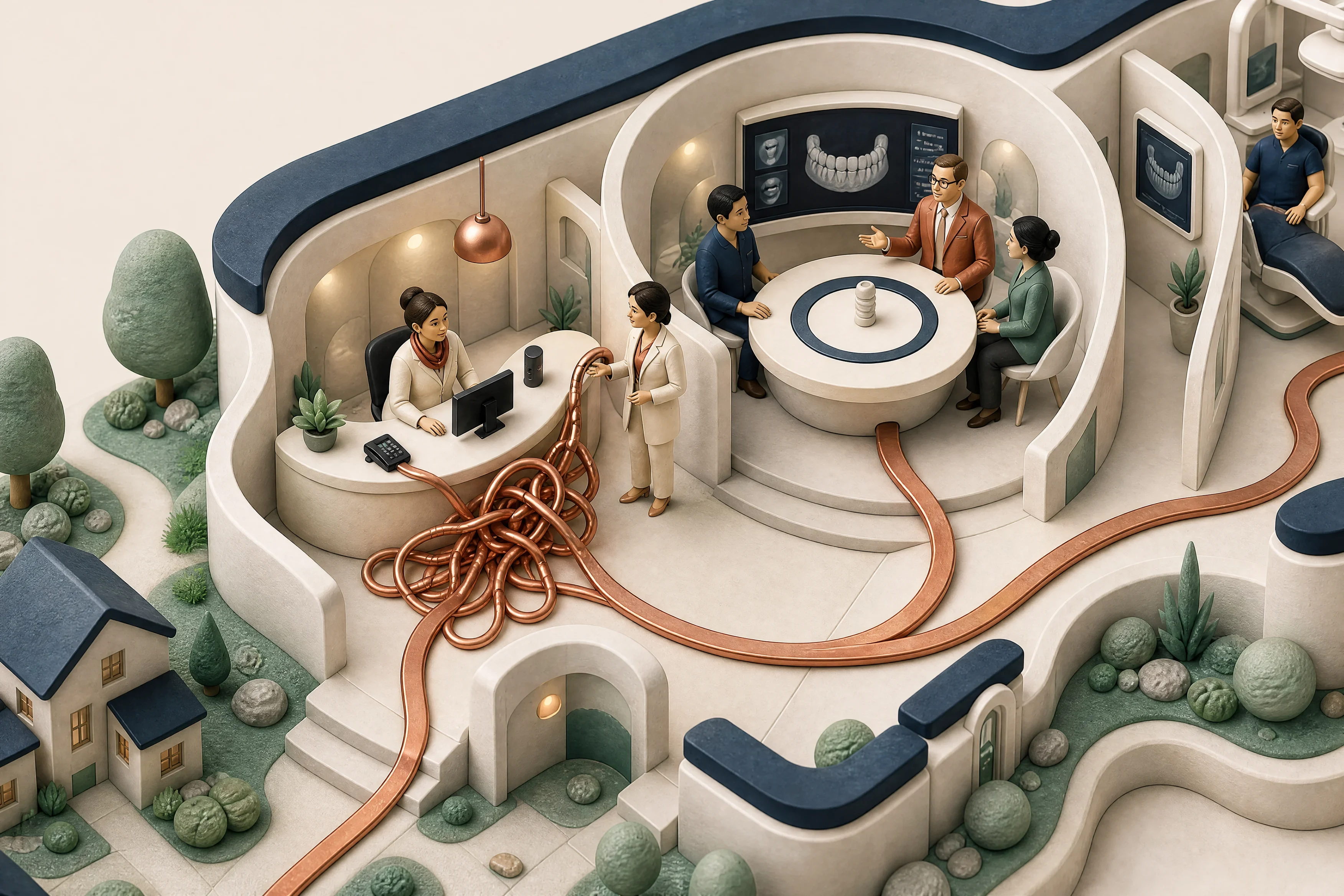
The intake constraint, made physical. Demand arrives as a copper path and tangles at the handoff.
people, palette, and
copper path in view.
2. Make the camera follow the operating story
The six scenes are signal, diagnosis, system, patient path, rhythm, and future. Each became an
eight-second Seedance 2.0 dive. The camera moves into the current constraint, follows the repaired
path, and returns to the full practice after the team can repeat the system.
The sequence follows the operating work in order: see the whole practice, find the constraint,
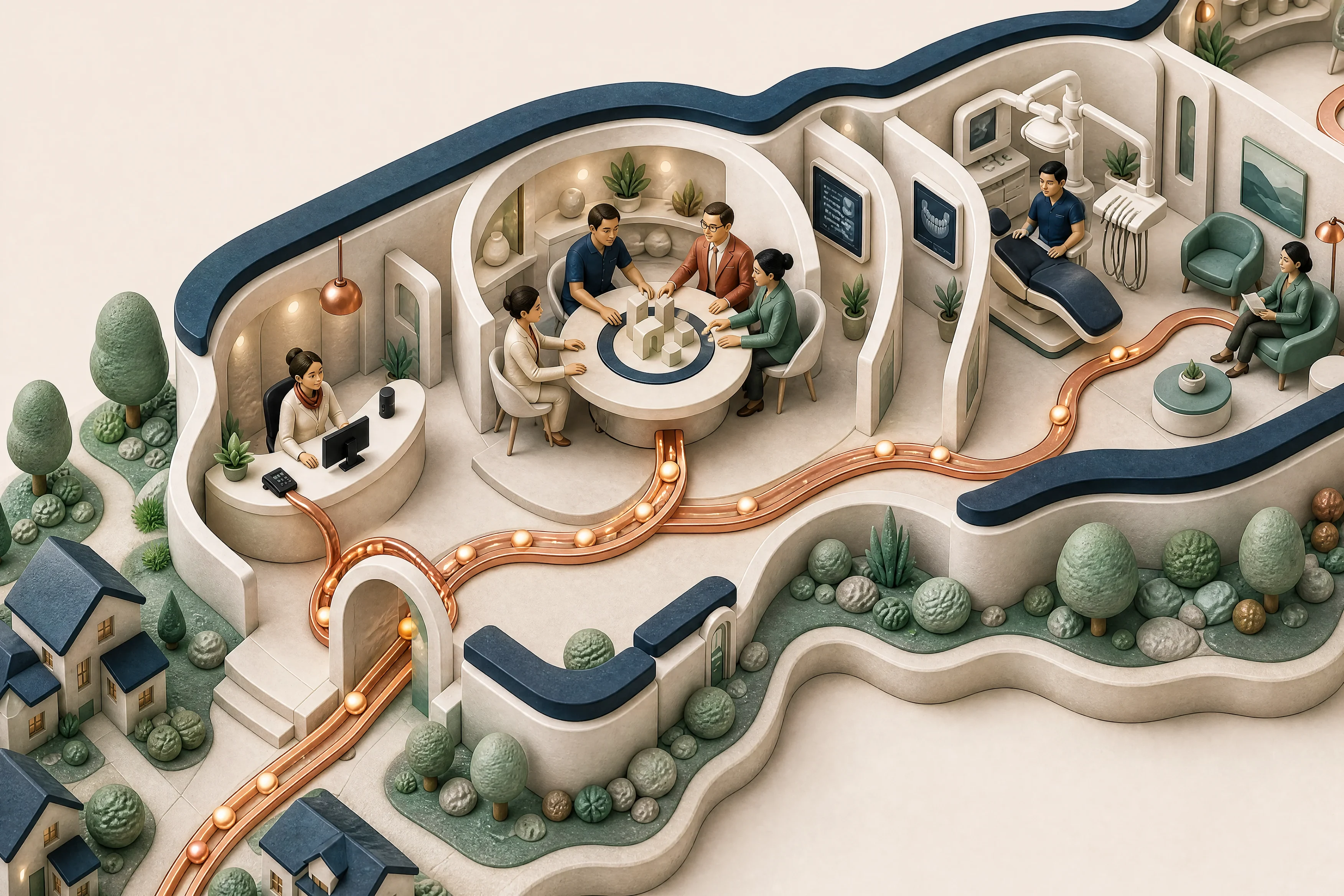
The same team rebuilds the handoff. The people, rooms, materials, and path stay fixed.
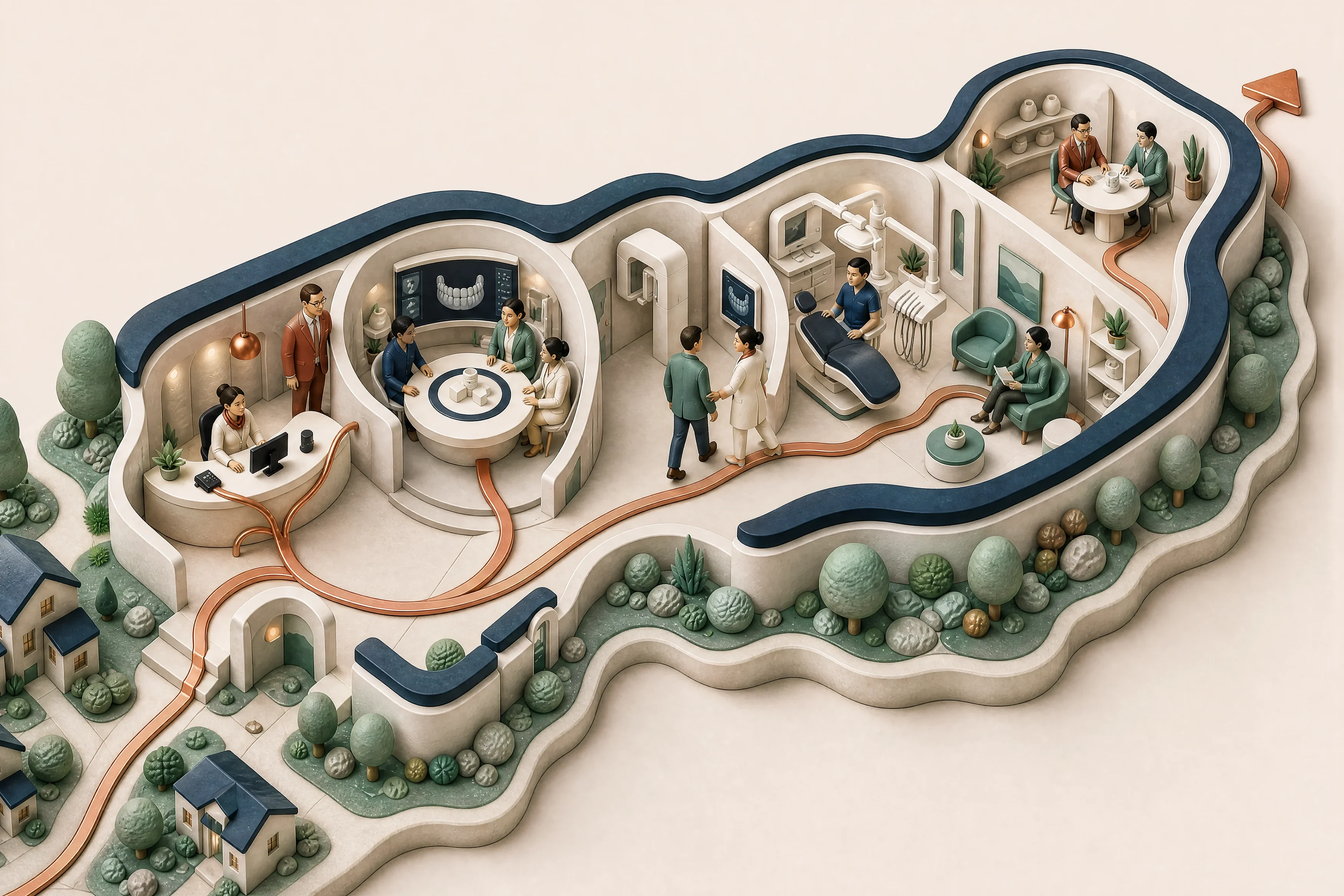
One patient follows the repaired path from response through treatment and follow-up.
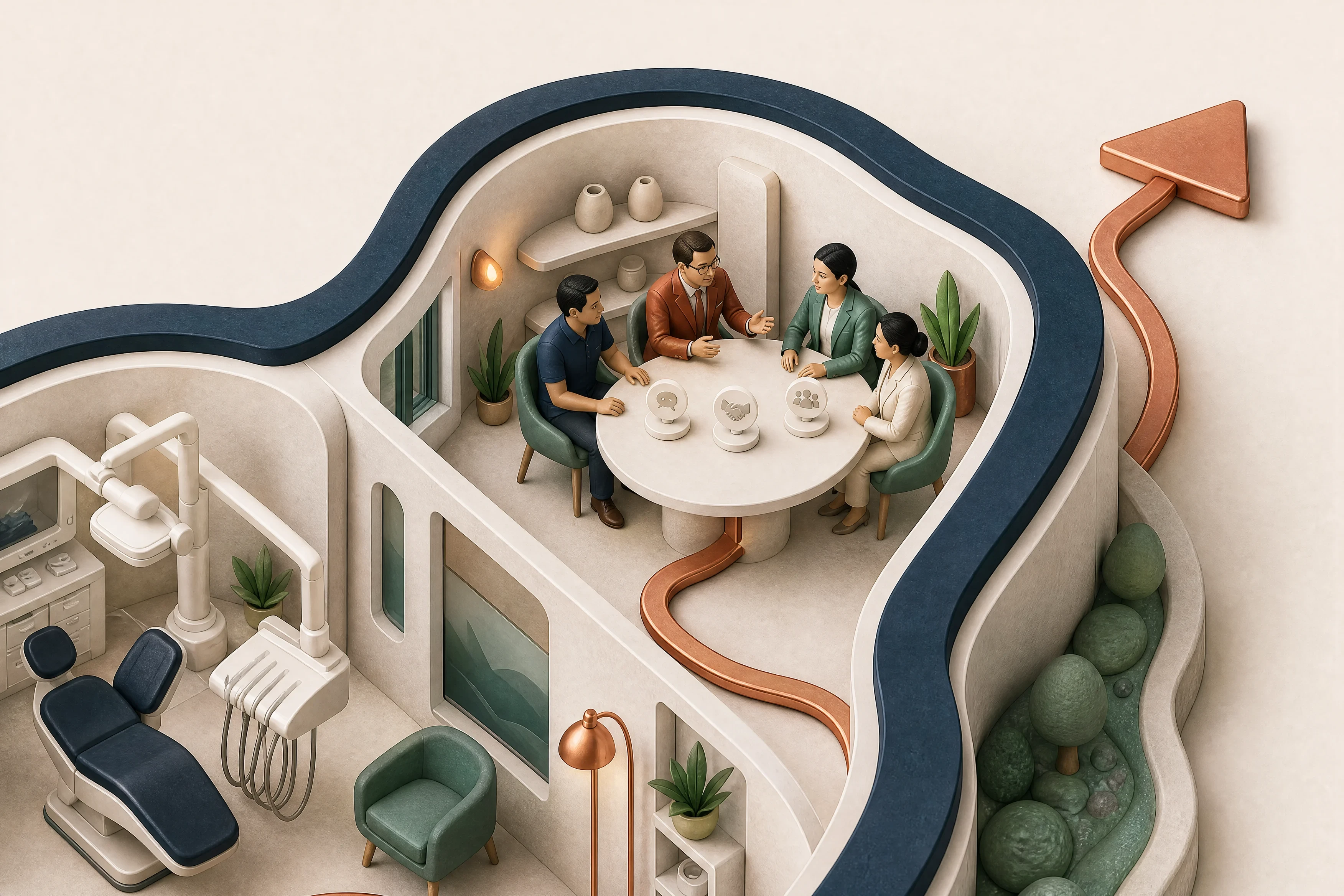
The weekly decision ritual turns one repair into a system the team can repeat.
repair it, and make the new system repeatable.
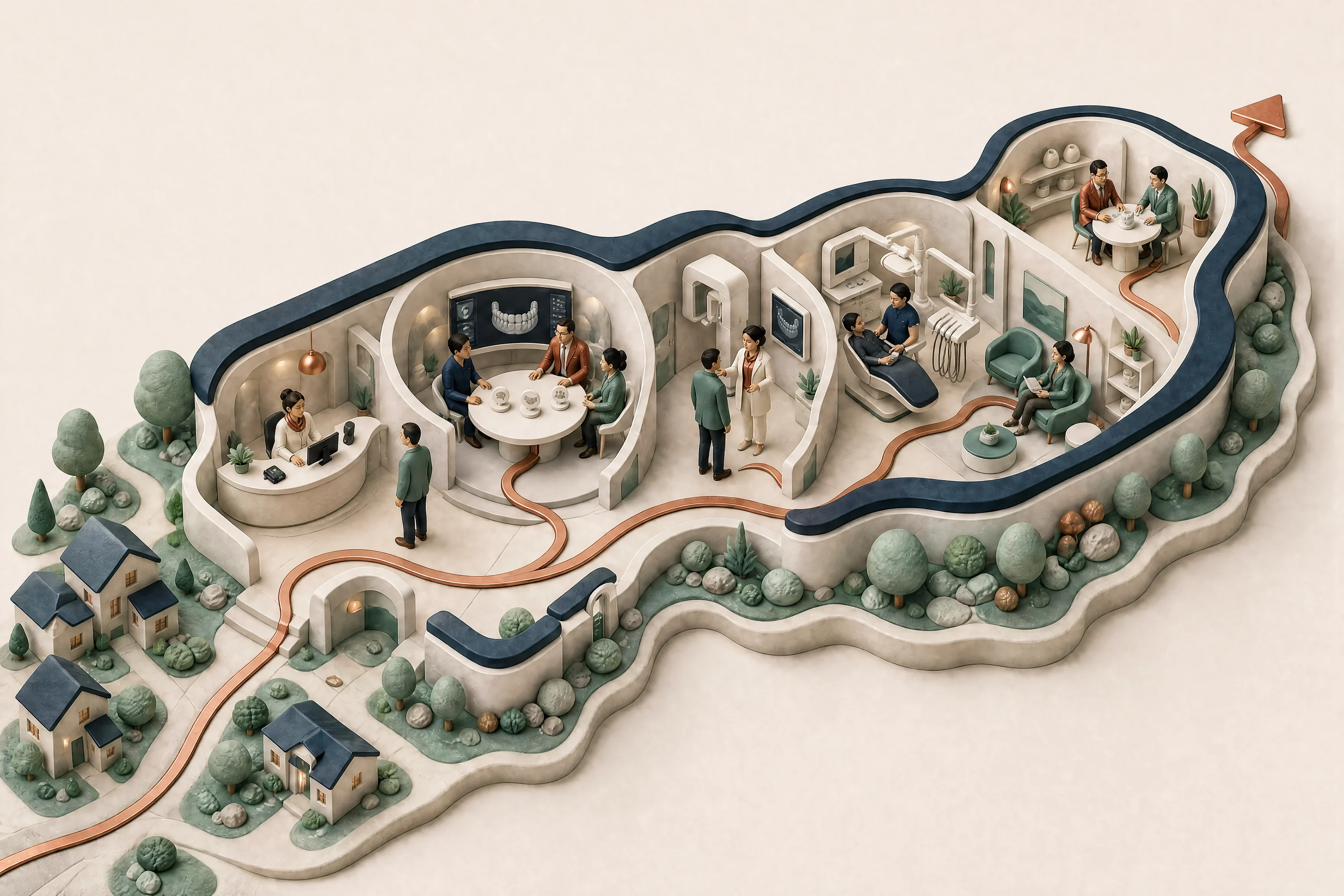
Back to the original geography, now with one continuous path to the north marker.
3. Generate the seams from the rendered clips
Five additional Seedance clips connect the six dives. Each connector begins on the actual last frame
of the preceding clip and ends on the actual first frame of the next one. The camera can cross a wall
or rise back to the master view without cutting to a different version of the world.
The final chain has eleven clips and 73 generated seconds. The stitched web encode runs 73.458333
seconds at 1920 x 1080 and 24 frames per second.
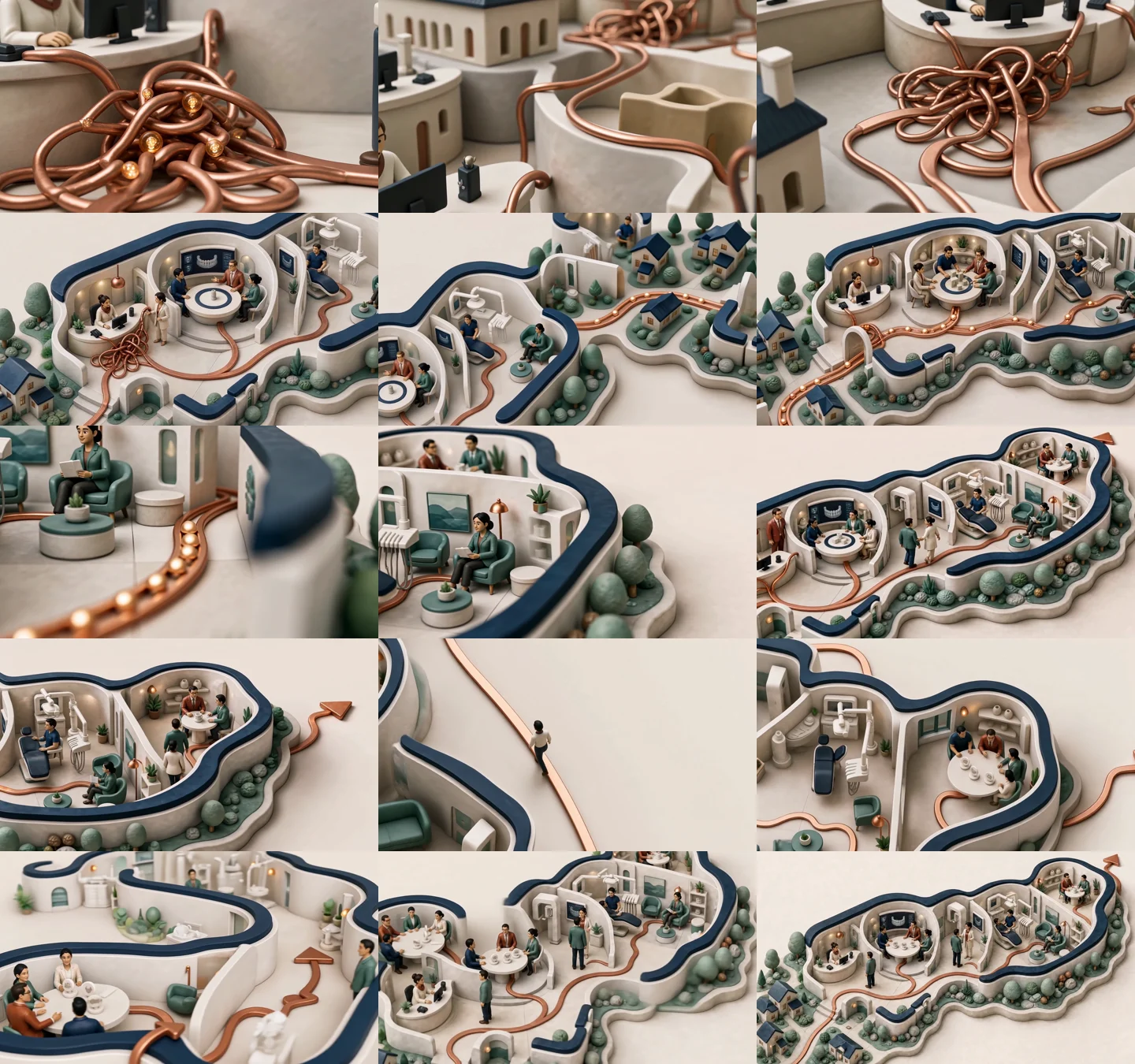
Five connector clips. Each starts and ends on real boundary frames from the neighboring dives.
4. Put the film under the visitor's scroll
The site loads each clip into a seekable browser blob and maps scroll position to video time. Scroll
down and the camera moves forward. Scroll up and it runs backward. Copy and navigation change with
the active scene.
The engine is plain JavaScript with no runtime dependency. On a smaller screen it changes the focal
crop. With reduced motion enabled, it leaves the stills in place and does not load
the clips.
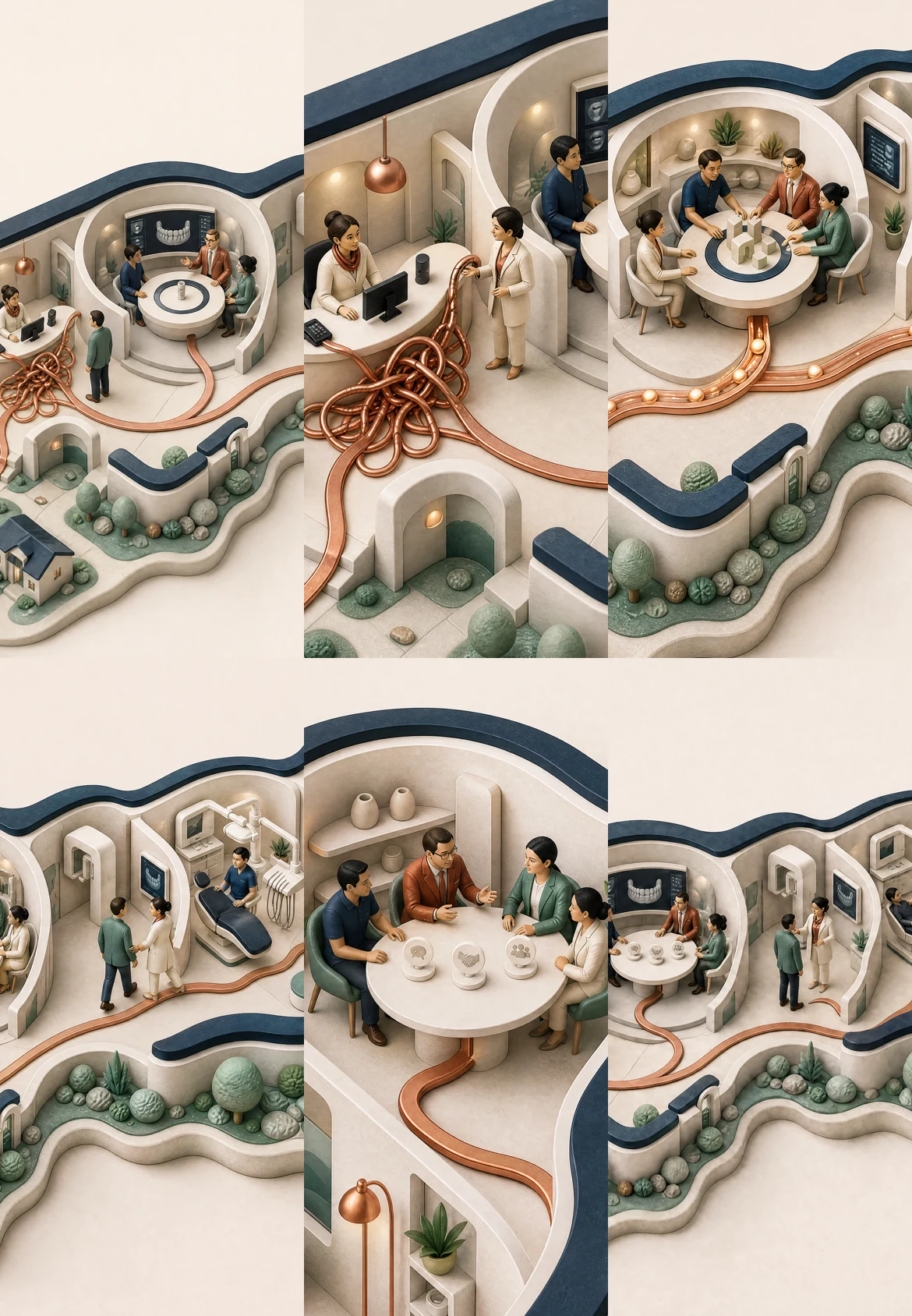
The same landscape world at three phone focal positions. The crop changes while the story stays intact.
5. Keep the receipt with the work
The recorded model spend was $23.62:
$0.96 for twelve 4K GPT Image 2 generations
$0.03 for one 1K image-to-image smoke test
$22.63 for six eight-second Seedance dives and five five-second connectors
Those numbers are the sum of the JSON receipts saved beside the generated files. They describe model
spend only. They do not price the concept, prompts, continuity system, frontend work, review, or
rejected directions.
Solution and outcome
A six-scene visual world with one geography, five recurring people, and one copper path carrying the story from intake constraint to operating rhythm
An eleven-clip, 73.46-second Seedance 2.0 film with frame-locked transitions
A live scroll-scrubbed site that works in both scroll directions
Responsive focal crops and a still-only reduced-motion path
A recorded model bill of $23.62
Northline is a production study, so the result is the inspectable film, the live interaction, and the
receipt. It has no client, user, revenue, or conversion metric.
The model bill was $23.62. Keeping one world coherent across eleven clips took the continuity
contract, boundary-frame connectors, and the scroll engine. That is the system I would reuse on a
real engagement.
If your offer needs a working visual prototype people can see and explore, I would like to hear what
you are building.
Like this project
Posted Jul 26, 2026
A self-initiated dental-growth concept: 12 GPT Image 2 generations, eleven Seedance clips, and a scroll-scrubbed site for $23.62 in model spend.
Likes
0
Views
12
Timeline
Jul 20, 2026 - Jul 23, 2026