LinkedIn Thought Leadership for a Coffee Brand Owner

Steffi Yosephine

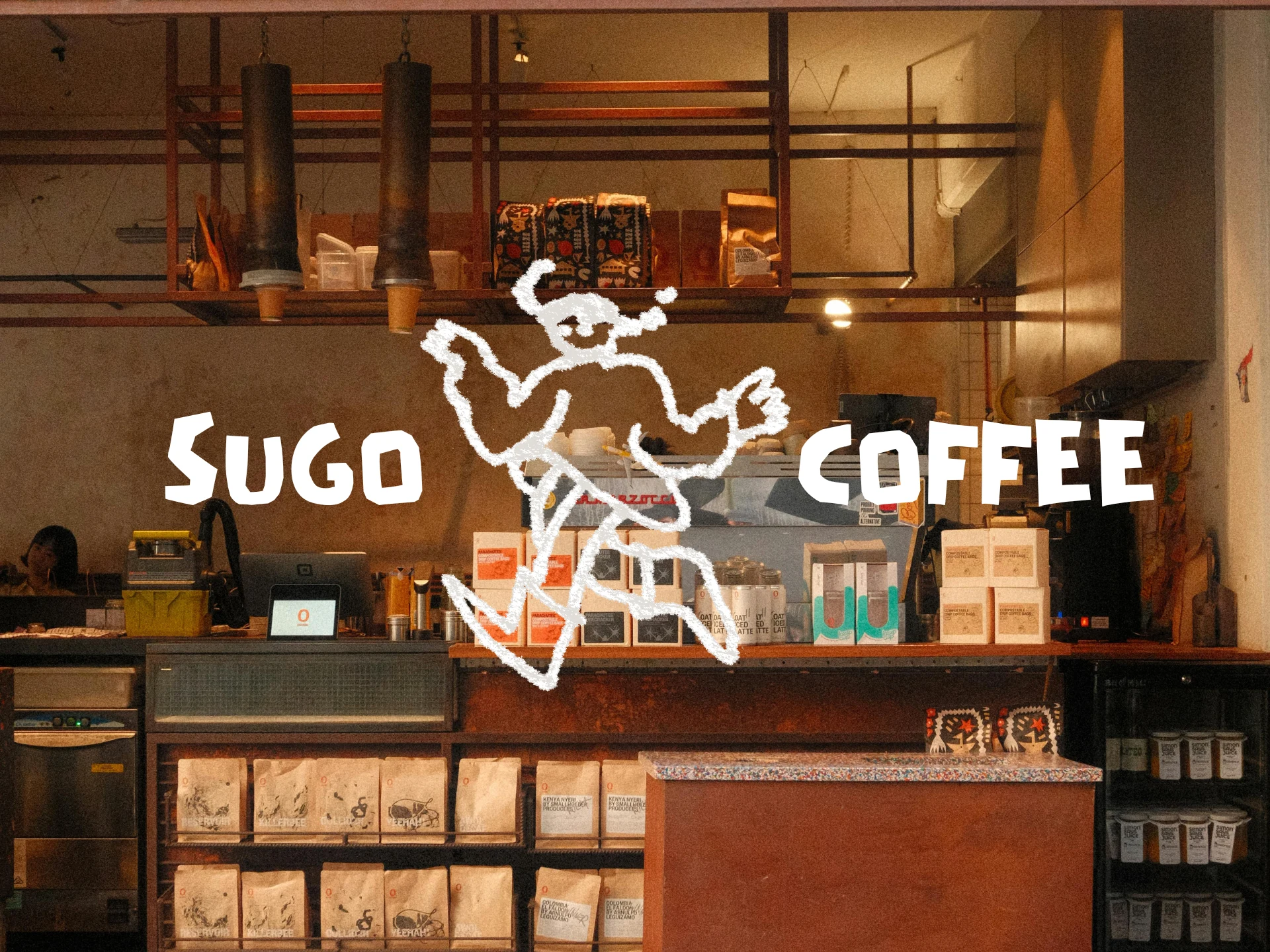
Due to the nature of my work, most of what I actually do stays confidential. Which is great for my clients and mildly inconvenient for my portfolio. So here's my workaround: meet Aimee, founder of Sugo Coffee, a fictional but very lovingly constructed Indonesian coffee brand.
Everything you'll see here is a mockup built to show how I approach LinkedIn thought leadership for founder-level clients.
LinkedIn Article
Hot Take: Indonesian Coffee Brands Should Actually Use Indonesian Coffee
His name is Matheus Tani, a farmer in Wolopaku, a small village in Ende, Flores. In the 1980s he bought 100 robusta saplings from someone in the next village and planted them on his land. That was how Kebun Kopi Tani started: a man, some land, a belief that he could do something good for his family and the people around him. His daughter Susan runs it now and she's built something beautiful around that inheritance: coffee tours, a cafe, a way of connecting people to what forty years of careful farming actually looks like up close.
I found them when I was sourcing beans for Sugo and I remember thinking this was what I had been looking for when I learned their story. Something I could genuinely stand behind.
Sugo Coffee opened in Surabaya in 2014 for my coffee-lover dad who had just retired. There was no grand vision attached to it. I was a counsellor who was tired of other people's career pivots and wanted to finally make my own, and my dad needed somewhere to be, and it turned out those two things added up to something that actually worked.
But businesses grow, and as Sugo grew I had to start making decisions that had longer consequences. The one I kept returning to was sourcing. When the conversations about expanding to Jakarta started, people kept offering me the same set of arguments: imported ingredients are more consistent, local supply chains are harder to manage, and customers probably can't taste the difference anyway. I've heard versions of this from smart people I genuinely respect, and I disagree with it so fundamentally that I sometimes have trouble being polite about it.
Indonesia is one of the largest coffee producers in the world. Specialty roasters in Europe actively seek out Indonesian beans, and we have regional profiles that people pay serious money for internationally. I find it ridiculous that Indonesian coffee brands import their beans from elsewhere because they've decided that local means unpredictable or second-rate, a story our industry has been telling itself for so long that it has stopped occurring to people to question it. It's genuinely frustrating. I think it's a failure of imagination and it has real consequences for the farmers who are doing extraordinary work that nobody in their own country is choosing to value.
I want to be clear that this is a business position and not a charity position. Kebun Kopi Tani produces genuinely excellent coffee. Our milk comes from a local farm in Bogor that makes an excellent product. I choose them because they make our stuff better and because the people behind them deserve to be part of a growing supply chain, and to me those have always been the same decision. People talk about local sourcing like it's in tension with running a real business and I think that's the wrong frame entirely. The tension is usually between what's convenient and what you actually believe in, and which of those you're willing to prioritize.
Indonesia has so much that is genuinely world-class. We don't need to import our way to credibility or to prove that we can be great. We just need more business owners with enough conviction to actually look at what's growing here and find the people who have been cultivating it for decades.
LinkedIn Post 01
I bet you didn't know that I used to be a school counselor. Yep, me. Which means I spent years sitting across from other people, helping them figure out what they actually wanted. I was good at it! I just hadn't turned the same question on myself.
Now, my dad has always loved coffee. Growing up, watching him make it every morning was this whole ritual. I think that's where I first understood that coffee has very little to do with caffeine and a lot to do with giving yourself a reason to slow down and be somewhere for a few minutes.
So when he retired and needed something to fill his days, I finally started asking myself what I actually wanted to build. The answer felt obvious: a coffee shop in Surabaya, for my dad to have somewhere to be. That was the entire plan, and I thought I'd just figure out the rest as we went... (sometimes being delulu works y'all).
Sugo Coffee opened in 2014. We now have 13 branches across four cities, which still catches me off guard sometimes when I'm reminded of it. And yes, my dad still comes in every morning to our first shop on the corner of Darmo Permai Selatan.
LinkedIn Post 02
Is it too much of me to say I knew our Tunjungan Coffee would be a hit? 🤷🏻♀️
When I was developing the menu, I spent a lot of time thinking about what I didn't want. I didn't want something that could have come from any coffee shop in any city. I wanted a drink that was specific to us, to this place, to these ingredients.
I've had people tell me they come to Surabaya specifically to have it, because there's something almost poetic about drinking Tunjungan Coffee at the Tunjungan store. Which is WILDDDDD!
Can't believe this is our life sometimes.
LinkedIn Post 03
When Sugo was preparing to open in Jakarta, A LOT of people had (unsolicited) opinions about what we should change to fit the market.
I listened, nodded, and then I mostly kept doing exactly what we were already doing. LOL. 🤐
I'd watched enough brands arrive in a new city and immediately start adjusting, softening, trying to become whatever they imagined that market wanted. The thing about that approach is that you end up saturated. People in that city already have options that were built for them. If you show up trying to become one of those options, you're just adding to a long list of things that already exist. There's no reason to choose you over the original.
The whole scaling strategy (if you want to call it that) has been to know what Sugo is and take it with us wherever we go. That's literally it.
LinkedIn Post 04
Everyone in F&B will tell you that high turnover is just part of the industry. Unfortunate, but not something you can do much about.
Ugh. 😑
I've never been able to accept that framing. Some turnover is inevitable and I know that. People grow, circumstances change, this is life. But I've also watched the industry normalize treating people as fully interchangeable, cycle after cycle of hiring and losing staff without ever asking why. And I think a lot of the turnover that gets blamed on "the nature of F&B" is actually just the consequence of that. When people feel like a body filling a slot, they leave. This seems obvious and yet the industry keeps being surprised by it.
At Sugo, we don't have a complicated management theory about this. We try to be honest with the team, give fair pay, and I try my best to make decisions with their time and dignity in mind.
I don't care if this sounds cliché, but the energy of a team that feels valued and the energy of a team that feels expendable are not the same, and you can literally feel and taste it in the air. Your team is your brand in the most literal operational sense, and the sooner founders treat that as a real decision rather than a line in a culture document, the better off everyone is.
LinkedIn Post 05
"Quick, post this on Instagram so we don't have to spend marketing budget here!" my dad said as we stood in front of the ruins of Sugo's first Jakarta branch that caught fire back in 2018. Lucky for him we shared the same dark humor, so I laughed with him... and did exactly that. The photo spread fast on the internet indeed, and Sugo became the pitiful story of Surabaya's local coffee shop scene, meeting its ending before it even started.
Thank God nobody was hurt. But the financial damage was significant, and I came very close to deciding not to rebuild. I told myself I was being practical.
What changed my mind was the messages. People who had only just found us, those who had been regulars for maybe a few months before the fire, even strangers on my DM wrote in asking us to try again. I eventually thought, okay... You know what, why not? Let's go all in. The worst thing that can happen is I go broke. 🤣
But it was the first time I learned that sometimes there's this kind of divine intervention where decisions stop being calculated and start being something that genuinely moves you.
Well, we're now 13 branches strong and I'm not (that) broke. So I guess sometimes it's good to actually listen to strangers on the internet? ;)
Like this project
Posted Apr 4, 2026
Mock LinkedIn content for a fictional coffee brand owner to showcase thought leadership strategies.
Likes
0
Views
7