
Muhammad Kaif
AI Engineer building smart automations, agents, and apps.
New to Contra
Muhammad is ready for their next project!
T20 World Cup Hub: AI-Powered Cricket Companion
Project Overview
The T20 World Cup Hub is a comprehensive, cross-platform mobile application designed to elevate the cricket fan experience. By combining extensive historical tournament data with an intelligent predictive engine, the app serves as an interactive encyclopedia and match-day companion. It goes beyond standard score tracking by offering users deep statistical insights and AI-driven forecasts in a highly visual, engaging interface.
Core Functionality
The application is built to deliver both real-time engagement and deep analytical insights for cricket enthusiasts.
Deep Analytics & Records: Provides users with comprehensive historical tournament data, detailed player statistics, head-to-head team comparisons, and all-time records (e.g., most runs, highest wicket-takers).
AI Predictive Engine: Features an integrated AI chatbot and predictive model that analyzes past data to forecast match outcomes and answer user queries.
Interactive Match Experience: Enhances the build-up to games with dynamic match countdown timers, visual team flags, and immersive stadium galleries.
Technical Architecture
Frontend Development: Built using Flutter to ensure a smooth, professional, and responsive user interface across multiple mobile platforms.
Data Aggregation: Utilizes custom web scraping techniques to gather and update accurate historical and real-time cricket data, stored within a structured relational database.
AI Integration: Seamlessly connects the mobile frontend with an AI backend to power the predictive analytics and chatbot features.
Impact and Applications
This project showcases a strong synthesis of mobile app development, data engineering, and artificial intelligence. By transforming raw sports data into an intuitive and interactive mobile experience, the application offers a unique, data-driven way for fans to engage with the T20 World Cup, demonstrating a practical application of AI in sports media and entertainment.
1
16
Project Overview
RideFlow is a comprehensive ridesharing platform developed as a robust database systems project. It simulates the core operations of a modern ride-hailing service, focusing on efficient data management, transactional integrity, and dynamic administrative control. The system handles the complex interactions between riders, drivers, and administrators, providing a realistic implementation of real-world database concepts.
Core Functionality
The application relies on a well-structured relational database to manage high-volume, concurrent operations, ensuring data consistency and optimal performance.
Core Entity Management: Effectively tracks and manages complex relationships across dedicated tables for Users, Rides, Payments, and Vehicles.
Advanced Administrative Features: Implements role-based access control (RBAC) to ensure secure system management and oversight.
Dynamic Pricing Engine: Features automated procedures capable of calculating and applying surge pricing based on real-time demand.
Live Dashboard UI: Provides administrators with a real-time visual interface to monitor system health, active rides, and revenue metrics.
Technical Architecture
Database Management System: MySQL (relational database design and cloud integration)
Backend Environment: Node.js / Python
Key DB Concepts: Entity-Relationship (ER) modeling, complex queries, stored procedures (surge pricing), and transaction management.
Impact and Applications
RideFlow demonstrates a strong practical understanding of complex database design and implementation. By building a scalable architecture capable of handling real-time, transaction-heavy operations like payments and ride matching, this project bridges theoretical database concepts with tangible software engineering applications.
1
22
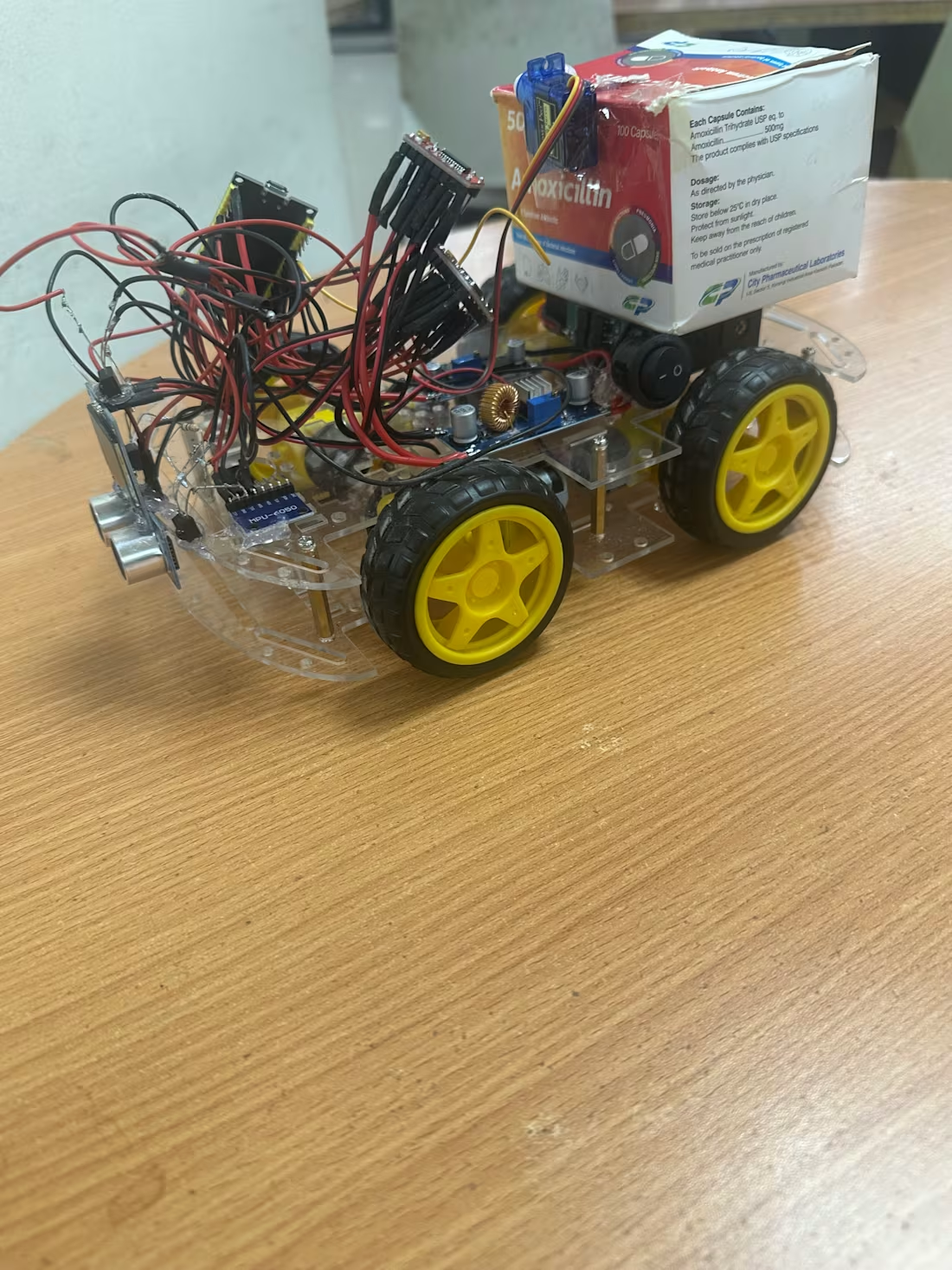
MediDash: Autonomous Medical Delivery Robot
Project Overview
MediDash is an autonomous robotic system engineered to streamline medical logistics and material transport within healthcare environments. Designed by a collaborative five-member team, this project tackles the critical need for efficient, reliable delivery of medical supplies. By combining advanced robotics with autonomous navigation, MediDash reduces the logistical burden on healthcare staff, allowing them to focus more on patient care.
Core Functionality
The robot operates as a self-navigating delivery unit, capable of traversing complex indoor environments to transport essential medical items safely and efficiently.
Autonomous Navigation: Utilizes advanced path planning and obstacle avoidance algorithms to move securely through dynamic hospital corridors.
Secure Transport: Designed to carry medical supplies, ensuring timely and reliable delivery between wards, pharmacies, and laboratories.
Hardware Management & Power Efficiency: Features custom power distribution systems ensuring sustained operational uptime and efficient energy management during delivery cycles.
Technical Architecture
Core Systems: Custom-built hardware architecture focused on robust power distribution and sensor integration.
Development Focus: Real-world engineering bridging software logic with physical hardware management.
(Note: Depending on your specific implementation, you might want to add details here about ROS (Robot Operating System), LiDAR/camera sensors used, or the main processing unit like Raspberry Pi/Jetson Nano).
Impact and Applications
MediDash represents a practical, engineered solution to real-world healthcare logistics challenges. By automating the routine transport of materials, it minimizes human error, improves the speed of critical deliveries, and enhances the overall operational efficiency of medical facilities. This project demonstrates a strong integration of hardware engineering and autonomous software systems to create a tangible impact in the healthcare sector.
1
29
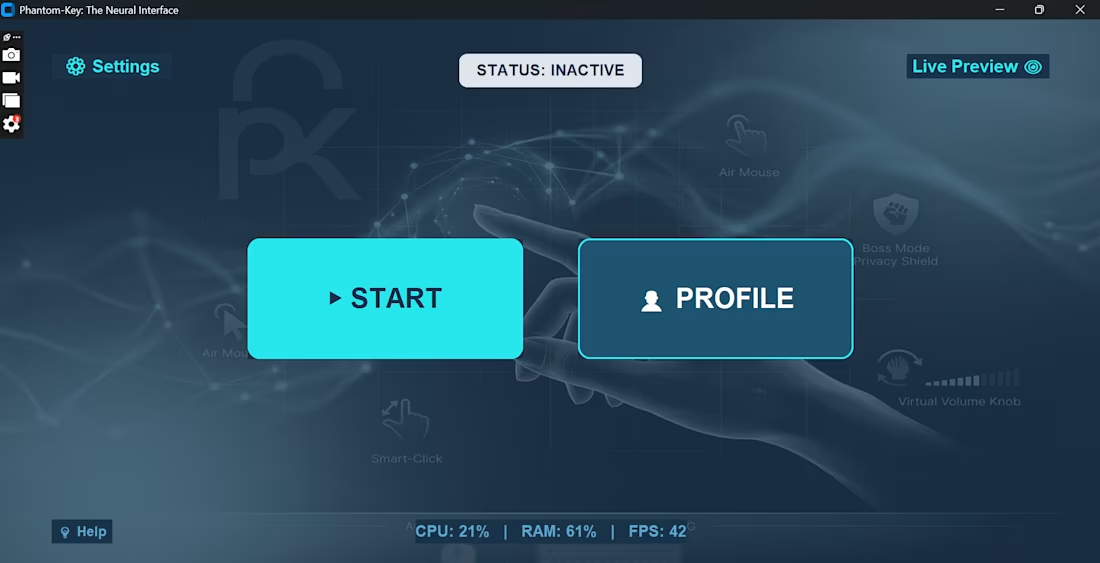
Phantom-Key: The Neural Interface
Project Overview
Phantom-Key is an innovative desktop application designed to redefine human-computer interaction by enabling entirely touchless control of the Windows operating system. By leveraging advanced computer vision and machine learning algorithms, the system translates real-time hand gestures into actionable system commands, effectively replacing the traditional mouse and keyboard.
Core Functionality
The application captures a live video feed from a standard webcam and processes the spatial coordinates of the user's hand landmarks. These landmarks are dynamically mapped to specific system actions, allowing users to navigate their desktop environment fluidly.
Touchless Navigation: Precise, real-time cursor tracking mapped to index finger movement.
Dynamic Gestures: Support for intuitive hand signs to execute clicks (left/right), drag-and-drop operations, and screen scrolling.
System Integration: Seamless execution of core OS commands without requiring specialized hardware or sensors.
Technical Architecture
Language: Python
Computer Vision Engine: OpenCV for real-time video capture and frame processing.
Gesture Tracking: MediaPipe for high-speed, lightweight hand landmark detection and spatial mapping.
Target OS: Windows
Impact and Applications
Phantom-Key bridges the gap between physical and digital spaces, offering a futuristic, hands-free user experience. It provides high utility for scenarios requiring sterile environments, enhances accessibility for users with limited physical mobility, and serves as a foundational step toward more immersive, AI-driven spatial computing interfaces.
1
42