
Muhammad Dawood
Asp Dot NET Developer and AI Engineer
New to Contra
Muhammad is building their profile!
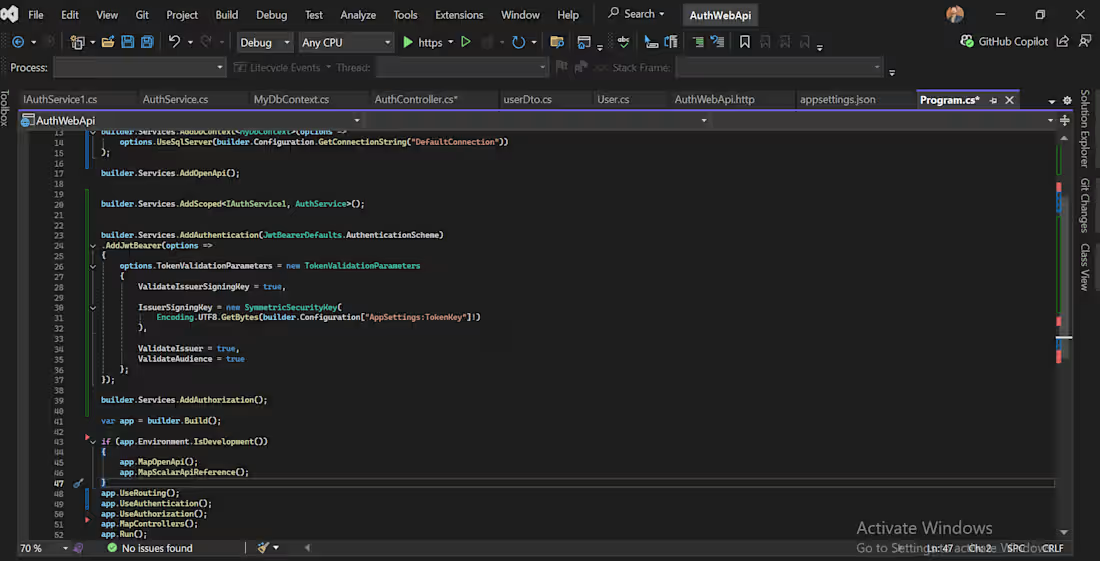
AuthWebApi- ASP.NET (http://ASP.NET) CoreWebAPI • DevelopedasecureAuthenticationWebAPIusingASP.NETCoreWebAPIwithJWTAuthenticationandRefreshTokens. • ImplementedUserRegistration, Login, Role-Based Authorization (RBAC), Password Hashing, and Protected API Endpoints using Entity Framework Core and SQL Server. • SourceCode: https://github.com/Dawood134/AuthWebApi
1
10
AI-Powered Portfolio Builder
A professional portfolio builder designed to help users create and manage a personalized online portfolio through an intuitive web interface.
Key Feature — Voice-to-Text
The platform integrates OpenAI Whisper to convert spoken input into text, allowing users to provide portfolio information through voice instead of manually typing everything.
Core Features
🎙️ Voice-to-Text with Whisper
👤 Profile & personal information management
💼 Skills and experience management
🎓 Education details
📝 Portfolio content management
✏️ Edit and customize portfolio information
🌐 Professional portfolio generation
🔐 User authentication and profile management
💾 Persistent database storage
Technology Stack
ASP.NET (http://ASP.NET) MVC · C# · Entity Framework Core · SQL Server · OpenAI Whisper · HTML · CSS · JavaScript
Project Focus
The project demonstrates the integration of AI-powered speech recognition into a web application, creating a more natural and efficient way for users to provide and manage their professional information.
1
38
Human Resource Management System (HRMS)
A full-stack Human Resource Management System designed to streamline employee operations, attendance, leave management, payroll, and organizational administration through a secure and scalable web application.
What I Built
I developed the HRMS backend using ASP.NET (http://ASP.NET) Core Web API with a structured architecture focused on maintainability, security, and scalability.
The system includes:
👥 Employee Management — Create, update, manage, and view employee information.
🏢 Department Management — Manage departments and organizational structure.
🕐 Attendance Management — Track employee attendance and working records.
🌴 Leave Management — Submit, manage, and approve employee leave requests.
💰 Payroll Management — Handle employee salary and payroll-related information.
🔐 Authentication & Authorization — Implemented JWT authentication with refresh tokens.
👤 Role-Based Access Control — Different permissions for Admin, HR Manager, Manager, and Employee roles.
📊 Reports — Provide HR-related data and operational insights.
🔔 Notifications — Support notification workflows for important HR activities.
Backend Architecture
The backend was built with ASP.NET (http://ASP.NET) Core Web API following Clean Architecture principles.
Architecture:
Domain → Application → Infrastructure → API
I implemented:
Repository Pattern
Unit of Work
Dependency Injection
Entity Framework Core
RESTful API design
JWT + Refresh Token authentication
Role-Based Authorization
SQL Server database
DTO-based API communication
Structured exception handling and validation
Frontend
The frontend was developed using React.js, providing an interactive dashboard and user interface for different HR roles.
The application communicates with the ASP.NET (http://ASP.NET) Core API through secure authenticated API requests.
Tech Stack
Backend: ASP.NET (http://ASP.NET) Core Web API, C#, Entity Framework Core
Database: SQL Server
Frontend: React.js, JavaScript, Tailwind CSS
Authentication: JWT, Refresh Tokens, Role-Based Authorization
Architecture: Clean Architecture, Repository Pattern, Unit of Work
Tools: Visual Studio, VS Code, Git, GitHub
1
52
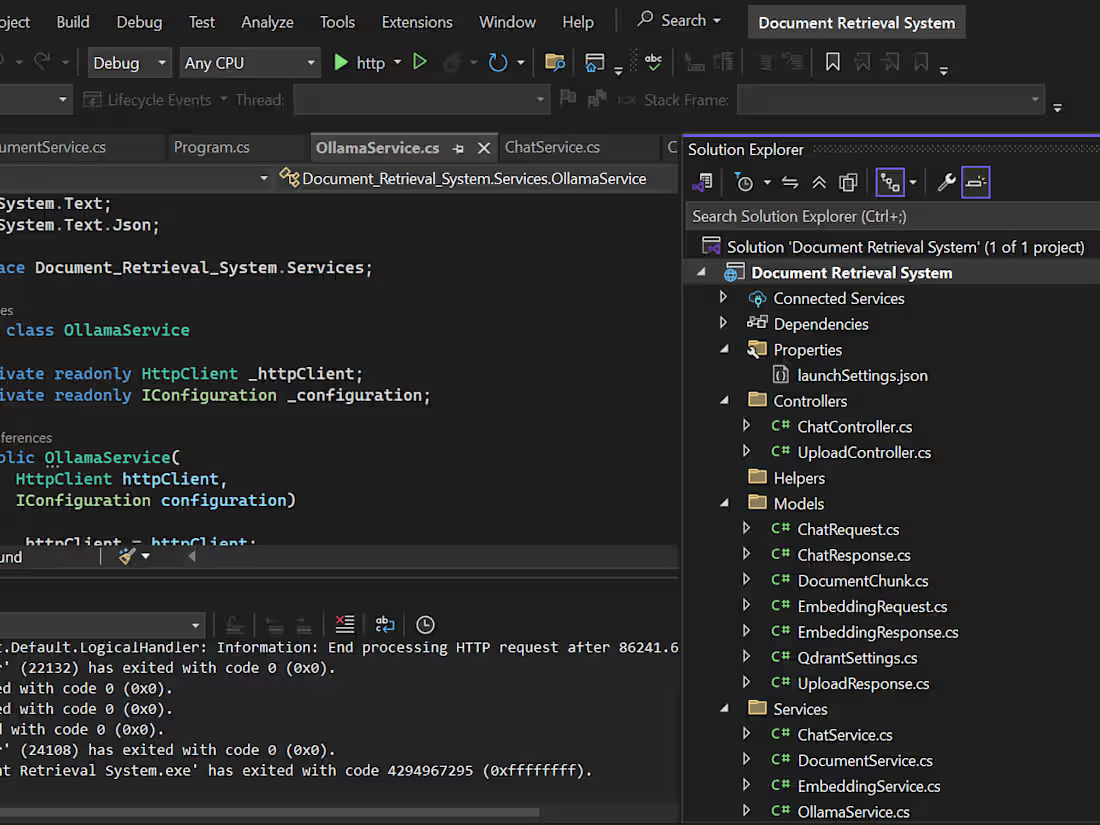
Custom RAG Document Chat System
Recently, I built a Custom Retrieval-Augmented Generation (RAG) system that allows users to upload their own documents and interact with them through natural-language questions.
The goal was to understand how modern AI document-chat systems work internally — from document processing and chunking to embeddings, vector search, and LLM-based responses.
What I Built
📄 Document Upload — Users can upload PDF and DOCX documents.
🔍 Text Extraction — Extracts readable text from uploaded documents.
✂️ Document Chunking — Splits large documents into smaller overlapping chunks for better retrieval.
🧠 Embeddings — Converts document chunks into vector representations.
🗄️ Vector Storage — Uses Qdrant to store and search document embeddings.
🔎 Semantic Search — Retrieves the most relevant document chunks based on the user's question.
🤖 LLM Integration — Uses retrieved context to generate grounded answers.
💬 Document-Based Chat — Users can ask questions and receive answers based on their uploaded documents.
RAG Pipeline
Upload → Extract → Chunk → Embed → Store → Retrieve → Generate
This project helped me understand the complete RAG pipeline rather than treating RAG as just an API call to an LLM.
Tech Stack
Backend: ASP.NET (http://ASP.NET) Core Web API, C#
Document Processing: PDF & DOCX text extraction
Embeddings: Ollama + nomic-embed-text
Vector Database: Qdrant
AI: Retrieval-Augmented Generation (RAG), LLM
API Testing: Swagger
Frontend: React.js
1
41