
Mohammad Mahdi Abbaszadeh
DevOps Engineer building scalable Kubernetes platforms and a
New to Contra
Mohammad Mahdi is building their profile!
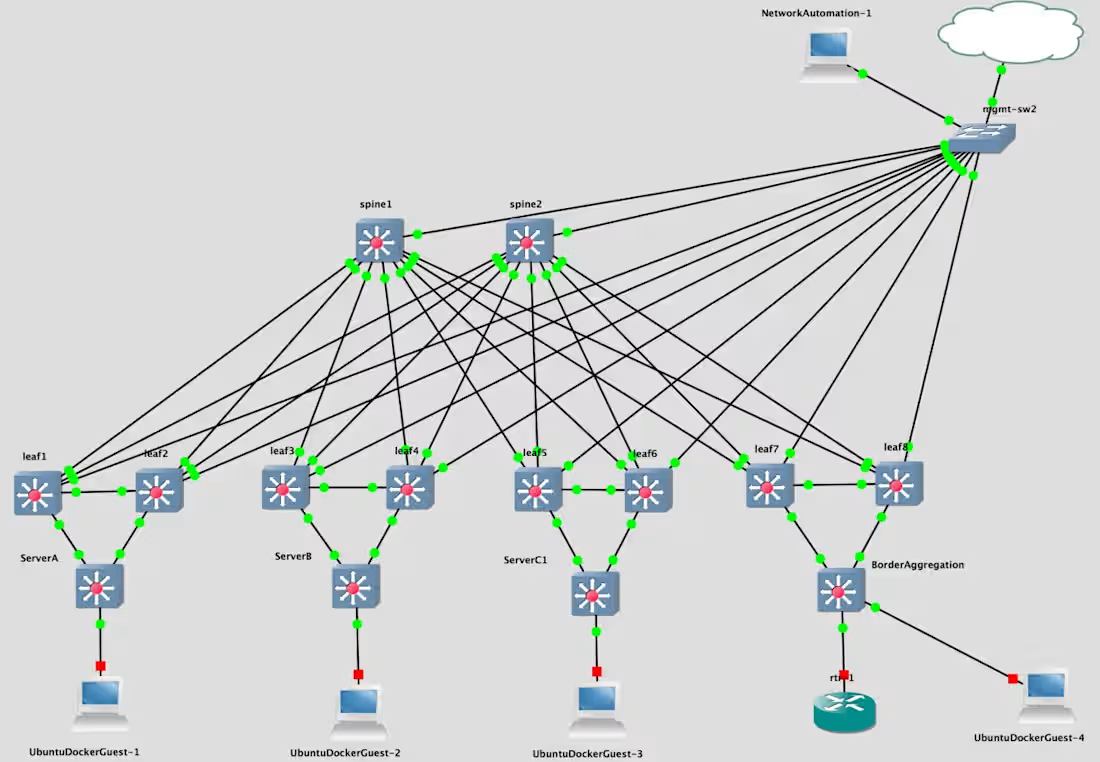
Perfect for NetDevOps, Network Automation, or DevOps interviews!
🔗 Repo: https://lnkd.in/gfs5x9dT
What’s your go-to tool for network automation these days?
🐂 Ansible
🐍 Python (Netmiko/NAPALM)
🛠️ Terraform
🤖 Something else?
Drop your vote or comment below! 👇
#NetworkAutomation #Ansible #Cisco #NetDevOps #DevOps #Automation #Networking #CCNA #CCNP #CiscoCertified
1
13
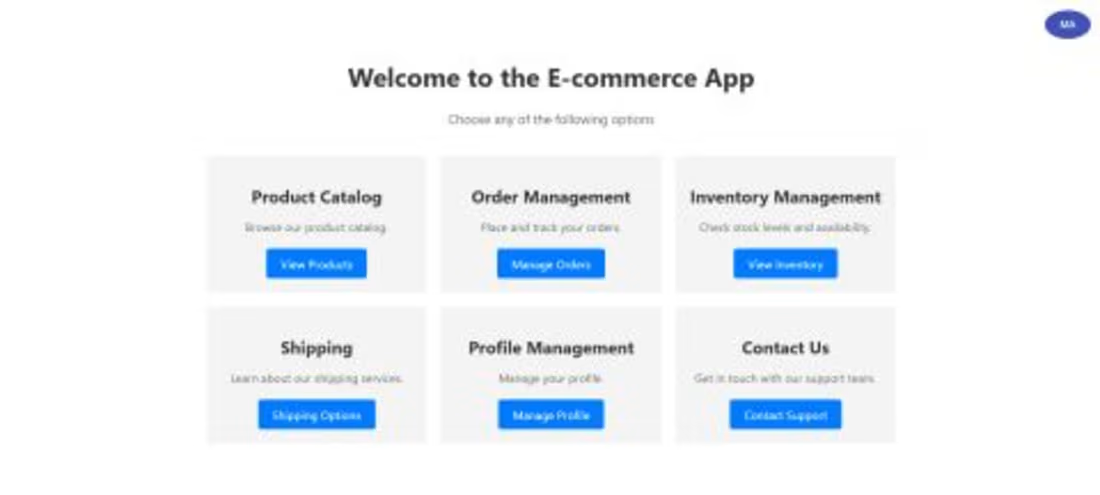
🚀 Just finished building a Dockerized E-Commerce Microservices project.
I took a basic e-commerce system and split it into 7 independent services:
* Product Catalog
* Product Inventory
* Order Management
* Profile Management
* Shipping & Handling
* Contact Support
* Ecommerce UI
All services are fully containerized with Docker and orchestrated using Docker Compose.
They communicate through an internal Docker network using service discovery — clean separation, isolated environments, production-style structure.
What I liked most about this project was seeing all containers spin up and interact like a real distributed system. It’s a different feeling when architecture starts behaving like something you’d actually deploy.
This project helped me go deeper into:
* Microservices architecture
* Docker networking & internal DNS
* Multi-stage Docker builds
* Infrastructure-focused repository structure
You can check the project here:
🔗 [https://lnkd.in/eEV2JWzX]
I’m thinking about taking this further — maybe adding Kubernetes, CI/CD pipelines, reverse proxy, or monitoring.
If you have suggestions, I’d genuinely love to hear them 👇
📫 Email: [abbaszade.m.1384@gmail.com (mailto:abbaszade.m.1384@gmail.com)]
💬 Telegram: [https://lnkd.in/esirxSMn)
🔗 GitHub: [https://lnkd.in/eFu8m5qU)
0
13
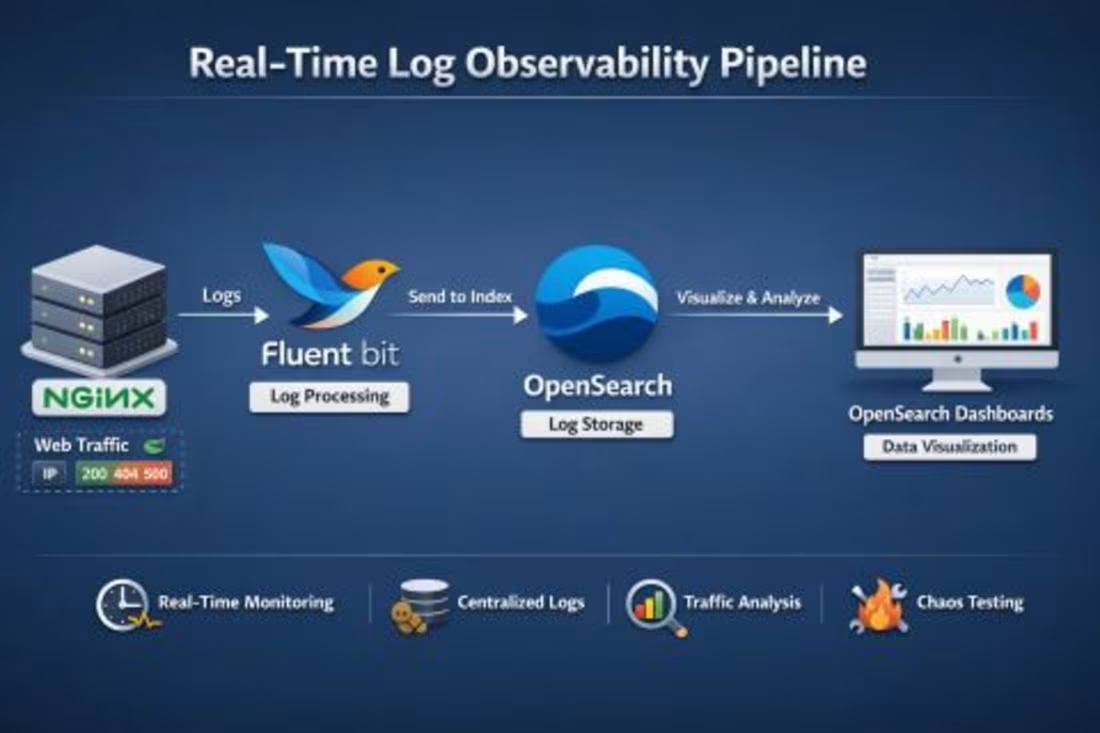
🚀 Designed and implemented a real-time log observability pipeline using containerized services.
The system ingests, processes, and visualizes high-volume web traffic logs with minimal overhead, enabling efficient monitoring and troubleshooting.
🔧 Stack:
OpenSearch
OpenSearch Dashboards
Fluent Bit
Nginx
Docker Compose
📐 Architecture:
Nginx → Fluent Bit → OpenSearch → Dashboards
💡 Key Capabilities:
• Real-time log ingestion and indexing
• Centralized log aggregation across services
• Queryable datasets for rapid troubleshooting
• HTTP status distribution and traffic analysis
• Identification of high-frequency clients and anomalies
⚙️ Engineering Focus:
Lightweight log forwarding with Fluent Bit
Compatibility tuning with OpenSearch (type-less indexing)
Container networking and service orchestration
Failure scenario testing (service interruption, backpressure handling)
📊 The system provides visibility into request patterns, error rates, and traffic spikes, forming a foundation for scalable observability in distributed environments.
💻 Source:https://lnkd.in/dgTynsFC
0
23
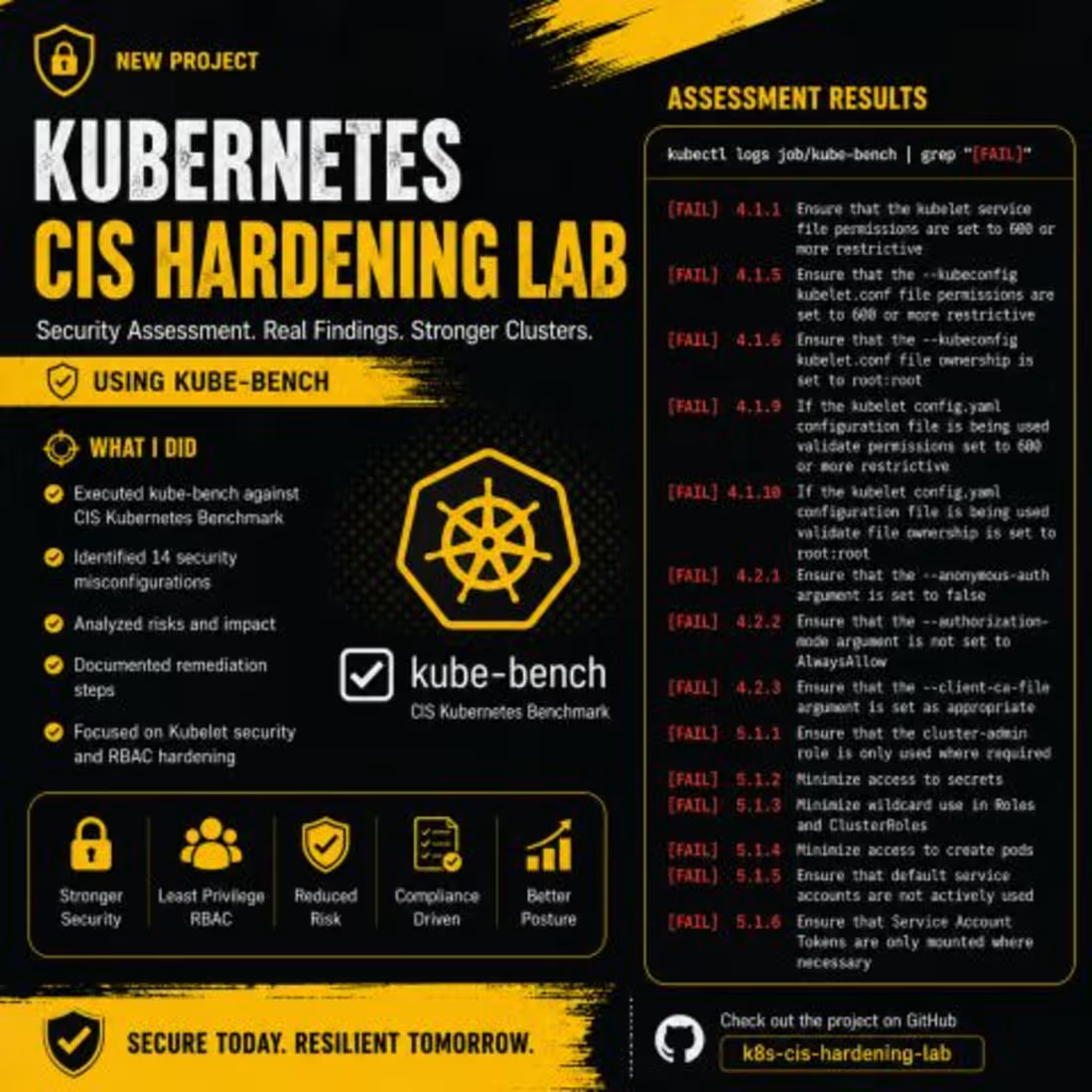
Just completed a small Kubernetes security project focused on CIS Benchmark assessment using kube-bench.
The goal was simple:
✔ Assess a Kubernetes cluster
✔ Identify security misconfigurations
✔ Analyze risks
✔ Document remediation recommendations
The scan revealed several findings related to:
• Kubelet configuration
• Authentication & authorization settings
• RBAC permissions
• Service Account security
• Least-privilege enforcement
Some of the notable issues included:
Anonymous authentication enabled
Excessive cluster-admin usage
Overly permissive RBAC rules
Unnecessary Service Account token mounting
Projects like this remind me that Kubernetes security is not only about deploying workloads—it's also about continuously validating cluster configurations against security best practices.
Repository:
github.com/yourusername/k8s-cis-hardening-lab
Next step: Runtime security monitoring with Falco and policy enforcement.
Feedback and suggestions are always welcome.
0
30