
Md Alamgir
Full Stack LLMO, GEO, AIO, AEO & AI SEO Specialist!


AI SEO, GEO & AEO Explained - AI Search...
The emerging discipline of optimizing for AI search engines goes by many names. We break down every acronym, track which terms the industry actually uses, and explain what it all means.
What is AI Search Optimization?
ChatGPT, Google AI Overviews, Perplexity, Gemini, and Claude are changing how people find information online. Instead of clicking through ten blue links, users ask a question and get a direct answer. That answer pulls from web pages across the internet, synthesizes the information, and sometimes cites its sources.
A new discipline has emerged around this shift. The goal is to make your brand, content, and digital presence visible when AI systems answer questions relevant to your business.
The problem? The industry has not agreed on what to call it.
The acronyms, explained
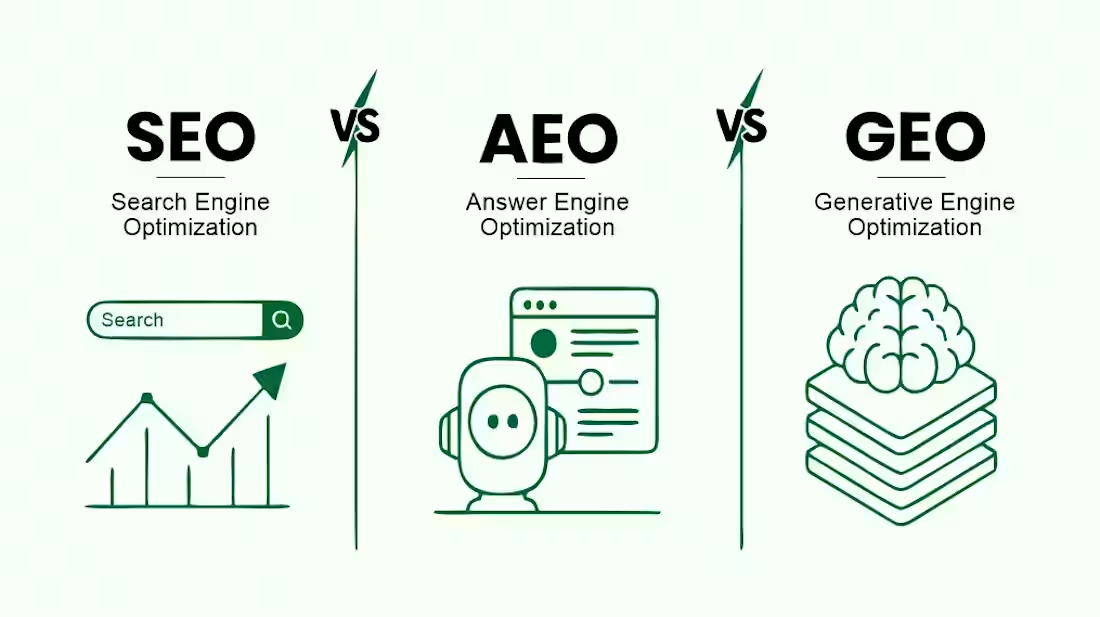
AI SEO - AI Search Engine Optimization
The broadest umbrella term and the one most people reach for first. AI SEO covers everything involved in making your content discoverable and citable by AI-powered search platforms. It builds directly on traditional SEO concepts, which makes it the easiest entry point for marketers already doing search optimization.
GEO - Generative Engine Optimization
Originated from a 2023 academic paper by researchers at Princeton, Georgia Tech, and IIT Delhi. GEO zeroes in on generative AI systems specifically. The term has picked up momentum fast, especially among marketers and agencies, because "generative engine" clearly distinguishes AI-generated answers from traditional search results.
AEO - Answer Engine Optimization
Frames the shift as moving from search engines to answer engines. When someone asks ChatGPT or Perplexity a question, they get a direct answer instead of a list of links. AEO is about making your content the source behind that answer. The term resonates with SEO practitioners because "answer engine" feels like a natural evolution of "search engine."
LLM SEO - Large Language Model SEO
Names the underlying technology directly. Popular among developers and technical SEO practitioners who want precision about what they are optimizing for. The focus is on how models like GPT, Gemini, and Claude process and surface content rather than on the search experience itself.
LLMO - Large Language Model Optimization
Drops the "SEO" framing entirely, reflecting the idea that this discipline extends beyond search engines to any system powered by large language models. Less commonly used for now, but growing among those who see the practice as fundamentally new rather than an extension of SEO.
They all describe the same practice
AI SEO, GEO, AEO, LLM SEO, and LLMO all refer to the same fundamental discipline. They describe the process of making your brand visible, cited, and recommended when AI systems answer questions relevant to your business.
The terminology splits along community lines. Marketers tend to prefer GEO and AI SEO. Developers lean toward LLM SEO. Traditional SEO practitioners often default to AEO because "answer engine" feels like a natural next step from "search engine." This kind of naming fragmentation is normal for emerging fields. For now, we track which terms are gaining adoption.
How AI search finds your content
AI search engines do not work like Google. Understanding the mechanics is essential.
AI models use live web search to answer questions. ChatGPT searches Google results through a third-party provider. Google AI Overviews pull from their own index. Perplexity crawls the web in real time. This means traditional SEO is not dead. It is the foundation that AI search is built on.
AI does not paste your full question into a search engine. It breaks your question into smaller sub-queries and searches for each one separately. Someone asking "What is the best CRM for a 10-person sales team?" might trigger three separate searches for "best CRM small business 2026," "CRM pricing comparison," and "CRM features sales teams." Your content needs to rank for these shorter fragments, not just the original question.
AI search is also non-deterministic. Ask the same question five times and you will get five different answers. There is no "position #1" in ChatGPT. Visibility is about how frequently your brand appears across many responses to many different prompts. Think mention rate, not ranking.
Among AI search platforms, ChatGPT has the largest market share at roughly 70%. Gemini is the fastest growing. Perplexity has the highest conversion rates, especially for SaaS products.
What to focus on right now
Make sure AI bots can actually read your content. This is the most commonly missed step. Check your robots.txt file for blocks against AI crawlers. Cloudflare recently changed its default settings to block AI bots automatically, so many sites are blocking them without realizing it. Also ensure your content is in the HTML. AI crawlers do not execute JavaScript, and content behind tabs, sliders, or accordions is invisible to them.
Keep your content fresh. AI systems have a strong recency bias. From real-world citation data, the moment content becomes over 3 months old, AI citations to that page drop significantly. Revisit important content at least once per quarter with current updates.
Get into content that AI already cites. This is the fastest path to visibility. Find out which web pages are already being cited for your target queries, then get your brand mentioned in them. This could be as simple as contributing to a Reddit thread that is already regularly cited, or reaching out to the author of a blog post that appears in AI answers. Brands have gone from completely invisible to getting their first AI mentions in under an hour using this approach.
Measuring AI search visibility
Most of AI search is zero-click. Users get the answer without visiting your website. Traditional analytics do not capture the full picture.
The most important metric is share of voice. This measures how frequently your brand appears in AI responses across a broad range of prompts. Think of it as a mention rate. The higher the percentage, the more impressions your brand gets.
Track share of voice alongside competitive rank to see how you compare against others in your space. Monitor both over time to know whether your optimization efforts are working or falling flat.
1
104
AEO vs. GEO vs. AI SEO?
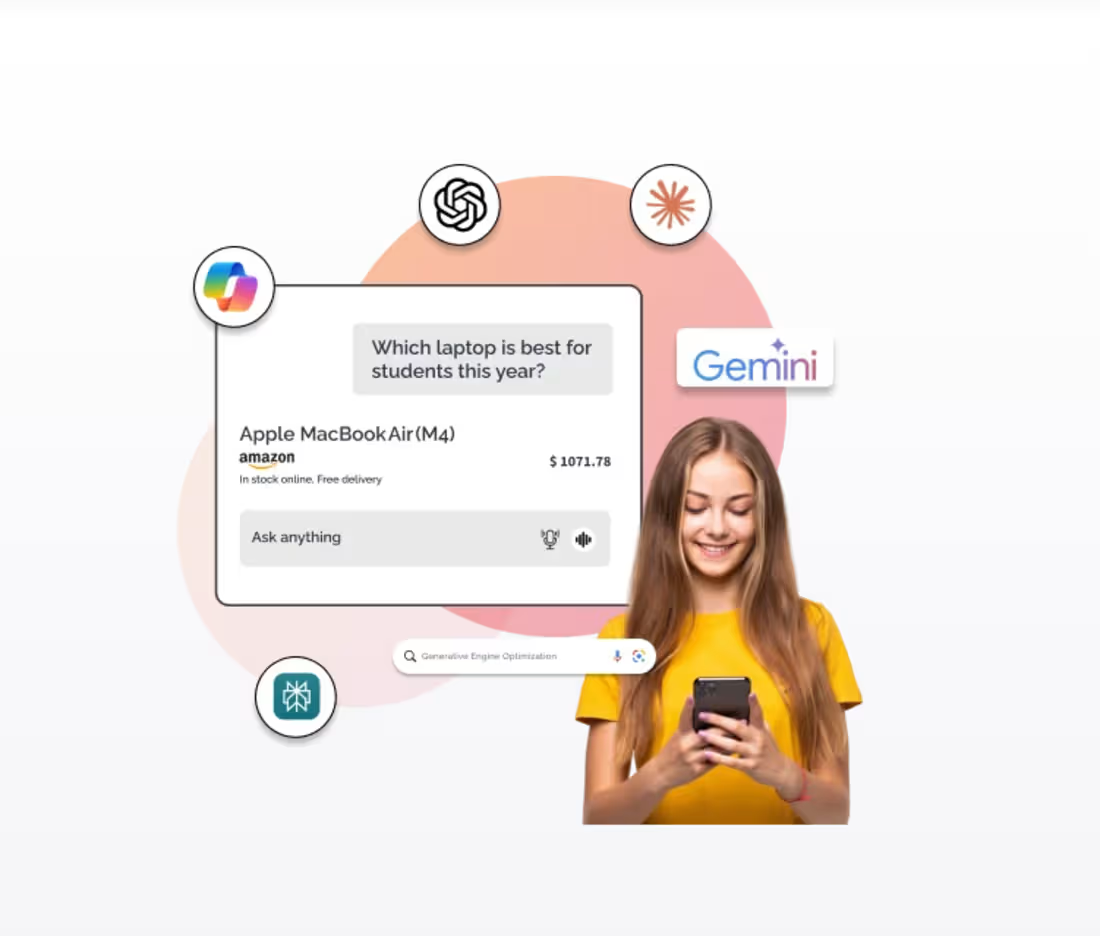
Optimizing a brand's presence in LLMs is new enough that there is not yet alignment on the most appropriate name — AEO, GEO, and AI SEO all compete for the label, and a shared name would simplify discussion and frameworks.
Graphite argues for AEO: "answers" most closely describes what LLMs return, while GEO carries geospatial associations and AI SEO implies the field is only about search, when AI chat is built for conversation.
AthenaHQ argues for GEO: a generative engine plans, routes, calls tools, and even transacts, so "answer" is too narrow, and GEO stays vendor-neutral where "answer engine" echoes Perplexity's branding.
Surfer argues for AI SEO: it frames the work as an evolution of SEO, is easy to understand outside marketing, and centers search as the user's action rather than the engine's mechanics or output format.
When asked, ChatGPT picked GEO, Perplexity picked AI SEO (citing far higher search volume), and Gemini picked AEO — leaving the debate split three ways.
Introduction
Optimizing your brand's presence in LLMs (ChatGPT, Perplexity, Gemini, Meta AI) is a burgeoning field of marketing. Since this is a new field, there is not yet alignment on the most appropriate name. A common way conversations on this topic begin is "AEO, GEO, AIO...whatever it's called these days".
Linguistic Conventionalism
Ultimately, the name of a concept and the definition of it are determined by a group of people reaching a collective agreement (linguistic conventionalism).
It is helpful to align on a single name to describe an idea such as marketing for LLMs, because it simplifies discussion and allows us to develop a shared set of concepts and frameworks.
We at Graphite, AthenaHQ, and Surfer joined together to put forth our most compelling arguments in favor of AEO, GEO, and AI SEO respectively. We collectively seek to help accelerate alignment by debating in this thread, which name is most appropriate.
Then, we encourage people to vote for their preferred name.
The losers of this debate have agreed to shave the winning name into their heads. (half kidding)
Why Answer Engine Optimization (AEO)?
Why AEO
"Answers" most closely describe the response from LLMs, whereas "generative" may refer to things such as the generation of images and video, which are likely different in nature to text answers in LLMs.
AEO has no such existing association. If you ask "Which are the best AEO agencies?" the answers are all agencies that offer LLM optimization services.
Why Not GEO
It is true that AI can generate far more than just answers. With products such as AI Image Generator (https://openai.com/index/introducing-4o-image-generation/), Dall-E (https://openai.com/index/dall-e-3/), and Mirage.app (http://Mirage.app), you can generate images and even video. With Character.ai (http://Character.ai) you can generate people, characters, and worlds. AI is indeed a "generative engine."
However, LLM products such as ChatGPT focus on chat, and chat primarily provides answers. So, the discipline of optimizing for LLMs such as ChatGPT, Perplexity, and Gemini is in fact optimizing specifically for answers.
There will likely be other new fields that focus on optimizing a brand's presence in images, videos, and worlds. But, these optimization strategies will likely be very different from those that optimize for text based answers. Thus, these are most appropriately described with a separate name.
From a practical perspective, "GEO" has strong existing associations with geospatial mapping technology. If you ask ChatGPT and Perplexity "Who are the best GEO agencies?" the answers are agencies focused on geospatial services, not marketing for LLMs. So, even AI itself does not think GEO refers to optimizing for itself.
Why Not AI SEO
LLMs frequently leverage search to generate answers (LLM + Rag). Often, when you ask a question, first a search is performed, then the LLM summarizes the results. For example, if you search for "what's the best project management software," a search for "best project management software" is run, then the LLM summarizes the search results.
I have argued since 2024 that marketing for LLMs is an evolution of SEO and argued against those that claim this is a completely different field that requires new optimization strategies. So, there is a strong argument to favor a name that explicitly references the original field of SEO, but with the modifier AI — AI SEO.
However, Google has used AI in their search for over a decade. Referring to AI SEO as something entirely new suggests that AI was not previously used as a core part of search technology. Further, AI chat is built for conversations, not just searching. By calling the field AI SEO, it implies that AI chat is only used for search.
In order to precisely describe marketing for LLMs, which provide answers as opposed to only search results, the most appropriate name is AEO.
Why Generative Engine Optimization (GEO)?
Why GEO
GEO names what we actually optimize: a generative, tool-using engine that plans, routes, calls functions, and now even transacts. In agentic flows, success means getting the engine to select your tool, call your API with the correct arguments, cite your source, and return or execute the result, not simply producing a more optimized paragraph. This is now standard capability across stacks (function/tool calling that lets models decide when to act), and assistants are already pushing into real tasks like booking or purchasing, so "answer" is too narrow for where usage is going. Also the fact that there's an article titled "GEO over SEO" (https://a16z.com/geo-over-seo/) in certain circles speaks volumes.
Why Not AEO
This is a neutrality issue. Perplexity brands itself as an "answer engine." That means "AEO" bakes one vendor's positioning into the field's name.
On the common pushback "Users ask questions; they expect an answer." They expect resolution. Sometimes that's a one answer paragraph. Often it's a plan, a comparison with citations, a calendar slot booked, a cart filled, or a form filed. GEO is about increasing the likelihood that the engine routes through your content and your tools to deliver that resolution.
Why Not AI SEO
This term has recognizability and rides the SEO brand equity, but it conflates a distinct discipline with legacy SEO and risks being perceived as a bolt-on rather than a new optimization surface. It will attract SEO teams, but it underspecifies agent behavior and tool routing.
When searching "GEO", geospatial terms come up; people hear "AEO" and think American Eagle Outfitters. This is why we should lead with the full term "Generative Engine Optimization" and use GEO in context. So if the goal is a durable, vendor-neutral term, GEO is the cleaner, future-proof label.
Why AI SEO?
By Tomasz Niezgoda (https://www.linkedin.com/in/niezgoda-tomasz/), CMO @ SurferSEO.com (http://SurferSEO.com)
Why AI SEO
At Surfer, we call it AI SEO — short for AI Search Optimization.
Some might argue it should be AISO. I stand behind AI SEO, and here's why it works better than AISO, AEO, or GEO:
It shows a clear evolution of our discipline. SEO has always adapted to new search behaviors: directories, keyword search, mobile, voice, and now AI assistants. Framing it as "AI SEO" emphasizes continuity and evolution, rather than starting from scratch.
It's easy to understand for leaders outside marketing. "SEO" already carries brand equity. Adding "AI" signals the next phase without requiring someone to learn a new acronym or decode jargon. CMOs, founders, and executives immediately grasp that this is SEO adapted for AI-driven search experience.
It reflects how LLMs operate as wrappers for search. Assistants don't replace search — they extend it. AI models still retrieve, rank, and synthesize information from the same sources SEO teams already optimize (the familiar top 10 in Google, Bing, or any other index). AI SEO captures this continuity while pointing to the new frontiers ahead. AISO, by contrast, suggests a break from search engines — when in fact the core principles of SEO still apply.
It keeps the focus on search as an action. People don't "generative-engine" something, and they don't "answer-engine" something. They search — in Google, ChatGPT, Perplexity, or even Meta AI. That human intent hasn't changed, only the interface and the engine have. AI SEO is powerful because it centers on the user's action (search) rather than the engine's mechanics or the output format.
AI SEO bridges the past and future.
Familiar enough to build trust and adoption.
Expansive enough to cover new challenges in optimizing for AI assistants.
Grounded in what users actually do: search.
That's why we believe AI SEO is the clearest, strongest, and most future-proof name for this next chapter.
Why Not AEO
AEO is too narrow. It ties the field to "answers" when assistants increasingly deliver plans, comparisons, tool calls, and transactions — not just text snippets.
Why Not GEO
GEO is too abstract. "Generative" risks diluting the focus on discovery and overlaps with fields like image or video generation.
Why Not AISO
AISO is too forced. While technically accurate, it's not how people talk. The market already uses AI SEO — and introducing a new acronym only creates confusion and slows adoption.
What Does AI Think?
In order to solve this debate, we decided to consult with something smarter than all three of us combined: AI. So, we asked ChatGPT, Perplexity, and Gemini what they think.
ChatGPT
Why GEO
I'd pick Generative Engine Optimization (GEO) because it best reflects what's new about LLM platforms: they generate responses rather than just retrieving them, and the name feels future-proof as these systems expand beyond text into multimodal outputs.
Why Not AEO
I wouldn't pick AEO because "answer engine" is too narrow and tied to an older era of voice search and featured snippets.
Why Not AI SEO
I wouldn't pick AI SEO because it's too vague and risks confusion with "using AI for SEO" rather than "optimizing for AI systems."
Full argument: chatgpt.com (http://chatgpt.com)
Perplexity
Why AI SEO
AI SEO is the clear winner because it has the strongest market demand (250,000+ monthly searches vs. 1,300 for GEO and 720 for AEO) and requires zero explanation to stakeholders, while building naturally on existing SEO knowledge and infrastructure.
Why Not AEO
Answer Engine Optimization has a narrow scope that may become outdated as AI evolves beyond simple Q&A to more complex generative interactions.
Why Not GEO
Generative Engine Optimization creates major confusion with geographic marketing terminology, requiring constant clarification in professional settings and making it difficult to find relevant content online.
Full argument: Perplexity (https://www.perplexity.ai/search/consider-three-different-names-_n4pJsUjSPqLyFvarfBdHQ#0)
Google Gemini
Why AEO
AEO is the superior term because it clearly and intuitively defines the strategic objective: optimizing content to be selected for direct, concise, and synthesized answers, which aligns with the enduring user intent in the zero-click era. This clarity provides seamless continuity with existing search marketing practices focused on winning featured snippets and maintaining visibility across answer engines.
Why Not GEO
Generative Engine Optimization (GEO) is rejected due to a critical acronym failure, as the term "GEO" is already globally and historically established in both common usage and LLM training data to refer to geography, creating insurmountable linguistic conflict and strategic ambiguity.
Why Not AI SEO
AI SEO is not the preferred strategic label because its functional ambiguity conflates the toolset (using AI to enhance traditional SEO processes) with the strategic outcome (optimizing content for AI visibility), which risks diluting the focus of the core marketing mandate.
1
103
SEO vs. GEO vs. AEO: The Ultimate 2027 Guide to Ranking on Everything!
Search is evolving faster than ever. While traditional search engine optimization (SEO) remains essential, the rise of artificial intelligence (AI) is fundamentally changing how people discover information online. Instead of clicking through a list of blue links, users increasingly receive direct answers from AI-powered search experiences such as Google AI Overviews, ChatGPT, Perplexity AI, Microsoft Copilot, and Gemini.
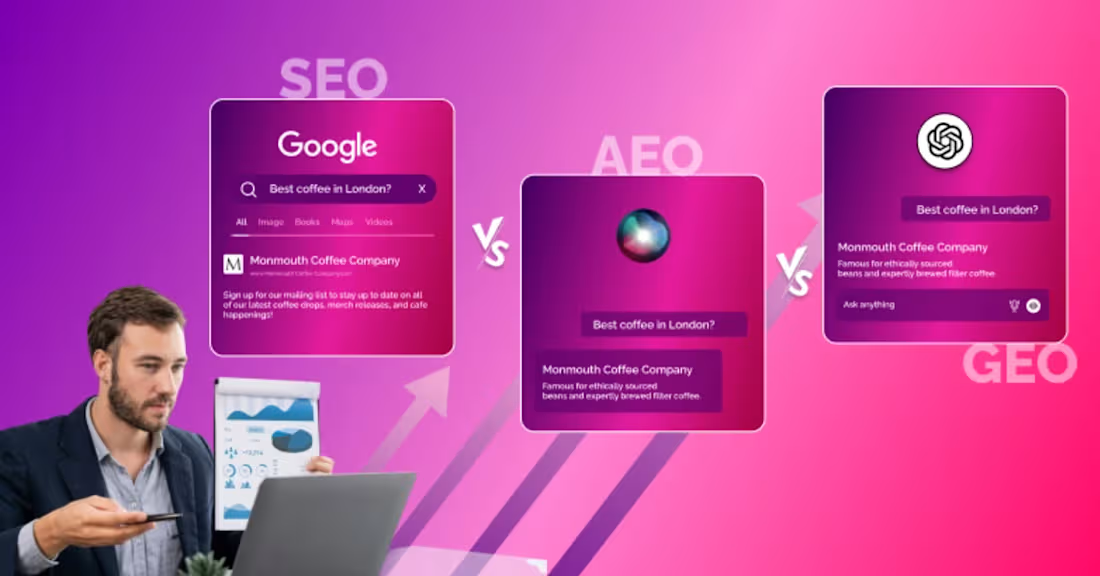
This shift has introduced two new optimization strategies alongside traditional SEO: Generative Engine Optimization (GEO) and Answer Engine Optimization (AEO).
SEO helps your website rank in conventional search engine results pages (SERPs). GEO focuses on increasing your visibility in AI-generated summaries and recommendations, while AEO ensures your content is structured to become the direct answer that AI assistants provide to users. For businesses investing in AEO Services, this means creating content that is concise, authoritative, and easy for answer engines to extract and present. Similarly, brands looking for answer engine optimization services need a strategy that goes beyond keywords and focuses on clarity, structure, and trust.
Rather than replacing SEO, GEO and AEO build upon its foundation. Businesses that combine all three approaches are better positioned to reach customers across every stage of their search journey whether they search on Google, ask ChatGPT for recommendations, compare products in Perplexity AI, or use voice assistants for quick answers. This is especially important for companies offering AI SEO Services, where the goal is to improve visibility across both traditional search and AI-driven discovery channels.
In this guide, you’ll learn:
What SEO, GEO, and AEO are and how do they differ.?
Why all three strategies are essential for modern digital marketing.
How AI search engines evaluate and cite content.
Best practices for optimizing content for both traditional and AI-powered search.
How to future-proof your website for the next generation of search experiences.
Whether your goal is to generate more organic traffic, increase brand visibility in AI search, or become a trusted source cited by answer engines, understanding the relationship between SEO, GEO, and AEO is the key to long-term digital success.
SEO vs GEO vs AEO: What is SEO?
Search Engine Optimization (SEO) is the practice of improving a website’s visibility in organic search results. It involves optimizing your website so search engines like Google and Bing can better understand, index, and rank your content for relevant user queries.
Although AI-powered search experiences are transforming how information is presented, traditional search engines continue to process billions of searches every day. Users still rely on Google to research products, compare services, find local businesses, and make purchasing decisions. Strong SEO remains the foundation of every successful digital marketing strategy, including modern AI SEO Services that combine classic ranking tactics with AI-era visibility goals.
Modern SEO extends far beyond keyword optimization. Search engines evaluate hundreds of ranking signals to determine whether your content deserves to appear for a particular search query.
The Growing Importance of E-E-A-T
Google increasingly evaluates content using the principles of Experience, Expertise, Authoritativeness, and Trustworthiness (E-E-A-T) to improve visibility in traditional blue links as well as newer search experiences.
Websites that clearly demonstrate first-hand experience, industry expertise, credible authorship, trustworthy information, and strong authority signals are more likely to perform well in both traditional search and AI-powered search experiences. It involves optimizing your website so search engine crawlers can discover, crawl, and index your web pages.
Ways to strengthen E-E-A-T include:
Publishing original research and insights.
Citing reputable sources.
Showcasing author credentials.
Including case studies and customer success stories.
Keeping content accurate and up to date.
Maintaining transparent business information.
These trust signals not only influence traditional rankings but also increase the likelihood of your content being referenced by AI-powered search engines.
Why SEO Still Matters?
Despite the rapid adoption of AI search, SEO remains the foundation of online visibility.
Traditional search continues to dominate transactional, navigational, and local searches, including queries such as:
Best Shopify development company
Magento development services
eCommerce SEO agency
Digital marketing company near me
Enterprise website development services
These high-intent searches often lead directly to conversions, making SEO indispensable for businesses seeking qualified traffic.
Additionally, AI systems frequently rely on content that already performs well in traditional search. Websites with strong technical SEO, authoritative content, and established trust signals are more likely to be selected as sources for AI-generated summaries and responses.
Instead of viewing SEO as outdated, businesses should recognize it as the foundation upon which successful GEO and AEO strategies are built.
What is Generative Engine Optimization (GEO)?
Generative Engine Optimization (GEO) is optimization for generative search engines powered by AI, like Google SGE, Perplexity, and You.com. It reflects how generative AI tools are changing search behavior and how large language models assemble answers from multiple sources.
Conventional search engines return a list of ranked links, but generative engines combine multiple sources into one answer. Your mission in GEO is to have your content included in that AI-generated summary, as search engines increasingly reward content relevance, not just keyword usage. In practice, generative AI favors sources it can interpret clearly, trust, and cite with confidence.
Key GEO Elements
Semantic Content: GEO optimizes for generative AI experiences powered by large language models. These tools synthesize multiple sources instead of only returning ranked links, so AI engines seek context and meaning rather than keywords. For instance, a site that describes “how AI software improves Shopify stores in New York” must use clear content structure to connect ideas like analytics, automation, customer experience, and revenue growth.
Structured Data: Schema markup and metadata inform AI about your site. Including product schema, FAQs, and reviews increase your chances of being referenced.
Long-Tail Optimization: Users pose natural questions to generative machines such as, “What is the best CRM for small businesses in the USA?” GEO targets intent-based queries written in a conversational tone and aligned with how engines interpret searches through natural language processing.
Sources of Trust: Generative machines will indeed consider credibility. Content referred with references, case studies, and expert remarks will be picked up.
How Does GEO Differ from Traditional SEO?
Traditional SEO focuses on improving rankings in search results by optimizing keywords, backlinks, and technical performance.
GEO expands this approach by helping AI models understand:
What your content is about through semantic content, as generative systems use natural language processing to interpret meaning and relationships.
Whether your information is trustworthy.
How your expertise relates to a topic.
Whether your content directly answers user intent through long-tail optimization, where a conversational tone helps GEO align with how people phrase prompts and questions.
Whether your page deserves to be cited alongside other authoritative sources, supported by structured data and clear content structure that improves how AI engines interpret and cite information.
Core Elements of GEO
Semantic Content
Modern AI systems understand topics, relationships, and context, not just keywords.
For example, a page discussing Shopify development should naturally include related concepts such as eCommerce, customer experience, conversion optimization, headless commerce, payment gateways, APIs, and scalability.
This semantic depth helps AI understand the full context of your content.
Entity Optimization
Search engines increasingly organize information around entities, people, organizations, products, technologies, and locations.
Clearly defining your business, services, products, authors, and industry expertise helps AI establish stronger relationships between your brand and relevant topics.
Structured Data
Schema markup provides machine-readable information about your content.
Helpful schema types include:
Article
Organization
Person
FAQ
Breadcrumb
Product
Review
Structured data helps search engines and AI systems interpret your content more accurately.
Original Insights
AI systems favor content that contributes unique value rather than repeating information available elsewhere.
Adding original statistics, expert opinions, proprietary frameworks, case studies, industry observations, or practical examples increases the likelihood of your content being cited. That also applies when creating content designed to give search engines and AI models clear, useful context they can interpret and surface.
Schema markup provides machine-readable information, and a logical site structure helps search engines and AI systems understand page hierarchy and relationships.
Authority and Trust
AI-generated responses are more likely to cite and reuse content built on original insights, and they prioritize information from credible and trustworthy sources.
Businesses can strengthen authority by:
Publishing expert-written content that positions the brand as a reliable source.
Improving the likelihood of having content featured in AI-generated answers and summaries.
Updating content regularly.
Demonstrating real-world experience.
Building a strong backlink profile.
Why Does GEO Matters?
As AI-generated search experiences become more prominent, visibility is no longer limited to traditional rankings.
GEO helps businesses:
Increase visibility in AI-generated summaries.
Build authority across multiple AI platforms.
Reach users earlier in their research journey.
Improve brand recognition even without a direct website click.
Future-proof their content strategy for AI-first search.
Companies that invest in GEO Service today position themselves to benefit as AI-powered search continues to reshape how people discover information online.
What is AEO (Answer Engine Optimization)?
Answer Engine Optimization (AEO) is the process of structuring content so search engines, AI assistants, and voice-enabled platforms can quickly identify and deliver direct answers to user questions.
While SEO focuses on ranking pages and GEO focuses on being cited in AI-generated summaries, AEO is about becoming the answer itself. This is especially important for brands offering answer engine optimization(AEO) services, because the goal is to create content that answer engines can easily extract, summarize, and present in response to conversational queries.
AEO is increasingly important because users now ask search engines and AI tools complete questions instead of typing short keywords. For example, instead of searching for “best CRM software,” a user may ask, “What is the best CRM software for small businesses with a limited budget?” Answer engines are designed to respond to these natural-language queries with concise, relevant, and trustworthy information.
How AEO Differs from SEO and GEO?
SEO aims to improve rankings in search results.
GEO aims to increase visibility in AI-generated summaries.
AEO aims to provide the exact answer that AI systems, voice assistants, and featured snippets can surface immediately.
This makes AEO especially valuable for:
Voice search
Featured snippets
People also ask results
AI assistants like ChatGPT and Copilot
Smart speakers and mobile assistants
FAQ-driven content
Core Elements of AEO
Question-Based Content
AEO works best when content is organized around the questions users actually ask.
Examples include:
What is SEO?
How does GEO work?
What is the difference between SEO and AEO?
Which strategy is best for eCommerce brands?
Clear question-based headings make it easier for answer engines to identify relevant sections.
Concise, Direct Answers
Answer engines prefer content that gets to the point quickly.
The best AEO content usually includes:
A short definition or summary at the beginning.
A clear explanation in plain language.
Supporting details below the answer.
Lists, tables, and examples where appropriate.
Structured Formatting
Formatting plays a major role in AEO.
Helpful content structures include:
FAQs
Bullet points
Numbered steps
Comparison tables
Definition blocks
How-to sections
These formats make it easier for AI systems to extract and present information accurately.
Schema Markup
Structured data helps answer engines understand the purpose of your content.
Useful schema types for AEO include:
FAQ Page
HowTo
Article
Organization
Product
LocalBusiness
Trust and Authority
Answer engines are more likely to surface content from credible sources.
To improve trust, businesses should:
Publish expert-authored content.
Include citations and references.
Keep content updated.
Use clear brand and author information.
Demonstrate real-world experience.
Why AEO Matters?
AEO is essential because users increasingly expect immediate answers rather than long lists of links.
It helps businesses:
Appear in featured snippets.
Improve visibility in voice search.
Increase chances of being cited by AI assistants.
Capture zero-click search opportunities.
Deliver faster answers to high-intent users.
For companies investing in AI SEO Services, AEO is a critical part of the strategy because it bridges the gap between traditional search visibility and AI-driven answer delivery.
0
48
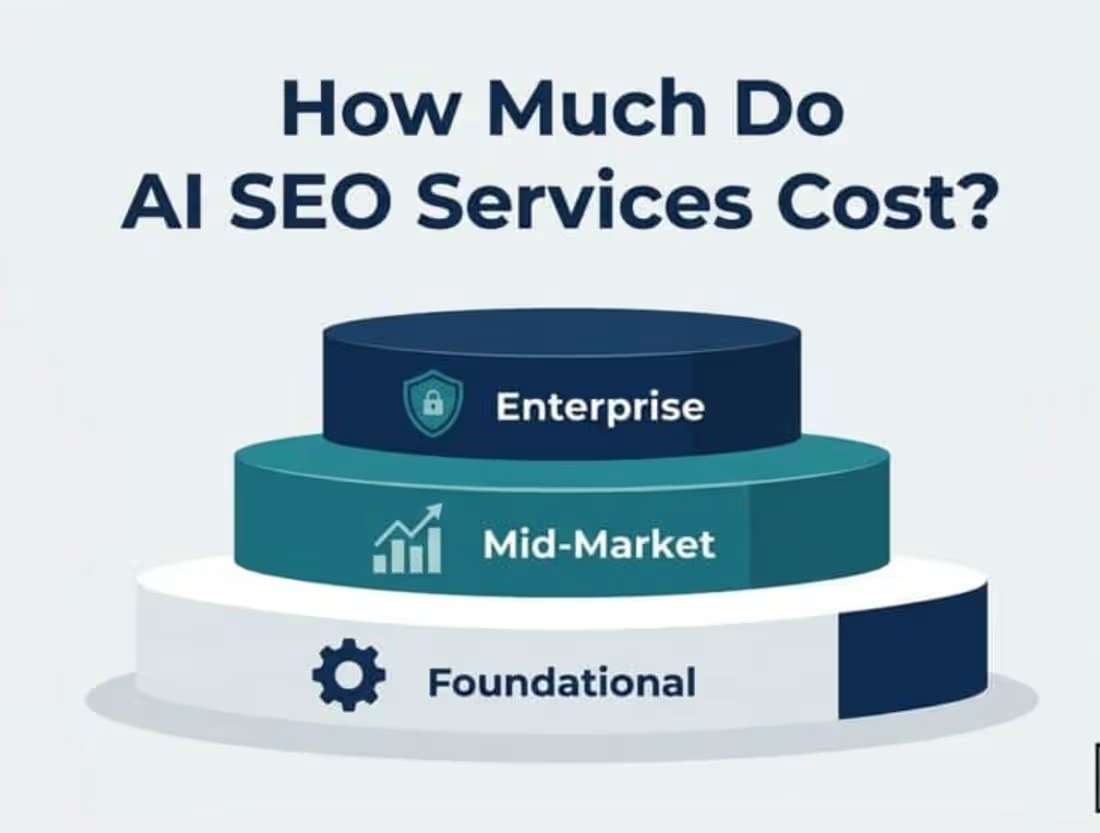
AI SEO Services: What They Include, What They Cost, and How to Choose?
In short
AI SEO services come in two kinds, often sold under one label: agencies that use AI to deliver ordinary SEO faster, and agencies that work on getting your brand mentioned and cited in AI search such as ChatGPT and Google AI Overviews. Most charge a monthly retainer. Before you sign, ask which of the two you are buying, which AI engines they measure and how, and who checks AI-written content. Walk away from anyone who guarantees rankings or citations: Google says no one can guarantee a #1 ranking.
Key takeaways
"AI SEO services" covers two different offers: SEO delivered faster with AI tools, and work to get your brand mentioned and cited in AI answers. Many agencies sell both under one name, so ask which you are paying for.
Most SEO providers charge a monthly retainer. In an Ahrefs poll of 439 SEO providers, 78.2% charged one, and the most common band was $501 to $1,000 a month.
Google says no one can guarantee a #1 ranking on Google. The same logic applies to AI answers, which change from run to run, so a guaranteed citation is a red flag.
Good AI SEO proposals name the engines they will measure, the prompts they will track, the baseline they start from and who reviews AI-written content before it goes live.
Software is enough when someone in-house can write and edit. An agency earns its fee when nobody has time, or when the work needs outreach to earn mentions on other sites.
What are AI SEO services?
AI SEO services are agencies, freelancers and consultants selling search work that involves AI. Two very different offers hide under that one label:
SEO delivered with AI. Ordinary SEO (keyword research, content, technical fixes, reporting) done faster with AI tools. You should get more output, or the same output for less.
SEO for AI search. Work aimed at getting your brand mentioned and cited when people ask ChatGPT, Perplexity, Gemini or Google's AI Overviews and AI Mode. This is usually called generative engine optimization (GEO).
Many agencies sell both under one name, and some sell the first while marketing it as the second. Before you compare prices, ask which one a proposal covers. If the two meanings are new to you, start with what AI SEO means.
How AI SEO services are priced?
There is no published price benchmark for AI SEO specifically, so the best guide is what SEO services cost in general. In an Ahrefs poll of 439 SEO service providers (article last updated August 2024):
Monthly retainer: 78.2% charged one. The most common band was $501 to $1,000 a month; agencies averaged $3,209 a month and freelancers $1,348.63.
Hourly: $75 to $100 an hour was the most common rate.
Per project: $2,501 to $5,000 was the most common fee, typical for a one-off audit or content sprint.
AI changes the mix inside those fees rather than the models themselves. Drafting and research get cheaper; tracking AI answers adds tool costs that classic SEO did not have. When two proposals differ a lot on price, compare what each one delivers per month, and how much of it a person writes or checks.
Frequently asked questions
How much does an AI SEO agency cost?
There is no standard price for AI SEO specifically. For SEO services in general, an Ahrefs poll of 439 providers found the most common monthly retainer was $501 to $1,000, with agencies averaging $3,209 a month and freelancers $1,348.63. Ask for a scope that lists deliverables, not just a monthly fee.
Can an agency guarantee that ChatGPT will cite my brand?
No. AI answers change between runs and between users, and no outside firm controls them. An honest agency will promise work and measurement, such as pages fixed, prompts tracked and mention rates reported, not a guaranteed citation.
Is AI SEO more expensive than regular SEO?
Not necessarily. AI tools can lower the cost of research and drafting, while tracking AI answers adds a cost that classic SEO did not have. Compare proposals on deliverables and measurement, not on the label.
Should I hire a freelancer or an agency for AI SEO?
A freelancer suits a defined job, such as an audit, a content sprint or setting up AI visibility tracking. An agency suits ongoing work across content, technical fixes and outreach that needs several people. Either way, ask to see their own process for checking AI-written content.
What should I own when an SEO contract ends?
Everything made for you: the content, the keyword and prompt research, audit reports, tracking history and access to your own accounts such as Search Console and Google Business Profile. Agree on this in writing before you start.
Do I need a local AI SEO agency near me?
Only if local knowledge matters to the work, for example local SEO for shops or clinics, or a market with its own language and directories. Google suggests asking any SEO about their experience in your country or city; most other AI SEO work can be done remotely.
1
110