
Maria Lapina
UX/UI & Product Designer | SaaS | Mobile & Web Apps | Figma
New to Contra
Maria is ready for their next project!
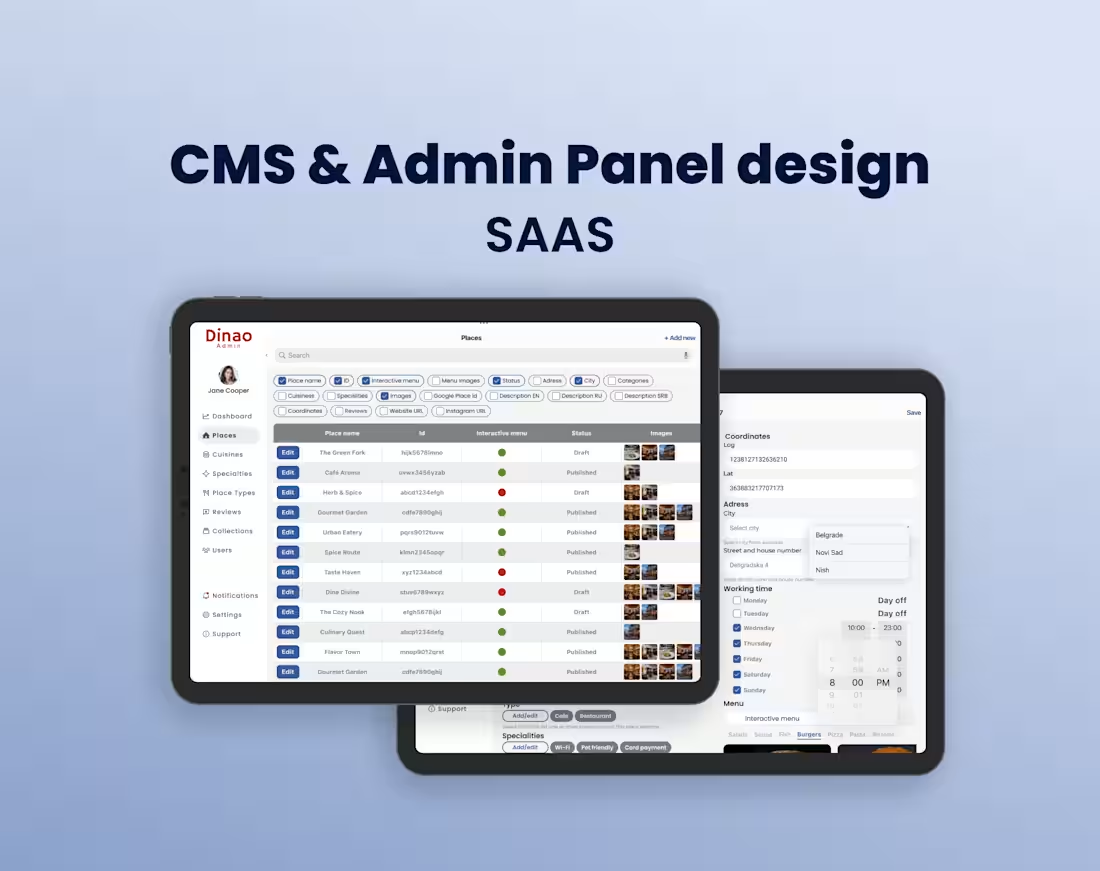
CMS & Admin Panel for a Restaurant Discovery Platform
An iPad-first admin panel for curating the places, collections, reviews, and users that power the Dinao consumer app.
Description
Context Dinao is a restaurant and bar discovery app in Belgrade. As the catalog grew past the MVP, the content team needed a dedicated CMS to manage everything that appeared in the consumer app. Until then, content lived in a patchwork of spreadsheets, Notion boards, and manual database edits — slow, error-prone, and impossible to scale.
I designed the CMS and admin panel from scratch: entity architecture, editorial workflows, and UI.
The problem Three things were breaking the team:
There was no structured model of how content entities (places, collections, reviews, users) related to each other.
No distinction between draft and published content, so half-finished entries regularly leaked into the live app.
The content team worked in the field — visiting venues, shooting photos, verifying details on-site. A desktop-only CMS was a non-starter.
Approach
Entity architecture. Defined the core objects and their relationships: a Place belongs to one or more Collections; a Review is tied to a Place and a User; a Collection is owned by the editorial team or surfaced algorithmically. This model became the backbone the CMS was built around.
Standardized Draft / Published workflow. Every entity has a lifecycle — Draft for work in progress, In Review for editorial approval, Published for what users see. This killed the "half-baked content leaking into the app" problem overnight.
iPad-first, table-based UI. The content team worked on the move. I designed the CMS around iPad's form factor and input model — touch-friendly but dense enough to handle hundreds of entries. Inline editing, bulk actions, sticky filters, and keyboard shortcuts (when attached to a Magic Keyboard) made heavy-duty work fast.
Designed for the real jobs-to-be-done:
Adding a new place on-site, with photos, tags, and hours in under two minutes
Building a curated collection ("Best rooftops in Savamala") by multi-selecting and sorting
Moderating user-generated reviews in a batch review queue
Pulling up a user's activity history when handling support cases
Outcome The CMS became the control room for the product. Content onboarding time dropped dramatically, half-finished entries stopped reaching users, and the editorial team could curate on the road instead of being tied to a laptop. It also unlocked scale — adding new cities, collection types, or content moderators became a workflow change instead of a database migration.
Role
Product Designer — information architecture, interaction design, UI
Services (теги Contra)
Product Design
UX Design
UI Design
Admin Panel Design
CMS Design
iPad App Design
Information Architecture
Tools
Figma
Industries
Startup · Restaurant Tech · Internal Tools
0
5

Growth Dashboard for a Restaurant Discovery Startup- Dinao
An internal analytics tool that turned fragmented metrics into a single source of truth for a product growing 7–9% week-over-week.
Description:
Context Dinao is a restaurant and bar discovery app launched in Belgrade. After the MVP, the product was growing 7–9% weekly, but the team was making decisions on scattered spreadsheets and disconnected charts. There was no shared view of what "healthy growth" actually looked like.
I designed an internal Growth Dashboard so the founders, PM, and marketing could read the state of the business at a glance — and argue about the right things.
The problem Three issues behind the mess:
Metrics were tracked in isolation — installs here, retention there, no funnel logic tying them together.
Everyone pulled their own numbers, so meetings started with 15 minutes of reconciling figures.
Absolute values told the team where they were, but not where they were going.
Approach
Mapped metrics to a growth framework. Organized everything around Acquisition → Activation → Engagement → Retention. Each stage got a primary KPI, a set of supporting metrics, and a clear owner.
Prioritized trend over snapshot. The dashboard defaults to week-over-week and month-over-month deltas, not static numbers. The team needed to see direction, not just position.
Built a drill-down hierarchy. Top-level KPIs on the landing view; one click deeper for cohort segments and acquisition channels; one more click for raw data.
Designed for three real jobs-to-be-done:
Weekly team standup — "is the line going up?"
Investor updates — "here's what we promised, here's what shipped"
Ad-hoc diagnosis — "why did activation dip last Thursday?"
Outcome The dashboard became the default surface for every growth conversation. Manual reporting dropped, decision speed went up, and the team finally had a shared language for talking about growth.
Role
Product Designer — research, information architecture, UI, data visualization
Services (теги Contra)
UX Design
UI Design
Data Visualization
Dashboard Design
Product Design
SaaS Design
Tools
Figma
Industries
Startup · Restaurant Tech · Consumer Apps
0
20
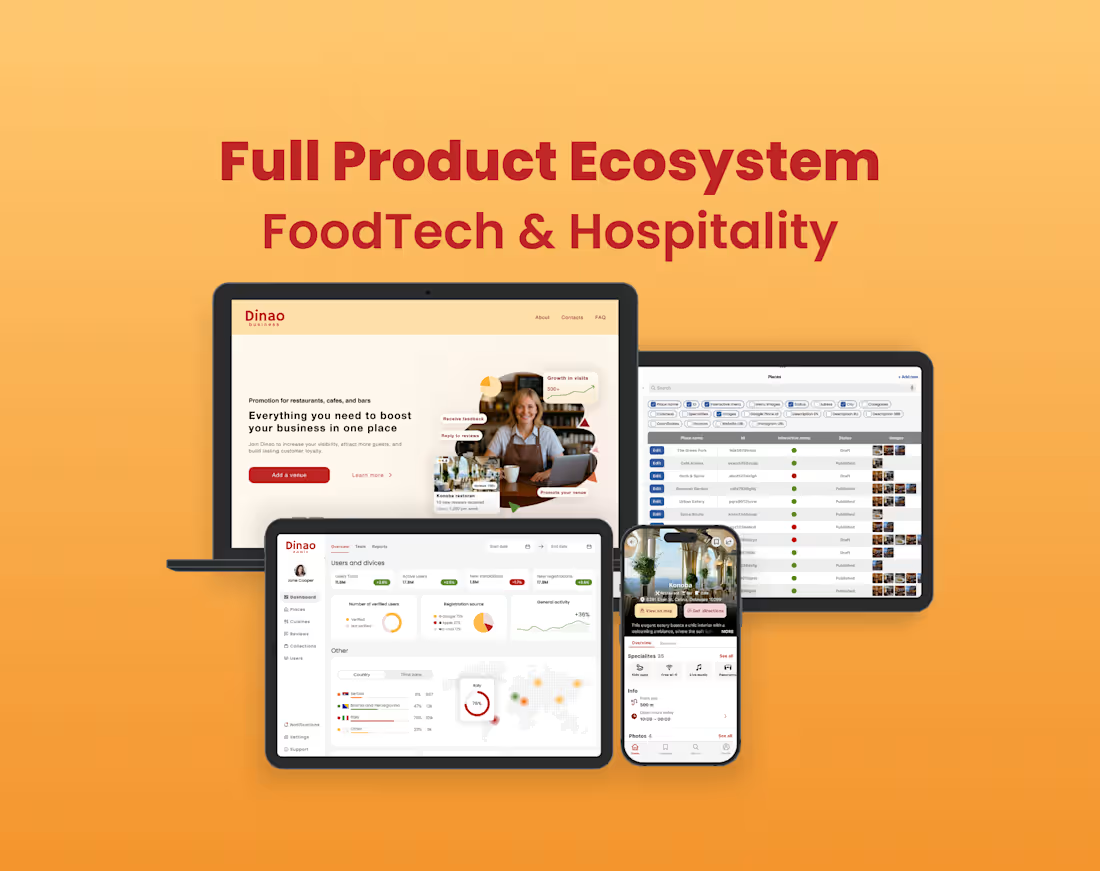
Dinao — Full Product Ecosystem: iOS app + branding + CMS + dashboard + B2B landing for a restaurant-discovery startup. Live on the App Store.
Description: Dinao helps people find restaurants and bars that match what they actually want. I led the full design cycle — brand, iOS MVP, post-MVP growth, CMS, analytics dashboard, and B2B lead-gen landing page.
The work started with 5 interviews + 50 surveys to build user personas and a journey map, then moved into MVP design on native iOS components. Post-launch, I ran 8 more interviews, prioritized features with RICE, tested the map flow, and shipped filters, social login, photo menus, reviews, and collections.
Highlights:
Live on the App Store
Weekly audience growth 7–9% (~200%+ YoY)
Post-MVP: registration +38%, session depth +24%, engagement +27%, venue views ×1.5
Designed 5 connected products: iOS app, brand system, iPad CMS, analytics dashboard, B2B landing
Role: Full-cycle Product Designer (research → brand → UI → handoff) Tools: Figma, iOS Human Interface GuidelinesTags: Product Design, iOS Design, User Research, Branding, Design Systems, SaaS Design
1
43
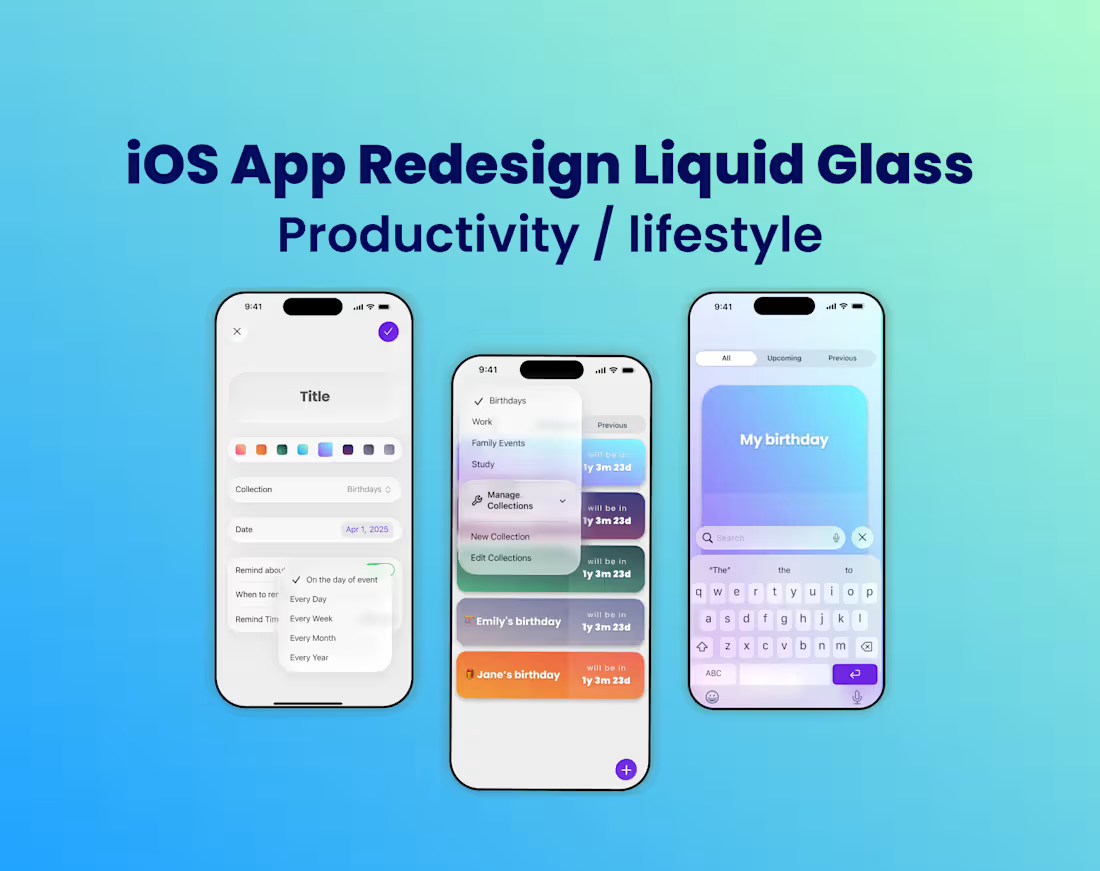
Soon — iOS 26 Redesign in Liquid Glass
1
62