
Mahadev Upadhyayula
AI Automation & Product Prototyping Expert
Profile in progress
Mahadev is building their profile!
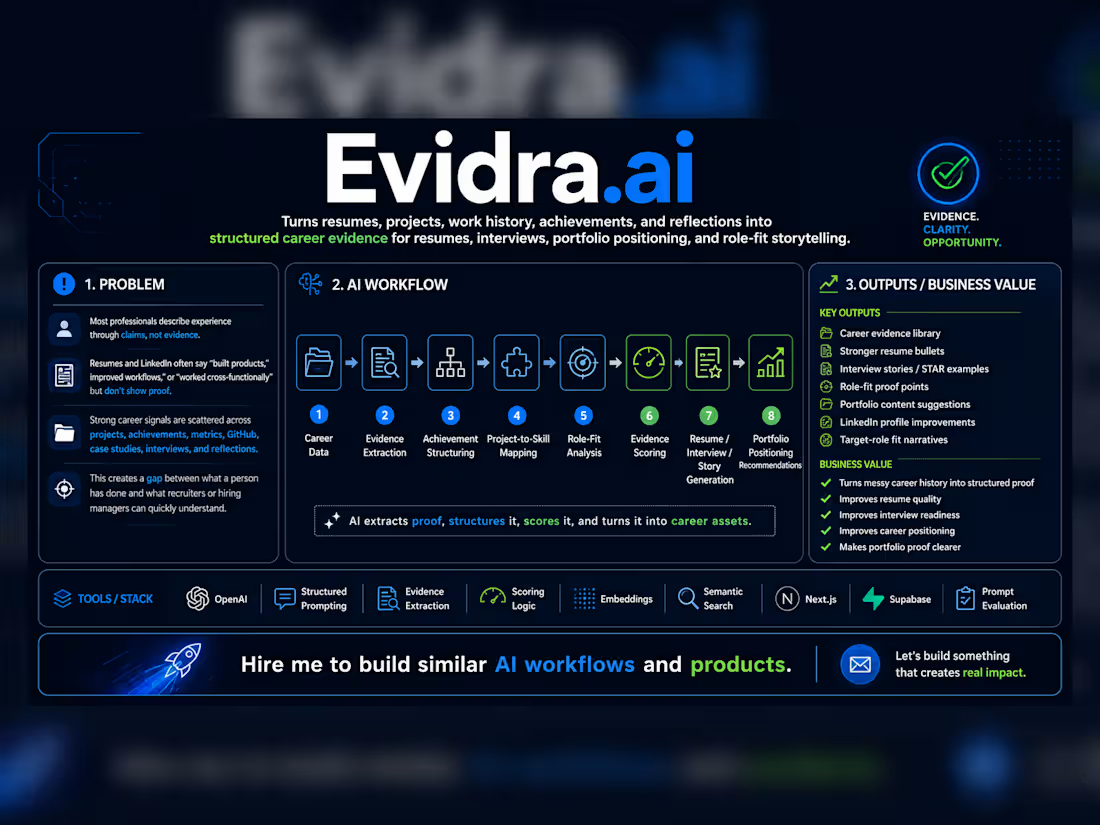
An AI-powered system that turns scattered work history into structured career evidence for resumes, interviews, and career growth.
Evidra.ai (http://Evidra.ai) is an AI career evidence system designed to help professionals capture, structure, and reuse the real proof behind their career growth.
Most job seekers start too late. They open a resume template, rewrite old bullets, or prepare generic interview stories only after they find a role. Evidra.ai (http://Evidra.ai) starts earlier by helping users build a living evidence base from projects, responsibilities, wins, metrics, decisions, feedback, and work artifacts.
The system transforms unstructured career inputs into structured signals such as impact themes, role competencies, STAR stories, resume evidence, interview examples, positioning angles, and career progression patterns.
I designed Evidra.ai (http://Evidra.ai) as a 0→1 AI product with a clear product strategy, problem framing, user workflows, roadmap, monetization thinking, and AI workflow architecture. The product focuses on making career claims more credible by grounding them in reusable evidence instead of vague self-description.
My Role
Founder / AI Product Manager / Product Strategist
I worked on:
Product strategy and positioning
Problem framing and user personas
Career evidence workflow design
AI extraction and structuring logic
Resume and interview evidence system design
Roadmap from MBP to scalable product
Monetization and go-to-market thinking
Content and launch strategy
Key Product Idea
Resume bullets are claims. Career evidence is proof.
Evidra.ai (http://Evidra.ai) helps users move from:
“I am good at product strategy.”
to:
“Here are the projects, decisions, metrics, tradeoffs, and outcomes that prove my product strategy capability.”
0
47
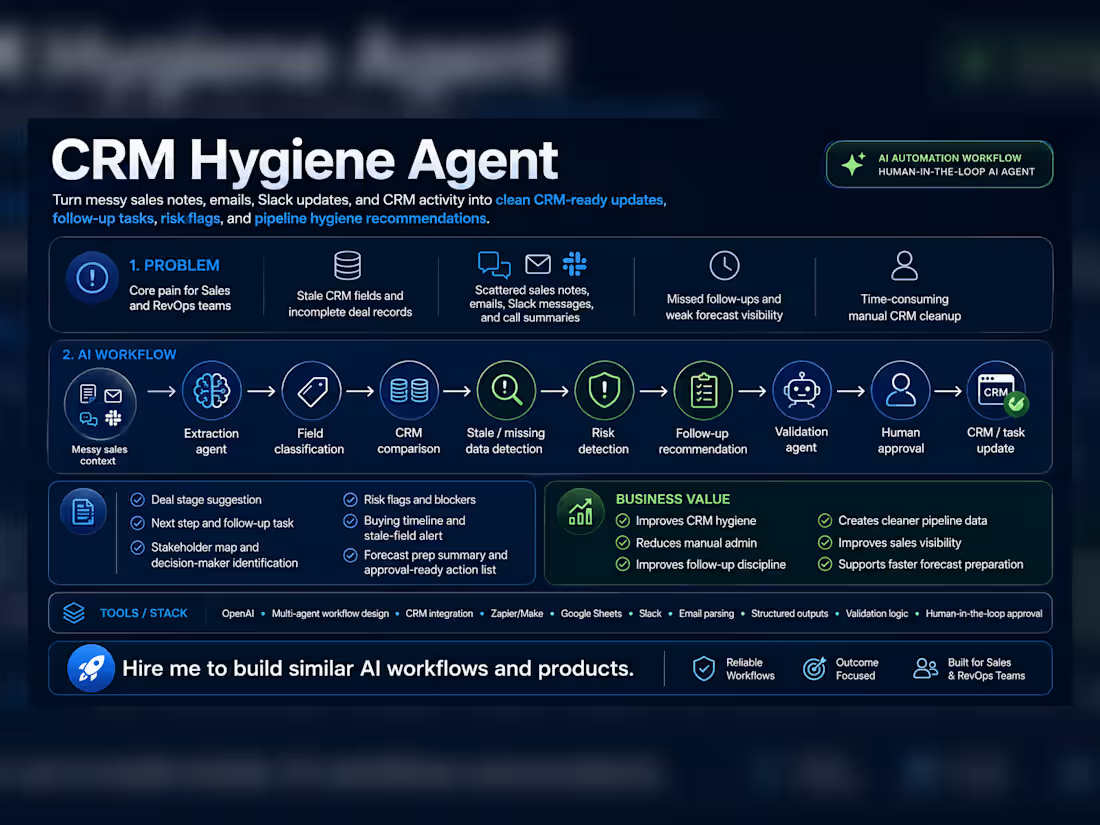
CRM Hygiene Agent — AI Workflow Automation for Sales Ops
An AI-powered workflow that turns messy sales notes, emails, and Slack context into clean CRM fields, follow-up actions, and pipeline hygiene insights.
CRM Hygiene Agent is an AI automation concept designed to solve one of the most common problems in sales operations: messy, incomplete, and stale CRM data.
Sales teams often record deal progress across scattered notes, emails, Slack messages, call summaries, and manual CRM updates. Important information such as deal stage, next steps, risks, blockers, decision-makers, timelines, and follow-up actions often gets buried or missed.
The CRM Hygiene Agent uses AI to extract structured deal intelligence from unstructured sales communication and prepare CRM-ready updates. Instead of blindly auto-updating records, the workflow is designed with a safer human-in-the-loop process:
Extract → Validate → Compare → Approve → Update CRM
This makes the product more reliable for real sales teams because users can review suggested updates before anything is pushed into the CRM.
The project was designed as a practical AI workflow automation system for founders, agencies, RevOps teams, and sales teams that want cleaner CRM data, better follow-up discipline, and stronger pipeline visibility.
My Role
AI Product Manager / Workflow Automation Strategist / Product Designer
I worked on:
Problem framing and sales ops workflow analysis
CRM hygiene pain point identification
AI workflow design
Human-in-the-loop approval flow
Structured data extraction logic
Product positioning and MBP strategy
Portfolio case study and visual system design
Buyer-focused service packaging for freelance marketplaces
Key Workflow
The system takes inputs from:
Sales notes, call summaries, emails, Slack messages, and CRM activity
Then extracts:
Deal stage
Next step
Risks
Decision-maker
Blockers
Timeline
Follow-up actions
CRM field update suggestions
And outputs:
Validated CRM-ready updates, follow-up tasks, risk flags, and sales visibility insights.
Business Value
CRM Hygiene Agent helps sales and RevOps teams:
Reduce manual CRM admin work
Improve CRM data quality
Identify stale or incomplete deal fields
Create more consistent follow-ups
Improve pipeline visibility
Reduce missed next steps
Keep humans in control of sensitive CRM updates
0
34
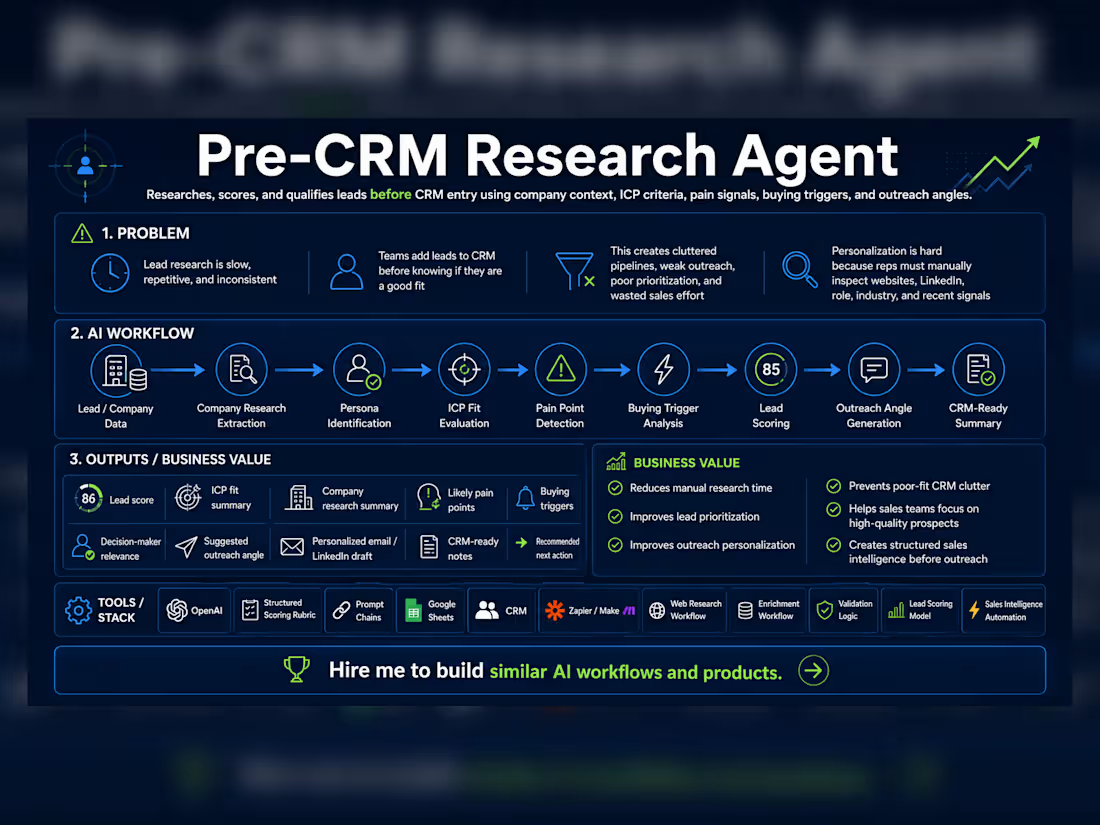
Pre-CRM Research Agent — AI Lead Research & Qualification Workflow
An AI-powered research workflow that turns raw leads into enriched, qualified, CRM-ready prospect profiles before they enter the pipeline.
Pre-CRM Research Agent is an AI workflow automation concept designed to solve a common sales and founder-led growth problem: leads often enter the CRM too early, with incomplete context, weak qualification, and no clear next action.
Many teams collect leads from forms, LinkedIn, directories, spreadsheets, referrals, events, cold lists, or website traffic. But before those leads become useful, someone still has to research the company, understand the buyer, identify fit, summarize the opportunity, classify urgency, and prepare outreach context.
The Pre-CRM Research Agent automates that research layer.
It takes raw lead inputs and enriches them into structured prospect intelligence before the lead is added to CRM or assigned to a salesperson. The workflow helps teams separate good-fit prospects from low-quality leads, reduce manual research time, and improve the quality of CRM data from the start.
Instead of treating CRM as the first step, this project creates a smarter layer before CRM:
Lead Capture → Research → Enrich → Qualify → Score → Prepare CRM Entry → Recommend Next Action
The result is cleaner CRM data, better lead prioritization, more personalized outreach, and less manual work for founders, sales teams, agencies, and RevOps teams.
My Role
AI Product Manager / Workflow Automation Strategist / AI Automation Designer
I worked on:
Problem framing for pre-CRM sales workflows
Lead research and enrichment workflow design
AI qualification logic
Prospect intelligence structuring
Lead scoring and prioritization model
CRM-ready output design
Human-review workflow for safer data entry
Buyer-focused positioning for freelance AI automation services
Key Workflow
The system takes raw inputs from:
Website forms, lead lists, spreadsheets, LinkedIn targets, referrals, directories, emails, and manual lead notes.
Then researches and structures:
Company overview
Industry and segment
Website summary
Ideal customer profile fit
Buyer persona fit
Pain point hypothesis
Product/service relevance
Lead source
Company size estimate
Urgency indicators
Personalization angles
Outreach context
Qualification score
Recommended next action
And outputs:
CRM-ready lead profiles, qualification notes, prioritization scores, and personalized outreach briefs.
Example Workflow
Before:
A raw lead appears in a spreadsheet:
“Acme Logistics — website form — interested in automation.”
After:
The Pre-CRM Research Agent prepares:
Company: Acme Logistics
Segment: Mid-market logistics provider
Likely pain points: manual dispatch coordination, reporting delays, CRM fragmentation
Fit score: High
Suggested CRM stage: Research Qualified
Recommended next action: Send workflow automation discovery email
Outreach angle: “Reducing manual coordination across dispatch, reporting, and sales ops”
CRM notes: Structured summary ready for review and entry
Business Value
Pre-CRM Research Agent helps teams:
Reduce manual lead research time
Improve lead qualification quality
Keep low-fit leads out of CRM
Create cleaner CRM records from day one
Prioritize high-intent or high-fit prospects
Generate better outreach context
Improve sales handoff quality
Reduce wasted time on weak leads
Support founder-led sales, agencies, and lean RevOps teams
0
25
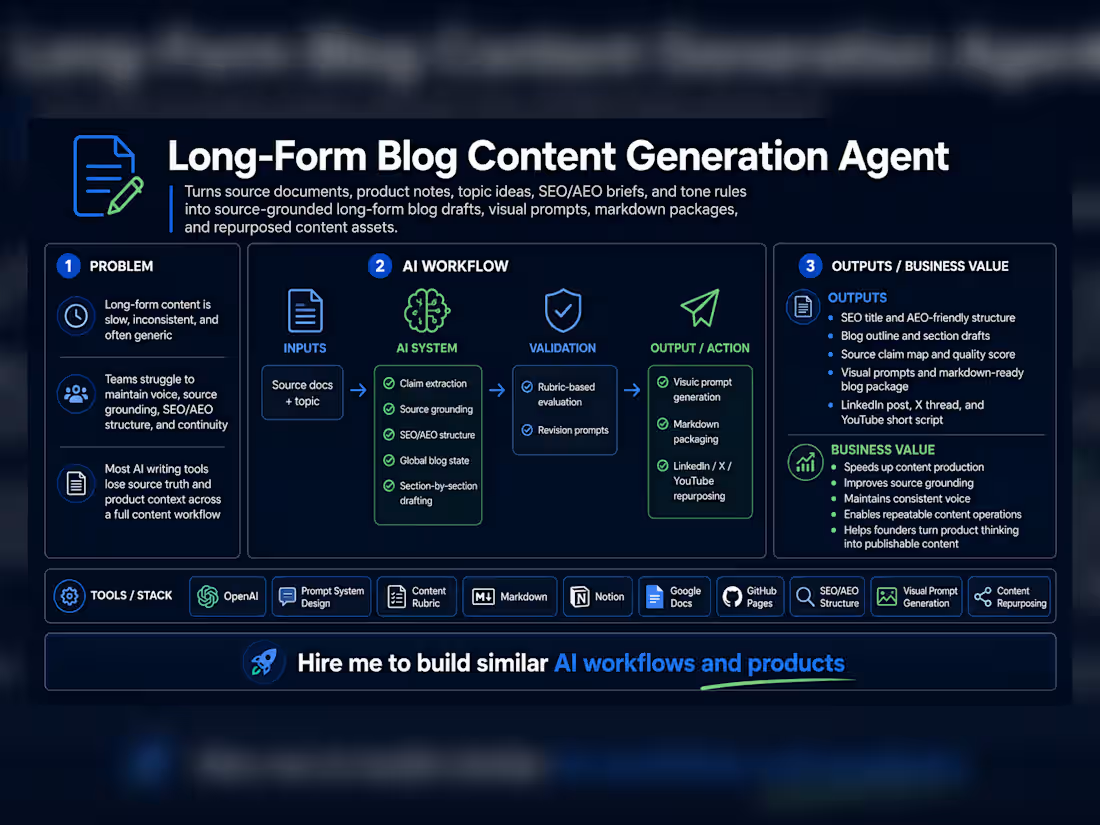
Long-Form Blog Content Generator — Source-Grounded AI Blog Production Workflow
An AI workflow system that turns topic ideas, research notes, and source documents into structured, SEO/AEO-optimized long-form blog drafts with continuity, visuals, and publishing-ready Markdown.
Long-Form Blog Content Generator is an AI-powered content production workflow designed for founders, creators, agencies, SaaS teams, and product builders who need high-quality long-form content without relying on one-shot AI drafts.
Most AI blog workflows are too shallow:
Topic → Prompt → Generic AI Draft
This project takes a more reliable approach by treating blog creation as a structured AI workflow with context memory, source grounding, section-by-section writing, quality checks, visual planning, and publishing support.
The system uses a global state artifact to preserve continuity across the entire blog process. It carries forward the blog angle, audience, thesis, source documents, SEO/AEO strategy, tone, section status, claims used, visual slots, and publishing requirements from one step to the next.
Instead of generating a full blog in one pass, the workflow breaks production into stages:
Topic Idea → Source Context → SEO/AEO Strategy → Outline → Section Drafts → Claim Validation → Continuity Check → Visual Asset Plan → Markdown Packaging → Publish QA
The result is long-form content that is more specific, better structured, easier to publish, and less likely to drift into generic AI writing.
My Role
AI Product Manager / Workflow Designer / Content Systems Strategist
I worked on:
AI workflow design for long-form blog production
Global state artifact design
Source-grounded content system planning
Section-by-section blog generation prompts
SEO and AEO optimization strategy
Content quality rubric design
Visual asset workflow planning
Markdown and GitHub Pages publishing flow
Human-in-the-loop review and approval checkpoints
Repurposing strategy for LinkedIn, YouTube, Twitter/X, and carousel assets
Key Workflow
The system takes inputs such as:
Topic ideas, notes, source documents, research packets, product docs, content strategy, SEO intent, brand voice, and target audience.
Then structures the blog production process through:
Context Memory
Loads brand voice, audience, writing style, depth rules, SEO/AEO rules, and content constraints.
Source Grounding
Uses product documents, research notes, strategy docs, PRDs, roadmaps, monetization notes, and prior content as the source of truth.
SEO/AEO Strategy
Defines search intent, answer-engine intent, target reader, blog angle, working title, slug, and section-level extractability.
Outline Generation
Creates a structured long-form outline with H2/H3 sections, transitions, examples, definitions, and visual slots.
Section-by-Section Drafting
Writes one section at a time while updating the global blog state after each section.
Quality Review
Checks source grounding, specificity, continuity, SEO/AEO quality, tone, and usefulness.
Visual Asset Planning
Identifies hero image, diagrams, inline visuals, workflow graphics, comparison tables, and social repurposing assets.
Markdown Packaging
Converts the final blog into GitHub-ready Markdown with YAML front matter, hero image path, inline images, captions, alt text, and publish checklist.
Publishing QA
Validates title, date, permalink, repo path, image references, Markdown formatting, and missing placeholders before publishing.
System Concept
The core idea:
Long-form AI content should not be generated as a single prompt. It should be produced as a managed workflow with memory, source grounding, evaluation, and publishing discipline.
This project demonstrates how AI can support deep content production without sacrificing structure, originality, or trust.
Example Output
The workflow can produce:
3,000–10,000 word long-form blogs
SEO/AEO-optimized outlines
Section-by-section drafts
Featured-snippet-friendly definitions
Source-grounded claims
Visual asset prompts
Blog hero image briefs
LinkedIn post angles
YouTube long-form script outlines
YouTube Shorts hooks
Twitter/X threads
GitHub Pages-ready Markdown files
Business Value
Long-Form Blog Content Generator helps teams:
Reduce time spent planning long-form content
Avoid generic AI-generated blog drafts
Maintain consistency across sections
Ground claims in source documents
Improve SEO and AEO readiness
Create reusable content assets
Package blogs for GitHub Pages or CMS publishing
Repurpose one blog into multi-channel content
Keep human review in the workflow
Build a scalable content production system
0
19