
magdy fahmy
Senior Food Industry & Microbiology Expert (35+ Yrs Exp)


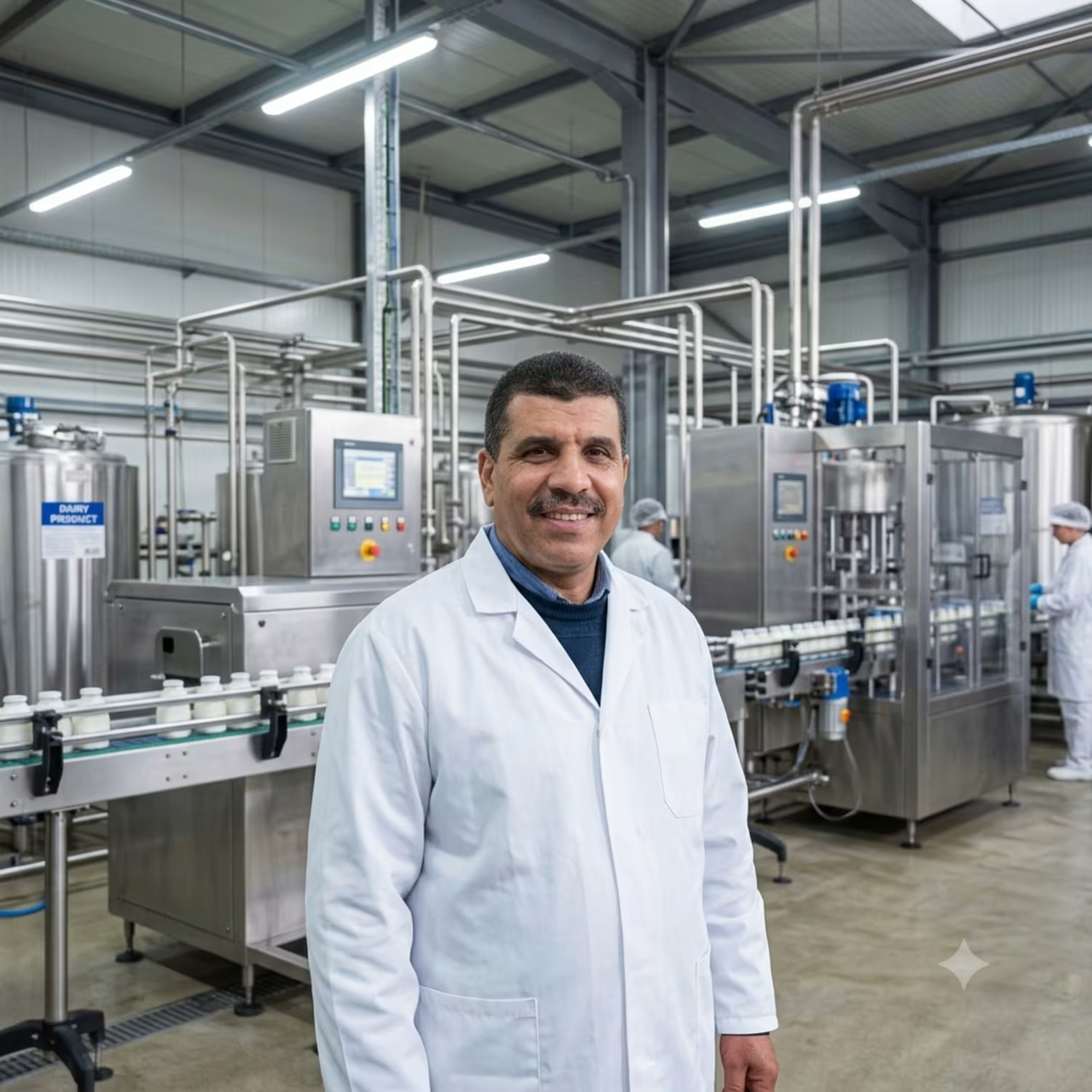

Bacteriophages in Yogurt Manufacturing — The Hidden Enemy of Starter Cultures
By Magdy Fahmy — Food Industry Consultant with 35+ years of hands-on experience in dairy and juice manufacturing, food microbiology, and quality systems. Consultant for Mira International Foods, Inc. (USA). Former member of Egypt's Organization for Standardization and Quality (EOS). Certified through advanced training at the University of Virginia, USA.
One of the most difficult decisions manufacturers face on the production floor is halting production entirely — particularly at peak operating capacity during the high-demand season. This guide addresses a recurring problem that can periodically affect yogurt manufacturing plants: bacteriophage infection of starter cultures — a challenge that is often misdiagnosed as a milk, culture, or process issue.
What You'll Get Inside This Guide:
How to recognize the early warning signs of bacteriophage infection — before a full "dead vat" failure occurs
The 4 most common sources of phage contamination inside a dairy plant, including whey, returns, and cross-line movement
A practical starter culture rotation strategy to prevent recurring infection
Chlorine-based sanitation guidelines — with exact ppm ranges for daily prevention vs. severe outbreak control, and how to protect stainless steel and gaskets from damage
A real field case on managing phage risk without compromising brand taste consistency
5 pages | Practical technical guide based on direct plant experience | Instant PDF download
You can download this complete technical guide for FREE ($0) on both Gumroad and Contra:
📥 FREE Download on Gumroad: https://gumroad.com/products/dhyxvw ] (Enter $0 at checkout for instant download)
💼 FREE Download on Contra:]
0
28
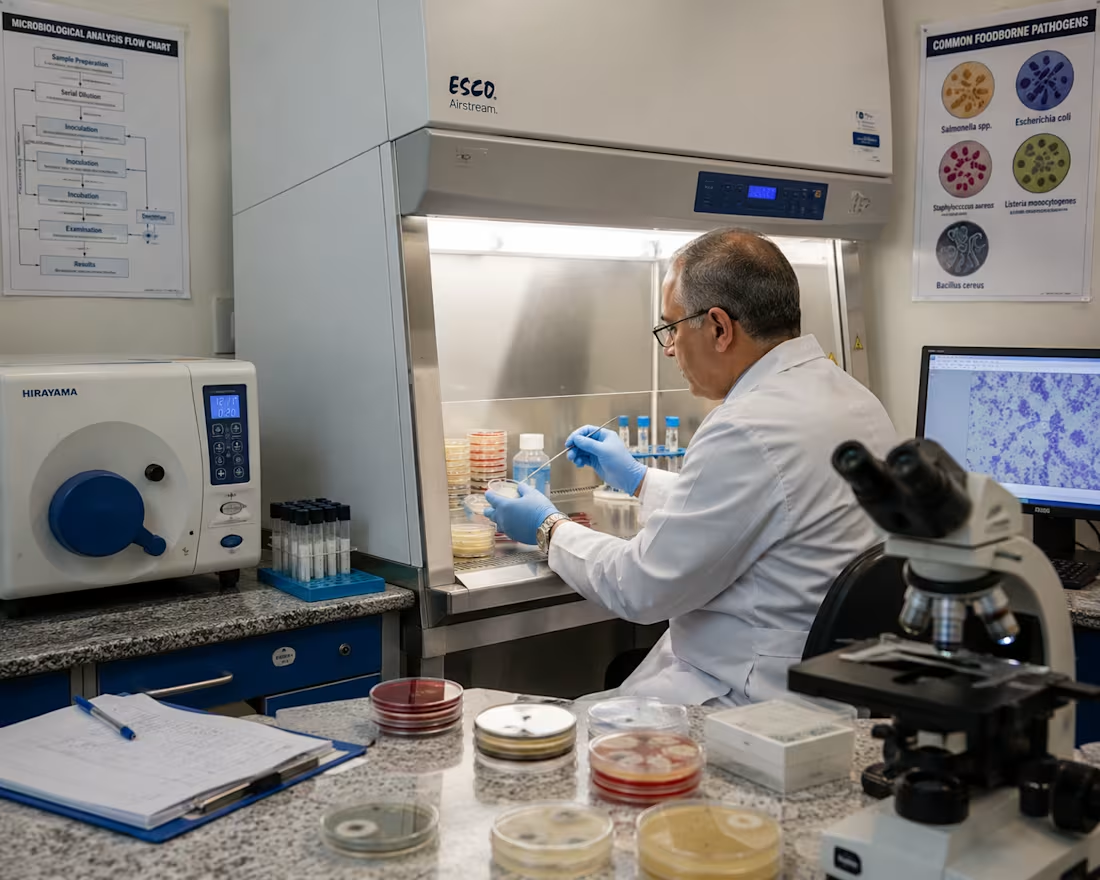
Microbiological Lab Report Audit & Root-Cause Troubleshooting (Limited Offer)
Are high bacterial counts or unexpected pathogens holding back your production batches?
A microbiology test result isn't just a sheet of paper with numbers like 1.5 × 10⁵ CFU/g Total Viable Count (TVC), Coliforms present, or traces of Salmonella spp. and Listeria monocytogenes.
Those numbers are symptoms of a specific flaw in your process — whether it's raw material contamination, ineffective CIP/sanitation, ambient air issues, or post-processing hygiene gaps.
Special Limited-Time Offer:
Special Launch Price: $30
Turnaround Time: 24 - 48 Hours
Ready to turn lab data into factory solutions? Click Get Started or send your report to begin!
1
228

"Secrets of Guava Juice Manufacturing: From Pulp to Final Product"
Inside this guide you will find practical formulations, processing methods, manufacturing parameters, packaging systems, troubleshooting guides, and real industrial applications designed for beverage professionals and food manufacturers.
This guide was created to provide practical knowledge that can be directly applied in production environments.
If you have questions, require technical consultation, customized formulations, or product development support, feel free to contact:
Magdy Fahmy
Food Industry Consultant
35+ Years of Experience
Email: magdyfahmy158@gmail.com
(mailto:magdyfahmy158@gmail.com)Phone: +20 1223995398
0
185
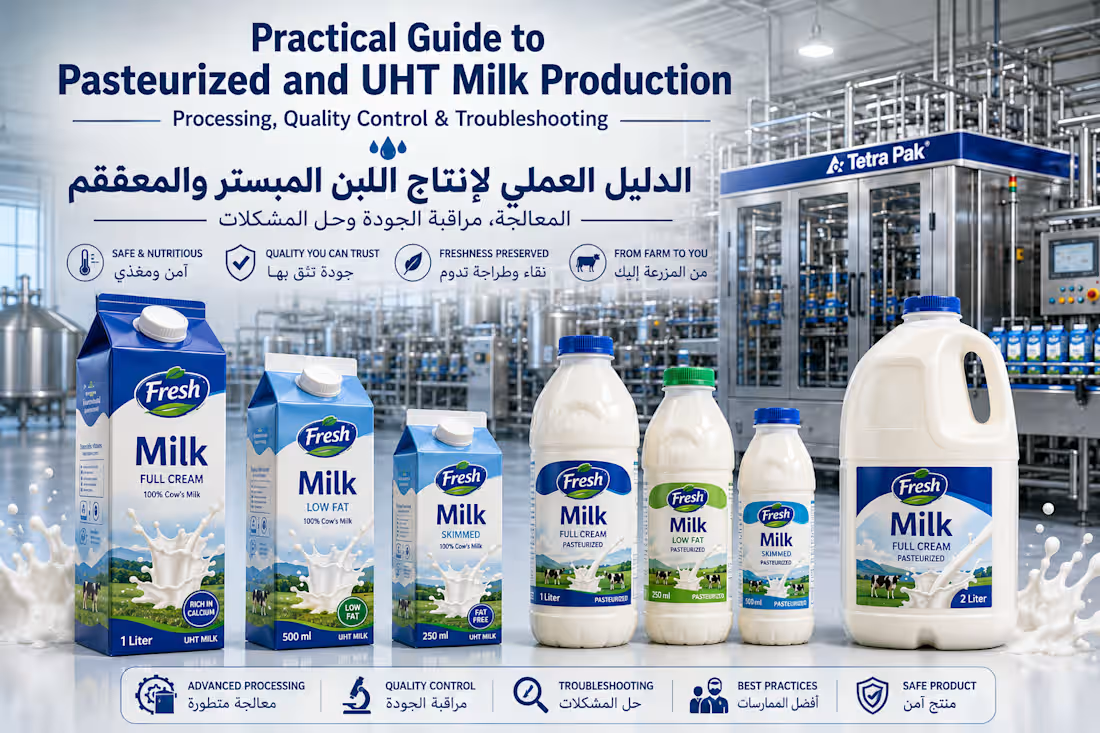
Do you face problems in pasteurized or UHT milk production?
• Short shelf life?
• Sedimentation inside milk packages?
• Instability after processing?
• High microbial counts?
• Coagulation after heat treatment?
• Flavor defects or cooked taste?
• Cream separation?
• Problems with standardization or formulation?
• Unexpected production losses?
Many of these issues are not solved by theory alone. They come from real production experience, understanding root causes, and applying practical solutions inside the factory.
After 35 years of hands-on dairy manufacturing experience, I compiled a practical guide covering:
Raw milk reception and quality evaluation
Chemical & microbiological analysis
Milk standardization methods
Full-fat, low-fat & skim formulations
Pasteurized and UHT processing
Production troubleshooting
Real factory solutions and best practices
The complete practical summary is available here on Contra.
1
209