Leyland Trent
Freelance Writer & Editor


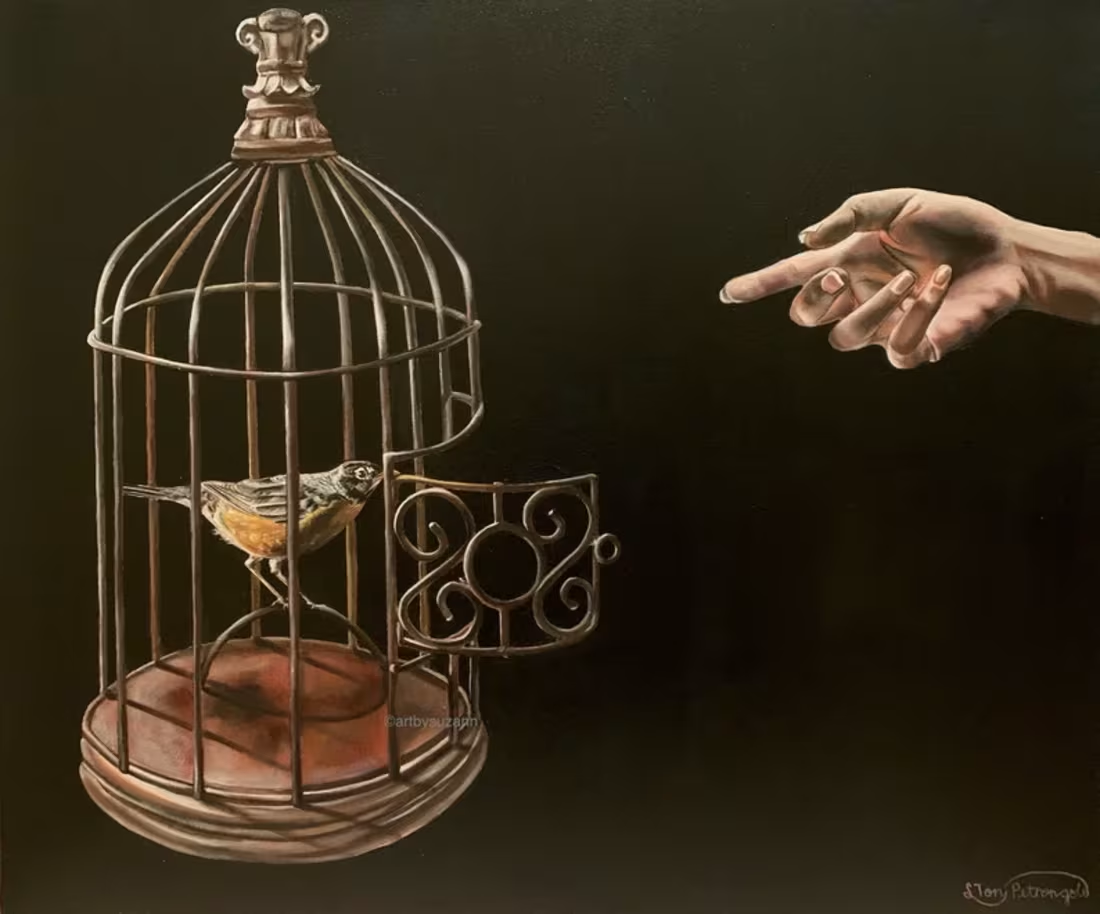
🕯️ I’m excited to share my newest fiction piece: Caged.
This story is deeply personal in the way it explores family, sacrifice, motherhood, and the things we carry silently.
Caged follows a grandmother through what begins as an ordinary day with her grandson. But as the day unfolds, she finds herself carrying more and more emotional weight while trying to remain strong for the people she loves.
One of the things I wanted to explore was what happens when someone becomes so focused on caring for everyone else that they begin to lose themselves in the process.
The monster in this story represents something much deeper than a physical presence.
It represents the things we try to cage.
The emotions we suppress.
The pain we carry.
The responsibilities we never put down.
The parts of ourselves we keep hidden because everyone else needs us to be strong.
✍🏽 Writing this piece allowed me to explore how fiction can show what a character is experiencing without always saying it directly.
I’m continuing to learn how to create characters who feel human, complicated, loving, flawed, and real.
📖 Read Caged on my Substack:
👉🏽 https://leylandthewriter.substack.com/p/caged?r=5pnsd4&utm_campaign=post-expanded-share&utm_medium=post%20viewer
If you read it, I’d love to know what you think.
What do you think the “monster” represents? 👀
And if you enjoy fiction, storytelling, and following the journey of a writer developing their craft, consider subscribing to my Substack. 🕯️📚
1
18

✍🏽 Learning to trust the reader.
One thing I’ve been exploring in my fiction writing class lately is the power of diction and dialogue.
I recently revisited one of my own scenes and realized something: I was explaining too much.
Instead of telling readers exactly what my character was feeling, I started experimenting with letting the dialogue, physical reactions, word choice, and silence carry the emotion.
📖 Reading Jerome Stern’s Making Shapely Fiction and Ernest Hemingway’s Hills Like White Elephants helped me see this differently.
Sometimes, what a character doesn't say can be just as important as what they do say.
I’m learning that good fiction doesn’t always hand the reader every emotion and every answer. Sometimes, we have to leave enough space for the reader to step into the scene and experience it for themselves.
That realization has changed how I approach my writing.
I wrote more about this process, including an excerpt from my own fiction, on my Substack.
🔗 Read “Learning to Leave Room for the Reader” on my Substack:
https://leylandthewriter.substack.com/p/learning-to-leave-room-for-the-reader
📚 Want to read along with me?
Making Shapely Fiction — Jerome Stern
🛒 Amazon: https://www.amazon.com/s?k=Making+Shapely+Fiction+Jerome+Stern
Hills Like White Elephants — Ernest Hemingway
🛒 Amazon: https://www.amazon.com/s?k=Hills+Like+White+Elephants+Ernest+Hemingway
If you’re interested in following my writing journey, subscribe to my Substack. I’ll be sharing more about fiction, creativity, reading, and what I’m learning as I continue developing my craft. ✍🏽📚
What are you currently learning about your own creative process? 👇🏽
1
18
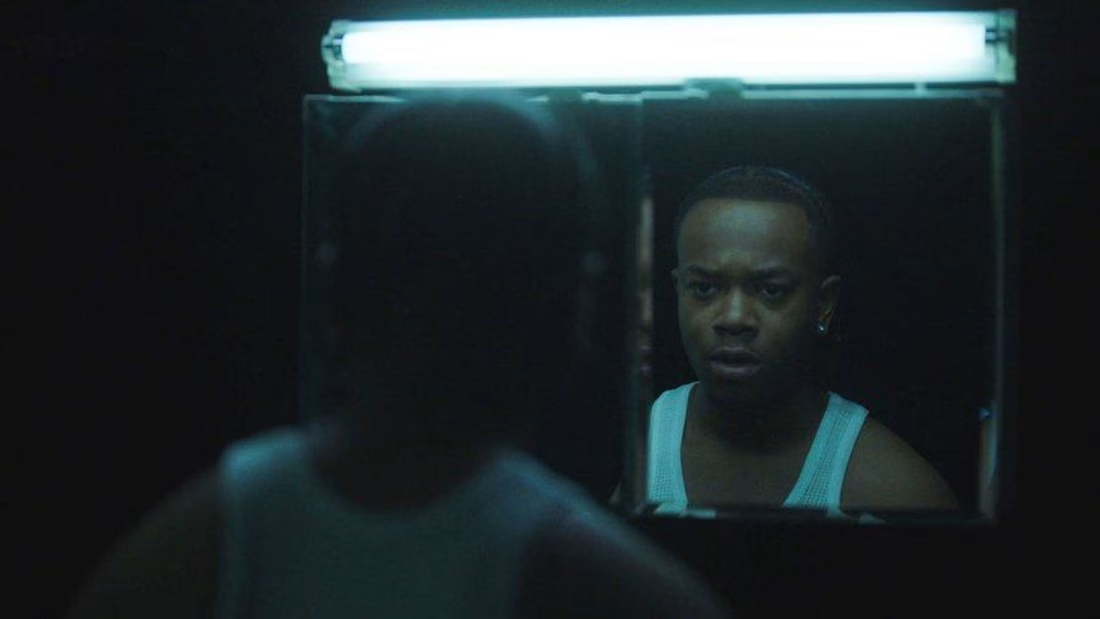
Uncle Rick
Short Story | Fiction | Creative Writing
From Classroom Assignment to Portfolio Piece
“Uncle Rick” is an original short story I wrote for my Advanced Fiction Writing course. Although I had already been developing my own fiction independently, this assignment gave me an opportunity to take my existing creative practice into the classroom and apply the techniques I was learning to a complete short story.
The story follows Rick on his 42nd birthday as he reunites with his family while privately navigating illness, addiction, shame, regret, aging, and his fear that he has disappointed the people closest to him.
At its core, the story explores family, identity, vulnerability, and unconditional love.
What I Explored
Character development and characterization
Internal conflict
Dialogue and family dynamics
Sensory detail
Flashback and memory
Emotional pacing
Scene development
Literary fiction
The Creative Process
I wanted Rick's internal conflict to unfold naturally through his interactions with his family rather than simply explaining what he was feeling.
The birthday celebration allowed me to create a contrast between Rick's internal experience and the love surrounding him. His anxiety, memories, and insecurities continue building throughout the story until he finally asks his mother the question he has been carrying with him:
“Are you disappointed in me as a son?”
That conversation became the emotional center of the piece.
Why I'm Including It in My Portfolio
I'm intentionally turning my academic writing into professional portfolio material.
Rather than allowing class assignments to exist only for a grade, I'm using them as opportunities to develop a body of work that demonstrates my voice, range, and growth as a writer.
“Uncle Rick” represents my continued development in fiction and my commitment to building a career around writing.
Link: https://substack.com/@blackcreature/note/p-211605180?utm_source=notes-share-action&r=5pnsd4
Role: Writer
Genre: Literary Fiction
Project Type: Short Story
Origin: Advanced Fiction Writing Course
3
85
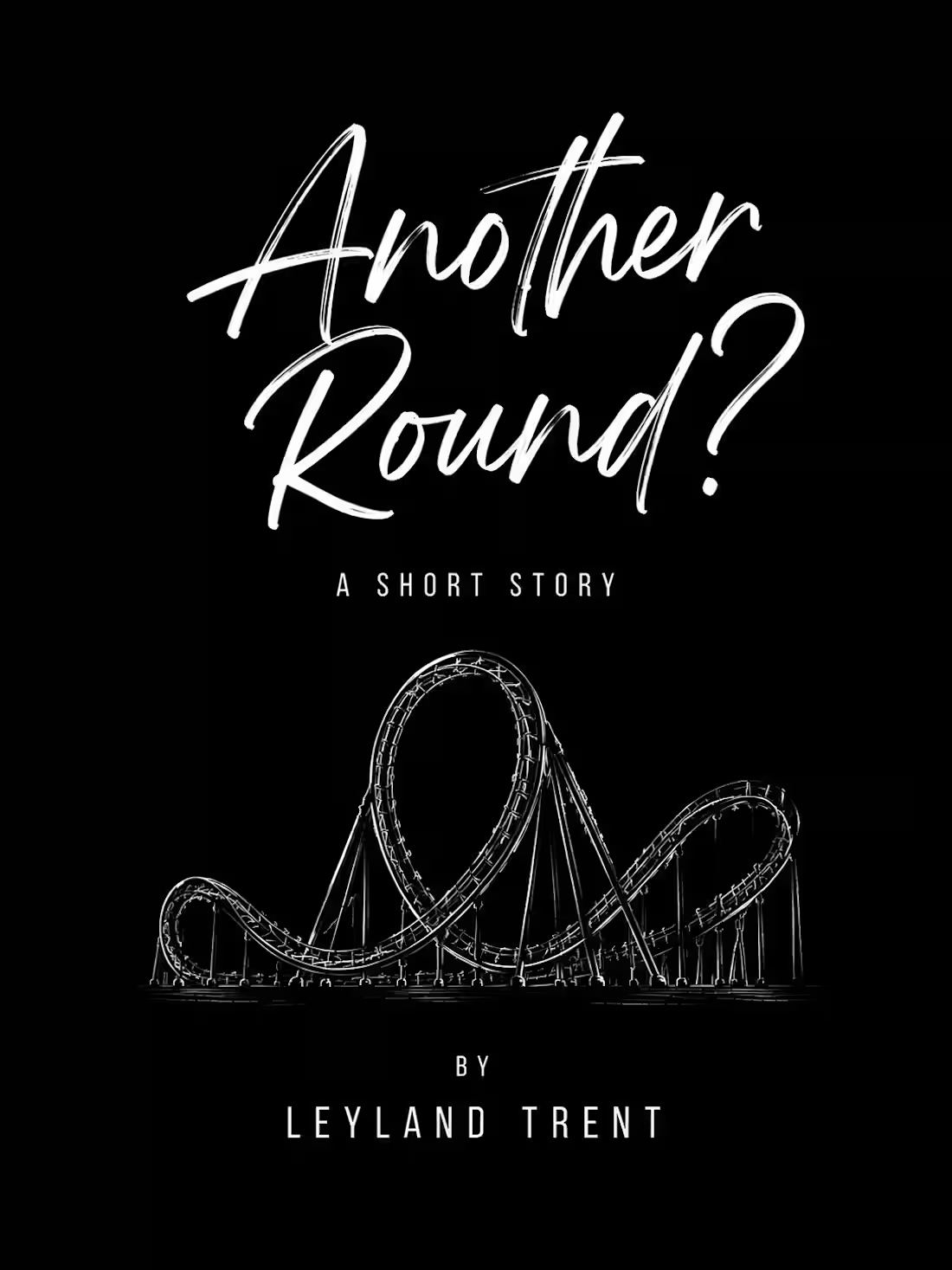
Another Round is a short story that uses a roller coaster as a metaphor for the emotional highs, lows, uncertainty, and repetition of a complicated relationship. Through the narrator’s experience on the ride, the story explores love, vulnerability, attachment, loss, and the hope that things might be different with time and growth.
This piece reflects my interest in using everyday experiences and extended metaphors to explore emotional relationships and human connection.
1
29