
Kaushik Bhingradiya
Mobile MVP Developer for Startups | Flutter, React Native.
- 5.0
- Rating
- 5
- Followers


Overview
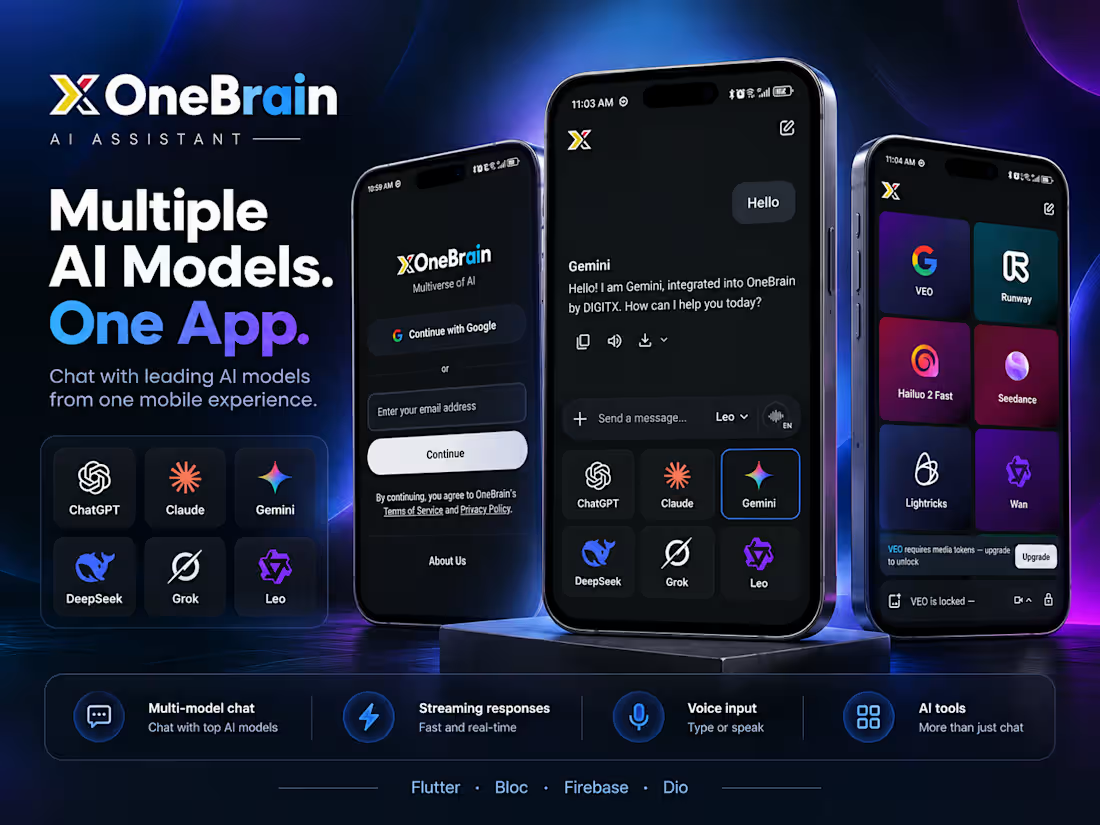
OneBrain is a mobile AI super-app by DIGITX that ends the habit of switching between ChatGPT, Gemini, Claude and a pile of single-purpose generators. You sign in once with Google or email, and the same app gives you a model-switching chat and a creation studio for images, video, voice and text utilities. The studio is built for generations that take a while: you can start a render, leave the app, and come back to a finished result.
Key Features
Multi-Model Chat (Unique): ChatGPT, Claude, Gemini, DeepSeek, Grok and Leo sit in one picker. Switch models mid-conversation without leaving the thread.
Streaming Responses: Replies arrive token by token, and each one can be copied, read aloud or downloaded.
Voice Input: Type or speak, with language selection built into the message bar.
Imagine (Image Generation): Six image models, with controls for aspect ratio, model and quality. Results land in a filterable gallery of images and videos.
Video Generation (Unique): Eight video models in one grid: VEO, Runway, Hailuo 2 Fast, Seedance, Lightricks and Wan, among others. Premium models like VEO are gated by media tokens, with an upgrade prompt shown in context.
Audio & Voice Studio: ElevenLabs-powered text-to-speech, speech-to-speech and voice cloning, with a searchable voice library split into Popular, My Voices and Cloned.
AI Humanizer: A standalone tool that rewrites AI-sounding text so it reads like a person wrote it.
AI Memory & Usage Controls: Personal memory settings, usage tracking, integrations and appearance options, all in one settings area.
Persistent Library: Every generation is saved in one place.
Tech Stack
Flutter · Dart · BLoC · Firebase · Dio · Async Generation Pipeline · Persistent Job Queue · ElevenLabs · Google Sign-In
Results
Shipped to the Play Store as a working multi-model AI app: six chat models, 14 image and video generators, voice cloning and a text humanizer, all in one native mobile experience.
1
91
Activity: City-Based Activity Discovery & Booking Platform
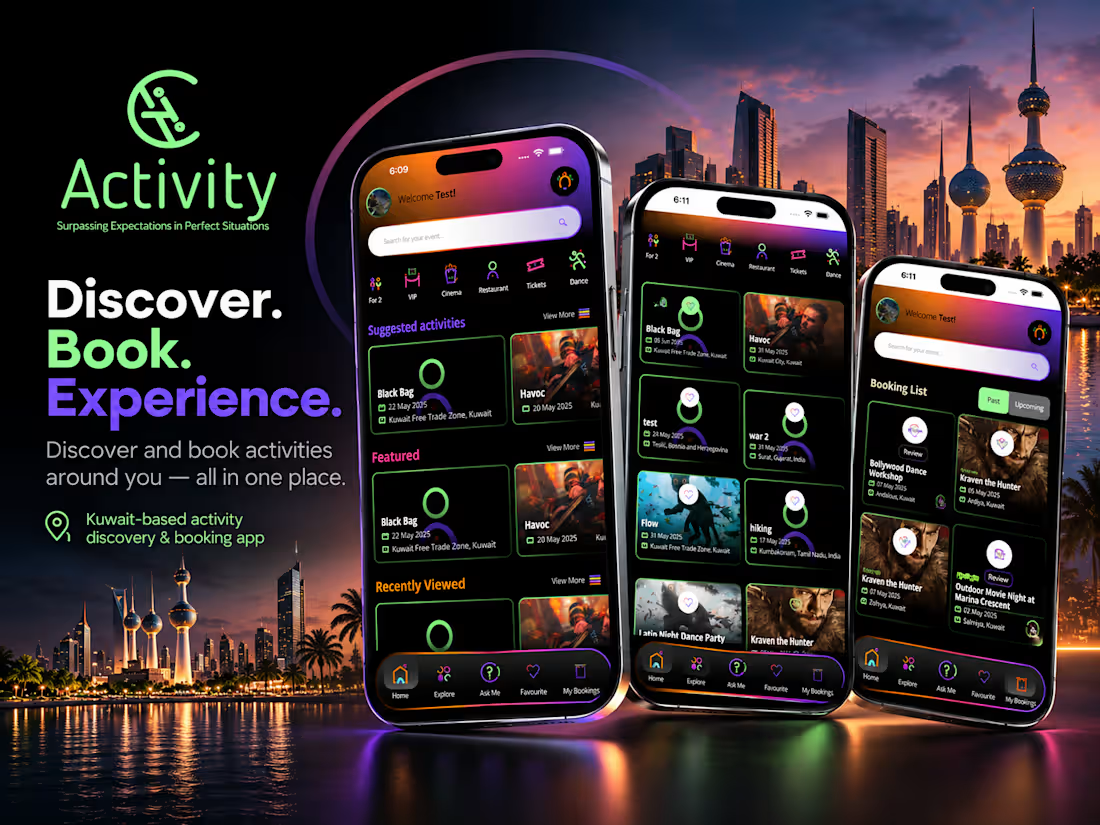
Activity is a Kuwait-based mobile platform built to make discovering and booking local experiences simpler. Instead of searching separately for movies, parties, events, games, workshops, kids’ activities, fitness sessions, food experiences, and other things to do, users can discover activities around them, choose a time slot, complete the booking, and manage everything from one app.
The platform connects users with local vendors who organize activities around the city, turning activity discovery into a complete journey from finding something interesting to showing up for the experience.
The problem
Finding something to do often means checking multiple platforms, social pages, event listings, and individual booking services.
The challenge was to create a single experience where users could discover different types of activities based on their location and interests, understand the available options, select a suitable time, make a payment, and keep track of their bookings without switching between different services.
Activity brings those steps together by combining location-based discovery, search, filtering, time-slot booking, payments, favorites, and booking management in one mobile experience.
My role
Flutter development for iOS and Android
UI/UX implementation for activity discovery and booking
Location-based activity discovery and map integration
Search, filtering, favorites, and activity browsing
Booking and time-slot selection flows
Payment and booking confirmation integration
QR-based booking and attendance experience
Quality assurance and release testing.
Key features
Location-based activity discovery
Activity is built around discovering things to do nearby. Users can browse activities based on their location and use the interactive map to visualize available experiences around them. Activities can be filtered by location, type, and time slot.
Activity discovery and categorization
The app brings different types of experiences into one place, including movie screenings, parties, social events, indoor and outdoor games, kids’ activities, workshops, fitness, yoga, wellness, art, cooking, food experiences, and more.
Search and advanced filters
With a large and varied activity catalogue, simply displaying activities in a list would make discovery harder.
Activity details and time-slot booking
Once users find an activity, they can open its details, review the available information, select a preferred date, choose a suitable time slot, and book their spot.
The supplied booking flow shows this progression directly: activity details → date selection → time selection → Book Now.
Technical approach
Mobile: Flutter, Dart
Platforms: iOS and Android
Core modules: Location services, map-based discovery, search and filters, activity catalogue, favourites, booking management, time-slot selection, payments, QR-based booking confirmation
Integrations: Maps/location services, payment gateways, backend APIs
Product areas: User discovery, activity/vendor listings, scheduling, booking, payment, and attendance
The application was designed as a complete mobile booking experience rather than simply an activity catalogue, with the major product flows connected from discovery through attendance.
Engineering and product decisions
The biggest product challenge was balancing a large variety of activities with a simple discovery experience.
A user looking for a specific activity should be able to search and filter directly, while someone who simply wants to find something interesting should be able to browse suggested, featured, and recently viewed activities.
The booking flow was therefore kept closely connected to the activity itself: users move from the activity card to its details, select a date and available time, complete payment, and then access the reservation through My Bookings.
The project's clearest product distinction is this end-to-end flow: discover something to do → choose when to go → book the spot → manage the reservation → show up with the booking confirmation.
Outcome
Activity shipped as a mobile activity discovery and booking application for the Kuwait market, connecting users with local vendors and experiences across entertainment, activities, workshops, wellness, food, and other categories. The Android application is publicly available on Google Play and was updated on April 5, 2026.
The result is a single mobile experience that brings together local discovery, map exploration, search, scheduling, payments, favourites, booking management, and QR-based attendance.
The product idea is simple:
Find an activity.
Book your spot.
Just show up.
2
1
200
Careezy
Turning everyday home-care visits into a structured, trackable workflow for caregivers.
Overview
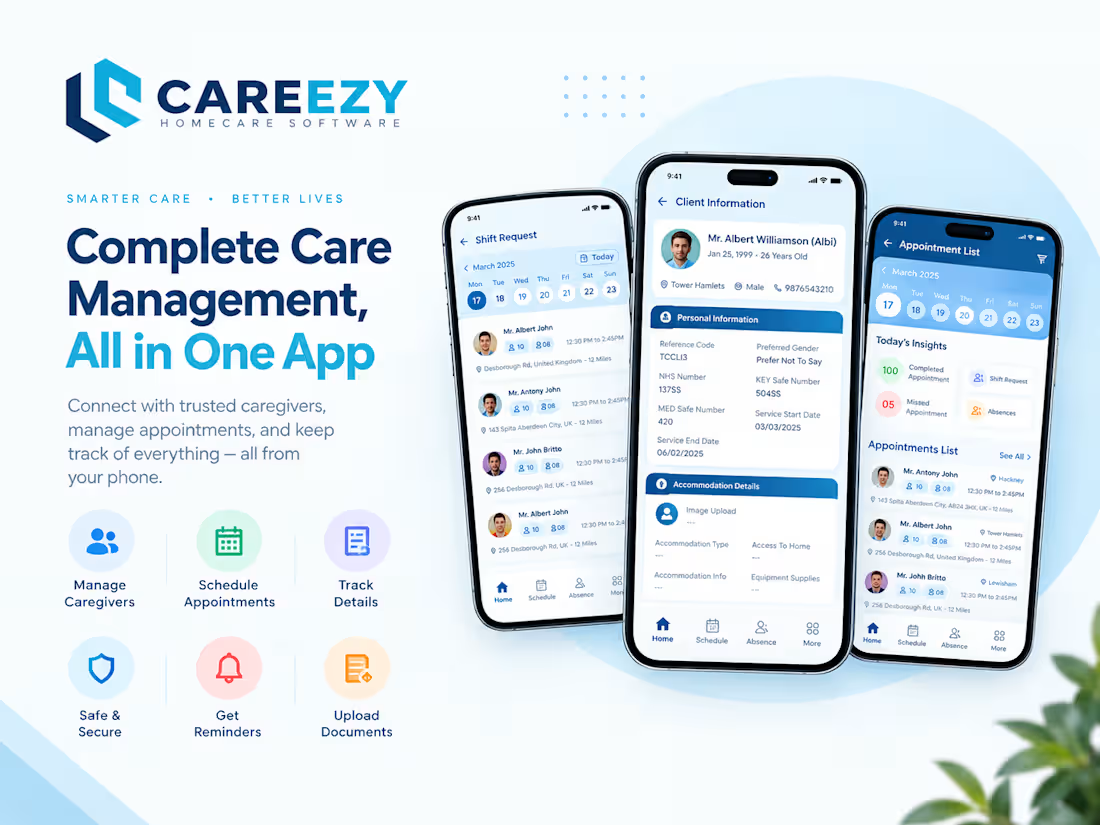
Careezy is a mobile home-care management application designed to help caregivers manage client visits, medication schedules, service tasks, and care documentation from a single mobile experience.
The app focuses on the caregiver's day-to-day workflow: arriving at a client's location, verifying the visit through GPS, clocking in, completing assigned care tasks, managing medication-related information, recording observations, and clocking out when the visit is complete.
I worked on the mobile application with a focus on making these workflows simple, reliable, and practical for caregivers who need to use the app while actively providing care.
The Problem
Home-care visits involve more than simply showing up at a client's address. Caregivers need to know what tasks need to be completed, which medications require attention, what happened during previous visits, and how to document important observations.
At the same time, care providers need confidence that scheduled visits are actually taking place at the client's location and that visit information is accurately recorded.
Careezy brings these activities into one mobile workflow. GPS-based attendance helps validate that caregivers are physically near the client's address, while task tracking, medication information, notes, and reporting create a digital record of the visit.
Key Features
GPS-Based Clock-In / Clock-Out — Caregivers can record the start and end of a visit, with location validation restricting clock-in/out to a predefined radius around the client's location.
Medication Management — Caregivers can view medication schedules and receive reminders to help ensure medications are handled at the appropriate time.
Service Task Tracking — Each client visit can include an organized list of care/service tasks. Caregivers can mark tasks as completed so important activities are not missed.
Care Plan Details — Client profiles provide access to relevant care-plan information, giving caregivers important context before and during a visit.
Visit Notes & Reporting — Caregivers can document observations and visit details, supporting better communication and continuity of care.
Appointment Notes — Appointment-related notes can be edited when information needs to be corrected or updated.
Body Map — A dedicated body-map view provides a visual way to work with medication-related information.
Client-Centric Workflow — The application organizes information around individual clients and their visits rather than forcing caregivers to manage disconnected workflows.
Location Validation
One of the more important implementation challenges was location-based attendance.
A simple clock-in button could allow a caregiver to register a visit from anywhere. Careezy instead uses the client's stored location and a predefined radius to determine whether the caregiver is close enough to the client address to clock in or clock out.
This creates a more reliable connection between the digital attendance record and the real-world care visit.
Caregiver Workflow
The core workflow is designed around the actual sequence of a home-care visit:
View the assigned client and visit information.
Review care-plan and medication details.
Arrive at the client's location.
Complete GPS-based location validation.
Clock in.
Review and complete assigned service tasks.
Manage medication-related activities.
Record visit observations and notes.
Complete the visit.
Clock out.
This keeps the most important information available within the caregiver's mobile workflow instead of requiring multiple disconnected systems.
Technical Challenges
GPS Accuracy & Location Validation — Location-based attendance needs to account for real-world GPS accuracy while still enforcing the required client-location radius.
Time & Timezone Handling — The application required attention to date/time handling, including fixes for timezone-related issues identified during production updates.
Healthcare Workflow Usability — Caregivers may use the application while moving between tasks and clients, so workflows need to remain clear and require minimal unnecessary interaction.
Production Reliability — The app has gone through multiple production iterations involving feature improvements, design updates, bug fixes, and timezone-related fixes.
Platform
Android & iOS
Category
Healthcare / Home Care / Caregiver Management
Production Status
Live application with ongoing production updates and improvements.
Key Takeaways
The most important lesson from Careezy was that healthcare workflow applications need to connect digital actions with real-world events.
A clock-in feature by itself is simple. Making that clock-in meaningful requires location validation, accurate time handling, client-specific context, and a workflow that caregivers can use without slowing down the actual care process.
Careezy combines these pieces into one focused mobile experience for home-care professionals.
1
95
RentNest Mobile App Development
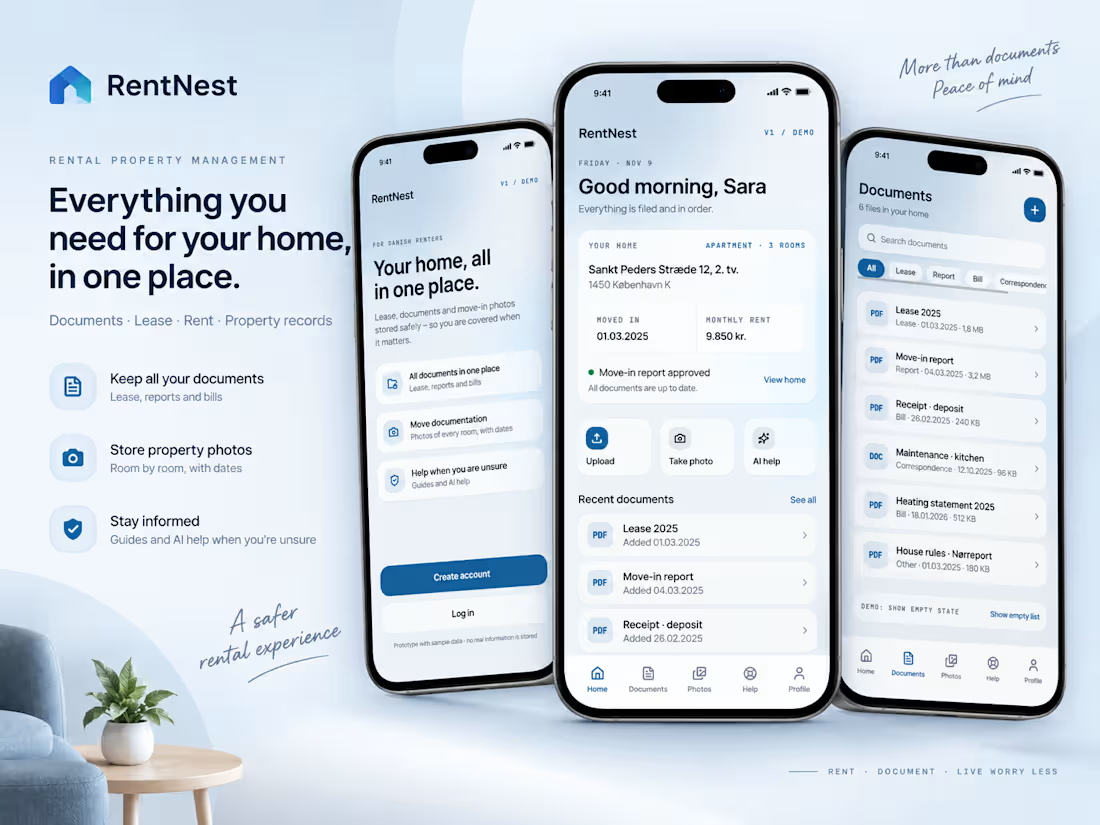
RentNest is a mobile app that helps Danish renters manage their lease documents, move-in/move-out photo documentation, and tenancy questions in one place.
I contributed as a Full-Stack Developer, building both the Flutter mobile client and the backend services powering document storage, photo management, and AI-assisted help with a focus on giving renters a reliable, all-in-one system for staying covered throughout their tenancy.
My Role
Full-stack development across Flutter mobile client and backend services Firebase integration for auth, data storage, and file handling
Feature implementation for document management, photo documentation, and AI-driven help Quality assurance and testing across core user flows
Technology
Flutter
Dart
Firebase
The work
The app was built around three core renter needs: keeping lease and financial documents organized, documenting the condition of a home at move-in and move-out, and getting fast, reliable answers to common tenancy questions.
On the document side, I built a categorized document library (Lease, Report, Bill, Correspondence) with search and file-type support for PDFs and other formats, so renters can quickly retrieve anything from their lease to deposit receipts and heating statements. For move documentation, I implemented a room-by-room photo capture flow with separate Move-In and Move-Out states, giving renters clear, dated visual evidence of a property's condition useful for resolving disputes at move-out.
I also worked on the AI help experience, which lets renters ask questions grounded in their own lease and get guided answers alongside a structured help center covering topics like deposits, notice periods, and maintenance responsibilities.
Using Flutter allowed the mobile app to be built and maintained from a single cross-platform codebase, while Firebase handled authentication, real-time data sync, and secure file storage for uploaded documents and photos. Alongside development, I carried out testing and quality checks across account creation, document upload, and photo capture flows to ensure a stable release.
Outcome
Delivered full-stack development for RentNest's renter-focused platform, including a Flutter mobile app with integrated document management, move-in/move-out photo documentation, and AI-assisted tenant support.
2
222