
Kami Harcej
AI decisions made clear, safe and actionable



AI is not making people smarter.
It’s making them faster at skipping thinking.
Most AI tools are optimized for one thing:
→ giving answers as quickly as possible
That works for productivity.
But for learning?
It’s a problem.
Users don’t struggle.
They don’t reason.
They don’t retain.
So I built something different.
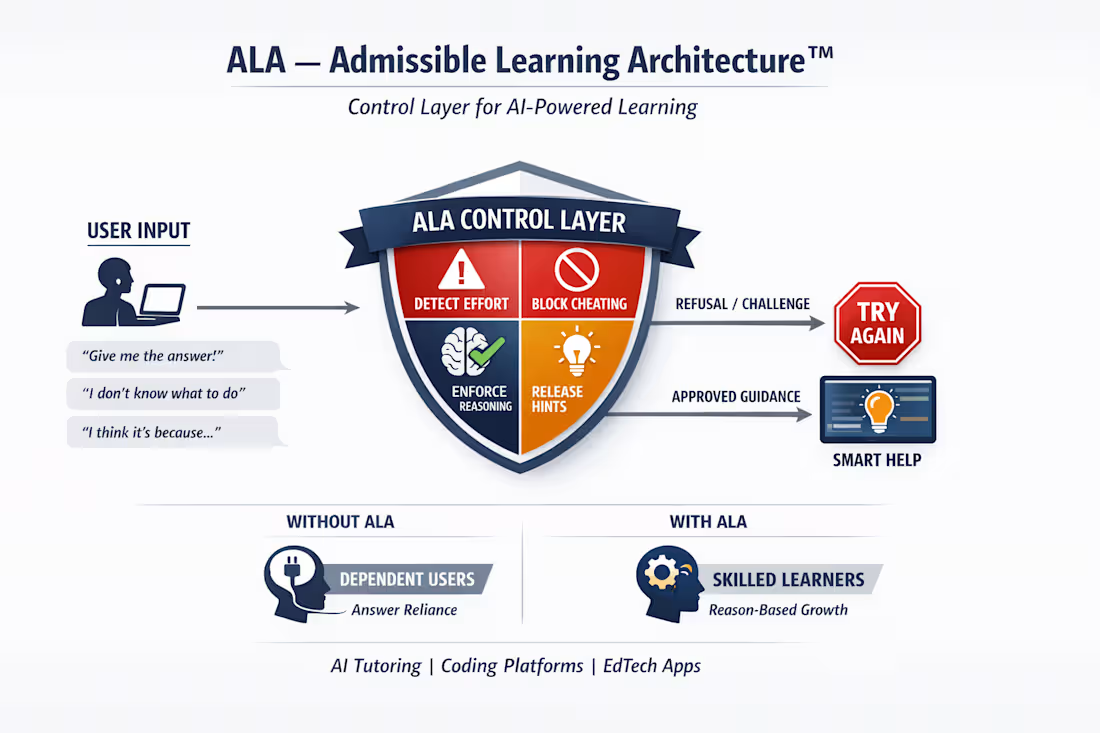
ALA - Admissible Learning Architecture™
A control layer for AI that enforces real learning.
Instead of answering immediately, it:
• detects low-effort input
• blocks answer-seeking behavior
• evaluates reasoning
• only allows hints when appropriate
In simple terms:
→ it decides when the AI is allowed to help
This is especially relevant if you’re building:
• AI tutors
• coding education platforms
• edtech products
Because the real risk isn’t AI replacing learning…
It’s users becoming dependent on it.
ALA - Admissible Learning Architecture™ is built to solve exactly that.
I’m opening early access for teams who want to integrate it.
Comment “ALA” or message me if you want access.
#AI (https://www.linkedin.com/search/results/all/?keywords=%23ai&origin=HASH_TAG_FROM_FEED) #ArtificialIntelligence (https://www.linkedin.com/search/results/all/?keywords=%23artificialintelligence&origin=HASH_TAG_FROM_FEED) #EdTech (https://www.linkedin.com/search/results/all/?keywords=%23edtech&origin=HASH_TAG_FROM_FEED) #AIinEducation (https://www.linkedin.com/search/results/all/?keywords=%23aiineducation&origin=HASH_TAG_FROM_FEED) #FutureOfLearning (https://www.linkedin.com/search/results/all/?keywords=%23futureoflearning&origin=HASH_TAG_FROM_FEED) #SaaS (https://www.linkedin.com/search/results/all/?keywords=%23saas&origin=HASH_TAG_FROM_FEED) #Startup (https://www.linkedin.com/search/results/all/?keywords=%23startup&origin=HASH_TAG_FROM_FEED) #Founders (https://www.linkedin.com/search/results/all/?keywords=%23founders&origin=HASH_TAG_FROM_FEED) #TechStartups (https://www.linkedin.com/search/results/all/?keywords=%23techstartups&origin=HASH_TAG_FROM_FEED) #ProductDevelopment (https://www.linkedin.com/search/results/all/?keywords=%23productdevelopment&origin=HASH_TAG_FROM_FEED) #AITutors (https://www.linkedin.com/search/results/all/?keywords=%23aitutors&origin=HASH_TAG_FROM_FEED) #DigitalEducation (https://www.linkedin.com/search/results/all/?keywords=%23digitaleducation&origin=HASH_TAG_FROM_FEED)
3
183
Constraining what becomes real
Most AI governance today is focused on decisions:
→ what systems are allowed to do
→ how actions are validated
→ how outcomes are explained
But there’s a deeper layer most frameworks don’t touch:
What the system is allowed to become over time
Systems don’t just act.
They learn.
And every learning event:
→ reshapes future decisions
→ redefines boundaries
→ shifts authority implicitly
Yet:
Learning is almost always unconstrained
This creates a system that can remain:
→ compliant
→ auditable
→ aligned on paper
…while gradually drifting away from a valid basis for action.
Not because a decision failed.
But because the system evolved beyond what was ever admissible.
The shift is simple, but structural:
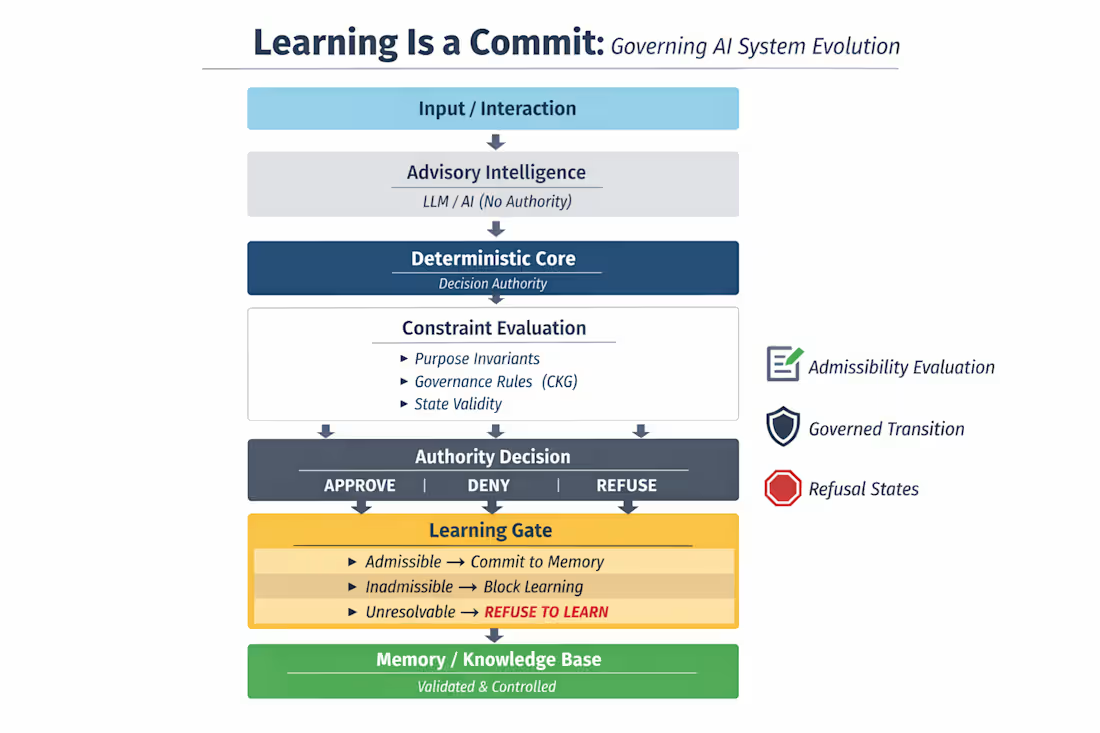
Learning must be treated as a governed state transition
Not something that happens automatically.
Something that is:
→ evaluated
→ admitted
→ or refused
Before a system learns, it must resolve:
→ Is this grounded in a valid state?
→ Is the source admissible?
→ Does this fall within its mandate?
→ Can this be justified at the moment of incorporation?
If not:
The system should not learn.
We already ask:
“Is this decision valid at execution?”
But we don’t ask:
“Was the system allowed to learn what led to it?”
That’s the gap.
And that’s where governance breaks.
This is the first layer of something deeper:
Moving from:
→ governing decisions
to:
→ governing system evolution itself
I’ll be exploring this further:
→ execution boundaries
→ admissibility
→ authority layers
→ and now: learning control
Governance doesn’t end at execution.
It extends to what systems are allowed to become.
#AIGovernance #AIArchitecture #DecisionIntegrity #GovernedAI #AIControl
1
270

Most decisions don’t fail when they’re made.
They fail when they’re executed.
Because what looked valid at design time
doesn’t hold under real constraints.
I’ve been stress-testing decisions this way:
→ reconstruct context
→ map constraints
→ simulate execution
→ check if the decision is still admissible
In most cases, it isn’t.
If you’re working on:
– AI deployment
– risk / compliance decisions
– high-stakes operational changes
I’m opening a few slots for a Decision Integrity Stress Test
You bring 1–3 decisions
We test if they actually hold
No slides. No theory. Just truth.
DM me “TEST”
2
178
“When decisions become real without valid authority”
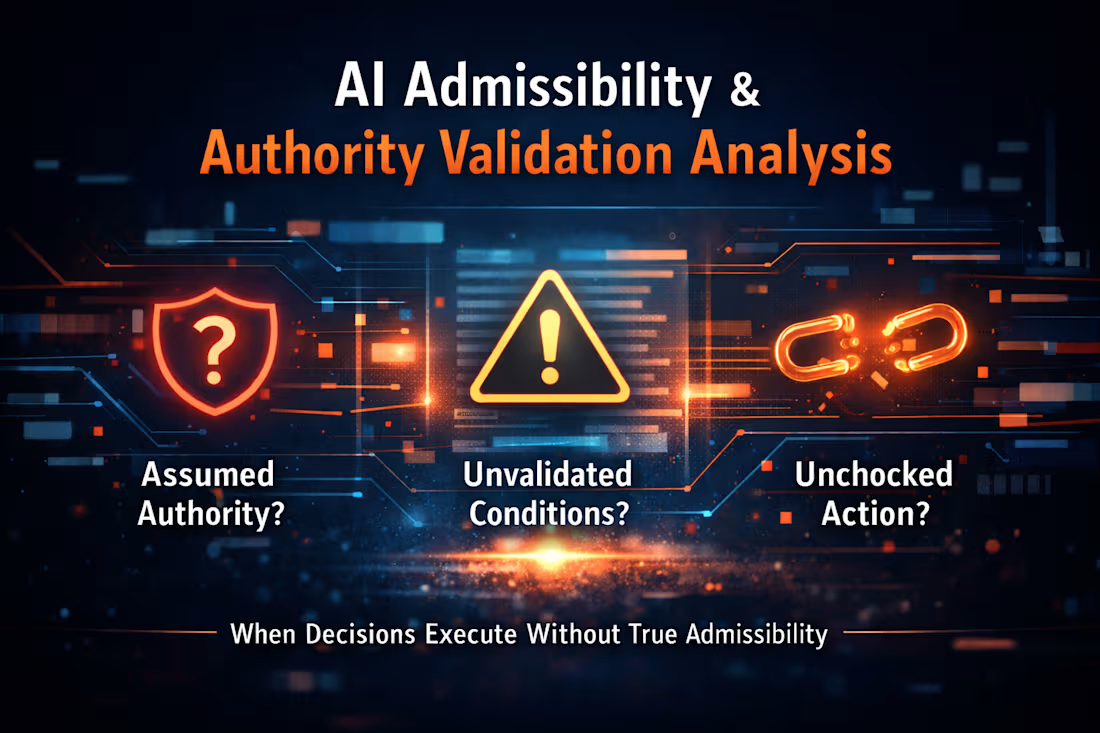
This work examines how AI-driven decisions can appear valid while lacking the authority or conditions required to become actionable.
It focuses on a critical gap:
– outputs are treated as admissible
– decisions are accepted as valid
– but authority and conditions are never fully established
The analysis highlights:
– where systems assume authority rather than explicitly validating it
– how admissibility is inferred instead of resolved
– where decisions become actionable without sufficient grounding
– why systems can execute correctly while lacking valid basis
The goal is to identify where decisions are allowed to become real,
not because they are admissible,
but because nothing prevents them from being treated as such.
3
153