
Jameel Khalid
I am an n8n automation specialist helping businesses
New to Contra
Jameel is building their profile!
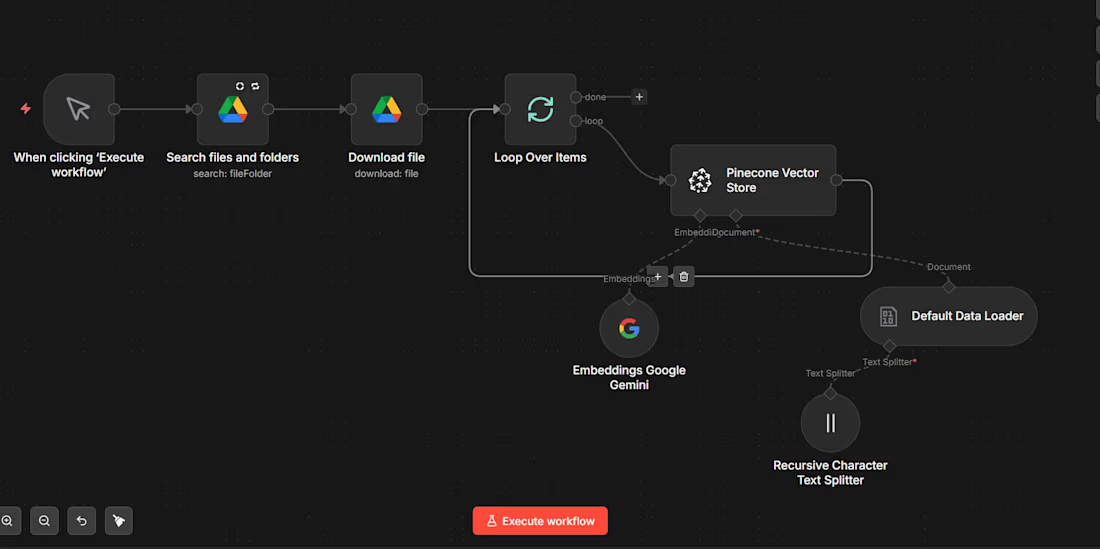
RAG Vector Embedding Automation (n8n + Pinecone + Gemini)
Built an end-to-end Retrieval-Augmented Generation (RAG) pipeline using n8n to automate the ingestion, processing, and vectorization of documents for intelligent search and AI-powered applications.
This workflow connects Google Drive as a data source, automatically retrieving files from a specified folder and processing them in batches. Each document is downloaded, parsed, and transformed into structured text using a data loader. A recursive character text splitter is then applied to break large documents into optimized chunks, improving embedding quality and retrieval accuracy.
For semantic understanding, the system integrates Google Gemini’s embedding model to convert text chunks into high-dimensional vector representations. These embeddings are then stored in Pinecone, a scalable vector database, using a dedicated namespace to maintain structured and efficient indexing.
The pipeline is designed with scalability in mind, utilizing loop-based batch processing to handle large volumes of documents efficiently without performance bottlenecks. The modular architecture allows easy extension for additional preprocessing steps, filtering logic, or integration with downstream AI systems.
0
10
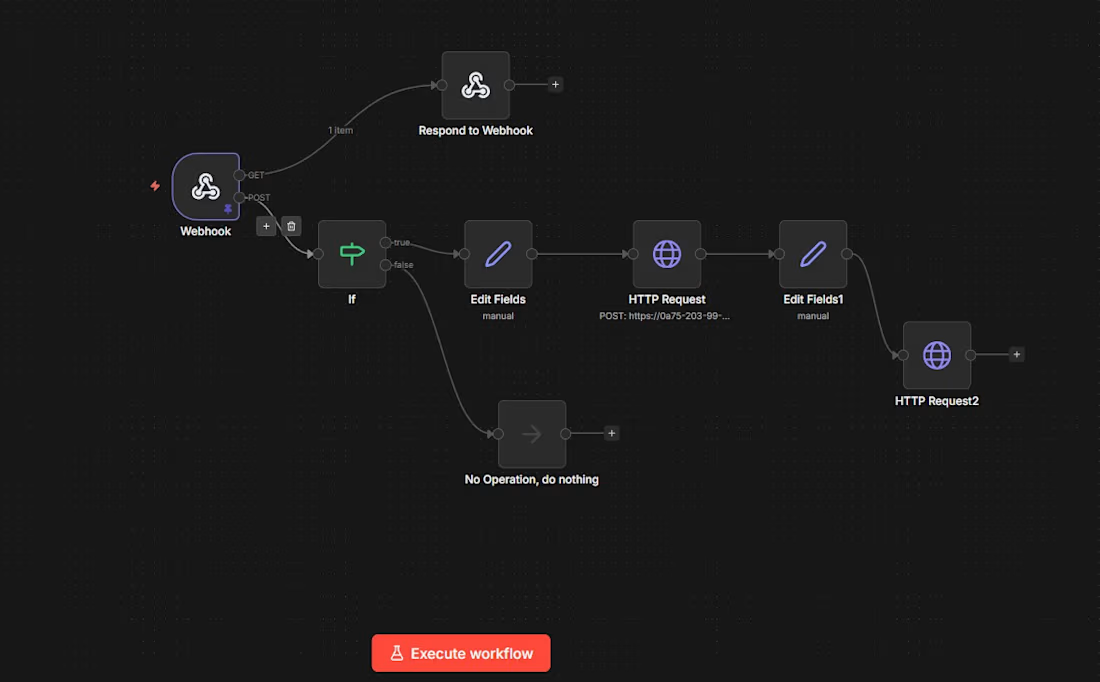
Developed an automated Facebook comment reply system using n8n, designed to handle real-time engagement by responding to user comments with AI-generated replies. This workflow enables scalable, intelligent interaction on social media without manual intervention.
The system is triggered through a Facebook webhook, which listens for events such as new comments on posts. It first validates incoming webhook requests to ensure secure communication with Facebook services.
A conditional logic layer filters incoming events, ensuring that only relevant comment actions are processed. It specifically:
Detects newly added comments
Ignores non-comment events
Prevents replies to the page’s own comments
Once validated, the workflow extracts essential information including the comment text, user name, post ID, and comment ID.
This data is sent to an AI model via an HTTP request, where custom prompt engineering is used to generate accurate and context-aware replies. The AI is guided with predefined instructions and content context (such as details about a travel video), allowing it to:
Respond only to relevant comments
Generate short, natural, human-like replies
Avoid repeating or restating the user’s comment
Return a neutral response if the comment is unrelated
After generating the reply, the workflow formats the output and sends it back to Facebook using the Graph API, automatically posting a response directly under the original comment.
0
7
AI-powered content generation workflow using n8n and Google Veo3 to automate short-form video creation. Generates cinematic scripts, scene breakdowns, and high-quality AI videos with voiceover. Includes API integration, batch processing, and auto-upload to Google Drive—perfect for TikTok, Reels, and YouTube Shorts automation. Final Ai generated video result is at the end
0
14