
Heather Robinson
CTO and cofounder of Umbizo: Data analytics, ML & AI support
New to Contra
Heather is building their profile!


A healthcare analytics company, required a sophisticated synthetic data generation system to support code development and testing within their Medicare claims analytics platform. The technical challenge involved generating approximately 6 million synthetic patients whilst maintaining statistical alignment with real-world distributions, implementing appropriate billing patterns across diverse encounter settings, and creating clinically plausible patient journeys with realistic progression patterns.
Quantitative Outcomes:
Designed system generating 6 million synthetic patients
Implemented persistent patient identity system maintaining demographic consistency across unlimited monthly generations
Created validation framework measuring alignment across prevalence rates, comorbidity patterns, treatment sequences, and billing distributions
Qualitative Benefits:
Enabled realistic code testing environment reflecting true population complexity beyond single-disease scenarios
Provided epidemiologically plausible synthetic data supporting development of sophisticated analytics algorithms
Created foundation for testing correlation analyses between National Provider Identifiers, hospitals, and patient diagnoses
1
4

TAS is a dashboard platform which leverages machine learning to bring key information forward during prostate cancer consultations, enabling optimal first line therapy decision making.
What's the current status of the prostate cancer treatment process? Here's a description from Justin via Prostate Cancer UK (https://www.linkedin.com/company/prostate-cancer-uk/):
"My doctor only talked me through two options, surgery or radiotherapy. They didn’t mention active surveillance. Looking back, I think I was trying to get him to tell me what he would do in my situation. But that’s not what they do. They just give you the options. And I realised quite quickly that there wasn’t one answer that would fit everybody. I told the surgeon that I couldn’t decide what treatment to have yet. It just felt like too much information and I needed more time."
We place the most important decision of a prostate cancer patient's life in their hands, with minimal information, and step back from it, despite holding clinical knowledge to inform and direct that choice to give them the best chance of success. What we don't share: How are other patients with my profile doing on these treatments? In my trust? In real time? Is there a clinical trial that would benefit me? How do I connect to it?
TAS uses smart algorithms to match patients to similar peers. It puts that information in front of clinicians immediately during the first consultation and beyond, so they can share it confidently and patients have what they need. Until the system improves, we support a better way.
0
18
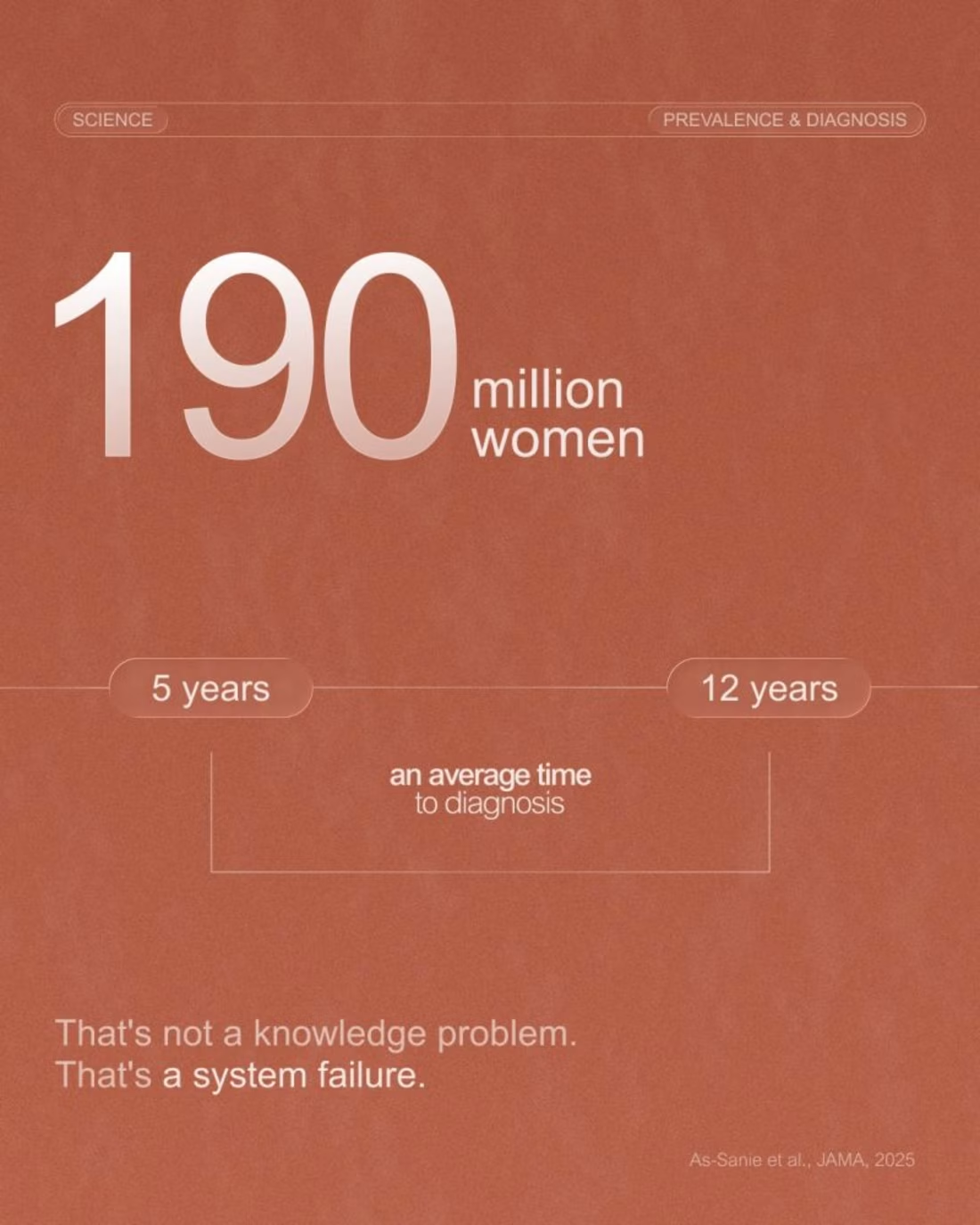
190 million women worldwide live with endometriosis. The average time to diagnosis is still 5–12 years.
That delay isn't a knowledge gap. The clinical understanding exists. The problem is structural: women's pelvic health is assessed in brief, infrequent appointments, with little visibility into what happens in between. So years of pain, uncertainty, and unanswered questions go undocumented — until a diagnosis finally arrives, often a decade too late.
That's the gap we're building OvaWise to close: combining pelvic biosensing, at-home biomarkers, and AI-driven insight to help women understand their health continuously, not once a year.
Better data between visits means earlier conversations, earlier answers, and a care system that finally keeps up with the people it's meant to serve.
0
21
UFlow is an AI-powered platform for creating professional audio advertisements. It is designed to let businesses, agencies, and marketers produce broadcast-ready audio ads in about 90 seconds without using a traditional recording studio. Features include:
AI-generated advertising scripts based on business information or uploaded documents.
AI voice options with controls for pace, tone, emphasis, and pauses.
Automatic addition of background music and sound effects.
Export of broadcast-ready audio for radio, streaming platforms, podcasts, YouTube, and social media.
Real-time editing and regeneration of scripts and voiceovers.
0
26