
Hasshya Moorthy
AI & ML Engineer | LLM | RAG | FastAPI | Python | Go Backend
New to Contra
Hasshya is ready for their next project!
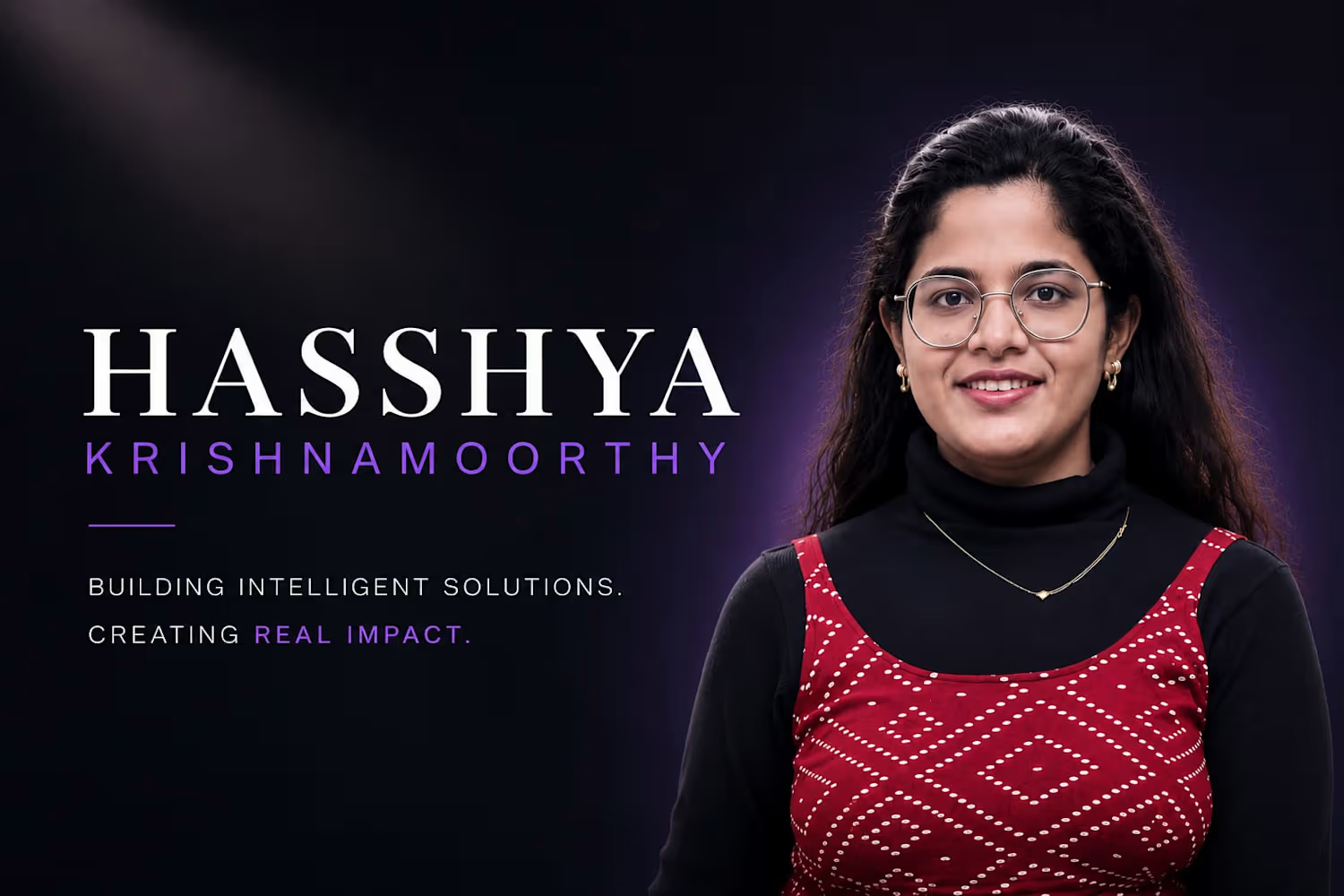
Portfolio Website — Personal Brand & Technical Showcase
Project Overview
Designed and developed a modern AI-focused portfolio website to establish a strong technical brand and showcase projects, research, engineering expertise, and open-source work. The platform serves as a centralized hub highlighting my work across Artificial Intelligence, Machine Learning, Healthcare AI, Full-Stack Engineering, and Data Analytics.
Problem Solved
Traditional portfolios often act as static resumes and fail to effectively demonstrate technical capabilities, project depth, and real-world engineering work. This portfolio was built to create an interactive and visually engaging platform that presents both technical skills and practical implementations in a structured way.
Solution Implemented
Built a responsive portfolio with a modern glassmorphism-inspired design system
Integrated dynamic GitHub repository fetching using GitHub REST APIs
Created sections for featured projects, research publications, and technical domains
Implemented interactive UI animations for improved user experience
Added multiple resume options based on target roles
Designed mobile-friendly navigation and responsive layouts
Deployed using GitHub Pages for continuous accessibility
Key Features
Responsive modern UI design
Dynamic GitHub project integration
Interactive animations and effects
Research publication showcase
Resume selection system
Engineering domain visualization
Mobile responsive experience
GitHub Pages deployment
Live Website: https://hasshya1530.github.io/portfolio_website/
GitHub: https://github.com/hasshya1530/portfolio_website/tree/main
0
8
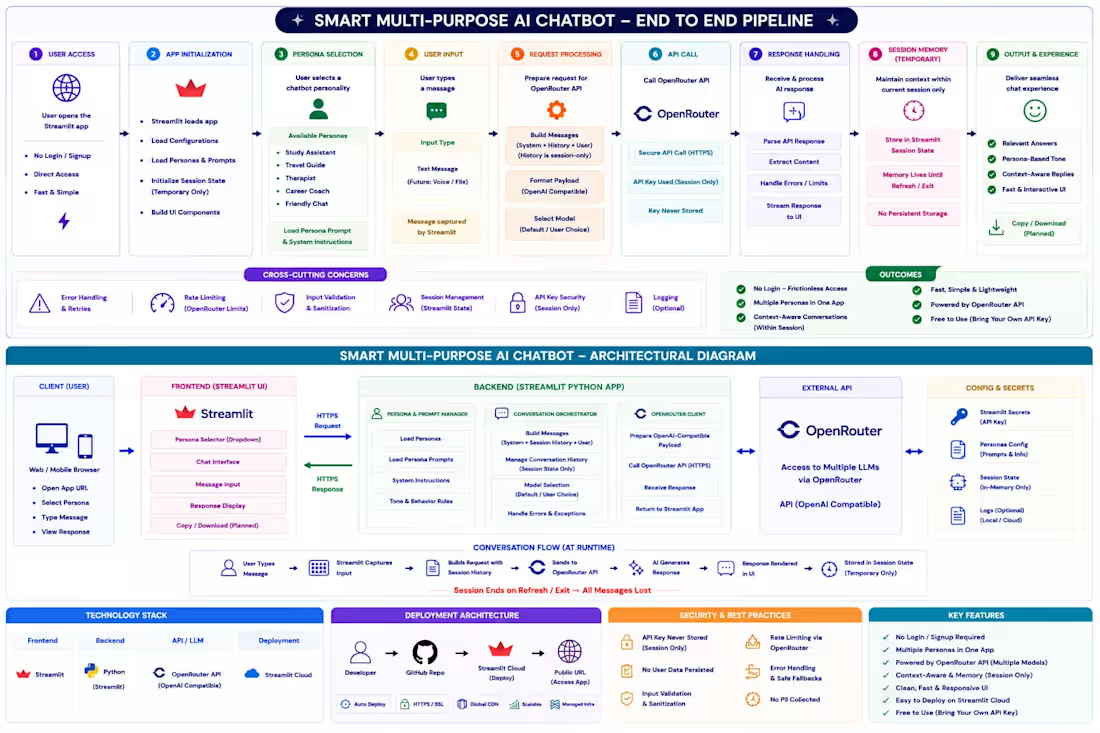
Developed a multi-persona AI chatbot platform allowing users to interact with different assistant personalities through a single application powered by OpenRouter.
Problem Solved
Most chatbot applications are limited to a single use case and lack contextual adaptability across different domains.
Solution Implemented
Built configurable AI personas including:
Study Assistant
Travel Guide
Career Coach
Therapist-style support
General Chat Assistant
Added session-based conversation memory
Implemented dynamic prompt management
Created OpenAI-compatible API orchestration through OpenRouter
Integrated secure session-only API key handling
Key Features
Multiple AI personas
Context-aware conversations
Session memory management
Dynamic model selection
Streamlit-based UI
Secure API handling
Tech Stack
Python • Streamlit • OpenRouter API • Prompt Engineering • Session State Management
Links
GitHub: https://github.com/hasshya1530/ai-multipersona-chatbot
Live App: https://chatbot-bfr83qrtfhgd2rcxvzcsmz.streamlit.app
0
7
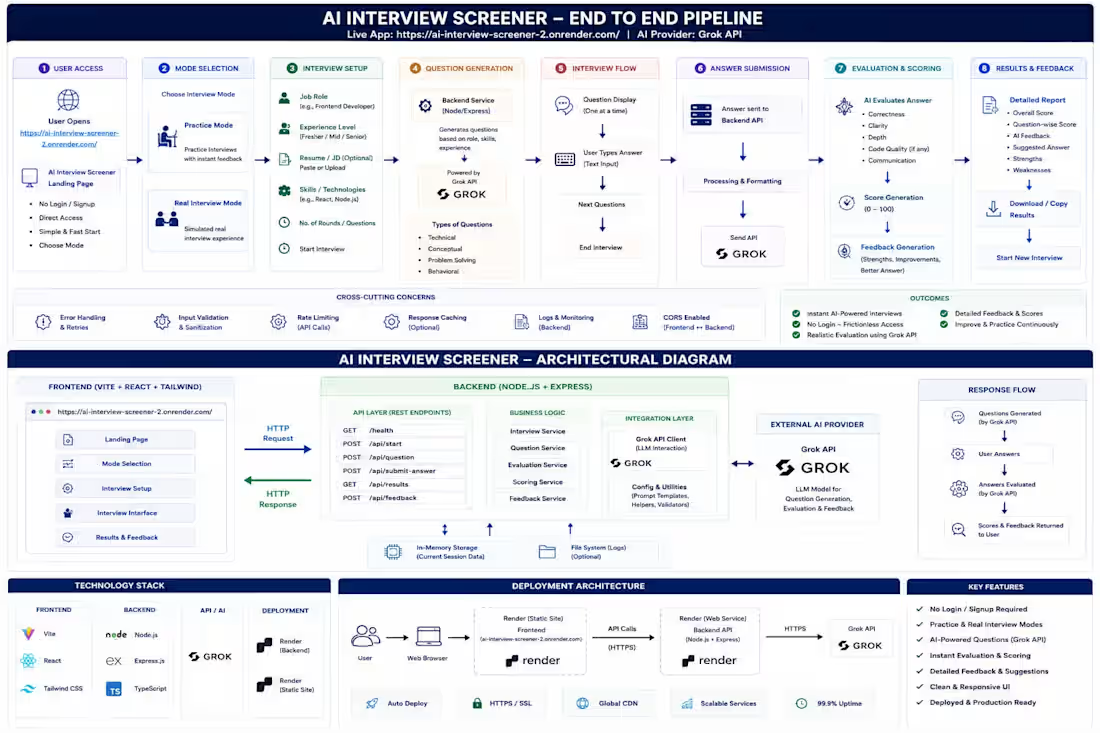
Built an AI-powered interview platform that generates role-specific interview questions and evaluates responses in real time using LLM APIs.
Problem Solved
Interview preparation tools often provide static questions and generic feedback. Candidates need realistic interview simulations with personalized evaluation.
Solution Implemented
Created practice and real interview modes
Dynamically generated questions based on:
Role
Integrated AI evaluation system for:
Technical accuracy
Clarity
Communication
Problem-solving approach
Produced detailed reports with scores and improvement suggestions
Key Features
Dynamic question generation
Real-time answer evaluation
AI-powered feedback system
Detailed scoring reports
Architecture
Frontend: React + Vite + Tailwind
Backend: Node.js + Express
AI Integration: Grok API
Deployment: Render
Tech Stack
React • Vite • Tailwind • Node.js • Express • TypeScript • Grok API • Render
Links
GitHub: https://github.com/hasshya1530/ai-interview-screener
Live App: https://ai-interview-screener-2.onrender.com
0
8
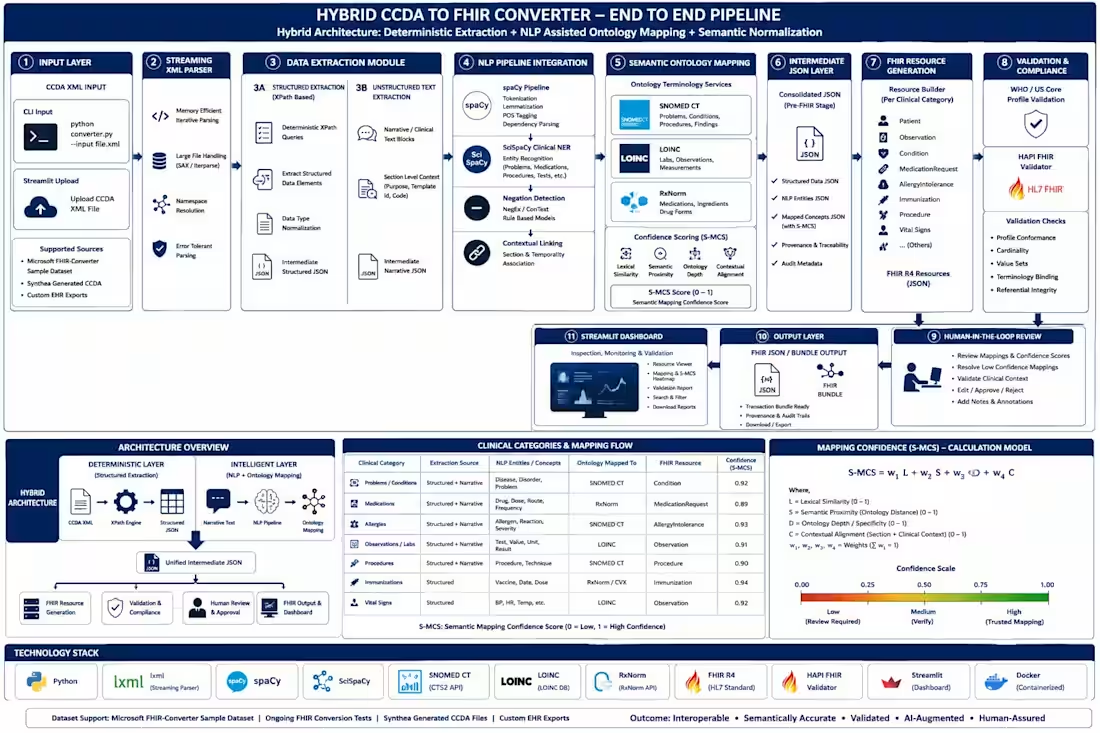
Built an end-to-end healthcare interoperability pipeline that converts CCDA (Clinical Document Architecture) XML files into standardized FHIR resources using a hybrid approach combining deterministic extraction, NLP-assisted ontology mapping, and semantic normalization.
Problem Solved
Healthcare systems often store clinical data in heterogeneous formats, making interoperability difficult. Manual conversion of CCDA records into FHIR-compliant resources is time-consuming and error-prone.
Solution Implemented
Developed streaming XML parsing for efficient handling of large clinical datasets
Extracted structured and unstructured medical data from CCDA documents
Integrated NLP pipeline using spaCy/SciSpaCy for:
Clinical entity recognition
Contextual linking
Negation detection
Mapped concepts to healthcare standards:
SNOMED CT
LOINC
RxNorm
Generated validated FHIR R4 resources and JSON bundles
Added human-in-the-loop review workflow and validation dashboard
Key Features
CCDA XML → FHIR conversion
NLP-assisted semantic mapping
Clinical ontology integration
Confidence scoring system (S-MCS)
Validation and compliance checks
Streamlit monitoring dashboard
Tech Stack
Python • lxml • spaCy • SciSpaCy • SNOMED CT • LOINC • RxNorm • FHIR R4 • HAPI FHIR • Streamlit • Docker
Links
GitHub: https://github.com/hasshya1530/hybrid_ccda_to_fhir_convertor
Demo: https://hybrid-ccda-to-fhir-convertor.streamlit.app
0
8