
Hamza Nafasat
AI Developer | RAG Chatbots, AI Agents & Next.js SaaS
New to Contra
Hamza is ready for their next project!


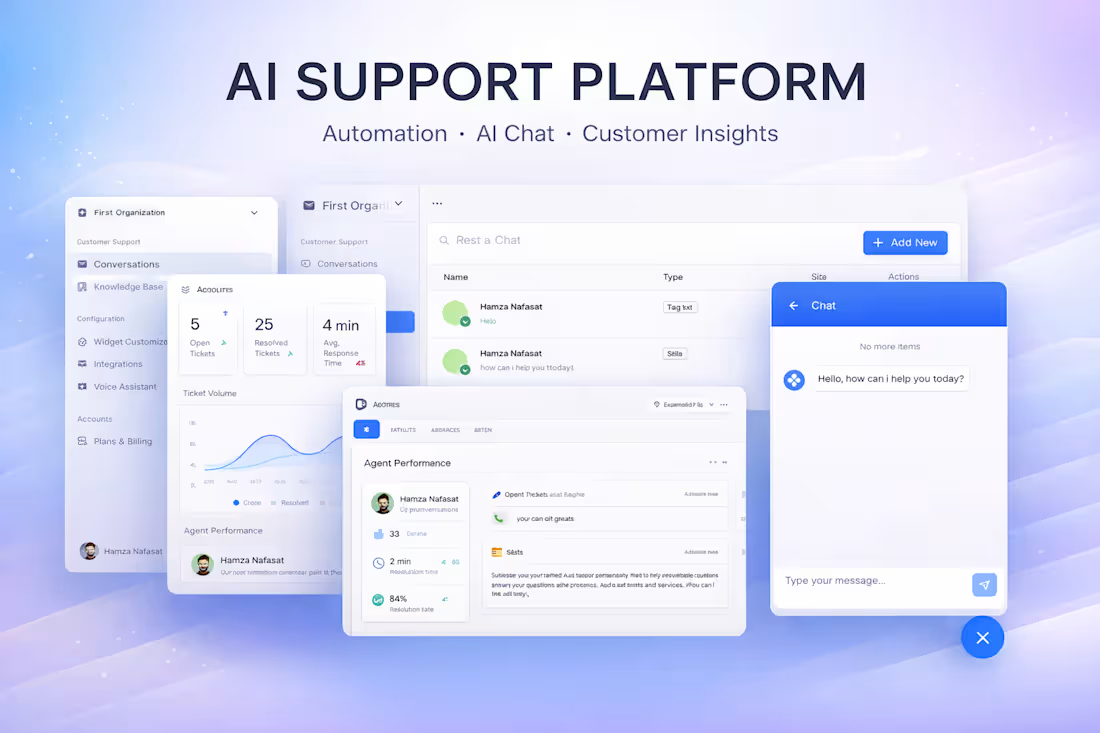
Echo is a multi-tenant SaaS for AI customer support with realtime chat, an AI voice agent, and AI automation. I was the primary developer on the full build, frontend, backend, and the AI layer. The AI is the core. It runs OpenAI, Claude, Gemini, and Grok through one multi-model setup, so a client can switch providers without a rewrite. A RAG pipeline connected to a vector database grounds every answer in the client's own content, so the chatbot never returns generic output. VAPI powers the voice agent, so customers can speak to support on a live call. Each tenant gets its own AI agent built on its own documents. The stack is Next.js 15 and React 19 inside a Turborepo monorepo, with separate apps for the dashboard, the embeddable chat widget, and backend services. Realtime chat runs on Convex. Clerk handles auth. API keys are encrypted per tenant through AWS Secrets Manager, so no two clients share credentials or data. Launch day held 60 live conversations at once with zero dropped sessions. What the client gets: an AI chatbot and voice agent that answer from their own content, work across multiple LLM providers, and stay isolated and secure per tenant.:
3
2
259
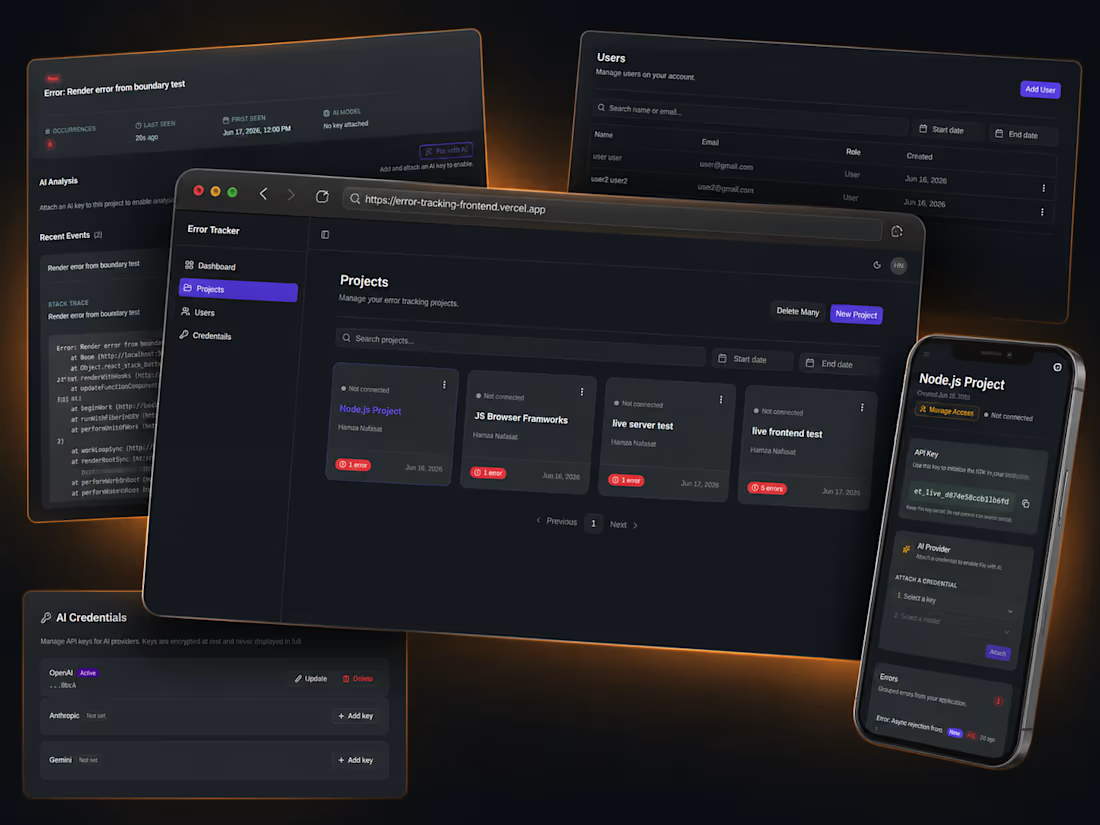
I designed and built a Sentry-style error tracking SaaS from scratch as the Next.js developer and AI integration developer behind it, to prove out multi-tenant architecture and AI integration. Admins manage sub-users with per-project access control. Each admin attaches their own OpenAI, Claude, or Gemini key, encrypted with AES-256-GCM, and picks a model per project for AI fix suggestions. I built two SDKs (Node.js and browser, with a React error boundary) plus a CLI that uploads source maps on build. Errors resolve to original source code, not minified output, the same technique Sentry uses.
2
211
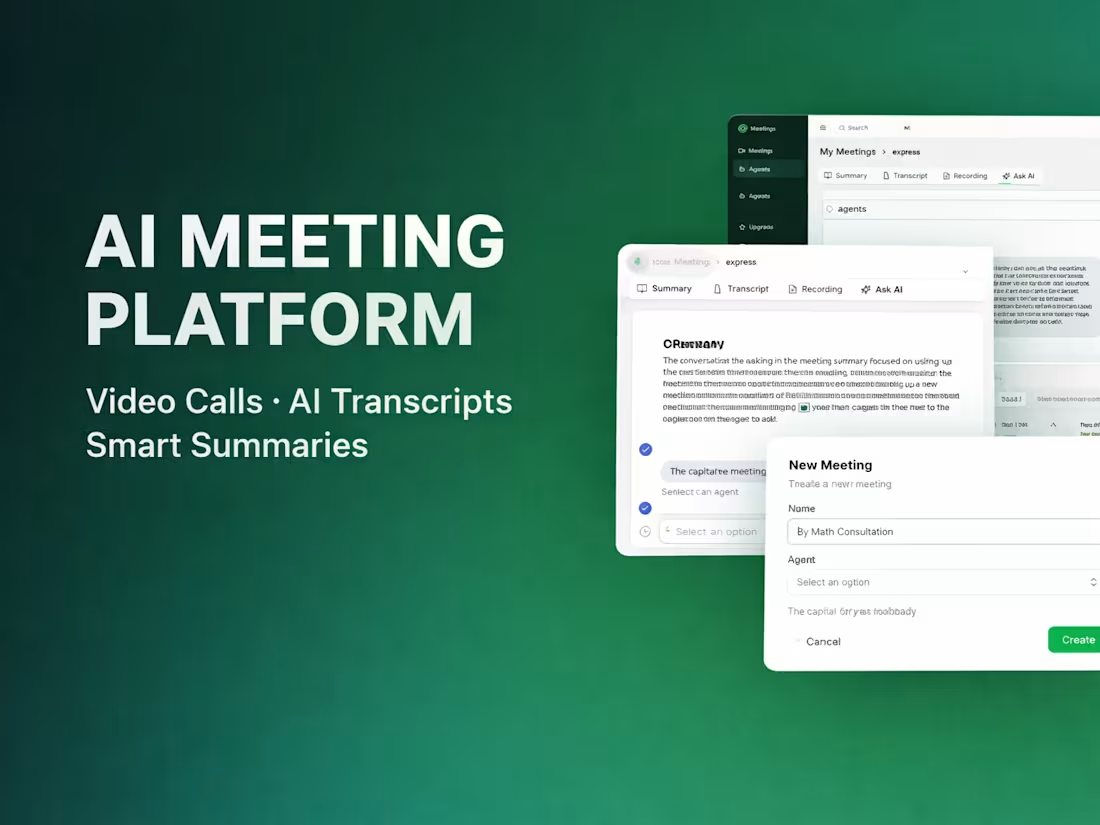
Meet AI is a video conferencing SaaS where AI agents join live meetings as active participants and respond in real time. I built the full application stack.
The hard part is the real-time layer. The backend provisions an AI agent the moment a meeting starts and keeps it running for the full call. Speech runs through a transcript pipeline and generates responses through the OpenAI API in near real time, so the agent replies while the conversation is still moving, not minutes later. After the meeting, the backend writes a structured summary through the same API, handled async by Inngest so nothing blocks the live app.
The stack is Next.js 15 and React 19 with the Stream Video and Stream Chat SDKs, tRPC and Drizzle ORM on Neon PostgreSQL, and Better Auth across the stack.
The platform runs 30 simultaneous live sessions, each with its own active AI agent, with no backend slowdown.
What the client gets: live AI agents that take part in real meetings, plus automatic summaries, on a stack built to hold many sessions at once.
2
3
247
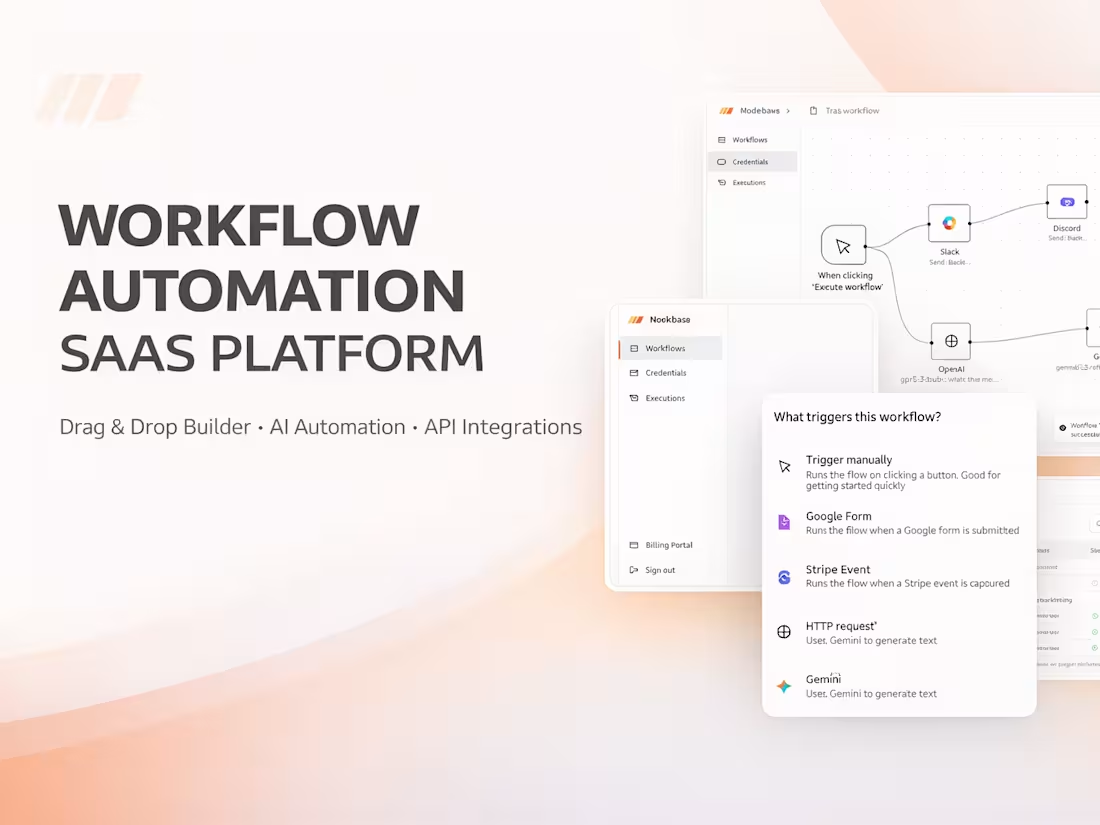
Nodebase is a workflow automation SaaS where users build AI workflows visually with no code, backed by a custom execution engine. I built the full product end to end, alone.
The visual builder runs on React Flow inside Next.js 15. Users connect trigger nodes, AI nodes, API nodes, and conditional logic into full pipelines. The backend engine uses topological sort to resolve node dependencies before running each step, so nothing fires out of order. Inngest handles background jobs, retries, and scheduled triggers. Webhooks let outside services start a workflow by hitting an endpoint.
This is AI automation in practice. OpenAI, Claude, and Gemini run as built-in AI nodes next to Slack, Discord, and Stripe. A user can route data through an LLM, act on the result, and pass it to the next step, all without code. Credentials are encrypted and pulled at runtime, so keys never sit in plain text.
Prisma with Neon PostgreSQL handles workflow ownership, execution history, and job logs. tRPC connects frontend and backend with full type safety.
What the client gets: a no-code platform where non-technical staff build their own AI workflows, on an engine reliable enough to run them on a schedule without supervision.
2
2
219