
Gautam Jha
Ghostwriting for Founders, Coaches & Sales Leaders
New to Contra
Gautam is building their profile!

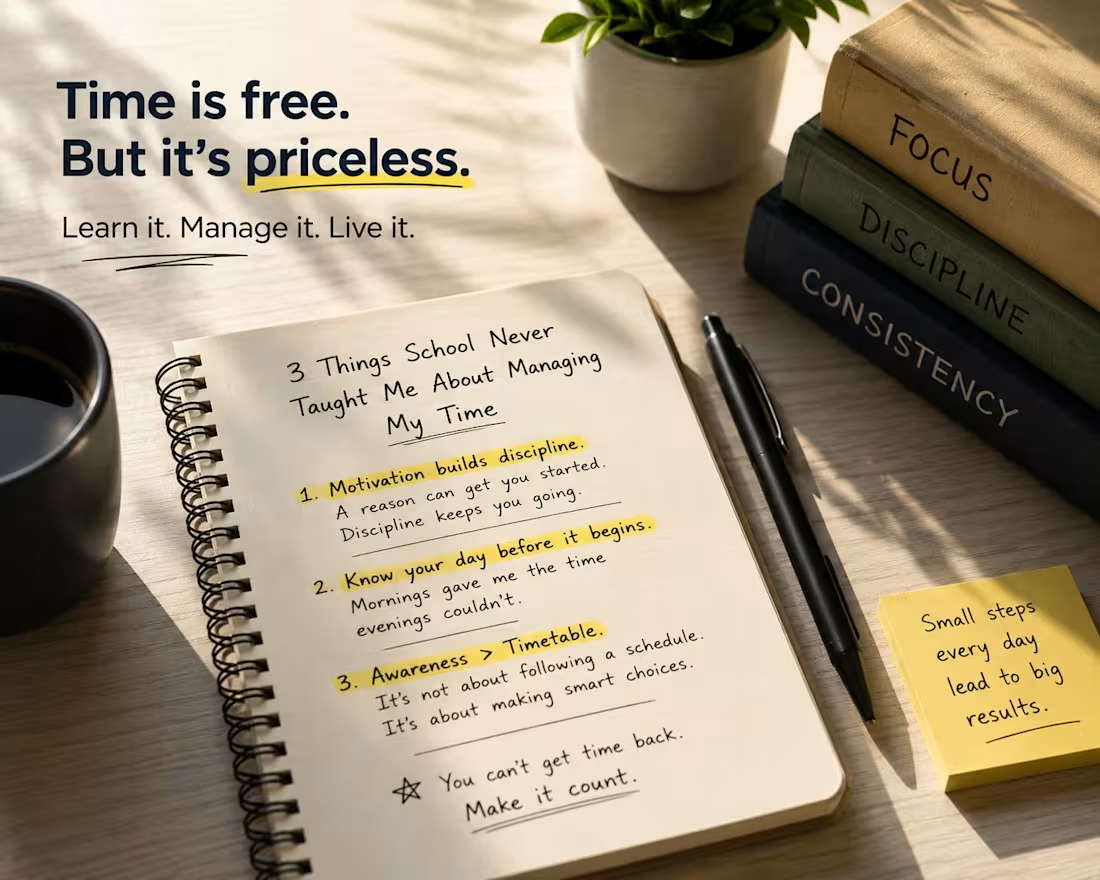
3 Things School Never Taught Me About Managing My Time
I had plenty of time in school. I didn't know it.
Looking back now, I realise that my schedule wasn't the problem. I was. Between school, tuition, and homework, some days felt hectic; others felt light. But here's the truth: the light days weren't easier because of less work. They were lighter because of less homework. That's not time management. That's just luck.
Time management is the one skill I genuinely wish someone had taught me earlier. Not because I was lazy — but because no one ever showed me how. Here are 3 things I had to learn on my own:
1. Motivation beats discipline — if you use it right.
During exams, my parents had a simple deal: study for 3 hours after school, and you can play outside for 2 hours. That one rule changed everything. I got home at 1 PM, ate lunch, and sat down to study immediately — not because I loved studying, but because I loved playing more. The reward made me plan. I didn't need a timetable. I needed a reason.
2. Know your day before your day begins.
In college, classes + extracurriculars + travel left me with almost nothing by evening. Studying after reaching home felt impossible. So I made one small shift — I slept 2 hours earlier. That gave me 3 to 4 hours of silent, distraction-free study time every morning. The time was always there. I just had to stop looking for it at the wrong end of the day.
3. A timetable doesn't teach time management. Awareness does.
School gave us timetables and called it time management. But following a pre-built schedule someone else made for you is not the same as learning to manage your own time. Real time management is knowing what matters, what can wait, and what is quietly stealing your hours. Nobody sat me down and taught me that. I had to figure it out by losing time first.
Money you lose can be earned back. Time cannot.
If there's one thing I'd go back and teach my younger self — it wouldn't be a subject. It would be this skill.
0
3
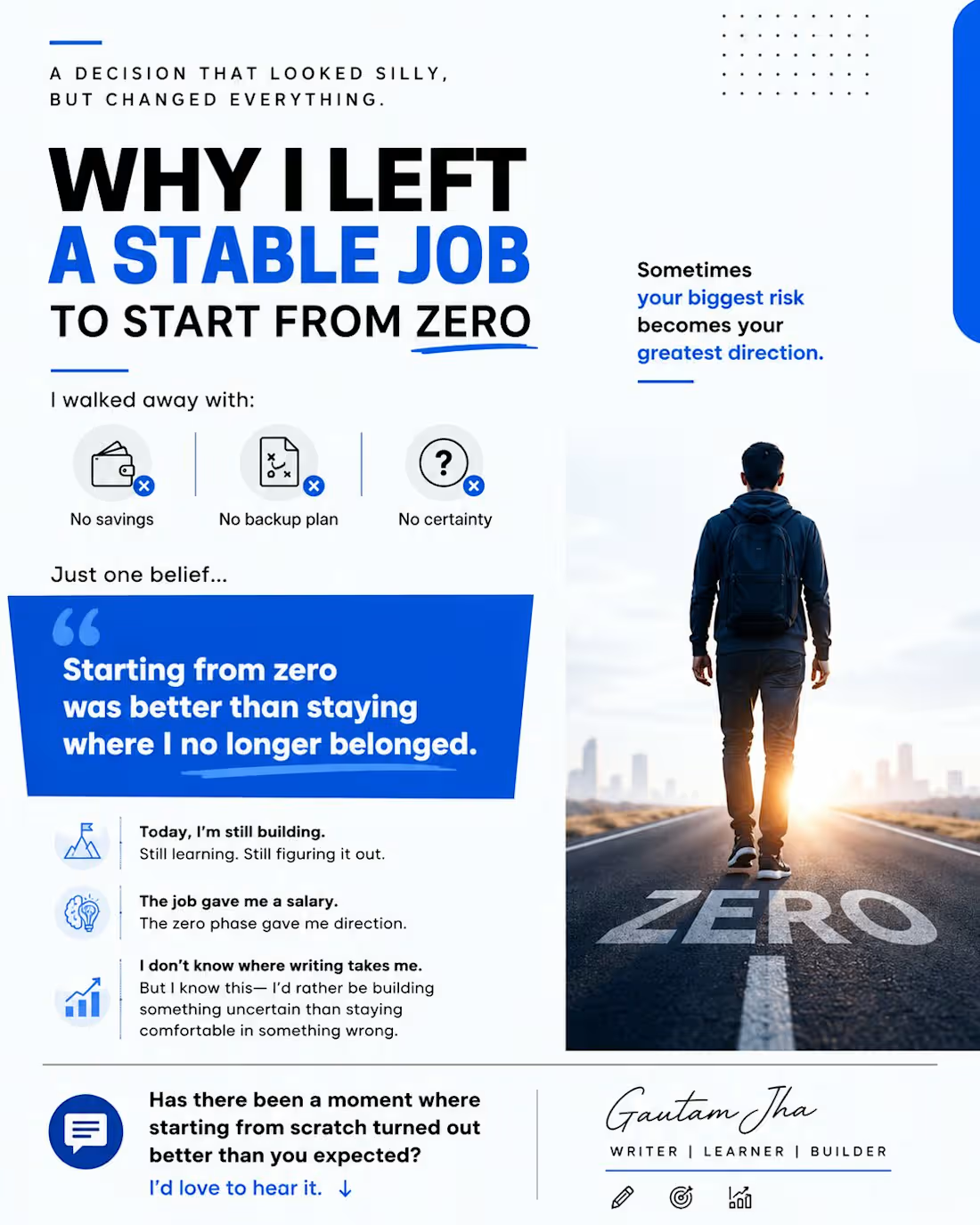
Leaving a stable job with a decent income — in this job market — was probably the silliest thing I did.
No backup. No plan. No savings.
Just my family's support. And honestly, that was enough to walk out.
Here's what nobody tells you about starting over —
I was an introverted kid who somehow landed a sales job. If you know sales, you know that's already a recipe for daily discomfort. Continuous follow-ups, target pressure, quotation counts, manager reports — all of it piling up every single day.
I quit.
And somewhere in my heart, I still carry a small regret about that. Because the mistake was mine — I didn't give the process enough time. But I also can't pretend that job was right for me.
Leaving the job wasn't the scariest part.
The scariest part was realising I had left with nothing lined up. No savings. No study habit. No plan. I found myself standing nowhere near the future I had imagined for myself.
That's when it hit me — I had to start from zero.
So I tried everything. Digital marketing. Instagram theme pages. Short-form video editing. Some days I was all in on one skill. Other days, something else pulled my attention. I was everywhere — which meant I was really nowhere.
Then I found writing.
Not because it was the plan. It was never the plan. Not even as a kid did I think — "I want to be a writer." But the more I wrote, the more it felt like something I actually wanted to get better at. That feeling never showed up in sales.
Looking back, this zero phase — the uncertain, uncomfortable, figure-it-out-alone phase — has taught me more than any job ever did.
The sales job gave me a salary. The zero phase gave me direction.
I don't know where writing takes me. But I know this — I'd rather be building something uncertain than staying comfortable in something wrong.
If you're sitting in a job that doesn't feel like you — I'm not saying quit tomorrow.
I'm just saying: starting over isn't as empty as it looks from the outside.
0
7
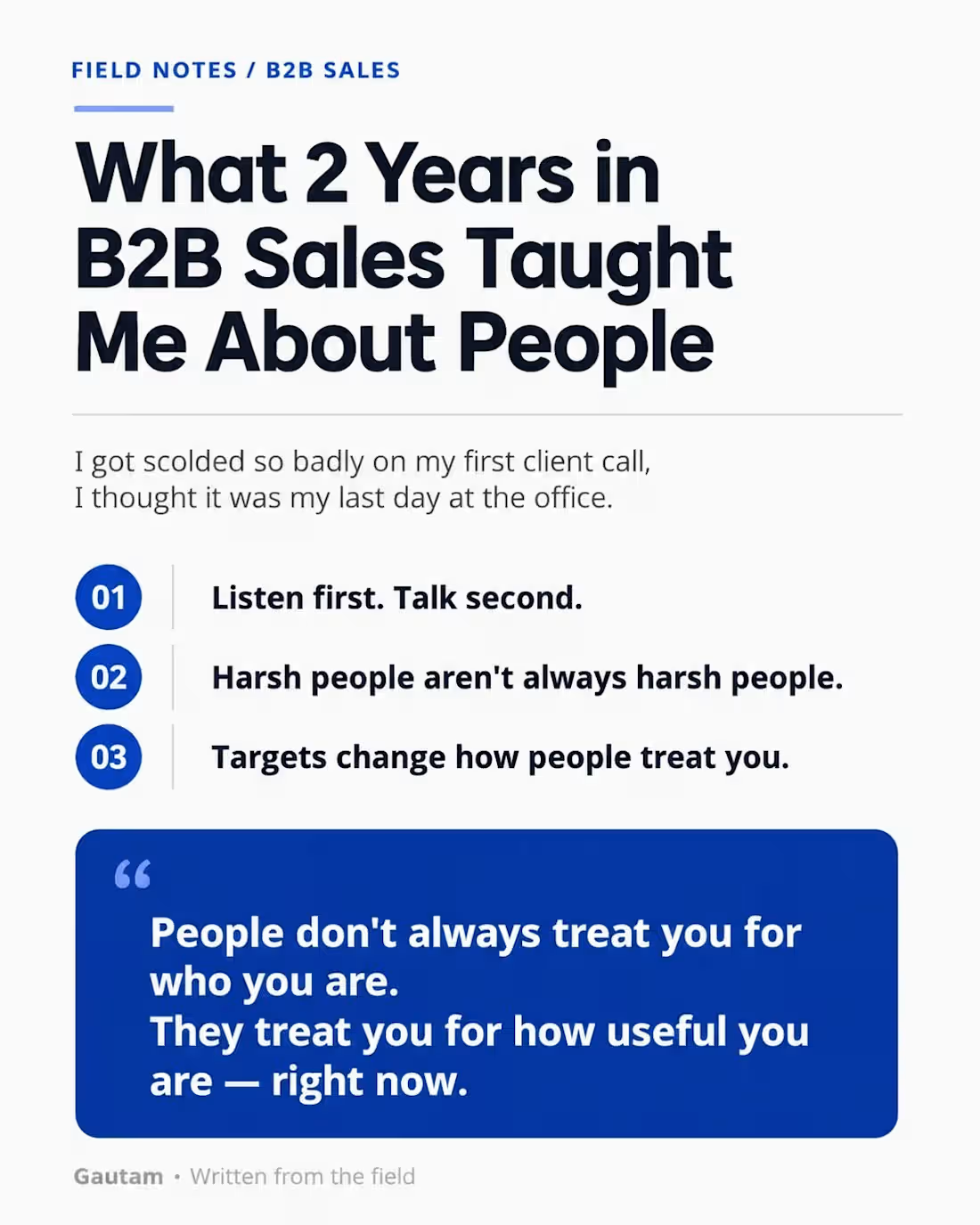
I got scolded so badly on my first client call, I thought it was my last day at the office.
My manager was sitting right next to me. Watching every second.
That day, sales stopped looking easy.
Here's what 2 years in B2B sales actually taught me:
𝟭. 𝗟𝗶𝘀𝘁𝗲𝗻 𝗳𝗶𝗿𝘀𝘁. 𝗧𝗮𝗹𝗸 𝘀𝗲𝗰𝗼𝗻𝗱. I once kept pitching a feature my client didn't care about. He stopped me mid-sentence. Made me realize — I wasn't listening. I was waiting to talk.
𝟮. 𝗛𝗮𝗿𝘀𝗵 𝗽𝗲𝗼𝗽𝗹𝗲 𝗮𝗿𝗲𝗻'𝘁 𝗮𝗹𝘄𝗮𝘆𝘀 𝗵𝗮𝗿𝘀𝗵 𝗽𝗲𝗼𝗽𝗹𝗲. A client once snapped at me over the phone for no reason. Turned out — his manufacturing team had been chasing him all morning. I called at the wrong moment.
𝟯. 𝗧𝗵𝗲 𝗼𝗻𝗲 𝘁𝗵𝗮𝘁 𝘀𝘁𝘂𝗻𝗴 𝘁𝗵𝗲 𝗺𝗼𝘀𝘁: When we hit targets, the office felt like family. The moment we missed one — suddenly every tea break, every five-minute chat, every small thing mattered.
Nothing about us changed. Only the number did.
That's when it hit me:
People don't always treat you for who you are. They treat you for how useful you are — right now.
Situations turn harsh. Not people.
Learn to tell the difference, and sales stops feeling personal.
0
11
Being rejected on the very first day of the job hits you differently when you're just starting your corporate journey.
Training was vital in my sales job.
We focused on workflow, software, and client data.
But learning to handle rejection was equally important.
Rejection hit me harder than I expected.
Even just after my training, my very first call was a disaster.
I not only got rejected — I was humiliated.
My manager was standing right behind me, hearing all of it.
I thought day one was going to be my last day.
But somehow, I managed to work there for the next 18 months.
When someone is at their lowest, they take everything personally.
I felt that same thing when, for 2 months, I couldn't even cross the bare-minimum target.
During that stretch, there was one hope — my monthly repeat client.
I was sure that order was coming.
When it got rejected too, I took it on myself.
I took it so personally, I started believing this job wasn't meant for me.
That one rejection made me lose the motivation to even call other clients.
My colleagues and my manager could see I was getting frustrated.
After leaving that job, I turned inward.
I realized the loss was mine alone.
I might have converted those leads — if I had only spoken to my clients more effectively.
The rejection stress even messed up my relationships with a few friends from the office.
The reason was simple:
It was my first job.
I had never faced rejection at that level before.
I didn't know how to handle it.
That cost me new clients, my bonds with friends, and even time with family.
If I hadn't taken that rejection personally, I wouldn't have lost my motivation.
Now, when a client says no — it's the deal that failed. Not me.
0
19