
pro
February First
Sustainable fashion designer & consultant
Profile in progress
February is building their profile!
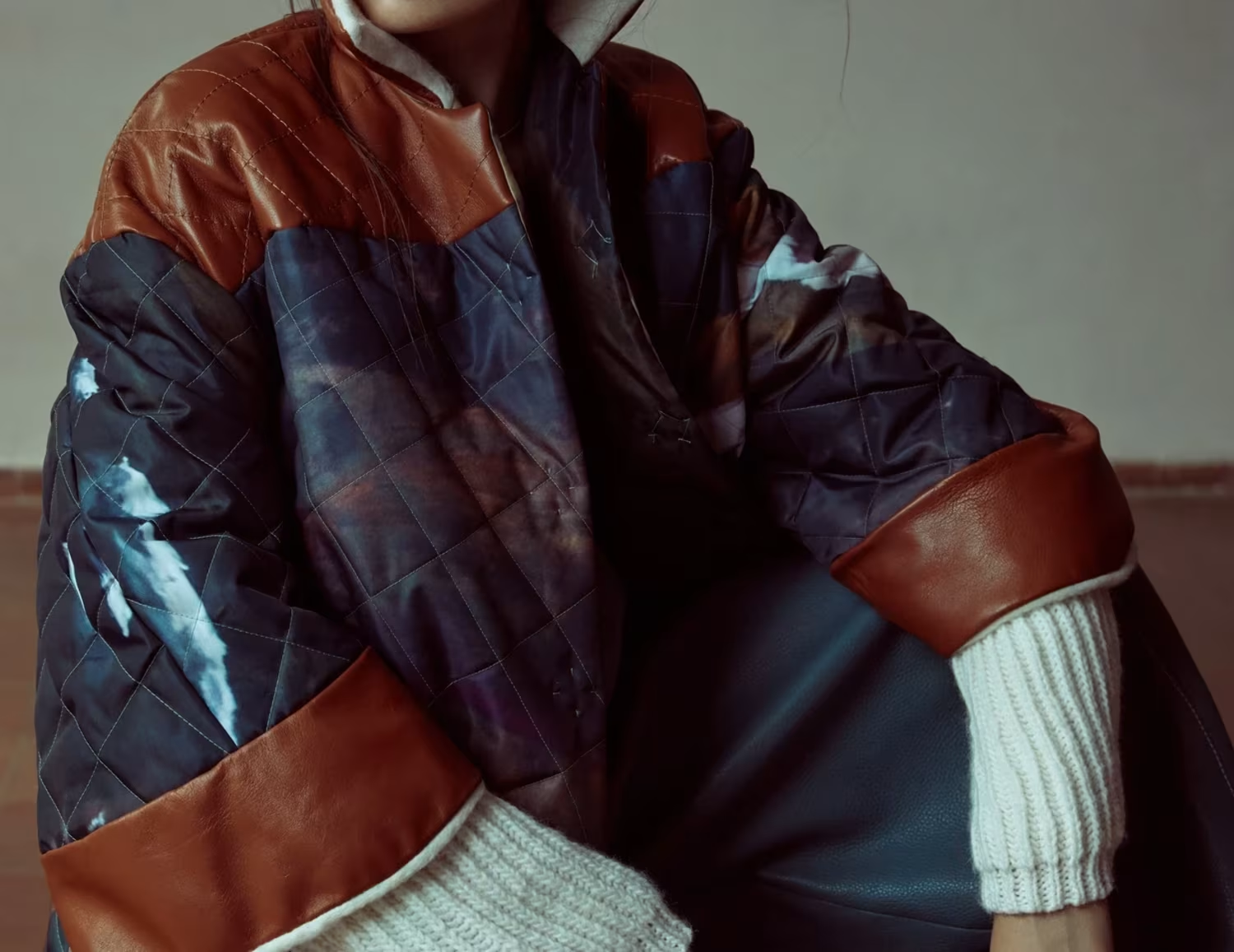
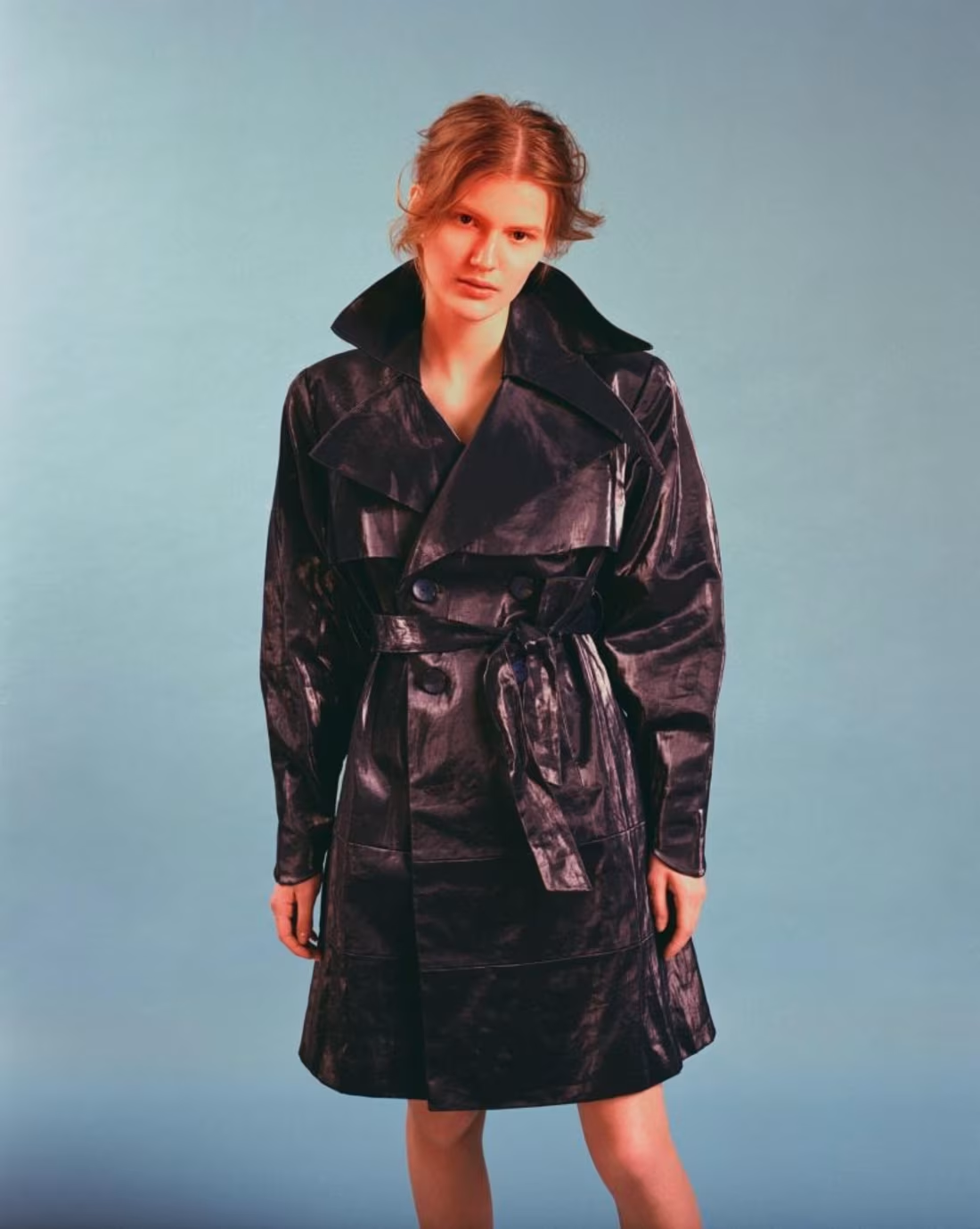
I love teaching tech packing and always have fun mentoring students, although my favourite thing is seeing the drawings of my friend’s little daughter. She doesn’t draw those disproportionately tall figurines, she draws garments. She basically draws tech flats and takes great time adding and changing details, clearly enjoying the process of creating these little things.
Most fashion students will say that tech packs are boring, although they really shouldn’t be. Tech packing is not something that concludes the design process, it is the design process itself.
Anyway, feel free to send our way anyone who finds tech packing boring, I’m sure we could change their mind!
0
45

We’re Daria Zinoveva-Princey & Ana van Turnhout, fashion designers and sustainability specialists with years of experience in high-end fashion. At February First, we have created the Eco Tech Pack, a licensed technology that helps us design with sustainability in mind—planning the end-of-life cycle before a garment is even made.
1
31

We’re not here to speed it up, we came to slow it down. When the entire system is rushing towards a cliff, the last thing it needs is acceleration.
Traditional tech packs are meant to avoid costly mistakes, but are we avoiding mistakes, or avoiding the design process itself? A finished tech pack is handed to pattern makers and technologists who interpret proportion, construction and fit. They do not need every tiny measurement. If every detail is already defined, then the garment is not new, it already exists.
We are told that tech packs reduce sampling and speed up production. But at what cost? Reproducing existing garments faster, just to push more units into a world that already has too many. Good pattern making is expensive and it should be. It takes time and skill. If it is cheap, whose work are you really buying?
1
2
67

I was rereading F. L. Zangrillo’s Fashion Design for the Plus Size yesterday , it has beautiful draping and pattern making notes, very cool. It also has those sweet nostalgic illustrations and that horrible nostalgic “problem zones” idea. still triggers me so much, still hear it sometimes when designing. Anyway, I just wanted to say that these design adjustments are not about hiding any “problem zones.” It’s simply that there is a certain beauty in classic tailoring logic, when garment points are aligned with key anatomical points, like the wrist bone and the shirt sleeve hem. So the garment should be aligned for various proportions - which brings us to the conclusion that a garment can have problem zones, but the human certainly can’t.
1
41

I sometimes terrify my husband by burying garments in the backyard just to see what happens to them. It’s definitely not very scientific, but it mesmerises me how something can disappear completely.
And that’s what brings me to what I actually wanted to talk about: the simplest sustainable thing – using mono materials. I see a lot of fear when, in design projects, I mention sustainable materials. We still tend to think it’s something complicated, like an airplane, and somehow that it costs the same too. But it’s actually a very natural and simple thing. If you just have the intention to make sure the future garment’s ingredients have a chance to disintegrate together in your backyard, then it is sustainable enough.
1
32