
pro
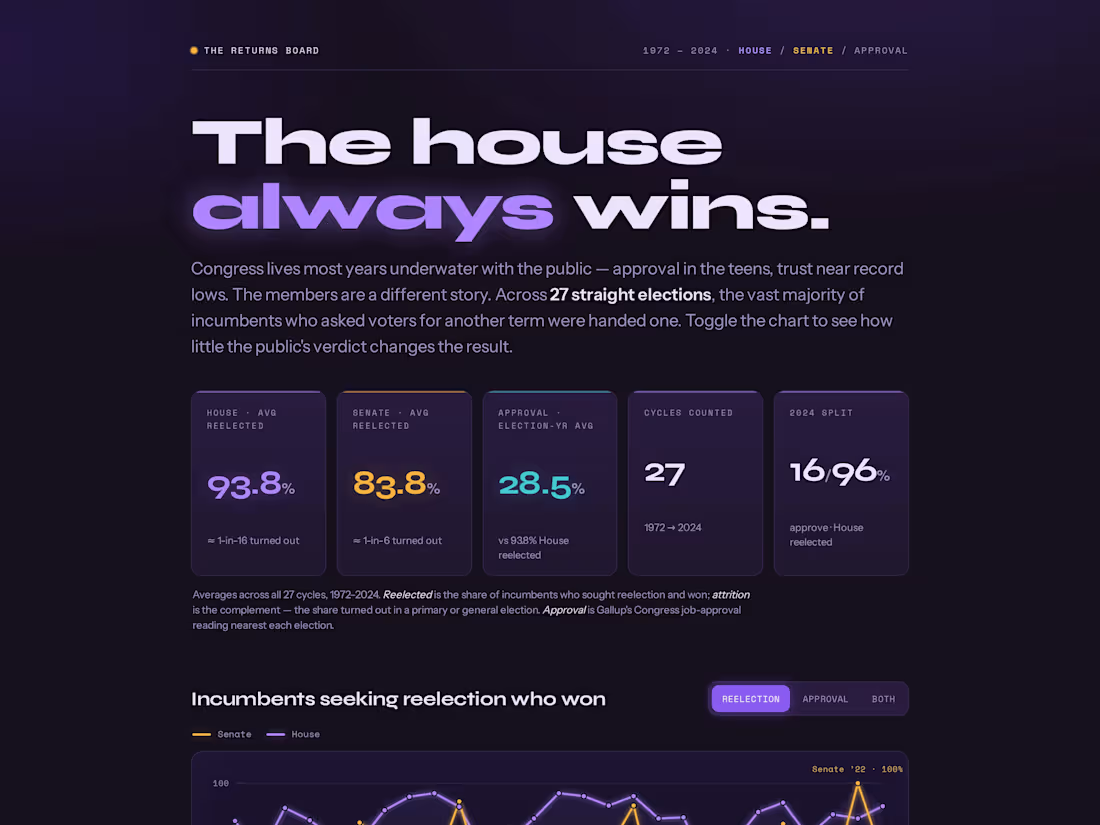
The house always wins.
One question: does the public's low opinion of Congress actually cost incumbents their seats? I built an interactive board across all 27 election cycles since 1972, toggling incumbent reelection against Gallup approval, every figure sourced. The result you can audit on one screen: House incumbents who ran won about 94% of the time while Congress sat near 28% approval.
0
120
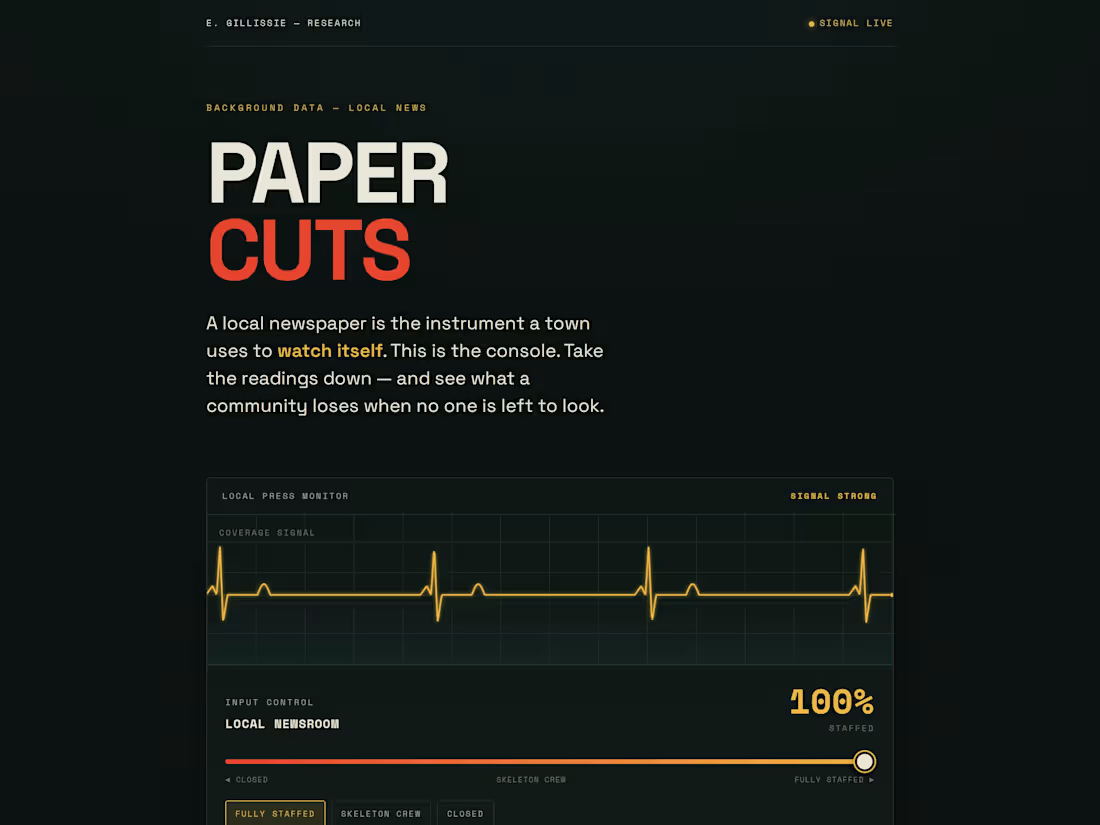
Paper Cuts
When a local newspaper closes, the damage doesn't announce itself — it shows up later, in the numbers. Paper Cuts is a console I built to make that visible: drag a newsroom from fully staffed to shuttered and watch a town's civic vital signs slide into the red — borrowing costs, contested ballots, split-ticket voting — each tied to published research. The country has lost roughly 3,500 local papers since 2005 and still loses more than two a week. This is what leaves with them.
0
96

Misunderstood
A personal essay that thinks through television. Every writer's job is to show us why a character does what they do — give an audience the reasons and even a cruel act becomes understandable. I turn that lens on ordinary life and the asymmetry it reveals: the grace we hand fictional strangers, we withhold from the people right in front of us. It starts from a private failure — that whatever I feel rarely lands intact on the other side — and follows it out to what's lost when reaching and being reached keep missing.
0
99
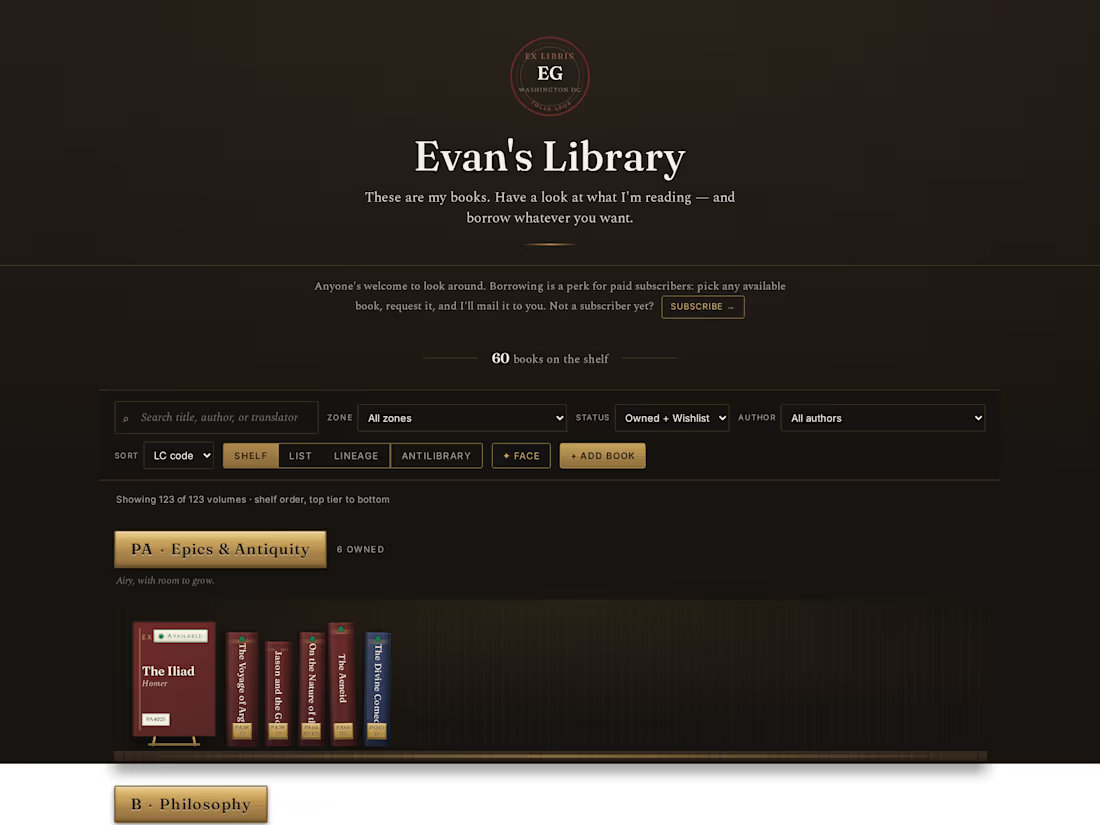
Evan's Digital and Physical Library
A catalogue of the books actually on my shelf — the real thing, shelved exactly as it stands at home. I organized it by what each book is for rather than who wrote it: five zones running from the epics down to poetry, with philosophy East and West kept together, oldest first. Every spine carries its Library of Congress call number, and one view draws the whole shelf as a single long conversation — influence traced as lines from one book to the next, so you can watch the centuries fold into one argument that never quite ended. Catalogued by hand, built to be read as much as browsed.
0
93