
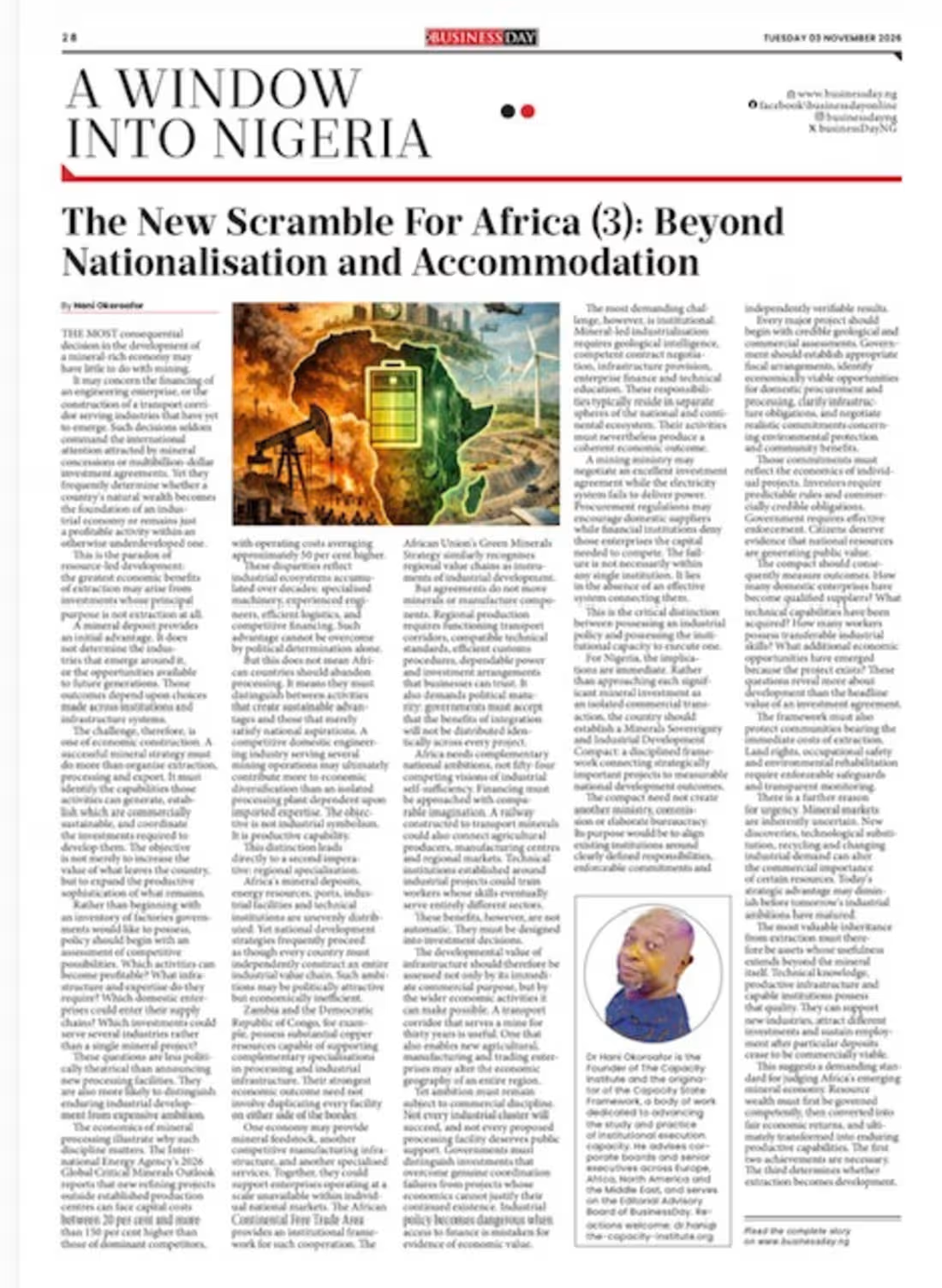
The New Scramble for Africa: Power, Sovereignty and the Battle for Strategic Influence
A Three-Part BusinessDay Editorial Series | Dr Hani Okoroafor
The New Scramble for Africa is a three-part geopolitical analysis examining the intensifying competition among global powers for Africa's resources, markets, strategic territories and political allegiance.
The series explores how China, Russia, the United States, Europe and emerging international actors are reshaping Africa's geopolitical landscape through investment, security partnerships, infrastructure financing, technological influence and control over critical minerals.
A central theme is the contrasting responses of African governments to this changing international order. The series critically examines the increasingly assertive sovereignty agenda of Sahelian states, particularly Mali, Burkina Faso and Niger, juxtaposing their confrontational posture with Nigeria's comparatively restrained diplomatic and strategic approach.
Drawing on historical parallels, contemporary geopolitical developments and comparative political economy, the series argues that Africa's greatest vulnerability lies not merely in external exploitation but in inadequate institutional capacity to negotiate, coordinate and execute national strategic priorities.
Ultimately, The New Scramble for Africa advances a compelling proposition: Africa's future will be determined not simply by who seeks influence over the continent, but by whether African states possess the capacity to shape the terms of their engagement.
0
2
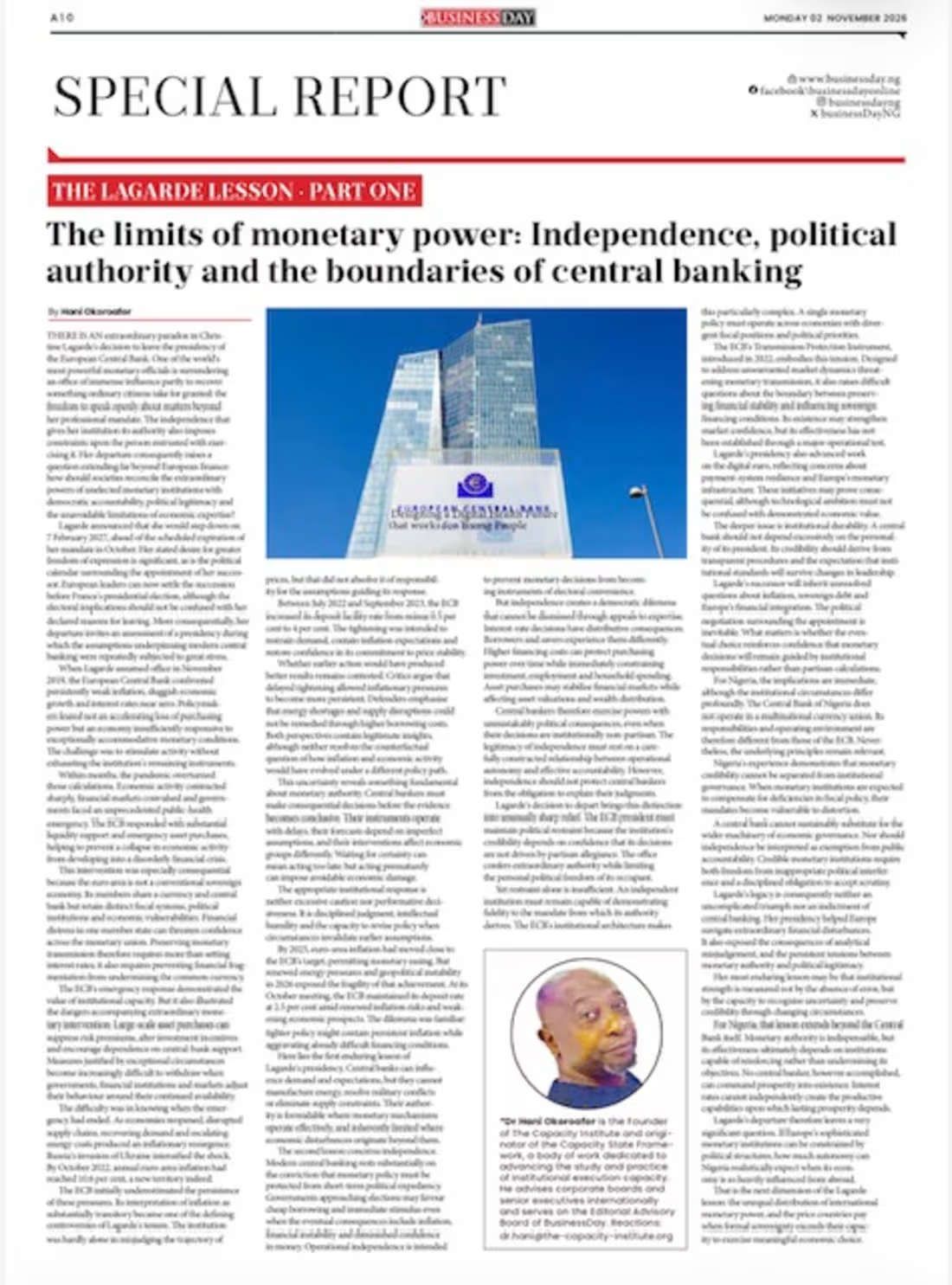
The Lagarde Lesson: Rethinking Monetary Power, Economic Sovereignty and Nigeria's Development
A Four-Part BusinessDay Editorial Series | Dr Hani Okoroafor
The Lagarde Lesson is a four-part analytical series examining the profound relationship between monetary leadership, institutional independence, economic sovereignty and national development, drawing on the leadership of Christine Lagarde at the European Central Bank and its wider implications for Nigeria.
Published as four consecutive articles in BusinessDay, the series moves beyond conventional commentary on central banking to interrogate a fundamental question: Why do some economies translate monetary credibility into sustained prosperity while others remain trapped in cycles of instability, dependence and underperformance?
The first article, The Limits of Monetary Power, examines the delicate relationship between central bank independence, political authority and democratic accountability. It challenges the assumption that monetary institutions can independently resolve structural economic weaknesses, emphasising the boundaries of technocratic power.
The second, The Price of Dependence, explores the international architecture of monetary influence, examining how global financial hierarchies constrain the economic choices available to developing nations. It considers Nigeria's vulnerability to external monetary conditions, capital movements and currency pressures, redefining economic sovereignty as the capacity to make credible choices under pressure.
The third, The Missing Transmission, investigates why monetary stability and institutional credibility do not automatically translate into productive investment, enterprise development, employment and rising household prosperity. It identifies the structural and institutional weaknesses that interrupt the transmission of financial confidence into real economic transformation.
The concluding article, Beyond the Central Bank, advances a broader institutional perspective, arguing that sustainable prosperity requires coordinated systems connecting monetary credibility, financial intermediation, productive investment and effective economic governance.
Together, the four articles demonstrate an integrated approach to executive research, comparative institutional analysis, economic interpretation and strategic thought leadership.
The series combines international economic perspectives with Nigeria-specific institutional realities, translating complex monetary and development questions into accessible, evidence-informed arguments relevant to policymakers, business leaders, investors and informed readers.
0
4
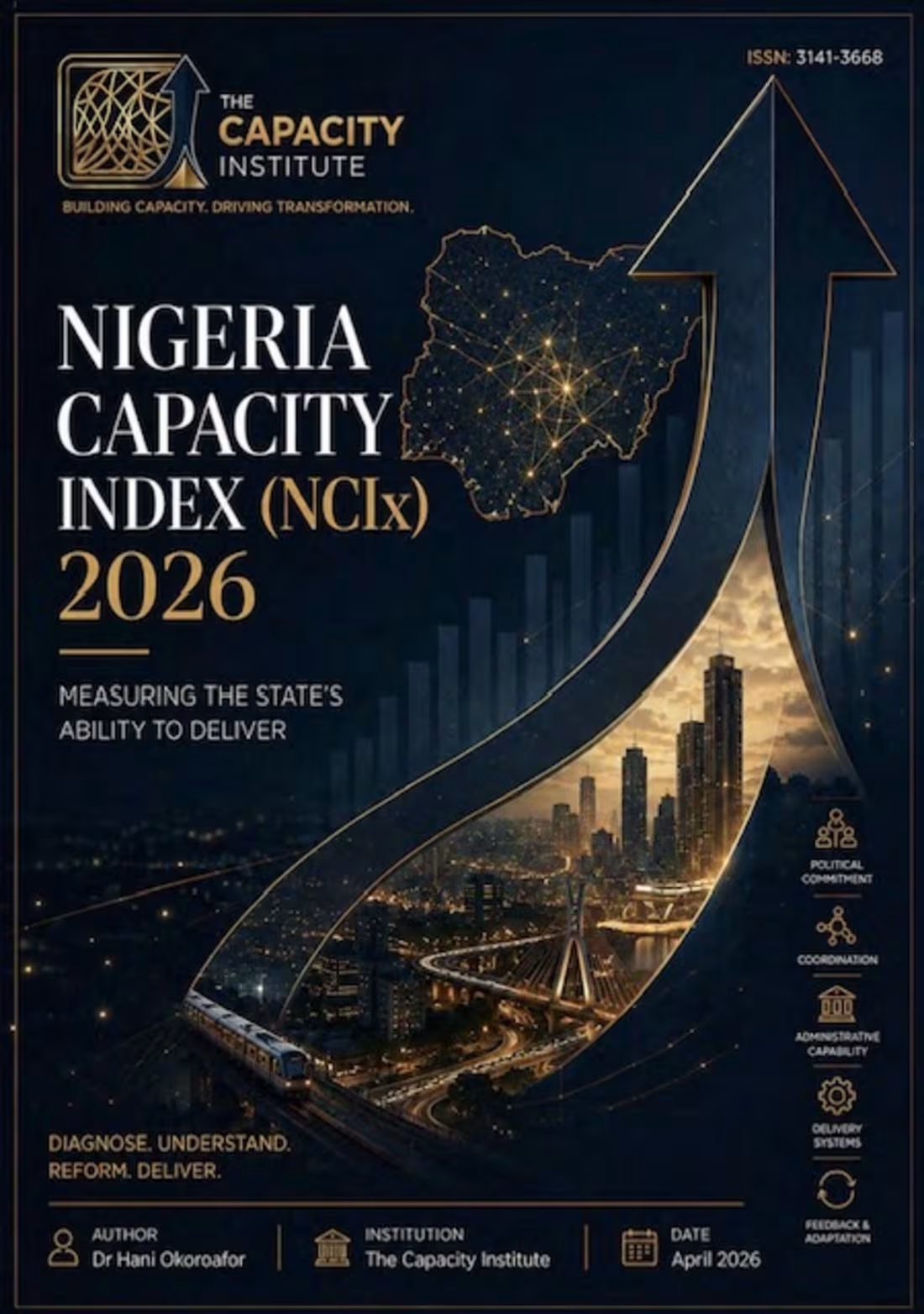
The Nigeria Capacity Index 2026 is a pioneering assessment of Nigeria's institutional ability to translate policies into measurable results. Using five pillars and 20 indicators, it evaluates political commitment, coordination, administrative capability, delivery and feedback, revealing systemic constraints and priorities for reform.
0
11
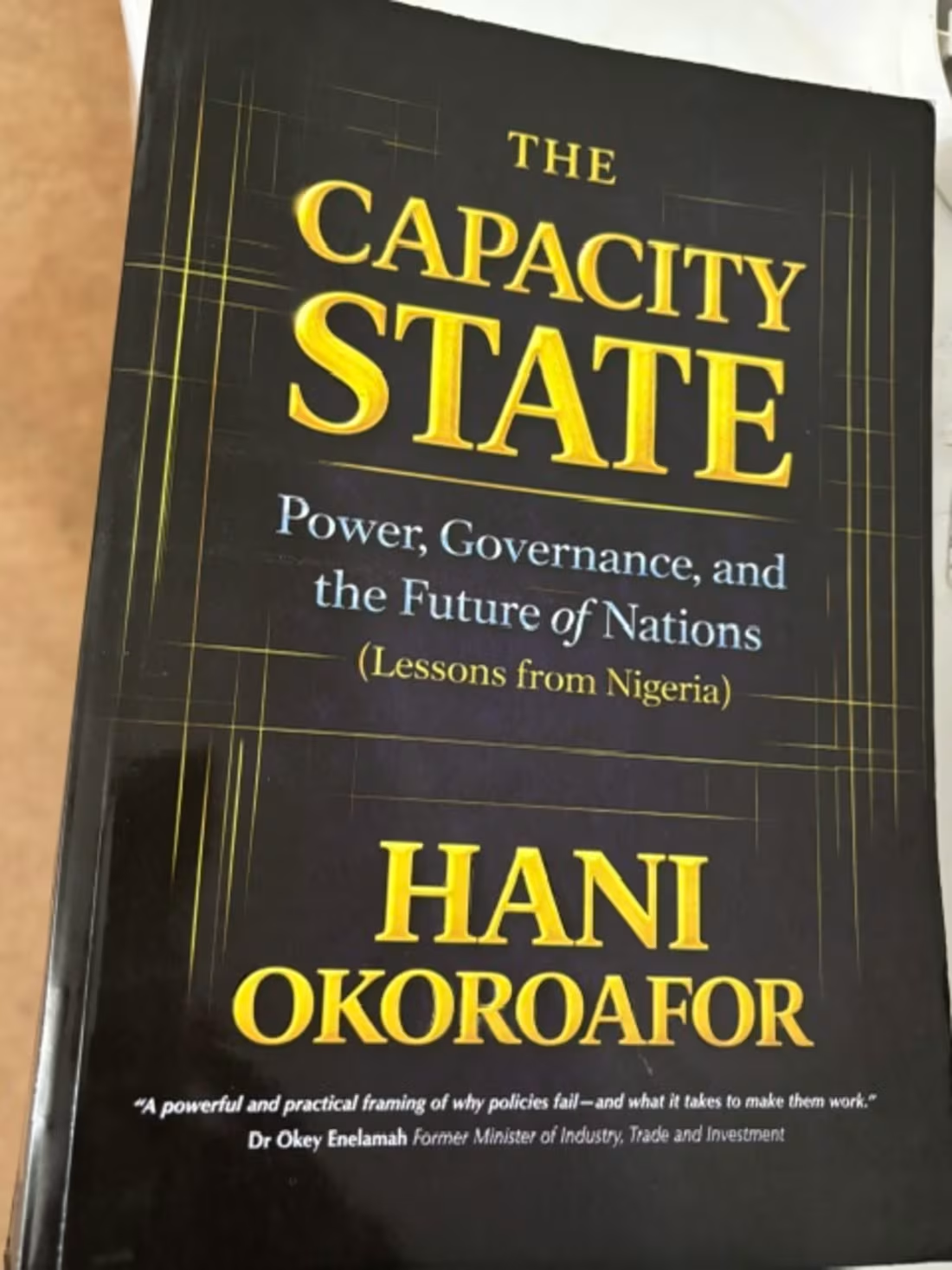
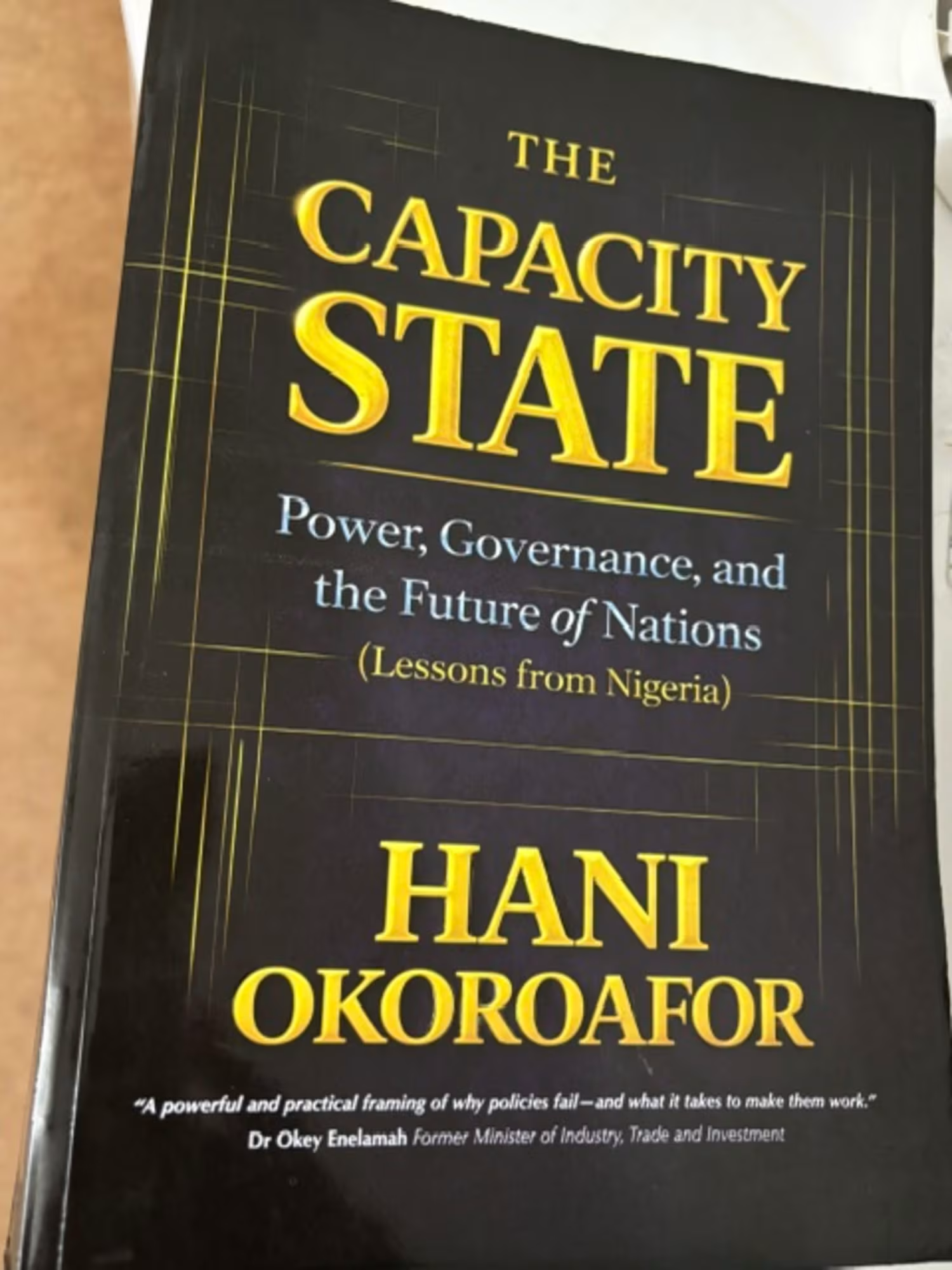
The Capacity State explores why nations and organisations struggle to translate ambitious policies and strategies into tangible results. Challenging conventional development thinking, the book identifies execution capacity as the missing link between aspiration and achievement, offering a compelling framework for strengthening institutions, improving performance and delivering sustainable transformation.
0
20