Projects using Zoho OneProjects using Zoho OneEpisode #6: The bank balance is NOT your profit.
“I have AED 250,000 in the bank, so I’m doing great.”
Not necessarily. Look at what’s actually inside that balance:
🟣 AED 100,000 is a bank loan. You have to pay it back.
🟡 AED 60,000 is customer advances. You haven’t delivered the work yet.
🔵 AED 15,000 is VAT collected. It belongs to the tax authority.
🔵 AED 45,000 is your own capital that you put in.
🟢 AED 30,000 is the actual profit.
Cash and profit are different things, for three reasons:
1️⃣ Timing. An invoice you’ve sent is profit, but it isn’t cash until the customer pays.
2️⃣ Non-cash costs. Depreciation lowers your profit, but no money leaves the bank.
3️⃣ Not your money. Loans, advances, VAT and capital all add to your balance without adding to your profit.
Profit = Revenue earned − Expenses incurred.
Earned ≠ received. Incurred ≠ paid.
Before you spend, ask:
✅ Did customers pay me, or did I only invoice them?
✅ Is any of this a loan, advance, VAT or my own capital?
✅ Which bills and taxes are still due?
✅ What is my real profit this month?
If you can’t answer these, your bank balance is giving you a false picture of how the business is doing.
Next up: Episode 7. Follow along so you don’t miss it.
Counting Crux |
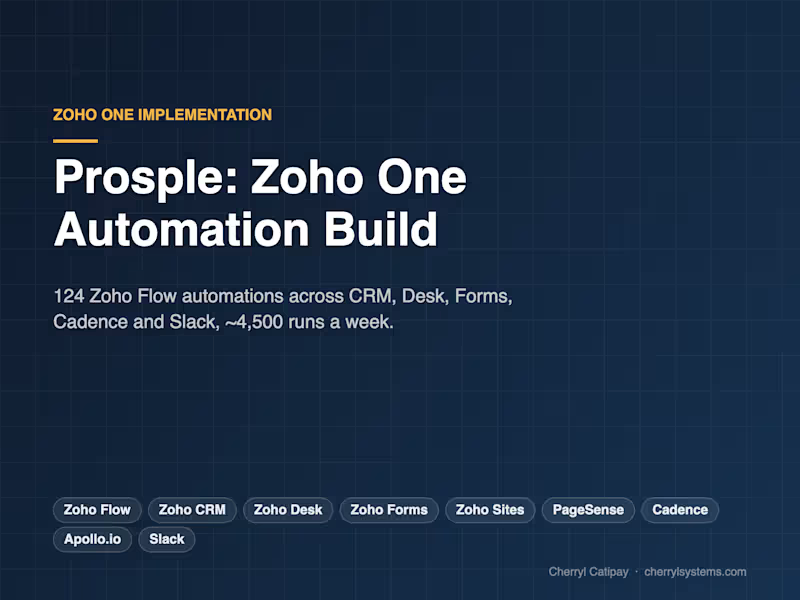
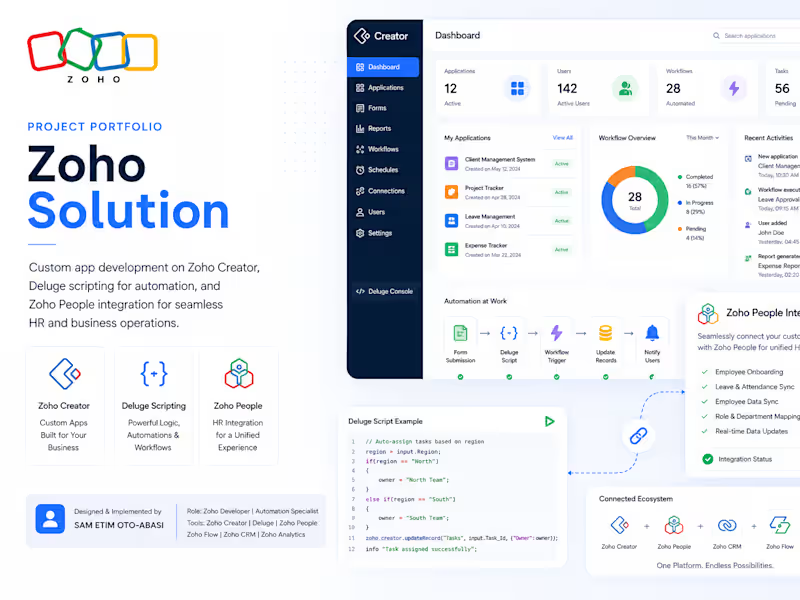
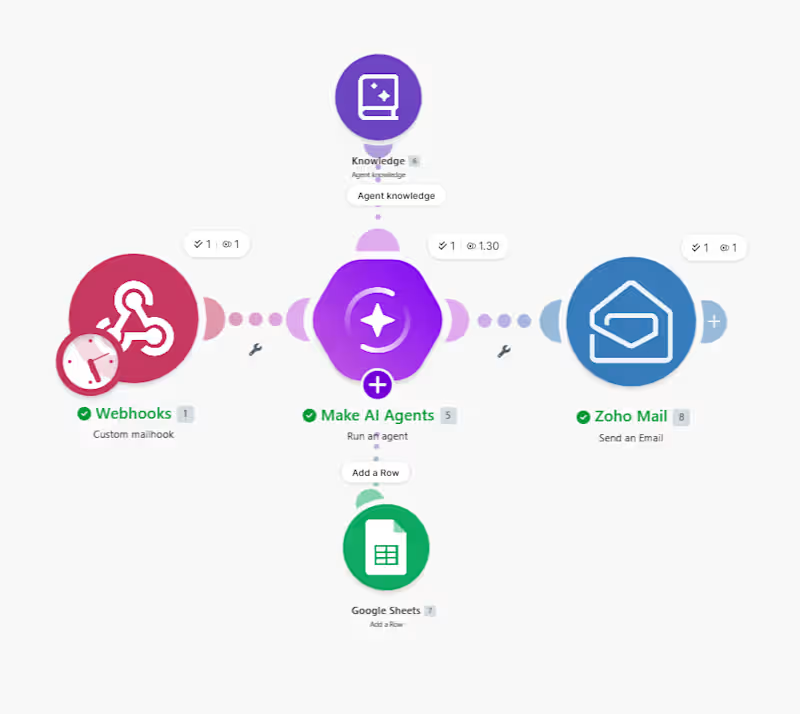
#Accounting #UAEBusiness #Profit #CashFlow #Bookkeeping #Founders #DubaiBusiness #SmallBusiness Zoho One implementation for Prosple, a graduate recruitment platform, as their Marketing Automation Specialist. I built and managed 124 Zoho Flow automations connecting Zoho CRM, Desk, Forms, Bookings and Campaigns with Apollo.io (http://Apollo.io), Calendly, Google Sheets, Jira and Slack, running about 4,500 executions a week with almost no failures.
I also set up Zoho CRM workflow rules that route self-serve leads by source and country, assign owners, add tags and send email notifications; built lead capture forms with conditional logic and UTM tracking; configured Zoho Desk ticketing with auto-assignment and escalation; ran A/B tests and funnel tracking in PageSense; and built multi-channel sales cadences in Zoho Cadence for automated outreach. ZOHO SYSTEM WORKFLOW
The system was designed to track worked hours, banked time, sick leave, and holidays while supporting manual approval workflows and accounting exports. All employee-facing interactions were handled through Zoho People, with Zoho Creator used as the processing and control layer.
The interface was built entirely in French and structured to work without requiring Zoho Creator licenses for employees.
Key Features
Automated Hour Collection
Worked hours are pulled directly from Zoho Projects task timers and structured by employee, date, project, hour type, and duration.
Central Processing in Zoho Creator
Zoho Creator acts as the control layer for data storage, validation, approvals, and reporting.
Weekly Timesheet Approval
Admins review and approve weekly timesheets through a dedicated interface before data is finalized.
Accounting Export
A single action generates one consolidated Excel or PDF file containing approved hours for all employees, ready for accounting submission.
Employee Visibility via Zoho People
Employees can view their accumulated banked time, sick leave, holiday balances, and usage history directly in Zoho People.
Time-Off Requests Without Creator Licenses
Employees request banked or sick leave through a simple form in Zoho People, with approval workflows handled in the background.
French-Only Interface
All interfaces, labels, and workflows were implemented entirely in French to match client requirements
Mission
The mission of this project was to centralize time tracking, accumulated hours, and leave management into a single, reliable system without disrupting existing workflows.
The client needed accurate tracking of worked hours from Zoho Projects, manual validation before accounting submission, and clear visibility for employees over their banked time, sick leave, and holidays. At the same time, the solution had to avoid additional licensing costs and remain simple for employees to use.
This project aimed to bridge operational tracking, HR visibility, and accounting requirements while keeping access controlled, approvals structured, and data consistent across systems.
Impact
The system replaced manual tracking, fragmented approvals, and repetitive reporting with a single structured workflow.
Administrative effort was reduced, approval accuracy improved, and accounting received consistent, consolidated reports. Employees gained clear visibility into their balances without needing access to additional tools.
The result was a scalable, license-efficient solution that aligned HR, operations, and accounting without increasing complexity.