Projects using Google ScholarProjects using Google Scholar𝐖𝐡𝐞𝐧 𝐌𝐚𝐥𝐚𝐫𝐢𝐚 𝐀𝐟𝐟𝐞𝐜𝐭𝐬 𝐭𝐡𝐞 𝐁𝐫𝐚𝐢𝐧: 𝐖𝐡𝐲 𝐂𝐞𝐫𝐞𝐛𝐫𝐚𝐥 𝐌𝐚𝐥𝐚𝐫𝐢𝐚 𝐂𝐚𝐧 𝐋𝐨𝐨𝐤 𝐋𝐢𝐤𝐞 ‘𝐌𝐚𝐝𝐧𝐞𝐬𝐬’
A public health article explaining how cerebral malaria attacks the brain and why it can turn life-threatening. I broke down the science behind the condition, from how it develops to symptoms like confusion, seizures, and loss of consciousness, and explained it in plain language that a general reader could follow without losing what makes it credible.
This piece shows my ability to translate complex medical research into clear language without losing the science.
Link to the article. (https://drive.google.com/file/d/1JpqugZqCngM6AIbQH9Oh-YhrupnthcbZ/view?usp=drivesdk)
𝐖𝐡𝐞𝐧 𝐌𝐚𝐥𝐚𝐫𝐢𝐚 𝐈𝐬 𝐌𝐨𝐫𝐞 𝐓𝐡𝐚𝐧 𝐚 𝐅𝐞𝐯𝐞𝐫
Is it malaria, typhoid, or something else? Confusion can be a medical emergency.
When malaria is severe, it can go beyond fever and chills and affect the brain. This can cause dramatic changes in behaviour, consciousness, and thinking that may look frightening or confusing to an untrained observer, and could be mistaken for madness.
This condition is called cerebral malaria.
𝐖𝐡𝐚𝐭 𝐈𝐬 𝐂𝐞𝐫𝐞𝐛𝐫𝐚𝐥 𝐌𝐚𝐥𝐚𝐫𝐢𝐚?
Cerebral malaria is a very serious form of malaria that affects the brain. It is caused by 𝑃𝑙𝑎𝑠𝑚𝑜𝑑𝑖𝑢𝑚 𝑓𝑎𝑙𝑐𝑖𝑝𝑎𝑟𝑢𝑚, the deadliest malaria parasite. This parasite is responsible for most severe malaria and malaria deaths.
And yes, it is caused by the same parasite that causes malaria.
But this isn't just a case of someone having a high fever and feeling weak.
Cerebral malaria can cause a person to become confused, act very differently from normal, have seizures, or even lose consciousness and fall into a coma.
The WHO defines cerebral malaria as an unarousable coma that persists even after other temporary causes, such as low blood sugar or the temporary effects of a recent seizure, have been corrected.
In simpler terms, the person's brain has been affected so severely that they become completely unresponsive. They cannot be woken up by normal stimulation, such as loud sounds or shaking.
That is what makes cerebral malaria so dangerous.
𝐖𝐡𝐲 𝐂𝐚𝐧 𝐈𝐭 𝐂𝐡𝐚𝐧𝐠𝐞 𝐇𝐨𝐰 𝐒𝐨𝐦𝐞𝐨𝐧𝐞 𝐁𝐞𝐡𝐚𝐯𝐞𝐬?
So, how can malaria make someone confused, behave strangely, or even become unconscious?
Remember, 𝑃𝑙𝑎𝑠𝑚𝑜𝑑𝑖𝑢𝑚 𝑓𝑎𝑙𝑐𝑖𝑝𝑎𝑟𝑢𝑚 is a parasite that lives in red blood cells. The parasites do not go directly into the brain tissue. Instead, as the infection becomes severe, these infected cells stick to the walls of the tiny blood vessels in the brain and get trapped there.
This blocks blood flow and reduces oxygen to the brain. It causes inflammation, swelling, and changes that can damage brain function.
Chemicals in the brain get out of balance.
All this causes the brain to function poorly. And when the brain is not functioning well, the effects can be dramatic.
𝐀 𝐩𝐞𝐫𝐬𝐨𝐧 𝐦𝐚𝐲:
• Become confused or disoriented.
• See or hear things that are not there (hallucinations).
• Act aggressively, violently, or very strangely.
• Have seizures and then be very drowsy or agitated.
• Talk in a way that does not make sense.
So, what may look like a sudden change in someone's personality or behaviour may actually be a sign that their brain is in serious trouble.
𝐖𝐡𝐲 𝐈𝐭 𝐂𝐚𝐧 𝐁𝐞 𝐌𝐢𝐬𝐭𝐚𝐤𝐞𝐧 𝐟𝐨𝐫 ‘𝐌𝐚𝐝𝐧𝐞𝐬𝐬’
In many communities, especially where mental health literacy is limited, these sudden changes can look like the person is having a mental health crisis. Others may think it is typhoid or even that the person is possessed by spirits.
But cerebral malaria can cause some of these same outward signs.
The important difference is that these changes can be caused by a severe infection affecting the brain. They do not automatically mean that the person has a mental illness.
This is why it is dangerous to make assumptions based only on what you can see.
Many people may not recognise that these symptoms require urgent medical attention. If the behaviour is mistaken for a mental health problem, typhoid, or something supernatural, the person may not receive the medical treatment they urgently need.
Don't dismiss the behaviour as ‘madness’. It could be the brain signalling that something is seriously wrong.
𝐖𝐡𝐚𝐭 𝐒𝐡𝐨𝐮𝐥𝐝 𝐘𝐨𝐮 𝐃𝐨?
If a person with suspected or confirmed malaria becomes confused, unusually sleepy, very weak, unconscious, has seizures, or has trouble breathing, treat it as an emergency.
𝐖𝐡𝐚𝐭 𝐭𝐨 𝐝𝐨:
• Don't wait to see if they get better.
• Take them to the nearest hospital immediately for urgent medical assessment and treatment.
• Don't assume it is only a mental health problem, typhoid, or something supernatural.
• Don't try to manage severe symptoms at home.
• Don't restrain the person unless it is necessary to prevent immediate injury. A sudden change in behaviour should not be assumed to be purely psychiatric without urgent medical assessment.
• If a seizure happens, move nearby objects away to prevent injury. Do not put anything in the person's mouth, and do not force food or drink.
Most importantly, get medical help quickly.
𝐖𝐡𝐲 𝐅𝐚𝐬𝐭 𝐓𝐫𝐞𝐚𝐭𝐦𝐞𝐧𝐭 𝐌𝐚𝐭𝐭𝐞𝐫𝐬
Cerebral malaria is an important public health problem because it can be life-threatening and can leave lasting effects, especially in children.
Surviving is not always the end of the story.
Even when a person survives cerebral malaria, some may have long-term problems, such as:
• Trouble concentrating, learning, or remembering.
• Behavioural changes, mood problems, or lasting mental health effects.
• Difficulty at school or at work.
Children who survive cerebral malaria may be particularly affected, and some may need follow-up care for learning and behaviour problems.
This is why recognising the warning signs early and getting medical care quickly can save lives and help reduce the risk of long-term brain damage.
𝐓𝐡𝐞 𝐓𝐚𝐤𝐞𝐚𝐰𝐚𝐲
Malaria is more than a fever. When it becomes severe, it can be life-threatening.
And while children are particularly affected by severe malaria, adults can also become seriously ill, including travellers visiting malaria-endemic regions and pregnant women.
When we recognise sudden changes in behaviour, we shouldn't delay urgent medical care. Cerebral malaria needs immediate antimalarial treatment and supportive care in the hospital.
This is also why continued investment in malaria prevention, including treated mosquito nets, indoor spraying, and malaria vaccines, matters, alongside early diagnosis and rapid treatment.
Sometimes, what looks like a change in behaviour is actually a medical emergency.
𝐒𝐨𝐮𝐫𝐜𝐞𝐬
[World Health Organization (WHO) – Malaria] (https://www.who.int/news-room/fact-sheets/detail/malaria)
[WHO Guidelines for Malaria] (https://www.who.int/publications/i/item/guidelines-for-malaria)
[Neuropsychiatric Profile in Malaria: An Overview] (https://pmc.ncbi.nlm.nih.gov/articles/PMC5020222/)
[Cerebral Malaria and Neuronal Implications of Plasmodium falciparum Infection: From Mechanisms to Advanced Models](https://pmc.ncbi.nlm.nih.gov/articles/PMC9798991/)
[Human cerebral malaria and the blood-brain barrier](https://pubmed.ncbi.nlm.nih.gov/16616145/)
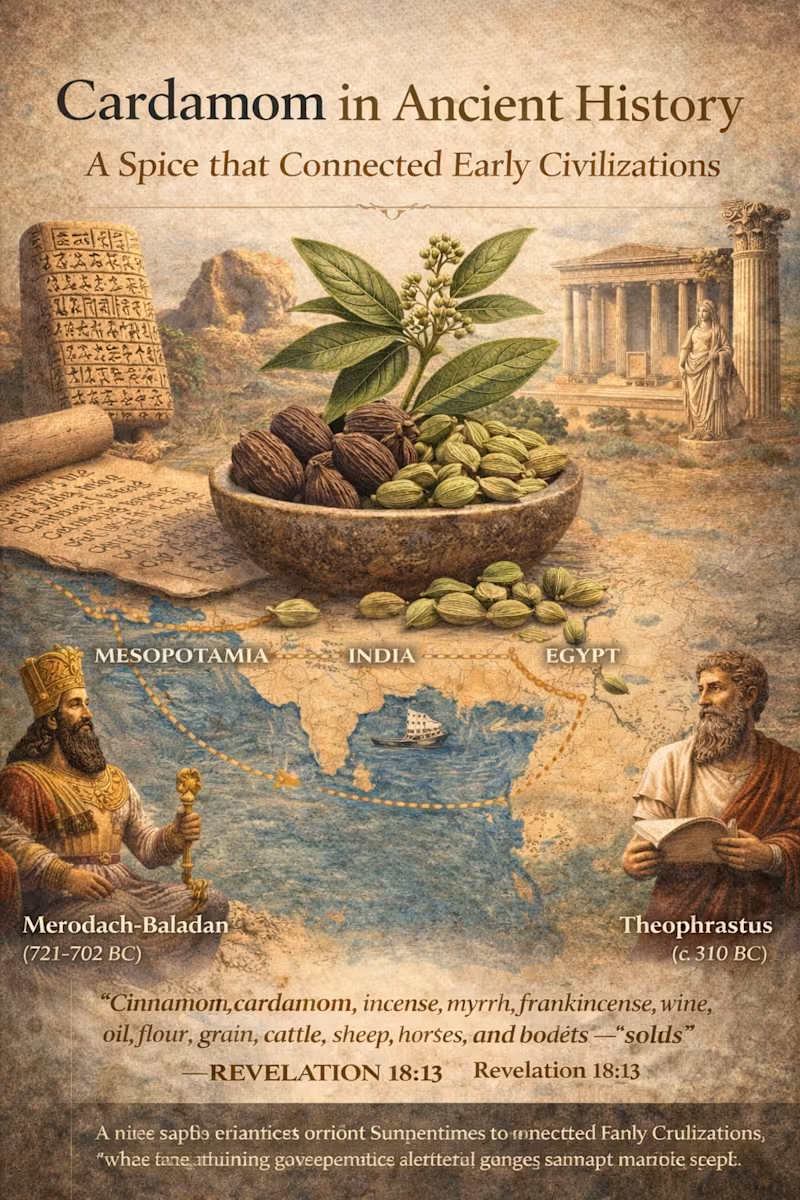
Cardamom’s story spans thousands of years—from the gardens of Mesopotamian rulers to the spice routes linking India, Egypt, and the Mediterranean.
Ancient texts, archaeological evidence, and botanical research reveal how this small aromatic pod influenced trade, medicine, and cuisine across civilizations.
Transforming historical research into engaging narratives is one of the most rewarding aspects of writing about food, culture, and science.
If you are working on a book, article, or research project in history, food culture, herbs, or natural products, I help turn complex material into clear, compelling writing.
#Ghostwriting #BookWriting #HistoryWriting #FoodHistory