
Business Systems Analyst with 5+ years of experience



Developer with editing and Sales experience



B2B SaaS Product Designer for AI & Complex Workflows
- 19
- Followers
B2B SaaS Product Designer for AI & Complex Workflows
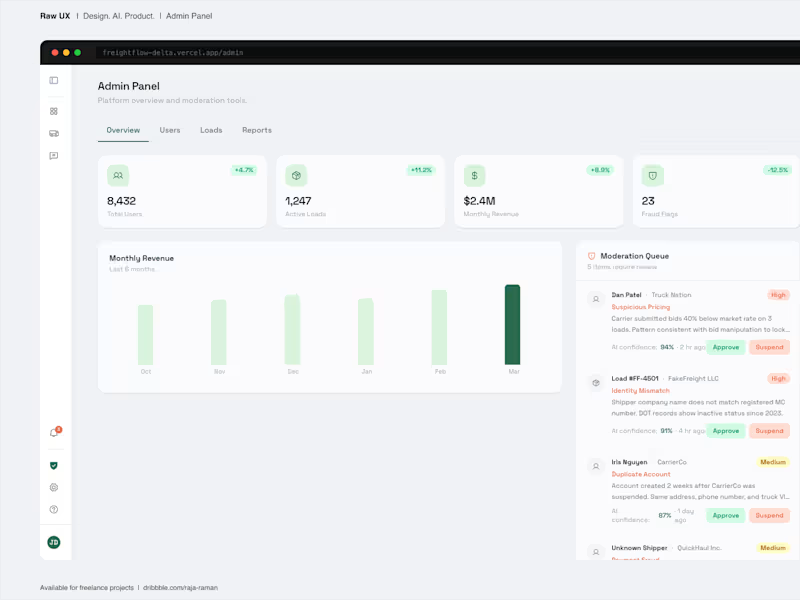
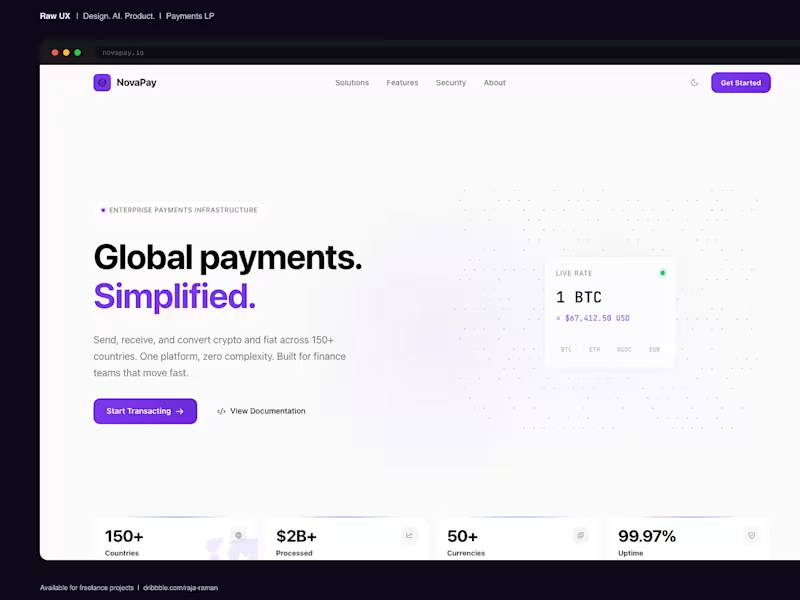
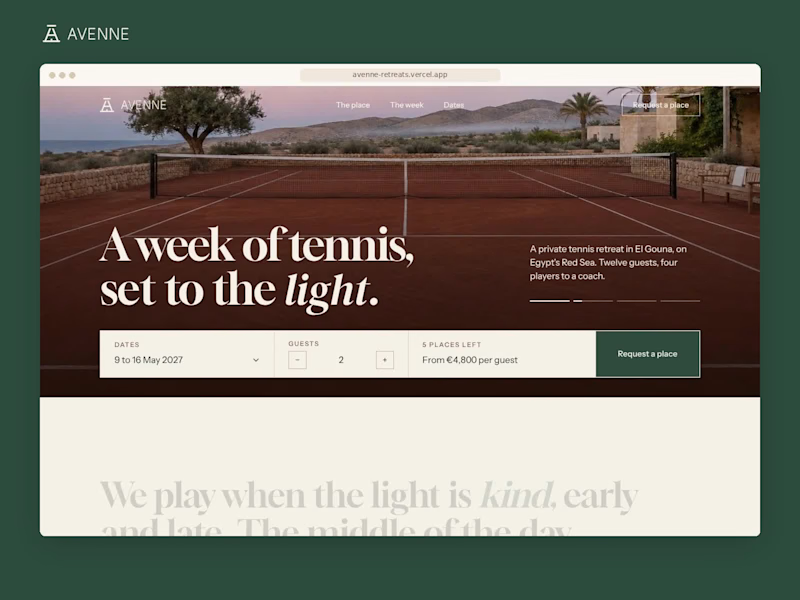


Cross-Platform Experiences


Video & Content Producer | Health & Science
- 5.0
- Rating
- 5
- Followers
Video & Content Producer | Health & Science


AI Security & DevSecOps Engineer | Cloud Automation
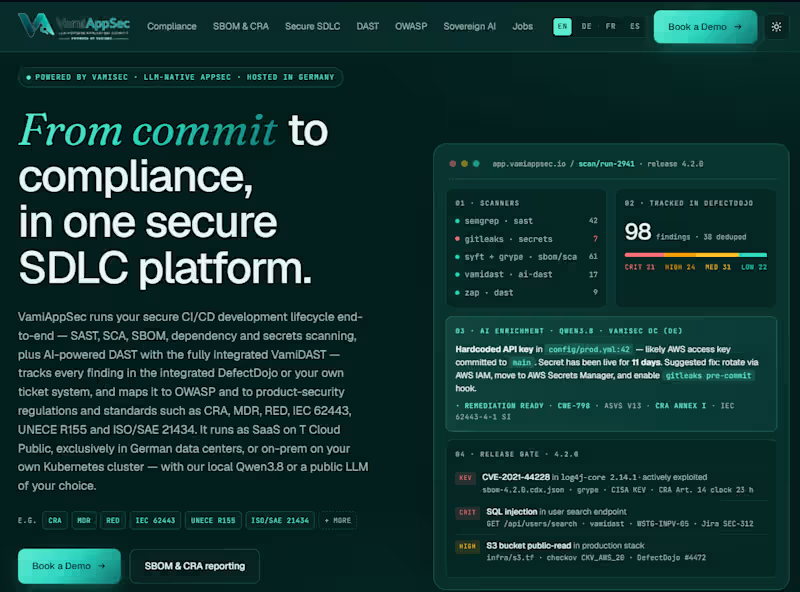
VamiAppSec | AI-Powered Application Security Platform (https://vamiappsec.com/#top)
VamiAppSec is an AI-assisted application security platform developed during my professional experience at VamiSec GmbH.
I contributed to integrating automated security analysis into development workflows, combining multiple security scanning technologies with AI-assisted vulnerability analysis.
My contributions included:
• Integrating SAST, SCA, and secrets detection tools.
• Automating security scanning through CI/CD pipelines.
• Implementing Infrastructure-as-Code security checks.
• Supporting SBOM generation and dependency analysis.
• Developing security findings aggregation and reporting workflows.
• Integrating AI-assisted vulnerability triage and remediation guidance.
Technologies: Python, GitHub Actions, Semgrep, Gitleaks, Checkov, Syft, Grype, LLMs, DevSecOps.
This experience strengthened my expertise in application security engineering, security automation, and AI-assisted DevSecOps.
0
45
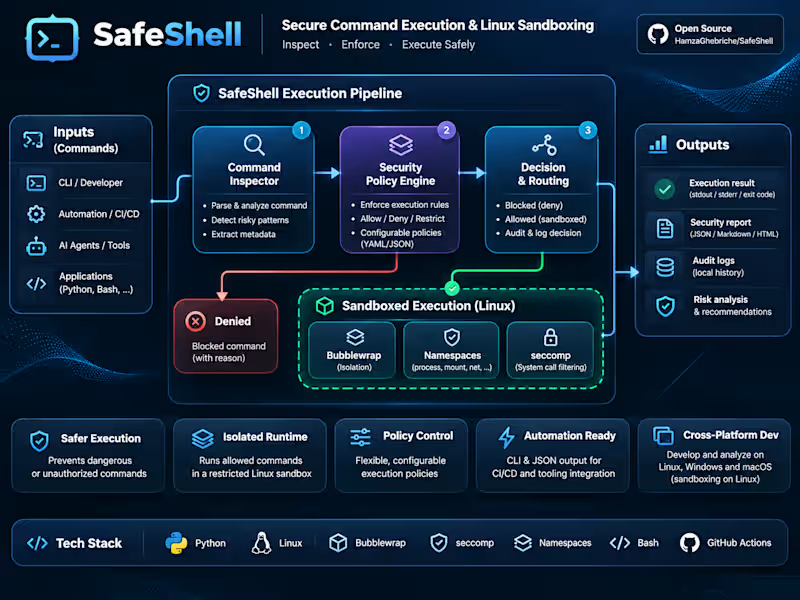
SafeShell | Secure Command Execution & Linux Sandboxing (https://github.com/HamzaGhebriche/SafeShell)
SafeShell is an open-source Python security tool I developed to inspect potentially dangerous shell commands, enforce execution policies, and run permitted commands within a restricted Linux sandbox.
The project focuses on improving command execution safety in development environments, automation workflows, and security-sensitive applications.
🔐 Key Features
1. Command Security Analysis
Inspects shell commands before execution.
Identifies potentially dangerous command patterns.
Generates structured findings and risk information.
Supports deterministic command analysis without executing the submitted command.
2. Secure Linux Sandboxing
Uses Bubblewrap and Linux security controls to restrict command execution.
Implements Linux namespaces and seccomp-based restrictions.
Reduces access to host resources through controlled filesystem and runtime configurations.
Refuses protected execution when required security mechanisms are unavailable.
3. Security Policies & Access Control
Enforces configurable offline execution policies.
Supports explicit authorization for permitted operations.
Prevents approvals from overriding hard security restrictions.
Provides structured execution decisions and status information.
4. Security Automation & Auditing
Offers a Python command-line interface.
Supports JSON output for integration with automation workflows.
Records local execution metadata for review.
Provides timeout and output-size controls.
5. Cross-Platform Development
Supports command inspection and policy management on Linux, Windows, and macOS.
Provides protected execution on supported Linux environments.
Includes automated validation through CI pipelines.
Technologies: Python, Linux, Bubblewrap, seccomp, Linux Namespaces, Bash, GitHub Actions, JSON, Security Automation.
My Role: Independent Developer & Security Engineer.
Project Type: Open-source security tool.
Current Status: Experimental alpha release (v0.1.0-alpha).
SafeShell has undergone automated testing but has not received an independent security audit. It is not intended to serve as a production-grade security boundary.
0
27
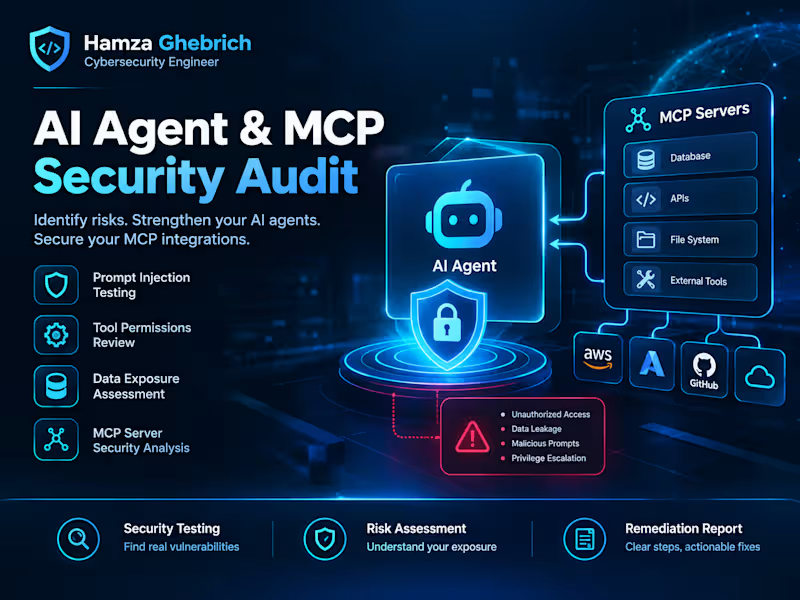
MCP Security Auditor | AI Agent & MCP Server Security (https://github.com/HamzaGhebriche/mcp-security-auditor)
MCP Security Auditor is an open-source security analysis tool I developed to help engineers identify security risks in Model Context Protocol (MCP) servers and AI-agent integrations.
As AI agents increasingly connect to external tools, APIs, and sensitive data, securing these integrations becomes essential.
I designed and developed MCP Security Auditor to automate security configuration reviews, identify potentially dangerous implementation patterns, and generate actionable security reports.
Key Features:
🔐 MCP Security Analysis
Detects risky authentication and authorization configurations.
Identifies potentially unsafe tool permissions and execution patterns.
Reviews filesystem access and security boundaries.
🤖 AI Agent Security
Analyzes security configurations used in MCP integrations.
Identifies potentially insecure connections between AI agents and external tools.
Supports security reviews of AI-powered applications.
⚙️ Automated Security Auditing
Static analysis of Python code and configuration files.
Automated security findings with severity classifications.
Security reports in JSON, HTML, Markdown, and SARIF formats.
Configurable security policies and risk scoring.
🚀 DevSecOps Integration
Supports automated security checks in development workflows.
Helps developers identify security issues earlier.
Provides actionable findings to support remediation.
Technologies: Python, MCP, Static Application Security Testing, Security Automation, GitHub Actions, JSON, YAML.
Business Value: Helps development teams review MCP integrations, identify risky configurations, and introduce repeatable security checks into their development processes.
My Role: Independent Developer & Security Engineer.
Project Type: Open-source cybersecurity tool.
0
35
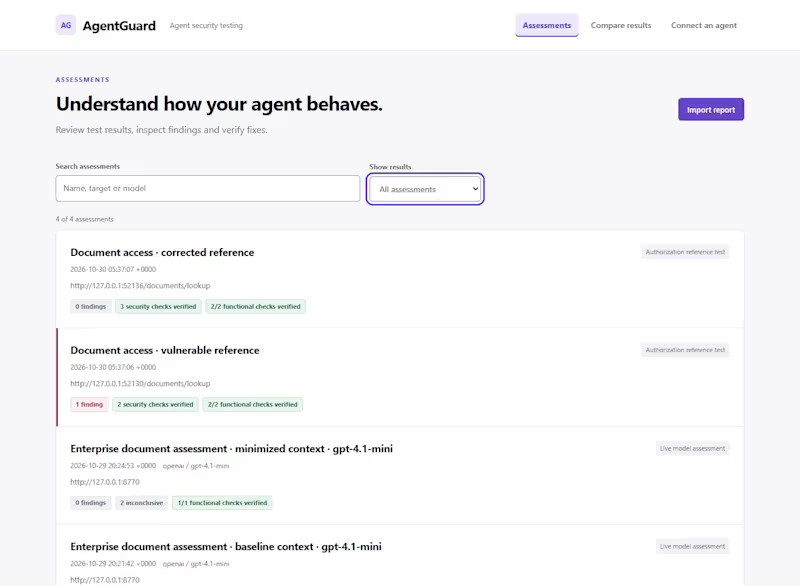
AI Agent Security Testing & Assessment | AgentGuard (https://github.com/HamzaGhebriche/AgentGuard)
AgentGuard is an open-source AI agent security testing tool designed to help developers assess the security of AI-powered applications and agentic systems.
I developed AgentGuard to support structured security assessments of authorized AI-agent endpoints, identify security weaknesses, and verify whether implemented fixes address the observed issues.
Key capabilities include:
• AI-agent endpoint security assessments.
• Testing of authorization and access-control behavior.
• Security findings with supporting evidence.
• Comparison of vulnerable and corrected application behavior.
• Local dashboard for reviewing and exporting security reports.
• Automated security testing using Python.
The project helps development teams understand security risks in their AI applications and validate specific security improvements.
Technologies: Python, AI Agent Security, LLM Security, API Security, Security Automation.
Project: AgentGuard — Open Source Security Tool.
0
54

Senior DevOps & DevSecOps Engineer · Cloud Security
Senior DevOps & DevSecOps Engineer · Cloud Security
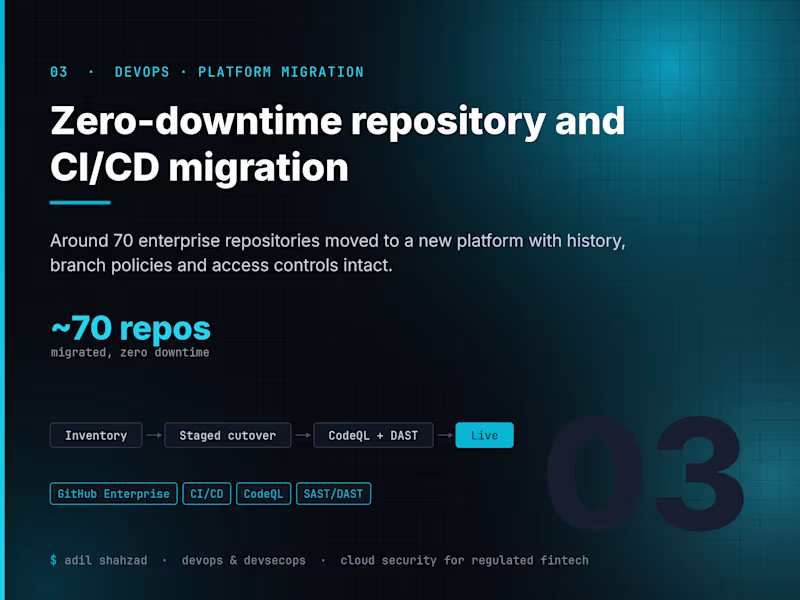
Zero-downtime repository and pipeline migration
Around 70 enterprise repositories moved to a new platform with history, policies and access intact.
Who it was for: A large international organisation running enterprise development at scale.
The problem. Source control and CI/CD had to move platforms without stopping delivery. Losing commit history, branch protection or access mappings would have been worse than not moving at all.
What I did. Inventoried repositories and pipelines, then ran a staged cutover that preserved history, branch policies and access controls. Rebuilt pipelines on the target platform and wired in code scanning and quality gates on arrival, so the migration also raised the security baseline rather than just relocating it.
The result. Roughly 70 repositories migrated with no delivery downtime, and automated vulnerability detection in place from day one on the new platform.
0
78


Fraud and abuse detection wired into a SIEM
Card-testing and brute-force detection routed to on-call with a runbook attached to every alert.
Who it was for: A payments platform exposed to automated card-testing traffic.
The problem. Automated enumeration against payment endpoints is both a fraud loss and an availability threat, and it doesn't announce itself. Without detection it looks like ordinary traffic until the chargebacks arrive.
What I did. Built the log pipeline into the SIEM, then wrote detections for card-testing patterns, brute force and anomalous transaction behaviour. Tuned edge rate-limiting and bot controls to cut volume at the perimeter. Every alert routes to on-call with a runbook attached, so whoever is paged at 3am has the next step in front of them.
The result. Repeat attempts are caught as they start rather than reconstructed afterward, and response is a documented procedure instead of improvisation.
0
62

FinOps automation across seven environments
Automated scheduling and rightsizing that took roughly $280k a year out of the cloud bill.
Who it was for: A large regional bank running seven cloud environments.
The problem. Seven environments, most of them idle outside working hours, and no visibility into which team was spending what. Cost conversations were happening after the invoice rather than before.
What I did. Established a cost baseline per environment, then automated resource scheduling so non-production stopped paying for nights and weekends. Rightsized the workloads that were provisioned for peaks that never came. Built daily and weekly cost reporting so stakeholders could see the trend without asking for it.
The result. Around $280k of annual run-rate removed, with ongoing reporting that keeps the saving from creeping back.
0
66

UI/UX Designer crafting intuitive, modern digital experience
New to Contra
UI/UX Designer crafting intuitive, modern digital experience
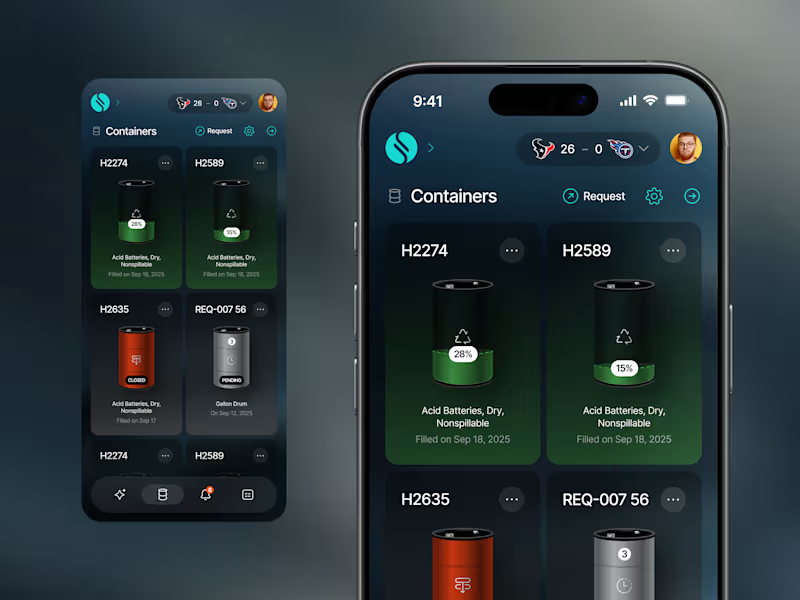
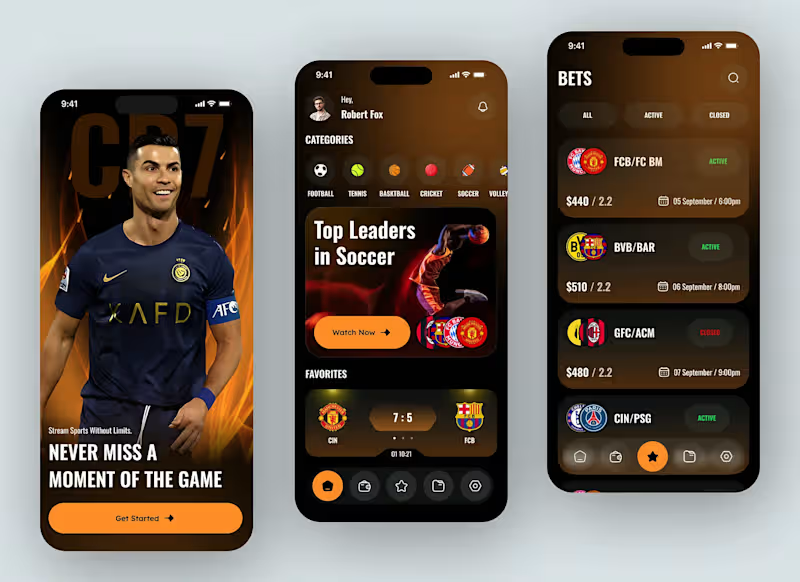
We design MVP apps that help startups move fast, validate ideas, and launch with confidence. Our focus is on building only what matters—clear user flows, essential features, and a product experience that’s easy to understand and test.
0
63
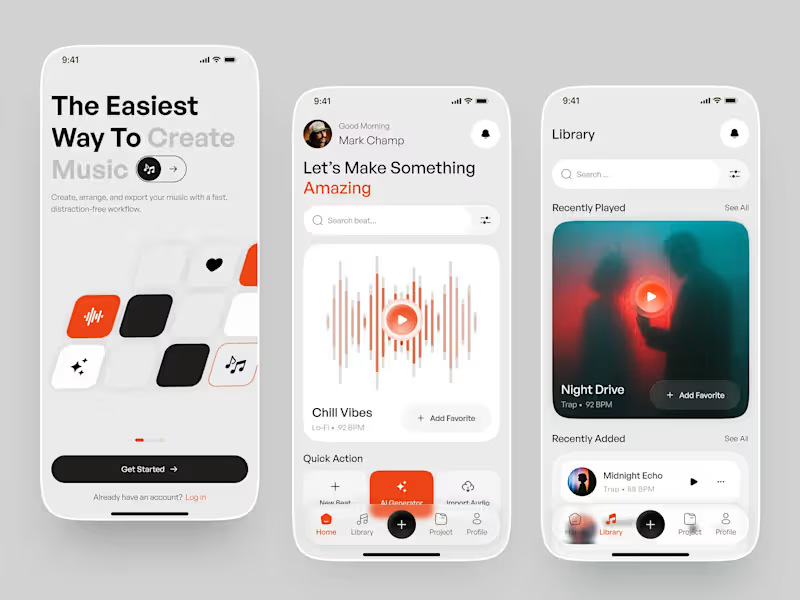
Music creation experience designed to make producing music feel simple, fast, and distraction-free.
The concept explores a smooth workflow for creating beats, generating music with AI, discovering sounds, and managing projects—all within a minimal and intuitive interface.
The visual direction combines soft neutrals, bold orange accents, rounded cards, and spacious layouts to create a friendly yet premium music-production experience.
Designed with a focus on simplicity, discoverability, and effortless music creation.
0
73
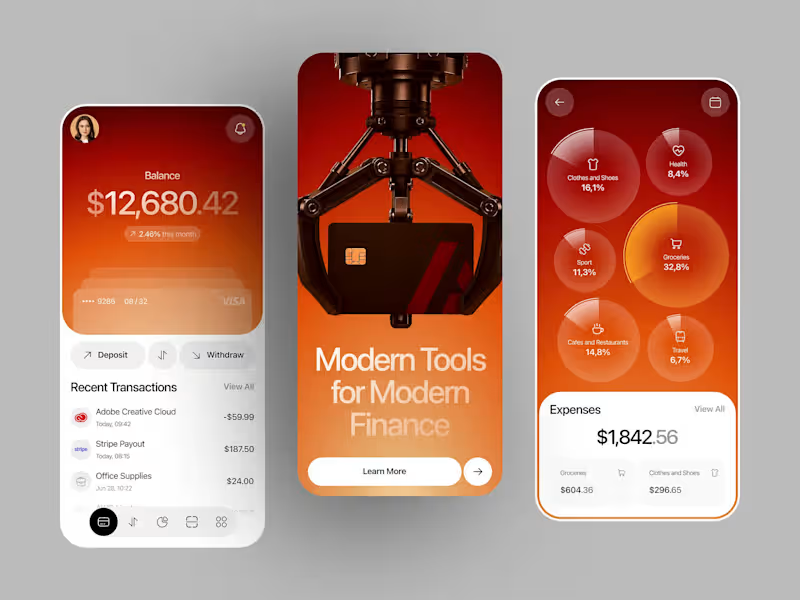
A modern personal finance mobile app designed to give users a clear view of their money in one place. The experience combines account balances, cards, recent transactions, deposits and withdrawals with visual expense tracking across categories like groceries, travel, health, and shopping.
Bold gradients and data-driven visuals bring a distinctive identity to an otherwise practical everyday banking experience.
0
64