Freelance Cybersecurity SpecialistsFreelance Cybersecurity Specialists
AI SaaS Builder & Web3 Security Architect | Ship Fast
$1k+
Earned
2x
Hired
5.0
Rating
479
Followers
AI SaaS Builder & Web3 Security Architect | Ship Fast
Cyber expert specialising in Azure Security Services.

$10k+
Earned
4x
Hired
5.0
Rating
22
Followers
Cyber expert specialising in Azure Security Services.

Microsoft 365 & Azure Solutions Architect
$5k+
Earned
2x
Hired
5.0
Rating
14
Followers
Microsoft 365 & Azure Solutions Architect
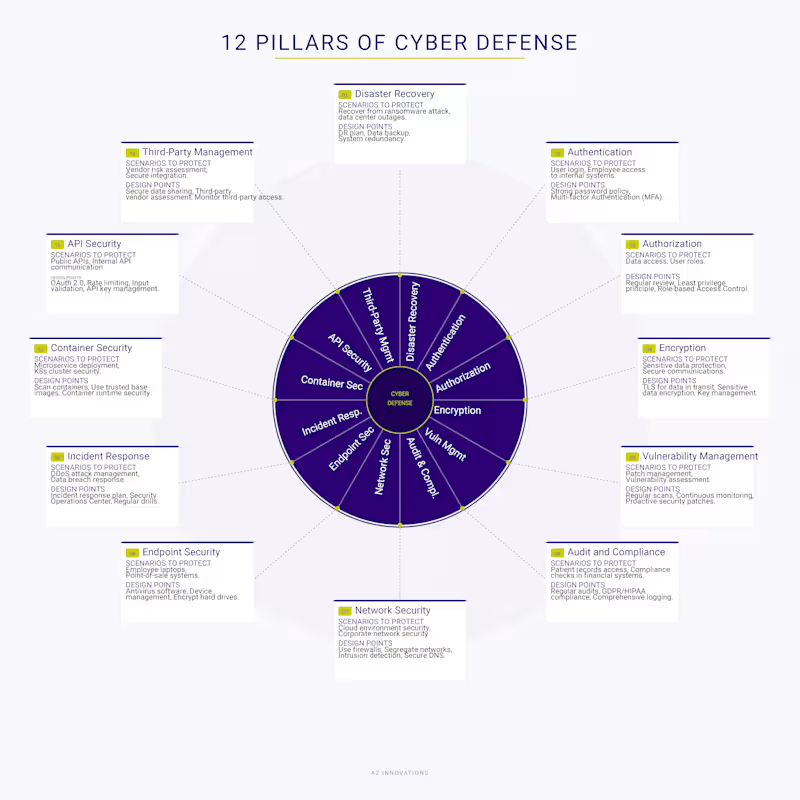
Cover image for Have you wondered how hacekrs
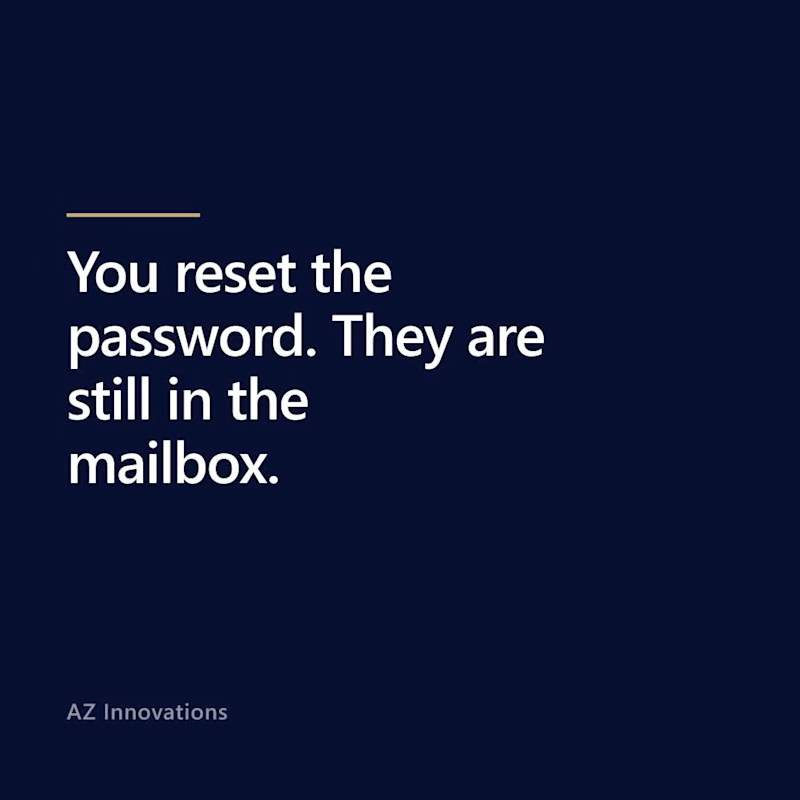
Have you wondered how hacekrs bypass MFA? Nowadays it is getting easier. There is a phishing kit called Mirage2FA that has been working against Microsoft 365 since late 2024. Here is how it goes. The user lands on a fake login page. They type their password. They approve the MFA prompt on their phone. Everything they enter is passed straight through to Microsoft in real time, so the sign-in genuinely succeeds and looks completely normal to them. Microsoft issues the session tokens, and the kit keeps a copy. With those cookies someone can read the mailbox, open SharePoint and OneDrive, and reach anything sitting behind SSO. They never see a second prompt, because the authentication already happened. ANY.RUN (http://ANY.RUN) put numbers on it. 9,426 accounts targeted across 3,518 domains, roughly 4,532 showing signs of compromise, most of them in the US. A third of the successful logins happened on phones, where you can barely see the URL you are looking at. The advice going around is to switch on Continuous Access Evaluation. I would switch it on too. Just read the documentation first, because it does something slightly different to what people assume. CAE sessions run tokens for up to 28 hours. The default is one hour. What you get in exchange is revocation when something happens, and Microsoft is specific about what counts: the account is disabled or deleted, the password is changed or reset, MFA gets turned on, an admin revokes refresh tokens, or ID Protection flags the user as high risk. Allow up to 15 minutes for that to propagate. IP location is the only one that applies straight away. Three things worth knowing before you lean on it. It covers Exchange Online, SharePoint Online and Teams. Guest accounts are not supported, which is where a lot of contractor access lives. And it only reads IP-based named locations, so a country-based policy buys you nothing here. If I were fixing this in a tenant tomorrow, in this order: Phishing-resistant sign-in first. A FIDO2 key checks the domain it is talking to, so it will not hand anything over to a proxy wearing Microsoft's face. CAE on, so revocation actually reaches the services. Then a runbook where you revoke sessions before you reset the password. Reset first and you have changed the lock while someone is still inside holding a key that works. If session cookies walked out of your tenant this morning, what would notice, and how long would it take? Source: ANY.RUN (http://ANY.RUN) threat research, 19 August 2026. CAE behaviour from Microsoft Learn.
1
1
66
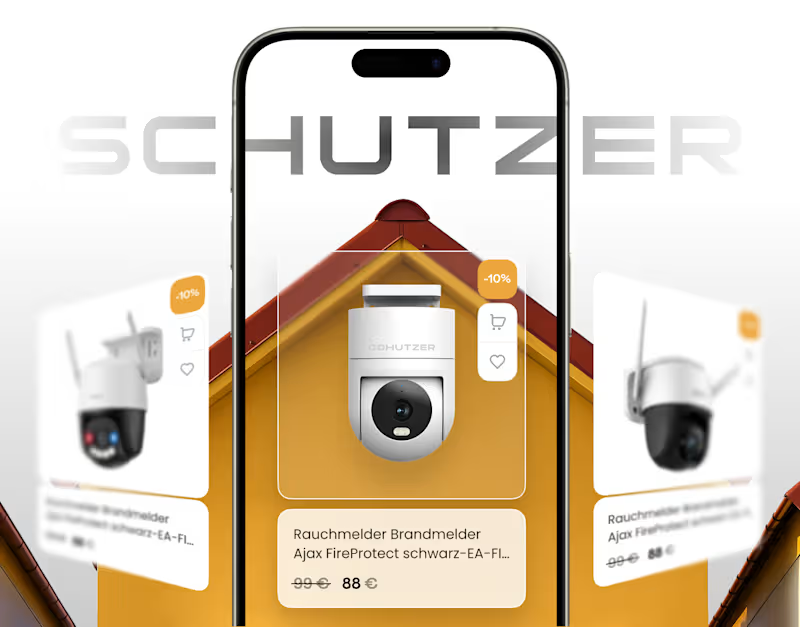
HMI Interface designer. UX/UI for embedded screens & devices
$10k+
Earned
2x
Hired
4.4
Rating
51
Followers
HMI Interface designer. UX/UI for embedded screens & devices
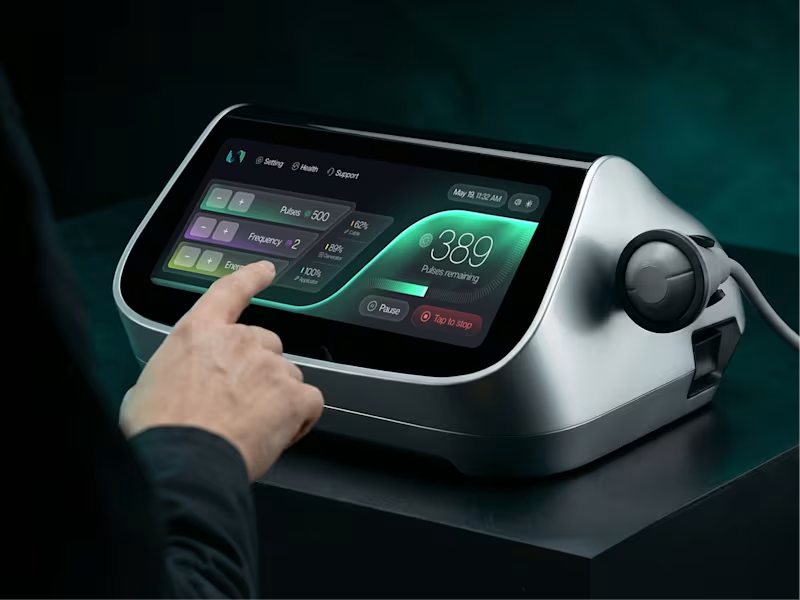
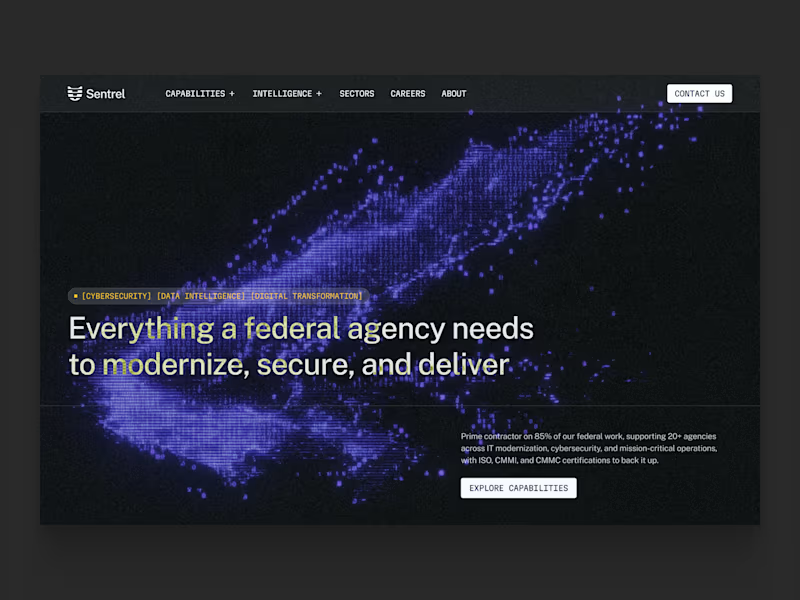
Design Partner for B2B SaaS, Cybersecurity & Defense
31
Followers
Design Partner for B2B SaaS, Cybersecurity & Defense
Cybersecurity GRC Consultant | Ex-Accenture
6
Followers
Cybersecurity GRC Consultant | Ex-Accenture
Cover image for Business Analyst for a Government
Business Analyst for a Government client on behalf of Accenture. Supported the delivery of a data warehouse programme aimed at centralising data, improving reporting capabilities and enabling data-driven decision-making across multiple departments. Worked closely with business and technical stakeholders to define data requirements and ensure alignment with strategic objectives. My duties included the following: ▪ Led requirement gathering activities to capture data, reporting, and analytics needs through stakeholder interviews, workshops, and process analysis. ▪ Facilitated workshops with business users, data engineers and architects to define data sources, data flows and reporting requirements. ▪ Produced detailed documentation including business requirements documents (BRDs), data requirements, data mapping specifications, and user stories. ▪ Collaborated with technical teams to translate business needs into data models, ensuring clarity on data definitions, transformations, and quality rules. ▪ Translated business needs into structured user stories and acceptance criteria, supporting agile delivery and ensuring traceability from requirements through to implementation. ▪ Managed RAID logs and supported programme governance by tracking risks, dependencies, and data-related issues. ▪ Supported UAT by defining acceptance criteria, validating outputs, and ensuring delivered data aligned with business expectations. Key outcomes included: Key outcomes included: ▪ Delivered clearly defined data and reporting requirements, enabling the successful design and implementation of the data warehouse. ▪ Improved data consistency and trust by standardising data definitions and aligning stakeholders on a single source of truth. ▪ Strengthened delivery alignment by linking use cases and user stories directly to technical outputs, reducing ambiguity and rework.
1
2
212
Cover image for Cybersecurity Project Manager for a
Cybersecurity Project Manager for a UK Government client on behalf of Accenture. My duties included the following: ▪ Led key projects aligned with the client's strategic goals, showcasing project leadership and strategic alignment capabilities. ▪ Successfully led and managed three major projects, ensuring they met important client milestones and demonstrated effective project coordination and management skills. ▪ Prepared critical documents necessary for the delivery and completion of program milestones, evidencing meticulous organizational skills and attention to detail. ▪ Actively steered discussions with project directors and stakeholders, showcasing skills in strategic communication and influence at senior management levels. ▪ Worked in close collaboration with senior stakeholders, ensuring alignment with strategic goals and successful achievement of key program milestones, reflecting a strong capacity for teamwork and stakeholder management. Key outcomes included: ▪ Successfully delivered three major cybersecurity projects simultaneously for a UK Government client, demonstrating the ability to manage complexity, competing priorities and high-stakes deadlines in a regulated environment. ▪ Ensured all projects met critical client milestones, directly contributing to programme progression and client confidence in delivery. ▪ Produced critical programme documentation that underpinned milestone delivery, ensuring governance, accountability and audit trails were maintained to the standard expected of a UK Government engagement.
2
362