Creative Direction Projects in Western CapeCreative Direction Projects in Western CapeSIRKEL
Closing the loop: brand strategy, creative direction and copywriting for a global investment venture
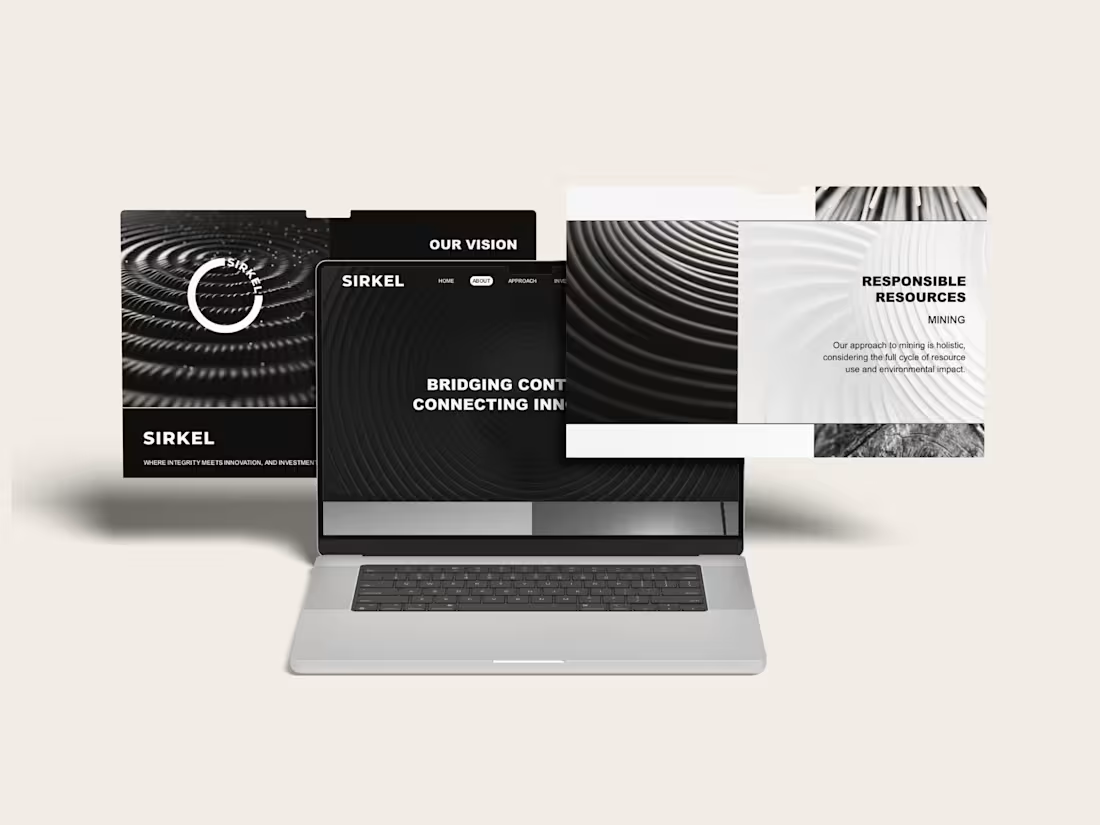
Brand strategy, naming, creative direction, visual identity, website and copywriting for Sirkel Ventures, an investment business working across renewable energy, mining and global markets.
THE STORY
Sirkel was built around a simple idea: seemingly separate opportunities are often part of something much bigger.
The business works across industries, markets and geographies, connecting capital, expertise and opportunity. I wanted the brand to make those connections visible.
That led naturally to the idea of the circle, and to Sirkel.
From there, I built the visual and verbal world around movement, connection and impact. Circles, ripples, loops and repeating forms became a way to show how one investment can create effects far beyond its starting point.
The language followed the same thinking. “Bridging continents. Connecting innovators.” “Embracing diversity and creating opportunity.” “Join our Sirkel of change and impact.”
The result was a bold, stripped-back identity that could move comfortably between mining, renewable energy and investment without belonging too obviously to any one of them.
WHAT IT TAUGHT ME
That a good brand idea can do more than hold a business together. It can help make sense of a business that operates across very different worlds.
And that sometimes the simplest shape gives you the biggest world to build from. Filmmaking with AI can get overwhelming fast. Not because the tools are difficult to use. But because the blank page is brutal.
You have a feeling.
A theme.
A visual world.
Maybe even a character.
But turning that into an actual story, scene by scene, is where a lot of creative filmmakers get stuck (myself included).
I’ve wanted to tell stories around the idea of escapism for a long time.
And the thing I keep running into is creative block around one simple question:
Where do I start?
Lately, I’ve been experimenting with a much simpler entry point:
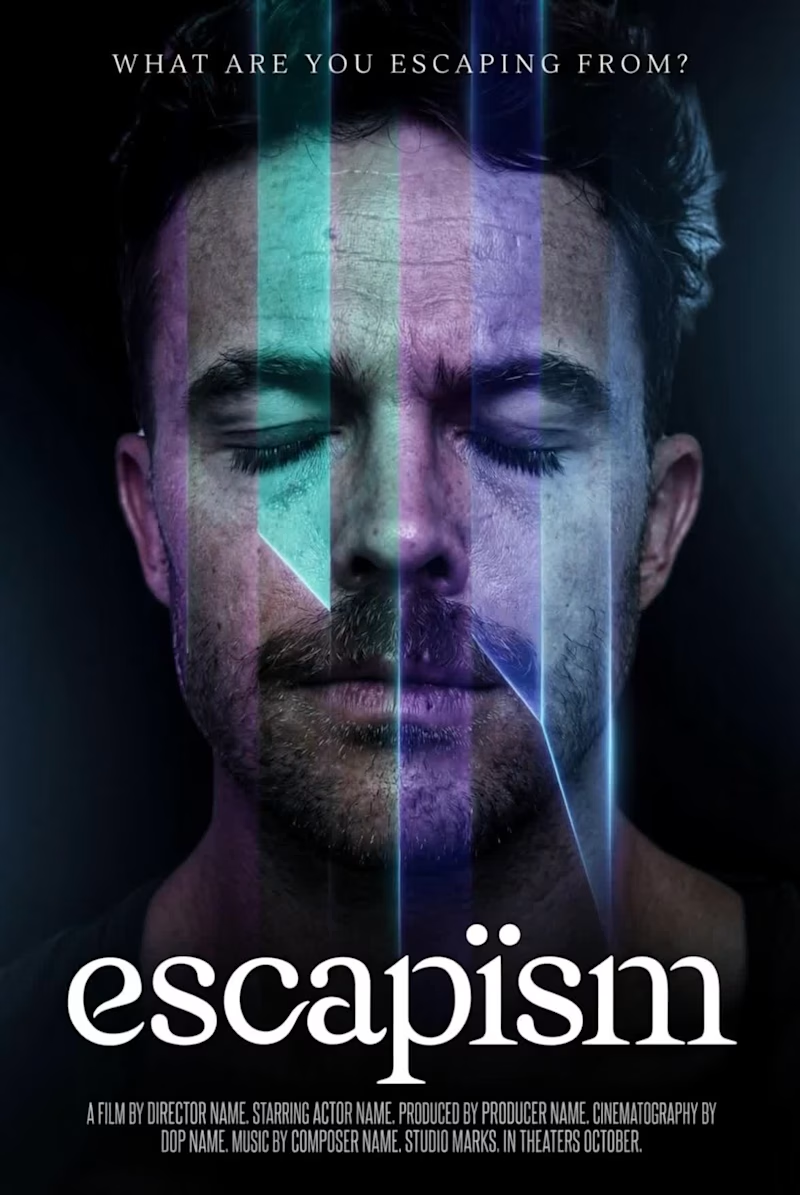
Start with the movie poster.
Not the whole film.
Not the full script.
Not the shot list.
Just the poster.
Because the moment you can visualize your film as if it’s already going into cinemas, something shifts.
The title becomes real.
The premise becomes clearer.
The mood sharpens.
The character starts to exist.
And suddenly the story feels less abstract and more buildable.
I used FLORA Techniques to templatize the process so it’s reusable, which means I’m not rebuilding the workflow from scratch every time. I can lock the core visual idea, drop in the character, movie title, refine the tone, and generate a poster that feels like the beginning of a real film world.
From there, I animated it in a very simple way:
Subtle lighting movement, a blink, just enough to make the image feel alive (using Kling AI 3.0 Pro).
And that’s the point.
Not to pretend the film is finished.
But to create a starting point that’s emotionally strong enough to pull me into making the rest of it.
I think this can be useful for a lot of filmmakers and gen AI creators.
Especially the ones who already have a story they feel…
…but don’t yet know how to begin shaping it.
A poster won’t write the film for you.
But it can give your vision a face.
A title.
A tone.
A reason to build the full story.
Sometimes that’s all you need to get the filmmaking process moving.
My submission for the FLORA x Contra Techniques challenge. You can give it a run yourself here: https://app.flora.ai/techniques/movie-promo-poster-animation
#FLORATechnique ARNO KEMP
The room behind the decision: brand strategy, creative direction and copywriting for an executive coach
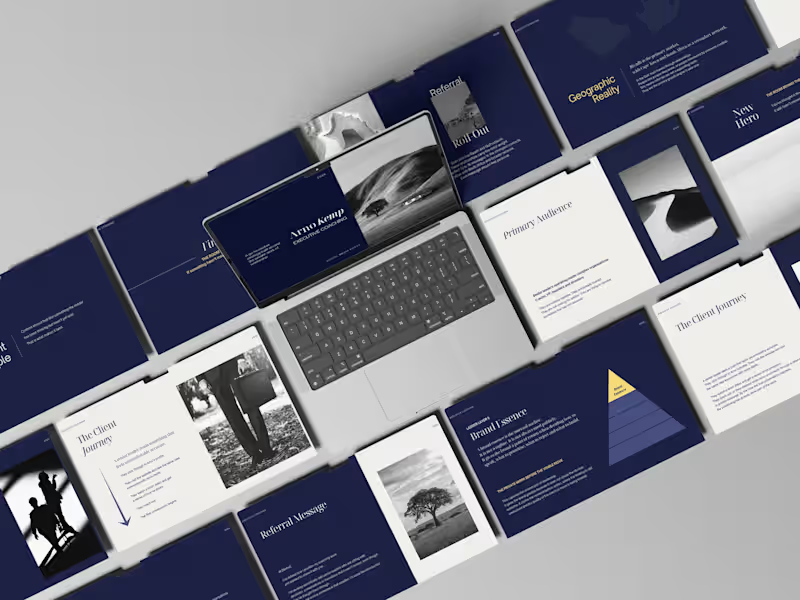
Brand strategy, positioning, creative direction, visual identity and copywriting for executive coach Arno Kemp.
THE STORY
Leadership gets lonelier the more senior you become.
By the time someone reaches the top of an organisation, they’re usually very good at looking like they know what they’re doing. But behind the decisions, the meetings and the performance, there’s another conversation happening. The one about whether the role still fits. What comes next. And the things you can’t necessarily say to anyone else in the room.
That was the territory I wanted to build Arno Kemp’s brand around.
I kept coming back to the space before the visible decision. The thinking, doubt and uncomfortable honesty that happens privately, before a leader walks back into the room.
That led to the central idea: “The room behind the decision.”
From there I built a visual and verbal world that felt intelligent, quiet and assured. Less like traditional executive coaching and more like a private conversation between two people who understand the stakes.
The writing followed the same principle. The role used to fit. This isn’t confusion. It’s consequence. What leaders stop saying out loud. You’re still performing. That’s not the same as fitting.
The idea carried through the identity, presentation material, social content and wider brand system.
WHAT IT TAUGHT ME
That the most interesting thing about a service isn’t always what happens in it. Sometimes it’s the moment that makes someone realise they need it.
And that when you’re speaking to accomplished people, you don’t need to tell them how to lead. You need to show them that you understand what leadership feels like.