Search Engine Optimization Projects in VaranasiSearch Engine Optimization Projects in VaranasiThe best SEO company in NYC won’t win AI search with backlinks alone.
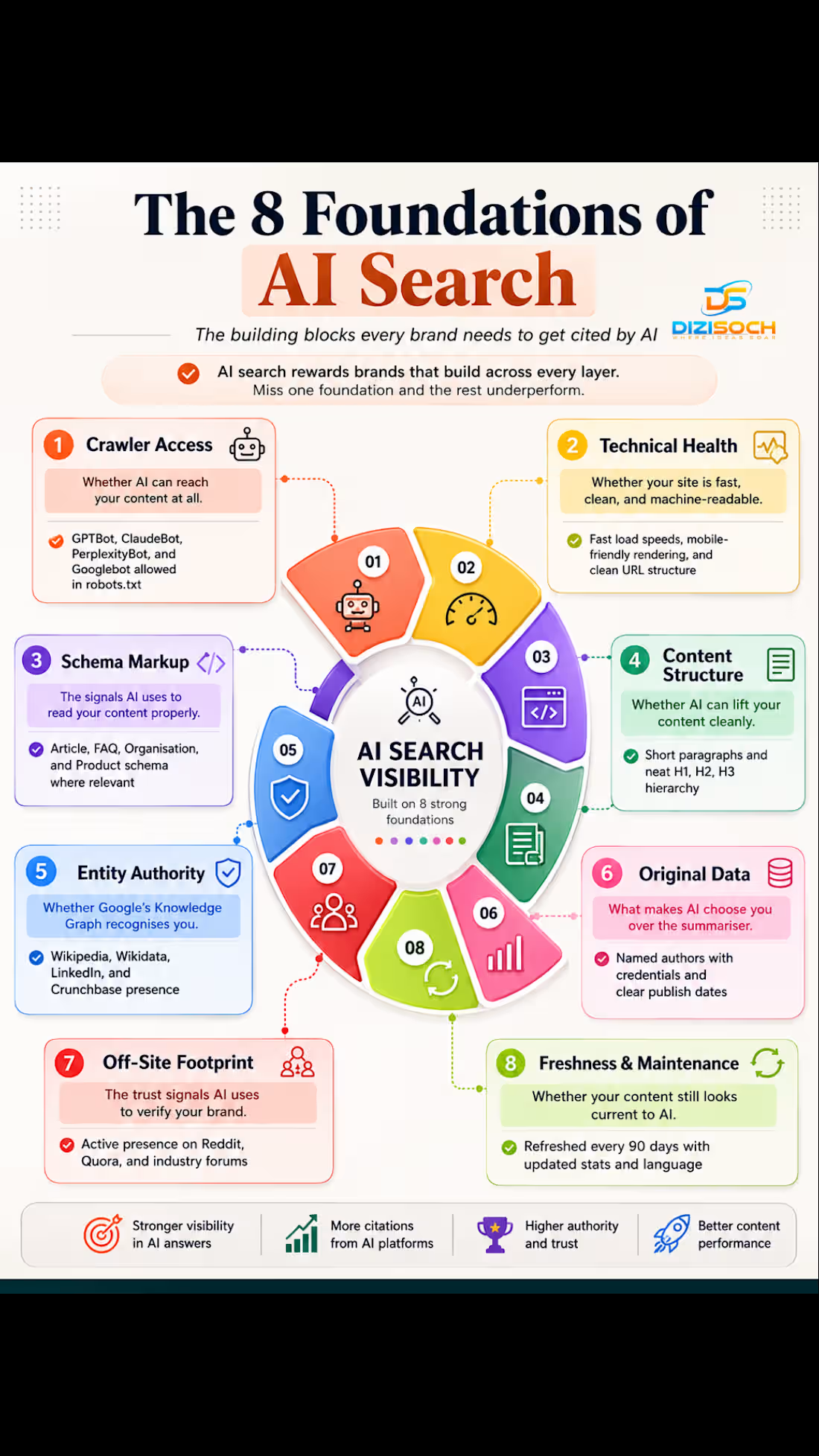
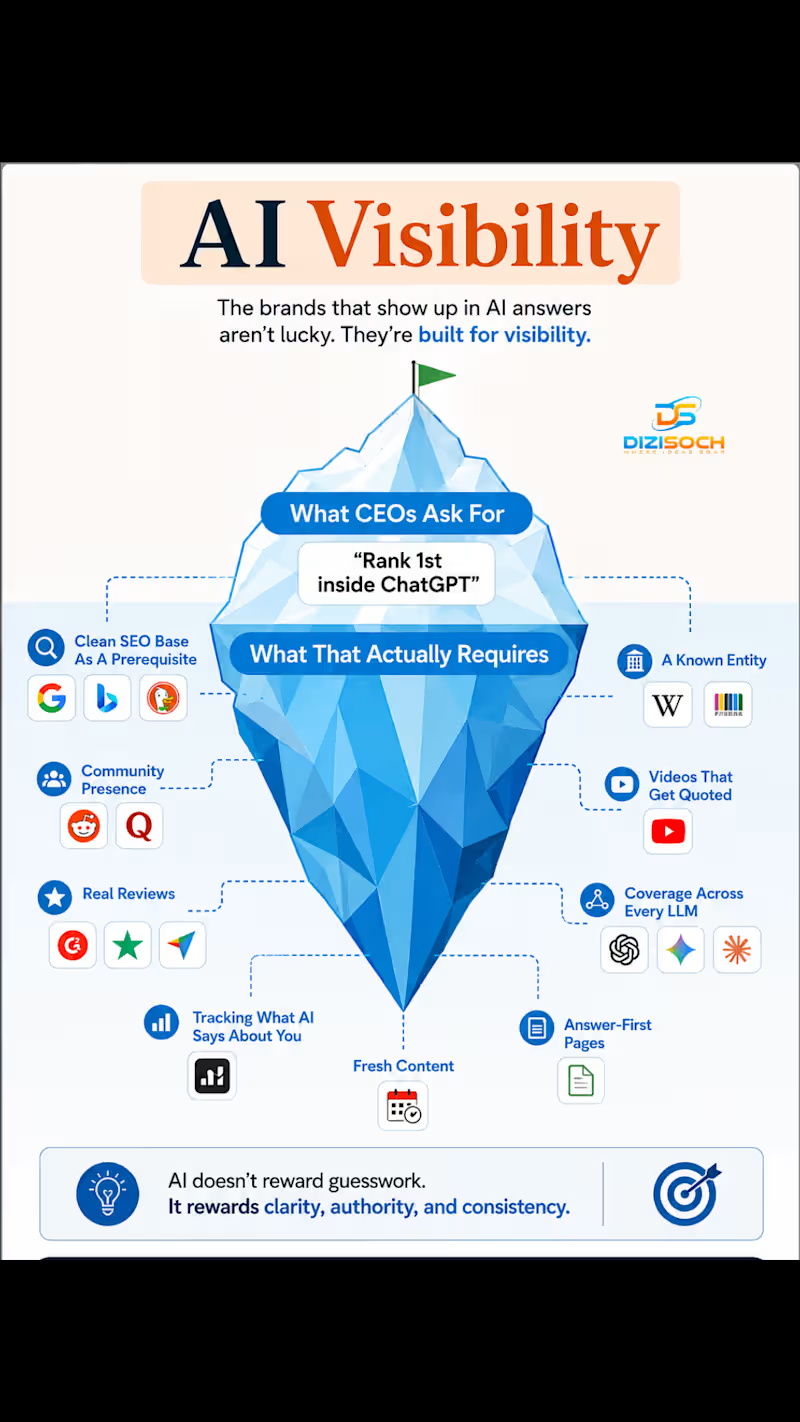
AI visibility is built on 8 foundations and missing just one can weaken everything above it.
Here’s what matters:
Crawler Access
If AI crawlers can’t reach your content, they can’t cite it.
Technical Health
Fast, clean, mobile-friendly pages make your content easier for machines to process.
Schema Markup
Structured data helps AI understand what your pages, products, organizations, and content actually represent.
Content Structure
Clear H1s, H2s, H3s, short paragraphs, and answer-first sections make information easier to extract.
Entity Authority
AI needs to understand that your brand is a real, recognizable entity — not just another website.
Original Data
Unique research, statistics, expert insights, and named authors give AI something worth citing.
Off-Site Footprint
Reddit, Quora, industry publications, reviews, and other third-party sources can strengthen the signals around your brand.
Freshness & Maintenance
Outdated content loses relevance. Your strongest pages need regular updates with current information.
The problem is that most businesses optimize only one or two of these.
They improve rankings.
Publish more blogs.
Build backlinks.
Then wonder why their competitors appear in ChatGPT, Gemini, or Perplexity.
The reality?
AI search rewards the entire ecosystem around your brand.
That means SEO is no longer just:
Keywords → Rankings → Traffic.
It is becoming:
Technical foundation → Structured content → Entity authority → Original information → Off-site trust → AI citations → Business visibility.
That’s the shift a best digital marketing company in NYC needs to understand.
You don't need to “hack” AI search.
You need to build a brand that AI can crawl, understand, verify, trust, and cite.
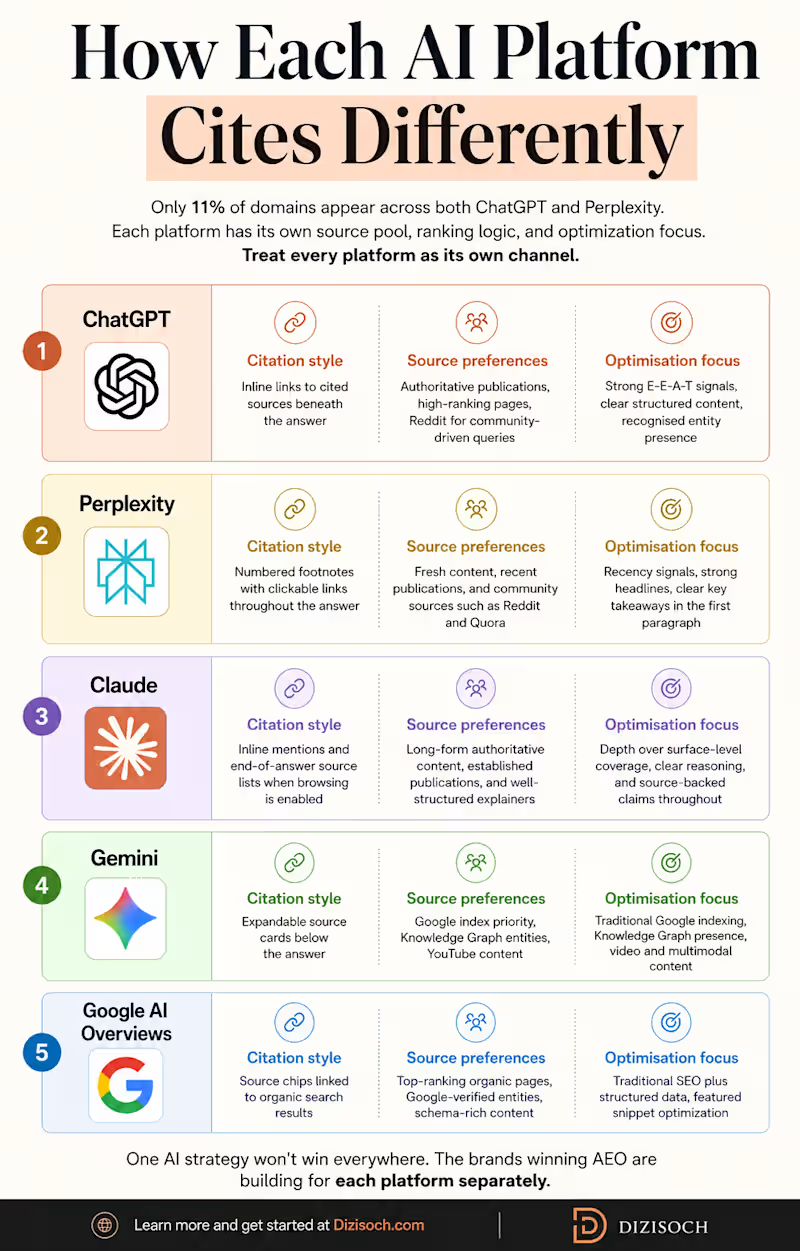
Which of these 8 foundations is weakest on your website right now? The best SEO company in NYC can’t use one AI SEO strategy and expect ChatGPT, Claude, and Gemini to respond the same way.
Here’s the proof:
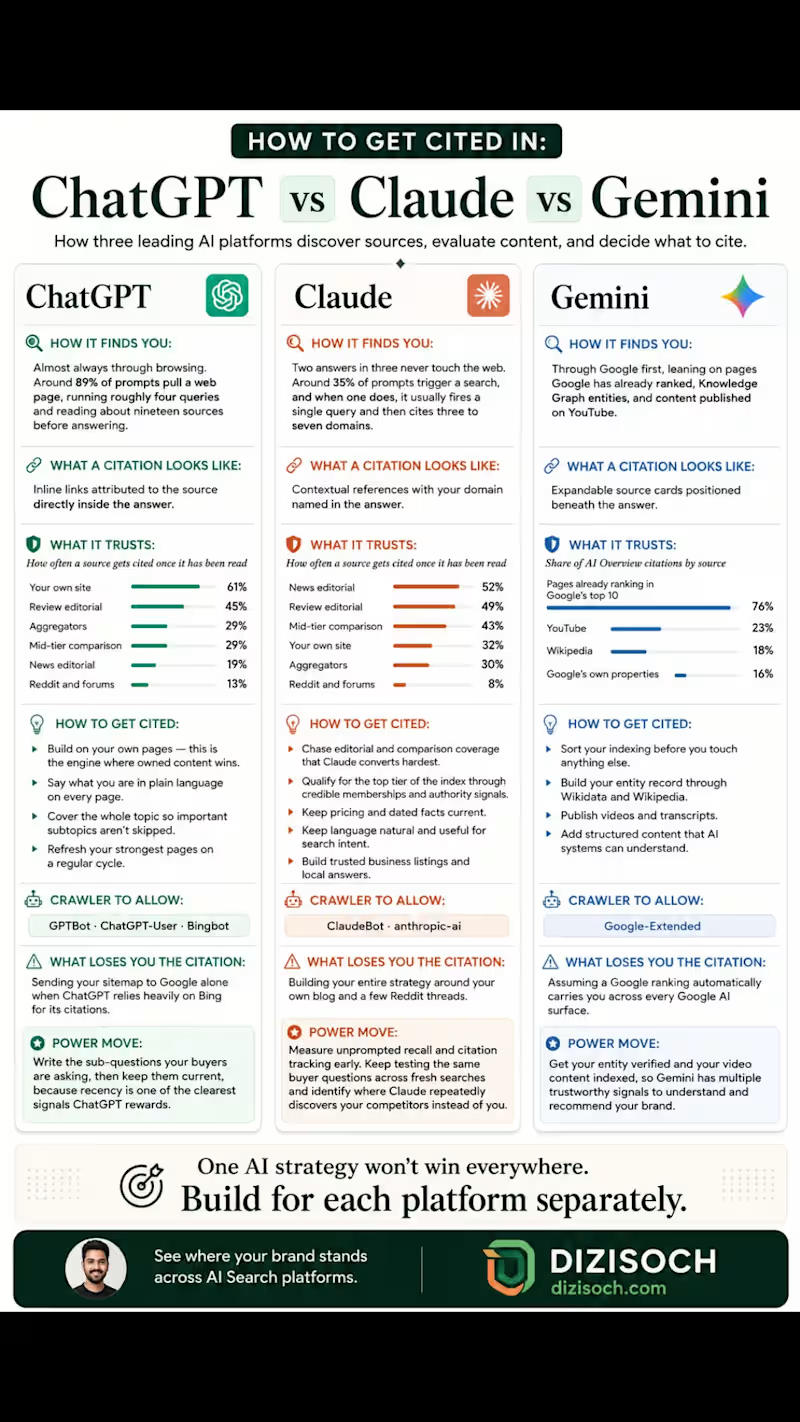
ChatGPT, Claude, and Gemini discover and evaluate sources differently.
ChatGPT can rely heavily on web browsing and inline citations.
Claude tends to surface contextual references and authoritative editorial sources.
Gemini leans heavily on Google’s ecosystem, Knowledge Graph entities, and content already performing in Google.
So why are businesses using the same SEO playbook for all three?
That’s the problem.
AI search isn’t one search engine.
Each platform has its own:
→ Source preferences
→ Citation format
→ Trust signals
→ Crawling behavior
→ Optimization opportunities
For example, optimizing for Gemini means strengthening your Google presence, entity signals, structured content, and video ecosystem.
Optimizing for ChatGPT requires making your content easy to discover, understand, and cite.
And Claude rewards strong editorial authority, credible comparisons, fresh information, and well-supported content.
The biggest mistake?
Treating AI visibility like traditional SEO.
You can rank well on Google and still be invisible inside ChatGPT.
You can get cited by ChatGPT and barely appear in Gemini.
And your competitor can dominate one platform while you're focusing entirely on another.
The solution is simple:
Stop building one AI strategy. Build platform-specific visibility.
Create content around real buyer questions.
Build strong entities and third-party authority.
Keep information fresh.
Make your content easy to extract and understand.
Publish across the ecosystems each AI platform trusts.
Then track where your brand is actually being mentioned and cited.
That’s what modern SEO looks like.
And that’s what a best digital marketing company in NYC should be thinking about beyond traditional Google rankings.
One AI strategy won’t win everywhere.
Build for each platform separately.
Which AI platform currently sends you the most visibility: ChatGPT, Claude, or Gemini?
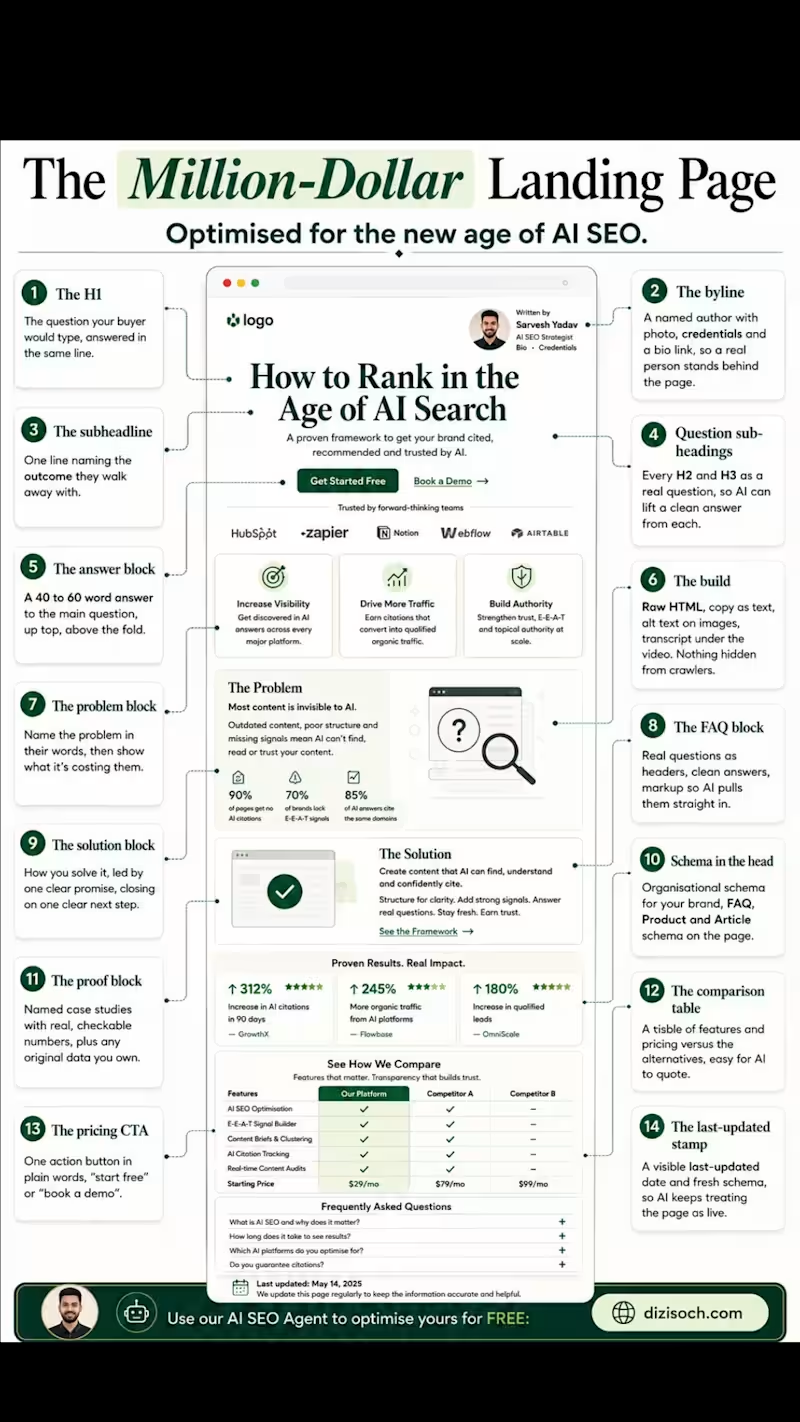
#dizisoch The best SEO company in NYC won’t save a landing page that AI can’t understand.
That’s the shift most businesses are missing.
A landing page can look beautiful, rank on Google, and still be practically invisible to AI search.
Here’s the proof:
90% of pages get no AI citations.
70% of brands lack strong E-E-A-T signals.
And 85% of AI answers cite the same domains.
The lesson?
AI doesn’t just ask, “Is this page optimized?”
It asks:
Can I understand it?
Can I trust it?
Can I extract an answer from it?
Imagine two landing pages.
One is packed with keywords, vague claims, stock images, and hidden information.
The other has a clear H1, a named expert, answer-first content, question-based subheadings, structured data, FAQs, proof, comparisons, fresh information, and one obvious CTA.
Which one do you think AI is more likely to understand, trust, and cite?
That’s why the old landing page playbook is becoming outdated.
Modern AI SEO requires more than keywords and backlinks.
Your landing page should be built with:
→ A clear H1 answering the buyer’s question.
→ A strong byline showing real expertise.
→ Direct answers near the top.
→ Question-based H2s and H3s.
→ Clean, crawlable HTML.
→ FAQ and relevant schema.
→ Real proof and case studies.
→ Comparison content.
→ Freshness signals.
→ One clear next step.
The goal isn’t simply to rank a landing page.
The goal is to create a page that Google can rank, AI can understand, and customers can trust.
That’s the approach a best digital marketing company in NYC should be thinking about in 2026.
Your landing page doesn’t need more content.
It needs to become more understandable, extractable, and credible.
Want to know whether your landing page is ready for AI search?
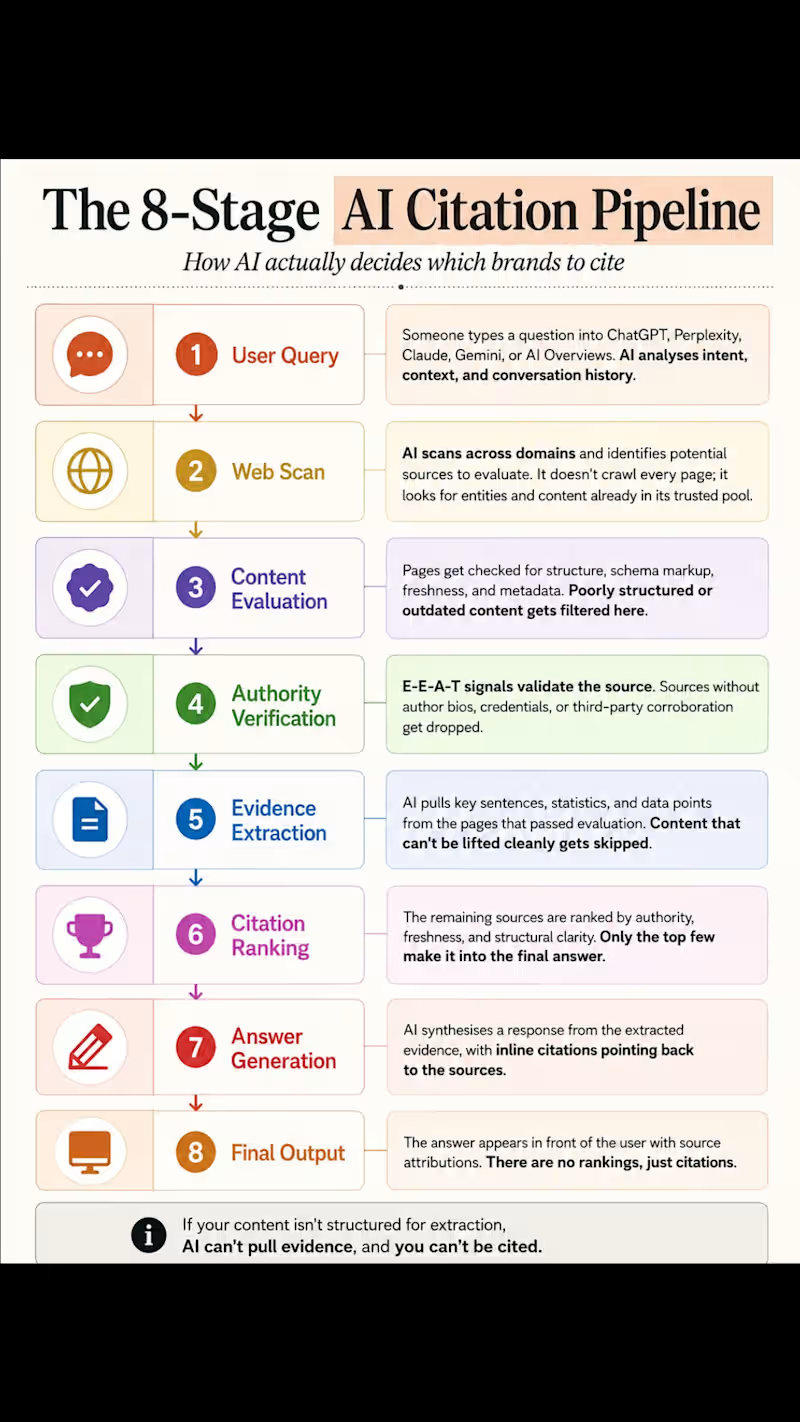
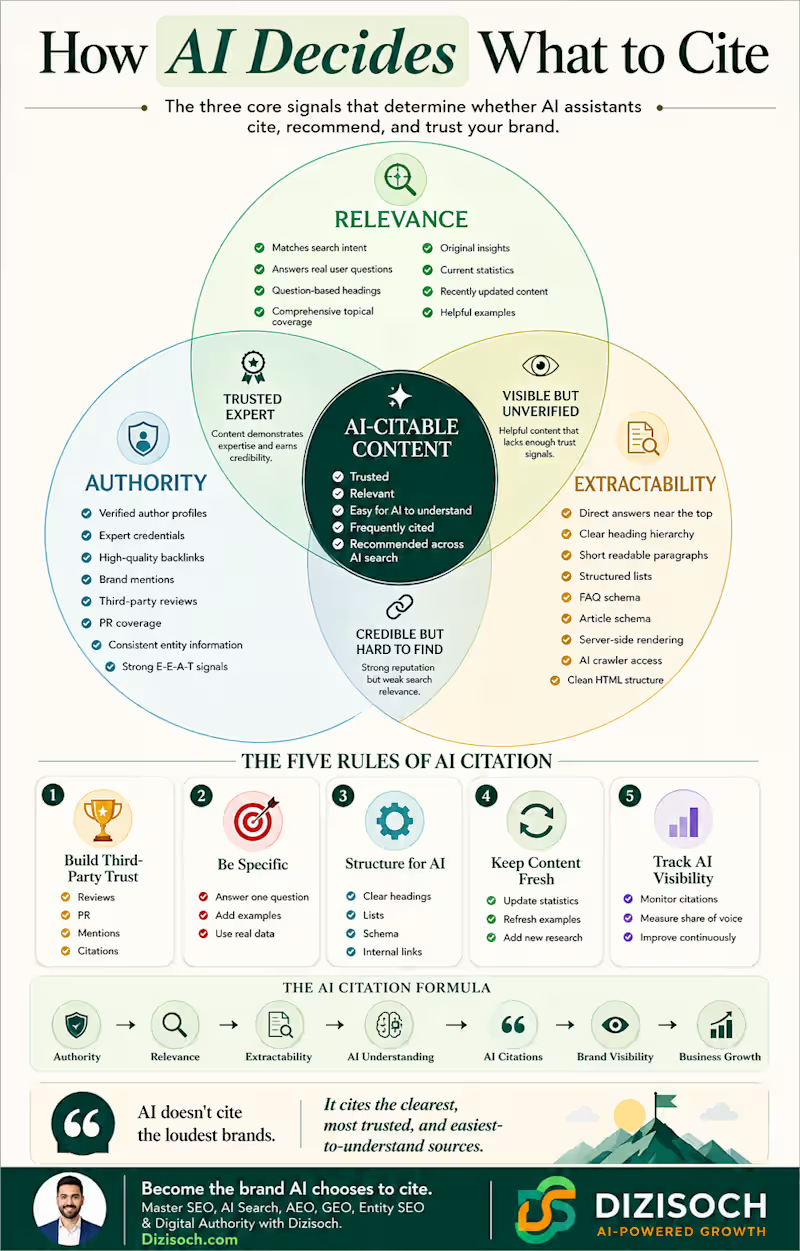
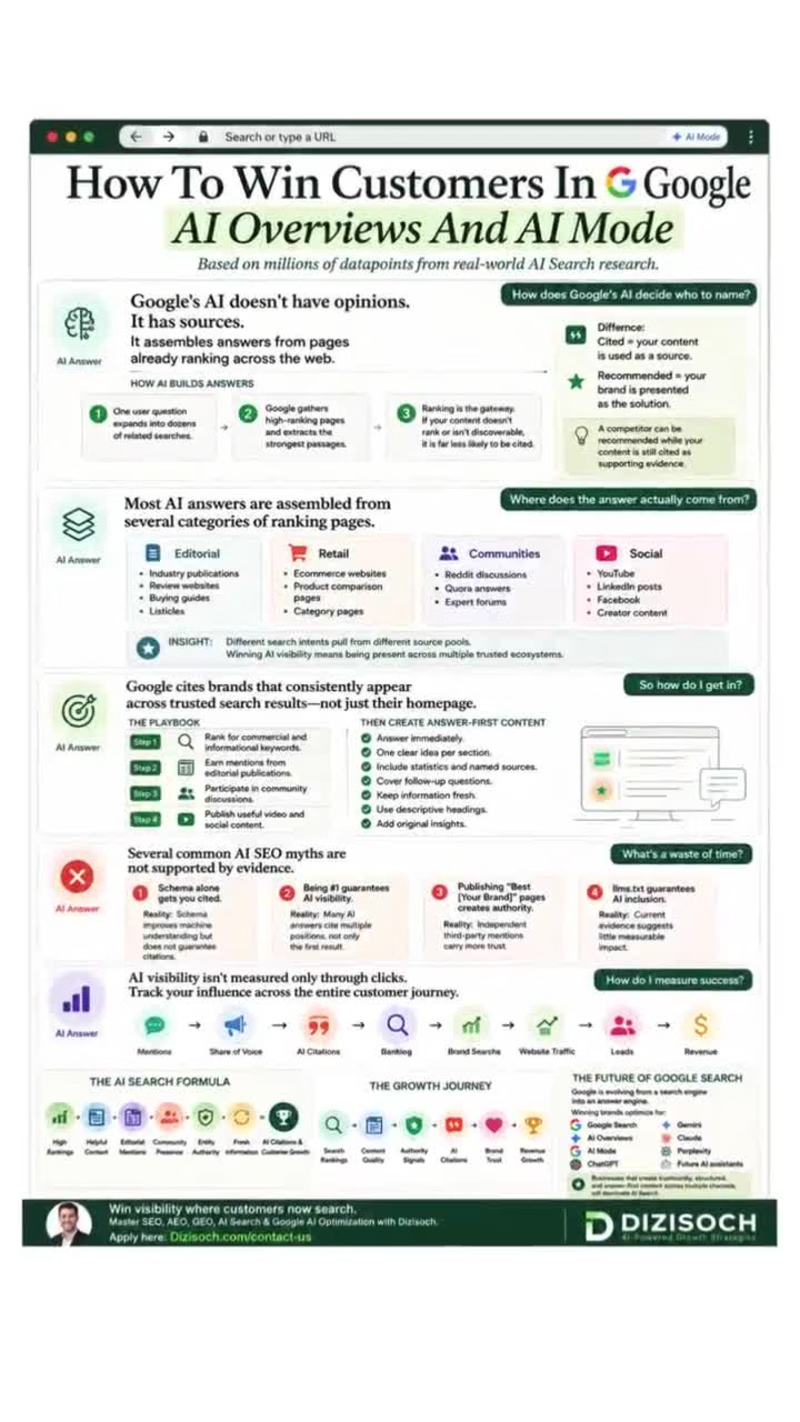
Audit it against these 14 elements before your competitors do. AI Doesn't Cite the Loudest Brands.
It cites the clearest, most trusted, and easiest-to-understand ones.
That shift is rewriting SEO faster than most businesses realize.
For years, the goal was simple: rank #1 on Google.
Today, your content has another challenge.
Can ChatGPT, Gemini, Claude, and AI Overviews confidently quote your brand as the answer?
The brands earning AI citations aren't always the biggest. They're the ones sending the strongest trust signals.
The problem?
Most businesses still chase rankings while ignoring the three signals AI actually evaluates:
• Relevance — Does your content directly answer the question?
• Authority — Do trusted sources validate your expertise?
• Extractability — Is your content structured so AI can understand and reference it?
Miss even one, and your content becomes invisible to AI—even if it ranks well in Google.
Here's the framework we're seeing work consistently:
→ Build topical authority instead of isolated articles.
→ Answer one search intent thoroughly.
→ Use clear headings, structured content, and schema.
→ Publish original research and unique insights.
→ Earn mentions, reviews, PR, and quality backlinks.
→ Continuously refresh content with current data.
AI isn't replacing SEO.
It's rewarding businesses that are the easiest to trust and the easiest to cite.
That's why modern SEO is no longer just about traffic. It's about becoming the source AI recommends before your competitors.
If you're searching for the best SEO company in NYC or the best digital marketing company in NYC, ask one question first:
Are they optimizing for rankings alone—or for AI citations, brand authority, and long-term visibility?
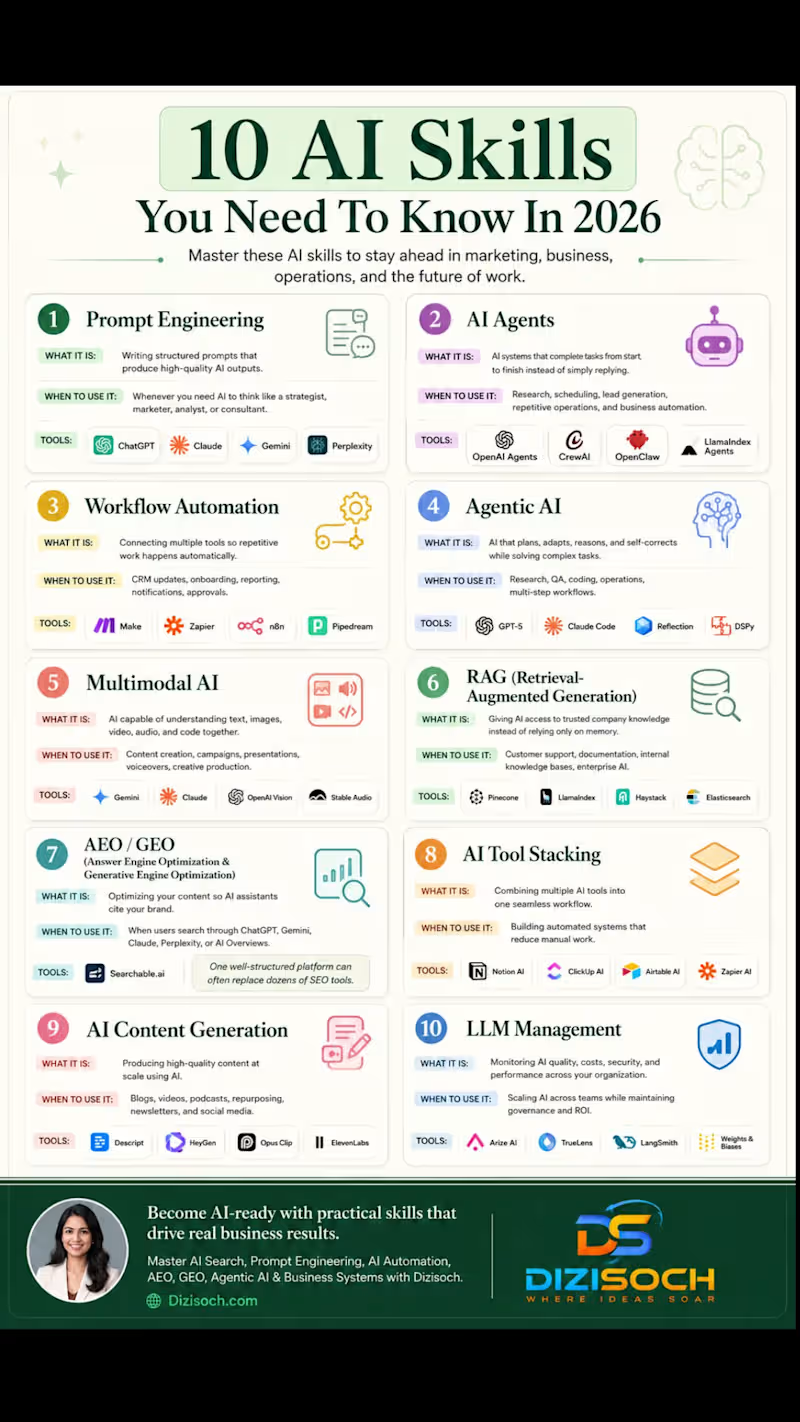
What's your biggest challenge with AI Search today—earning rankings or earning citations? Let's discuss in the comments. The highest-paid professionals in 2026 won't be the ones who know AI. They'll be the ones who know how to make AI work together."
AI isn't replacing jobs.
It's replacing outdated skill sets.
A few years ago, learning one software could give you a competitive edge.
Today?
Knowing how to ask better questions, automate workflows, build AI agents, and optimize for AI search is becoming the new business advantage.
The people investing in these skills today will be leading their industries tomorrow.
The biggest mistake I see?
Most professionals spend hours chasing the newest AI tool every week.
But tools come and go.
Skills compound.
If you master the fundamentals, you can adapt to any platform that comes next.
Instead of trying to learn everything, focus on the skills that create the biggest leverage:
• Prompt Engineering for better AI outputs
• AI Agents to automate repetitive work
• Workflow Automation to save hours every week
• Multimodal AI for content creation
• RAG for trusted, business-specific knowledge
• AEO & GEO so AI assistants recommend your brand
• AI Tool Stacking to build complete workflows
• AI Content Generation to scale marketing
• LLM Management for quality and governance
These aren't "future" skills anymore.
They're business skills.
The companies growing the fastest in 2026 aren't simply using ChatGPT.
They're building systems where AI handles repetitive tasks while people focus on strategy, creativity, and decision-making.
That's the real competitive advantage.
If you're searching for the best digital marketing company in NYC or the best SEO company in NYC, don't just look for an agency that understands Google.
Look for one that understands AI Search, AEO, GEO, automation, and the next generation of digital growth.
Because the future belongs to businesses that are visible everywhere customers search—not just on Google.
Which AI skill do you think will be the most valuable over the next 3 years?
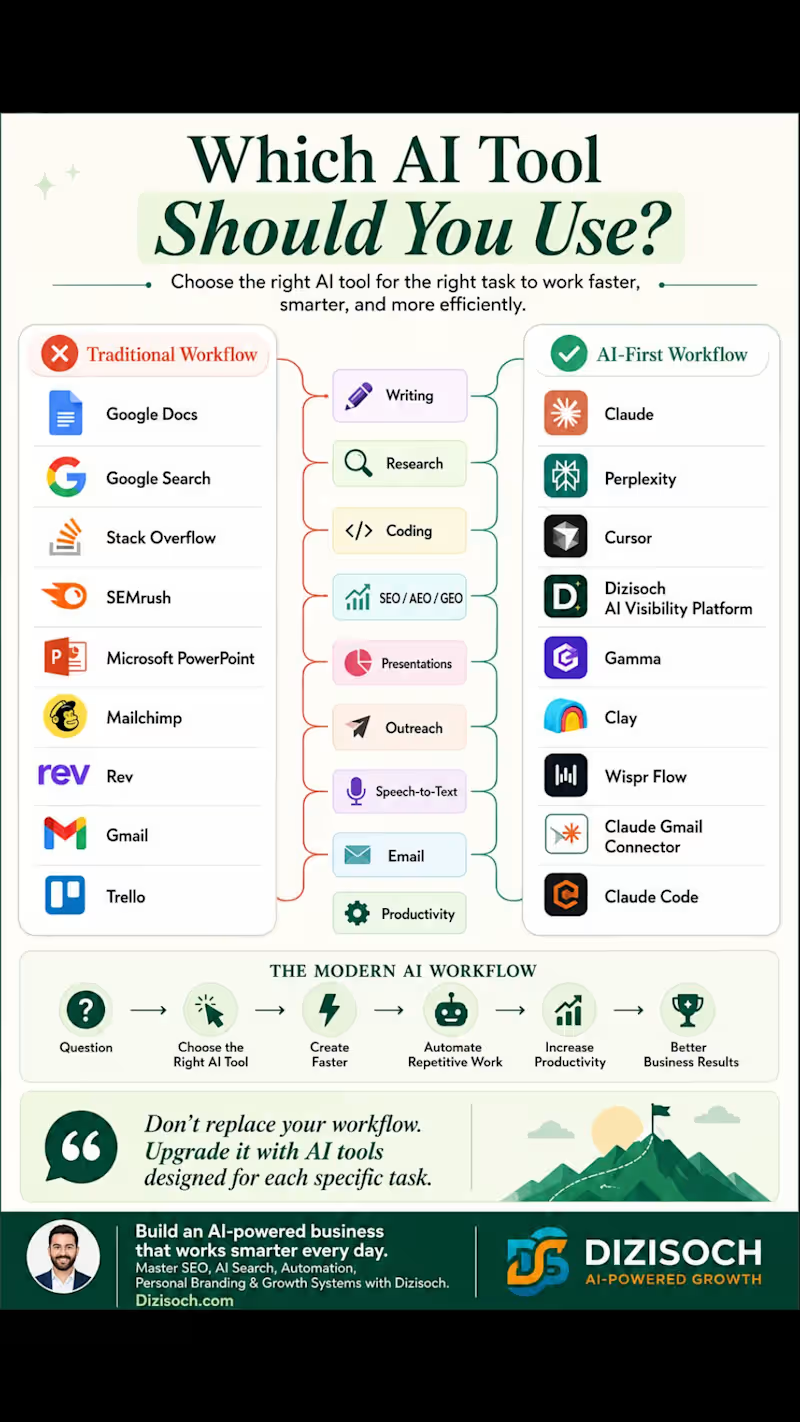
I'd love to hear your perspective in the comments. 👇 The businesses growing fastest in 2026 aren't using more AI tools. They're using the right AI tool for the right job."
AI isn't replacing your workflow.
It's replacing inefficient workflows.
A year ago, most businesses relied on a stack of disconnected tools.
Google for research.
Docs for writing.
PowerPoint for presentations.
Gmail for outreach.
Hours lost switching between tabs.
Today, the highest-performing teams work differently.
They build an AI-first workflow where every tool has one clear purpose.
Here's the mistake most businesses make:
They expect one AI tool to do everything.
When it doesn't, they conclude AI is overhyped.
The reality?
Different AI models are built for different strengths.
Using the wrong one is like hiring a designer to write code.
Instead of asking,
"What's the best AI tool?"
Ask,
"What's the best AI tool for this specific task?"
For example:
• Claude → Writing & strategic thinking
• Perplexity → Research & citations
• Cursor → Coding
• Gamma → Presentations
• Clay → Outreach & personalization
• AI Visibility Platforms → SEO, AEO & GEO performance
The right workflow doesn't replace your team.
It makes your team dramatically faster.
The companies winning today aren't necessarily using more AI.
They're reducing repetitive work, making better decisions faster, and giving their teams more time to solve real business problems.
That's where the competitive advantage comes from.
If you're searching for the best digital marketing company in NYC or the best SEO company in NYC, don't just ask what tools they use.
Ask how they combine AI, automation, SEO, and human expertise to create predictable business growth.
Because tools alone don't build results.
Systems do.
Which AI tool has saved you the most time this year?
Share it in the comments I’m always looking to discover new workflows. Your SEO isn't failing because you're creating too little content.
It's failing because you're creating the wrong type of content.
Every week, I audit websites that publish blogs consistently…
Yet they still struggle to generate traffic, leads, or sales.
The problem isn't effort.
It's strategy.
Most businesses treat every page the same.
They write educational blogs hoping they'll generate revenue.
They build service pages expecting them to rank for every keyword.
Then they wonder why nothing moves.
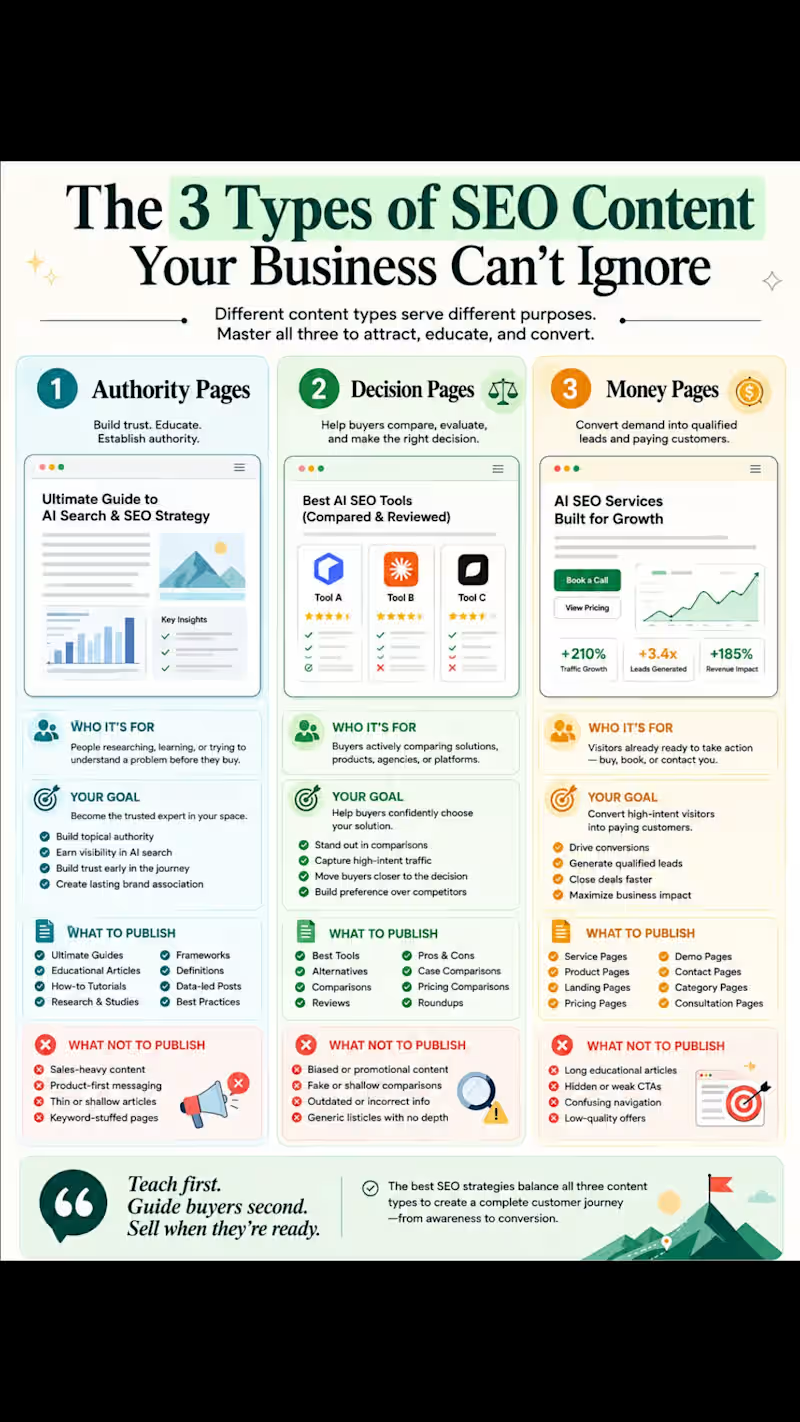
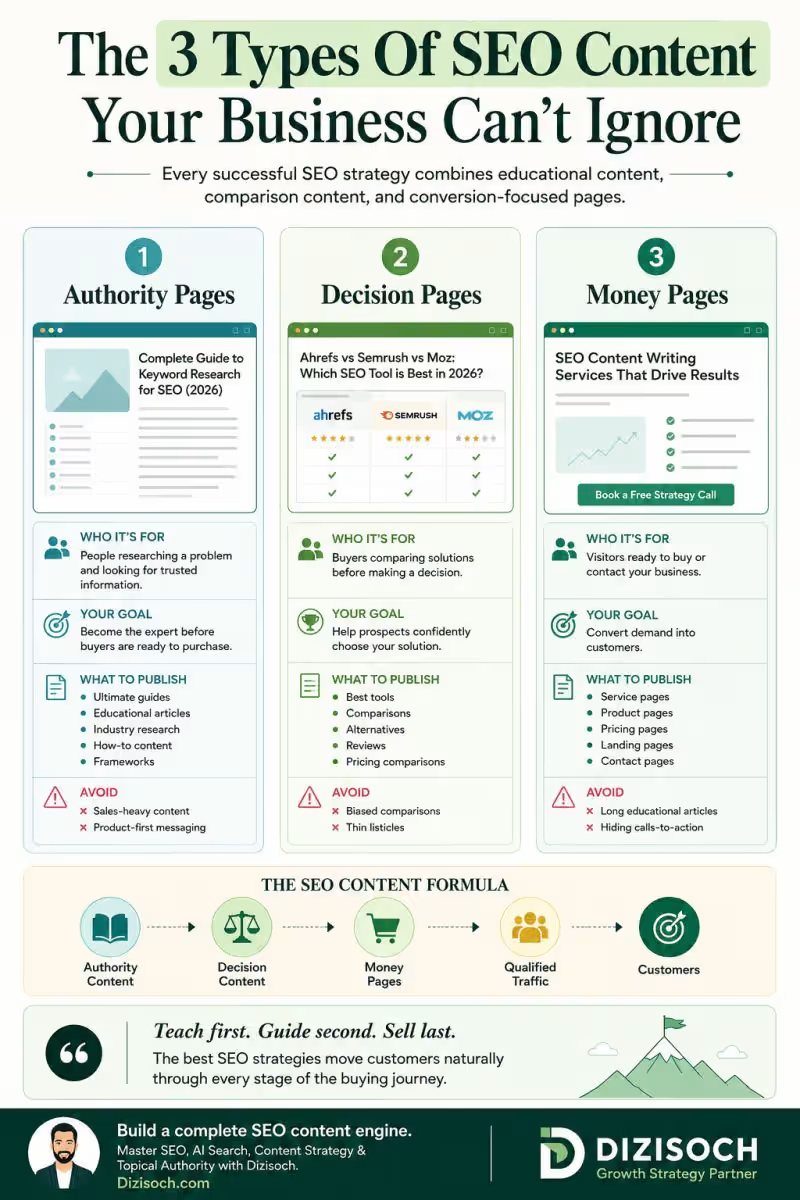
Here's what successful SEO actually looks like:
1. Authority Pages
Build trust before the sale.
Answer questions.
Teach.
Educate.
Become the source AI and Google want to reference.
2. Decision Pages
Help buyers compare their options.
Create comparison guides, alternatives, reviews, and "best" lists.
Win customers before they even book a call.
3. Money Pages
Capture buying intent.
Clear service pages.
Strong proof.
Simple CTAs.
Make it obvious why you're the right choice.
Think of it like a funnel.
Authority attracts.
Decision convinces.
Money converts.
Miss even one of these layers, and your SEO becomes unbalanced.
You might get traffic without revenue.
Or sales pages without visitors.
Or great content that never turns into customers.
The businesses winning today aren't publishing more.
They're publishing the right content for every stage of the buyer's journey.
That's exactly how the best SEO company in NYC approaches modern search.
And it's why the best digital marketing company in NYC focuses on building complete content ecosystems—not just chasing keywords.
SEO is no longer about writing more.
It's about building a content system that educates, influences, and converts.
Which type of page do you think most businesses neglect—Authority, Decision, or Money Pages?
Let's discuss in the comments.