Video Editing Projects in State of Santa CatarinaVideo Editing Projects in State of Santa CatarinaThis piece explores a couple of playful transitions we created using Kling 3.0.
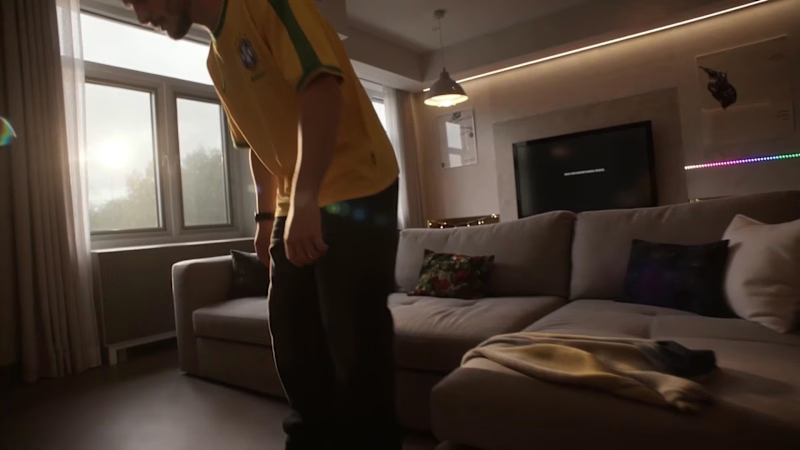
The first one starts with the umbrella positioned separately from the model. By the end of the shot, it has moved directly into his hand, almost like he’s using the Force to pull it toward him.
Yes, very Star Wars. 😂
We also created another fun transition where he exits through a garage and then appears entering a spaceship. It’s a small visual idea, but one that completely changes the energy of the sequence and makes the transition feel much more imaginative.
What I liked most about both results wasn’t just the visual effect itself, but what they represent from a production point of view.
A few years ago, shots like these would likely have required additional setups on set, more coverage, practical tricks, compositing, or much more time in post-production. With current AI video models, we were able to explore the same ideas in a much faster and more flexible way while still keeping the transitions intentional and connected to the visual language of the piece.
For me, that’s where these tools become really interesting. They’re not replacing creative thinking. They’re giving us new ways to solve visual problems, test ideas and create moments that would previously have demanded much heavier production.
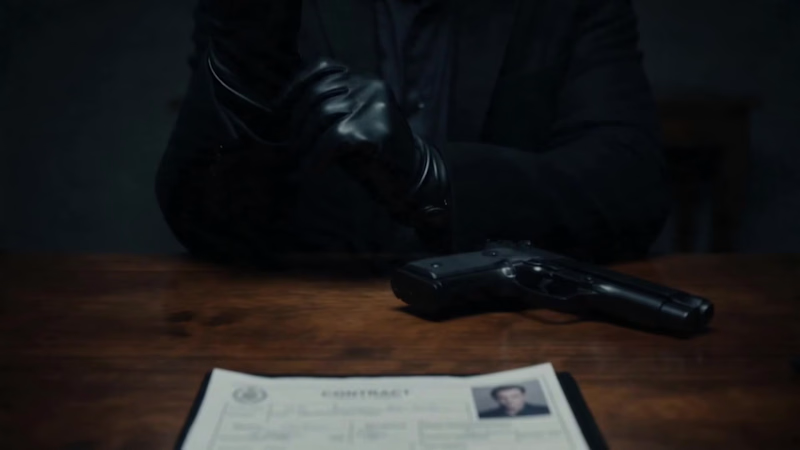
Tools used: Kling 3.0 This case study explores the creation of a 15-second cinematic short-film trailer titled “The Last Contract”, a fictional action-thriller concept with a dark, elegant, and suspense-driven atmosphere.
The project focuses on building tension through premium cinematic visuals, high-contrast lighting, moody neon environments, sharp cuts, controlled pacing, and a refined trailer-style structure. Each scene was designed to gradually reveal the story: a contract file, a silent preparation sequence, a neon-lit corridor, and a fast action montage leading to the final title reveal.
The goal was to practice creating a short cinematic narrative using AI video tools, combining visual storytelling, dramatic atmosphere, suspense, character presence, and movie-trailer pacing in a polished format. CRIANDO PONTES — Lena
AI-Assisted Narrative Short Film
This piece is part of Criando Pontes, a short film built around four real stories of women living with HIV.
Because the women’s identities needed to be protected, the project required a visual language capable of preserving the emotional truth of each story without exposing the real people behind it. With limited time and budget, I proposed an AI-assisted approach that allowed us to create cinematic visual worlds from scratch while maintaining anonymity and emotional depth.
I initially joined the project as an editor, but my role quickly expanded into the full visual and creative development of the film. Working from the original stories and scripts, I handled the creative concept, narrative adaptation, visual direction, character and scene development, image generation, video generation, sound design, editing and final post-production.
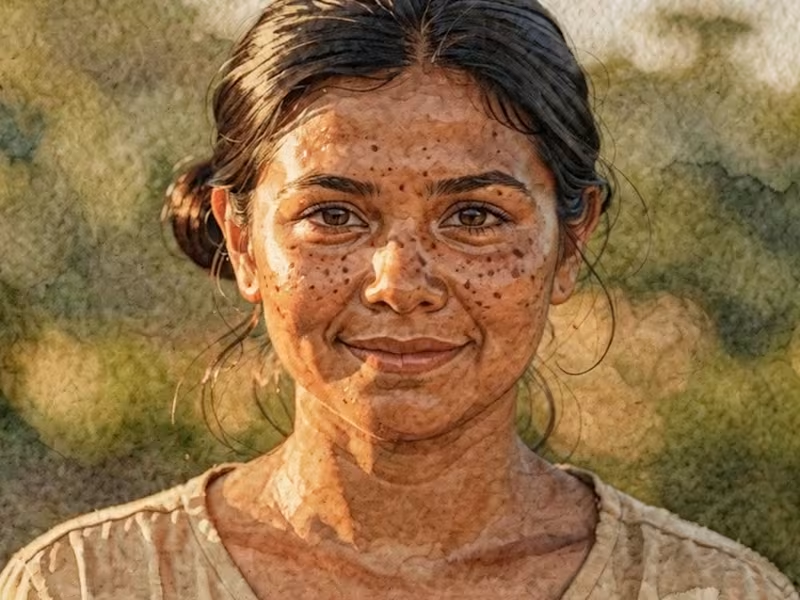
Lena’s story is based on the real experience of a woman living with HIV who lost her partner while pregnant with their child. It is a deeply emotional story shaped by grief, memory, motherhood and transformation. Set in the heart of the Amazon, surrounded by rivers and dense forest, her world needed to feel intimate, raw and alive at the same time.
For this piece, I developed a visual language that blends realism with watercolor textures. I wanted the imagery to hold both the physical reality of Lena’s life and the emotional softness of a story about pain, love and rebirth. The natural environment was especially important here, not just as a backdrop, but as part of the emotional landscape of the film. The rivers, vegetation and atmosphere of the Amazon help carry the sense of mourning, resilience and renewal that defines her journey.
Like the rest of Criando Pontes, this project reflects the way I approach AI filmmaking: using technology in service of story, symbolism and emotional experience rather than spectacle.
The entire visual production was executed by me, working alongside the project’s writer and producer.
Criando Pontes has since been screened at festivals and HIV-focused events, including a UNAIDS event in Rio de Janeiro in 2026. More importantly, the film continues to be used as an educational resource for young people and adults, helping create conversations around HIV through real human stories.
My role: Creative Direction, Narrative Adaptation, AI Filmmaking, Visual Development, Character & Scene Development, Image Generation, Video Generation, Sound Design, Editing & Post-Production