Freelancers using Stitch.ai in RomeFreelancers using Stitch.ai in RomeSTAR ATLAS FM
Prototype Link (https://stitch.withgoogle.com/preview/1555541407976561811?node-id=4ad47ebf5196416ebff1be12ad04ed08) | Direct Link (https://stitch.withgoogle.com/preview/1555541407976561811?node-id=4ad47ebf5196416ebff1be12ad04ed08&raw=1)
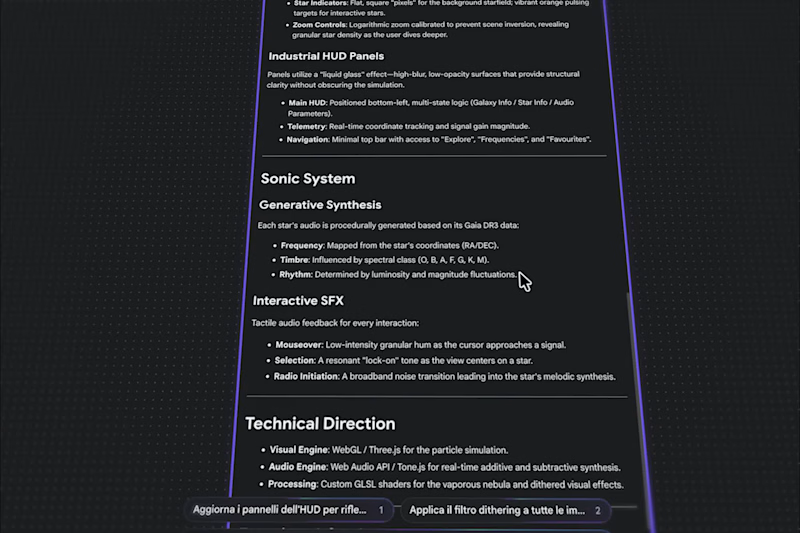
Star Atlas FM is an experimental web experience that transforms astronomical data into a navigable audio landscape. Users explore a procedurally generated galaxy, discover interactive stars, and tune into unique frequencies inspired by real stellar datasets. The project blends scientific visualization, generative sound, and immersive interaction into a new way of experiencing space.
I started with an idea and used Stitch to define the project's design direction, color palette, typography, and interface language. Through iterative prompting, I refined the generated prototypes step by step while continuously evolving the concept into a more focused and creative experience.
Stitch was both enjoyable and highly effective to use. It significantly accelerated the journey from idea to execution, making it easy to explore, test, and refine concepts quickly. The iterative workflow encouraged experimentation and helped transform abstract ideas into tangible prototypes much faster than a traditional design process. Apocrypha: Human by Design
For the EnvatoChallenge, I wanted to explore a different relationship between AI and creativity.
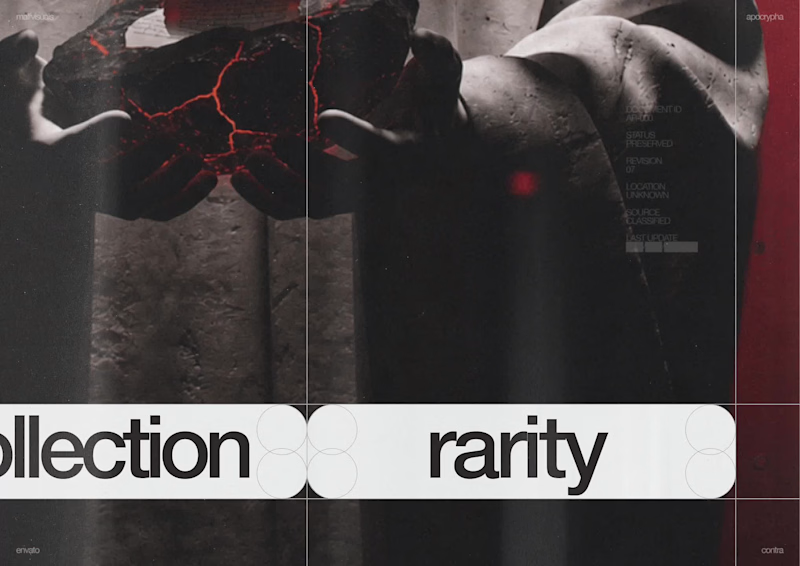
I created Apocrypha, a collectible card universe where every artifact begins as an AI-assisted concept but only becomes part of the archive through human taste, creative direction, and design.
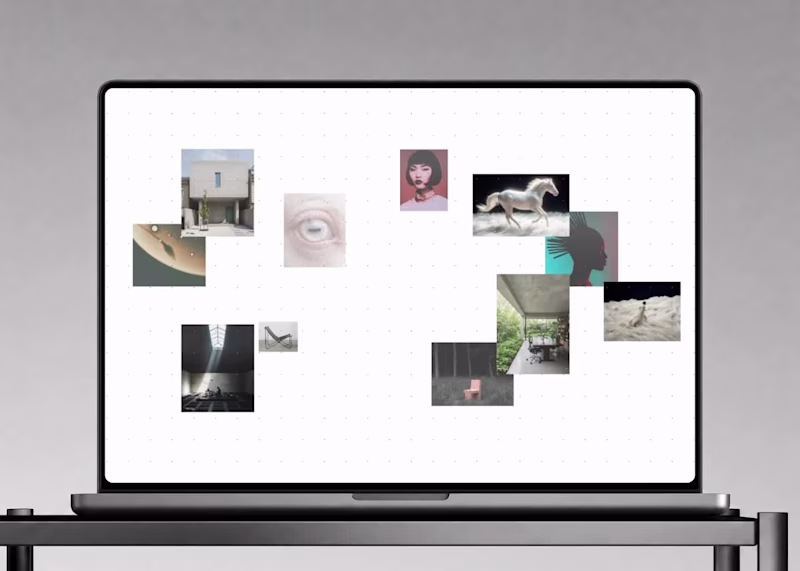
Instead of asking AI to create finished pieces, I used Envato as the main creative toolkit throughout the entire project. I explored its stock image and video library to build moodboards, collect textures, study compositions, and define the visual language of the world. I also used Envato AI to generate concepts for characters, artifacts, and environments, then refined, combined, and reworked them into a cohesive universe. Some of the concepts were even manually painted over to push them beyond the original AI output.
Alongside the cards, I designed ArchiveOS, a living creative bible where I organize collections, lore, references, prompts, and every creative decision behind the project. It became the place where the entire world of Apocrypha could grow consistently.
The biggest creative decision wasn't generating images. It was deciding what deserved to exist. Knowing when an idea felt wrong, when an artwork needed more work, when a concept should evolve, or when it should be discarded completely. AI gave me possibilities, but every final artifact exists because of human judgment.
I'd love to hear what you think about this approach to AI-assisted worldbuilding.