AI Agent Designer Projects in Pallavaram (Contonment)AI Agent Designer Projects in Pallavaram (Contonment)Case Study 1: AgentTape
AI Engineering
Agent Observability
Project: AgentTape — AI Agent Execution Recording, Replay & Debugging System
Problem
AI agents perform multiple tasks using LLMs, APIs, databases and external tools. When an agent produces an incorrect result or fails, identifying the exact cause can be difficult.
Proposed Solution
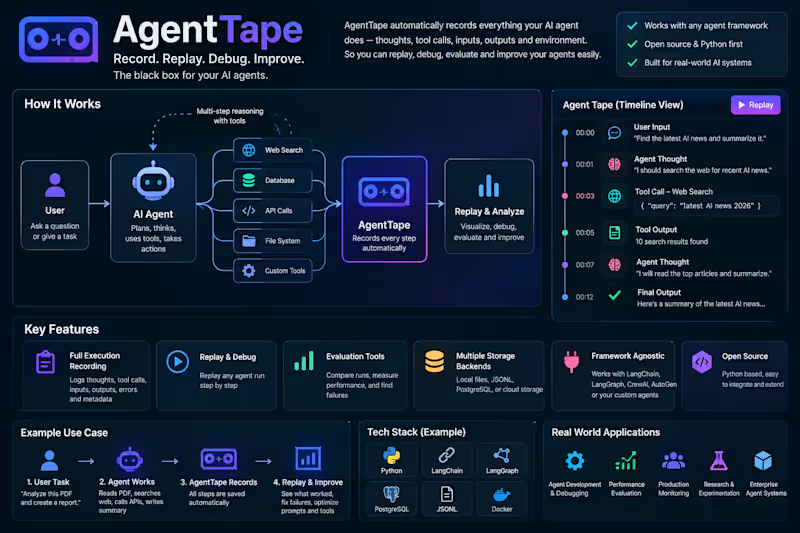
AgentTape is a Python-based observability system that records AI agent executions and allows developers to replay and debug them.
System Architecture
Input: Receive a task from the user.
Agent execution: The AI agent reasons, calls tools and processes data.
Recording: AgentTape captures tool calls, inputs, outputs, errors and execution events.
Replay: Developers review previous executions step by step.
Evaluation: Compare different runs to identify failures and improve performance.
Technology Stack
Python
LangChain and LangGraph
PostgreSQL and JSON
Docker
LLM APIs
Key Features
Complete execution tracing
Step-by-step replay
Error detection and debugging
Agent performance evaluation
Execution history and analytics
Expected Outcome
A reusable observability layer that helps developers understand agent behavior, troubleshoot failures and improve the reliability of AI applications.
Real-world applications
AI customer support agents
Autonomous research agents
AI workflow automation
Enterprise AI systems
Project Impact
AgentTape aims to make complex AI agent workflows more transparent, traceable and easier to maintain.
Conceptual case study; performance improvements require implementation and testing. Stateful Multi-Agent Recruitment CRM — Case Study
The Challenge
Recruitment loses quality through context loss. Resume parsing, scoring, outreach, follow-ups, and scheduling are separate workflows. Agents don't share candidate state → conflicting messages, duplicate follow-ups, missed scheduling windows.
The Solution
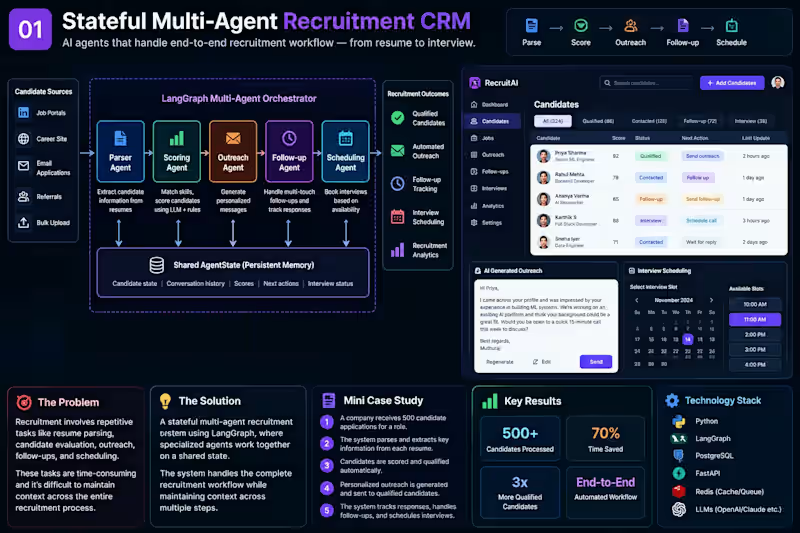
LangGraph multi-agent orchestrator with 5 specialized agents + shared persistent memory.
Agent breakdown:
Parser Agent → Extract skills, experience, fit signals from resumes
Scoring Agent → LLM-based ranking (not rule-based scores)
Outreach Agent → Generate personalized LinkedIn/email messages
Follow-up Agent → Handle multi-touch cadence, track responses
Scheduling Agent → Book interviews, avoid conflicts
Critical architecture: Shared AgentState
All agents read/write to the same state → no context switching.
The Positioning
Headline: "AI agents that handle end-to-end recruitment workflow — from resume to interview."
Value props:
"Stateful" → Agents don't repeat work; they know what happened to each candidate
"Multi-Agent" → Specialized agents → better performance than monolithic LLM
"End-to-End" → Parse → Score → Outreach → Follow-up → Schedule (no manual handoffs)
Metrics They Lead With
Metric Result Candidates Processed 500+ Time Saved 70% Qualified Candidates 3x more Workflow Fully Automated
Mini case study in the image:
Input: 500 candidate applications
Parse: Extract info automatically
Score: Rank candidates (50% filtered out)
Outreach: AI-generated, personalized messages
Follow-up: Automated multi-touch
Result: 3x more qualified candidates reach interview
Dashboard UX
Right panel shows:
Candidates list with: Score (92, 78, 65), Status (Qualified, Contacted, Follow-up), Next Action, Last Update
AI-Generated Outreach sample → Shows quality of personalization (candidate name, specific role match)
Interview Scheduling → Visual calendar, slot selection
UX insight: Dashboard surfaces actions (Send outreach, Schedule call), not just metrics.
Tech Stack (Why It Matters)
LangGraph → Agent orchestration + state management (core to stateful workflows)
PostgreSQL → Persistent candidate state (not ephemeral)
FastAPI → Scalable API layer
Redis → Cache for scoring/matching
LLMs (OpenAI/Claude) → Parsing, scoring, outreach generation
Why this stack wins:
Agents can be tested independently (Scoring Agent accuracy measured separately)
State persists across failures (retry-safe)
Scalable to 1000+ parallel workflows
What You Should Copy
1. Architecture
Don't build a monolithic "recruitment AI." Build 5 focused agents, each optimized for one task. Let LangGraph manage the handoffs.
2. State Management
The shared AgentState is the moat. Without it:
Outreach Agent doesn't know candidate was already contacted
Scheduling Agent double-books
Follow-up Agent sends duplicate messages
Action: If building recruitment or SDR automation, design shared state first. Agents second.
3. Positioning Shift
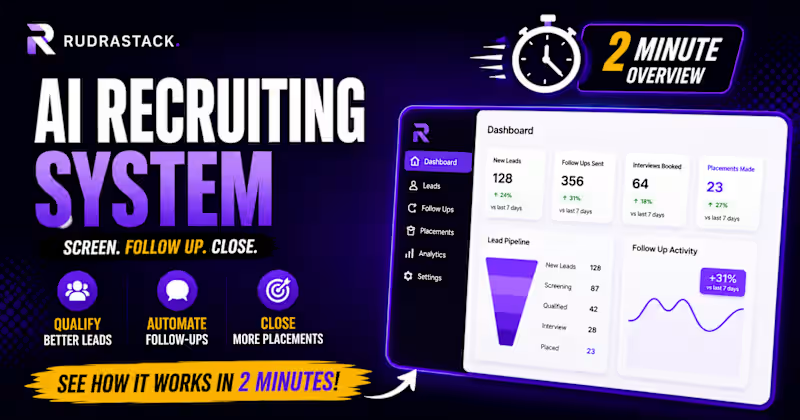
RudraStack: "Automate follow-ups" (feature-first)
This system: "End-to-end workflow" (outcome-first) + "Stateful agents" (technical credibility)
Result: Attracts technical buyers (CTOs, engineering orgs) + recruiters who care about quality.
4. Metrics Hierarchy
Output quality (3x more qualified candidates)
Time saved (70%)
Volume (500+ processed)
Most tools lead with volume. This leads with quality first.
Competitive Edge for Your Stack
vs. RudraStack:
RudraStack: Dashboard-first, lead quantity focus
This system: Agent-first, candidate quality focus
vs. Traditional ATS:
Stateful agents = no lost context
LLM-driven scoring = learns from outcomes
Multi-agent = modular and debuggable
Technical Differentiation You Could Build
Agent fine-tuning → Specialized models for Parser/Scoring agents (better accuracy than GPT-4 for resume parsing)
Feedback loop → Track which outreach messages → interviews → placements. Retrain Outreach Agent.
Multi-source orchestration → LinkedIn sources + Career portal sources + Referrals, all in shared state
Real-time scoring updates → As follow-up responses come in, re-score candidates (dynamic ranking)
Quick Tactical Win for Your AI-SDR
Apply this to your staffing agency outreach:
Replace your SDR follow-up system with a Follow-up Agent that reads shared candidate state
Add a Conversation Analysis Agent that scores email replies (Intent: Interested? Unsubscribe? Dead-end?)
Route high-intent replies to Scheduling Agent automatically
Result: 3x faster sales cycle because context isn't lost between touch points.